

Tourism Industry Howls at Libs' Latest Moves
Killing Tourism BC after imposing HST met with shock and anger.
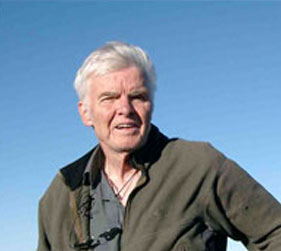
'Nobody expected this': Wilderness Tourism Association president Brian Gunn.



-
Vancouver's 'Brand': Ski Bums or Green Brainiacs?
Getting the Games meant the world would pay attention to the city's story. Uh oh. What is it?
-
Waiting for the EcoCultural Tourists
In Alert Bay, the fishing is dying and the future rides on aboriginal entrepreneurs wooing visitors.
-
Nk'Mip Centre Shimmers in Desert
Osoyoos Band offers new way to imagine 'breathtaking' buildings amidst the financial crash.
Members of the B.C. tourism industry were shocked on August 17 when the government announced it is shutting down Tourism B.C. and absorbing it into the Ministry of Tourism, Culture and the Arts.
"While Tourism BC has served British Columbia well," said Tourism Minister Kevin Krueger in a news release, "in these difficult economic times it is critical that we maximize every tourism dollar for marketing B.C. to the world. Consolidating tourism operations in the ministry will allow for co-ordinated marketing campaigns, while ensuring resources are focused on getting the best results for British Columbia's tourism sector."
Longtime CEO Rod Harris vanished at once from the TBC website, and the page listing the Board of Directors offered only "Sorry! There was a problem with the web page." Deputy Minister Lori Wanamaker now appears on the Senior Management page as Interim President and Chief Executive Officer.
In an interview with The Tyee, Brian Gunn, president of the Wilderness Tourism Association, said Tourism British Columbia has been a "responsible, businesslike operation." He added that he was shocked to see the government fire Harris.
"They said they're going to improve on what they've got," Gunn said, "but I don't see that as possible with the resources they've got."
Gunn explained that TBC was the result of years of lobbying for a dedicated marketing arm to serve the industry. The government-run model hadn't succeeded, in part because marketing funding was at the mercy of whoever was finance minister. "That's why we asked for a Crown corporation."
Liberals wanted TBC in 1997
When the New Democrats created Tourism British Columbia in 1997, said Gunn, they funded it with 3 percentage points from the new 8 per cent hotel room tax. This gave TBC a strong incentive to market effectively, free of political interference.
At the time, the Liberals (then in opposition) insisted on such independence from government. Political blogger Sean Holman has recently posted at length from the May 1997 Hansard, quoting the Liberals supporting the need for an independent corporation with its own funding.
NDP tourism critic Spencer Herbert told The Tyee, "Those I've talked to say the move was retribution for the tourism industry's protests about the Harmonized Sales Tax. But it's really about shutting down the hotel room tax and switching to the HST."
The 3 percentage points, Herbert explained, funded almost all of TBC's $58.8 million budget for 2008-2009 and the projected $60 million for 2009-2010. But presumably the hotel room tax will be repealed and replaced by the 7 per cent provincial component of the Harmonized Sales Tax. It's unclear if the HST charged for tourist lodgings would go into general revenue or back into promoting tourism.
Cuts predicted for tourism budget
"The government would have to pass a law to dedicate it to tourism marketing," Herbert told The Tyee. He also noted that the last provincial budget predicted a series of yearly cuts to the government's own tourism budget: "From $18.7 million to $13.5 million to $11.7 million to $11.1 million."
The industry was indeed alarmed when the HST was announced. On the website of the Council of Tourism Associations, an August 7 update summarized the situation:
"The HST will have a devastating impact on most tourism-related goods and services... The proposed Input Tax Credits will provide little compensation for tourism businesses, which are primarily labour intensive and have relatively low capital (replacement) costs... B.C.'s regional competitiveness will suffer... Businesses with fixed-price contracts already in place beyond July 1, 2010 will be forced to absorb the additional 7%."
"It's strange to do this right before the Olympics," Brian Gunn said.
"Tourism British Columbia was a model for the rest of the country." Herbert agreed: "Other jurisdictions tell me it's the model they're trying to move to."
Asked if the shutdown had been foreseen, Gunn said, "Nobody expected this." Yes, TBC and the government had had their spats, but that was inevitable for an independent Crown corporation.
'Tourism industry is gravely concerned'
Late in the afternoon of August 18, the Council of Tourism Associations posted a news release on its website. It said, in part:
"COTA and its members accept that this decision by government is final. However, at the COTA Council meeting nearly one-hundred B.C. tourism industry leaders were united in asking COTA to communicate publicly the following messages:
"1. The tourism industry is gravely concerned about the decision to dissolve Tourism BC and to bring the agency under the direct management of the provincial government. Tourism BC was considered a world leader in destination marketing. Any new structure put in place to support tourism marketing in B.C. will be judged against the standard set by Tourism BC and its former CEO, Rod Harris.
"2. Key principles that made Tourism BC a world leader, and which industry would like to see incorporated into the new marketing structure include:
"a. An autonomous, industry-led governance model that is independent of political interference, and that operates on sound business principles.
"b. Formula-funding, which enables long-term, strategic planning over a multiple-year time horizon.
"3. COTA and its members remain committed to working proactively with government to restructure the tourism system and ensure we return to a strong growth position in the short-term. We would like to contribute to the rebuilding of an organization that will capitalize on the vast post-2010 marketing opportunities, and ensure that B.C. continues to be a recognized world leader in tourism.
"COTA members also expressed concerns around the timing of this recent decision. The industry is already facing enormous challenges, including the global financial crisis, impacts of H1N1 on our key overseas markets (particularly Asia-Pacific), newly-imposed visa requirements for our fastest growing market (Mexico), new border documentation requirements, and now the proposed Harmonized Sales Tax (HST) that will make B.C. a more expensive travel destination. We look forward to working with the provincial government to address all these issues."
Tourism Minister Kevin Krueger did not respond to a Tyee request for an interview. ![[Tyee]](https://thetyee.ca/ui/img/ico_fishie.png)