


 SHARE:

Whenever I feel like the world makes no sense, when utter a-holes are in charge, and things like vanity, ignorance and venal cruelty rule the day, I think, “Oh, yeah. High school!”
Nothing can resurface the petty awfulness of humans like memories of one’s secondary school education. If you’d like to revisit the experience, take a gander at the new adaptation of Carrie, Stephen King’s first book and seminal tale of teenage suffering and revenge.
Originally published in 1974, the slim novella about Carrie White has been adapted to film a number of times, beginning with Brian De Palma’s legendary opus in 1976.
Sissy Spacek brought both terror and pathos to the story of a sad and lonely girl possessed of some serious telekinetic powers. The rest of the cast — Piper Laurie, Amy Irving, John Travolta, Nancy Allen — were equally compelling, and the director’s interpretation, complete with split screens, jump scares and near-operatic staging made the film into an instant classic. Subsequent takes have followed pretty much the same path as De Palma’s version.
Director Mike Flanagan takes a different approach to the story of Carrie White, spreading out her evolution from a lonely, awkward teen to a blood-soaked avenger over an eight-episode series.
The expansion affords the series the time and space to fully flesh out all the characters, and this has two-fold impact. It allows for greater empathy and understanding of the characters, including the villains.
But this is also where problems arise.
In the 1976 film, the teenaged terror Christine “Chris” Hargensen was played with sullen fury by actress Nancy Allen. Although she was 26 at the time of the movie’s production, Allen made for a convincing ‘70s teenager, complete with feathered hair and a spiraling degree of sociopathy.
Audiences weren’t given a backstory about her or made privy to her challenges, her internal emotions or unprocessed trauma. She was simply the nasty girl who led the bullying campaign against Carrie, the new girl in school.
Allen’s portrayal of Hargensen was straightforward: she tortured Carrie because she wanted to.
In the new series, Hargensen is played by Vancouver-born actress Alison Thornton (also in her mid-twenties). She is still the ringleader, orchestrating a campaign of bullying and cruelty against her classmate (played by 22-year-old Canadian actress Summer H. Howell).
But unlike earlier incarnations, Thorton’s Hargensen is a complex figure, suffering her own emotional struggles and insecurities.
It’s something of a trend in horror right now. Crystal Lake, the new version of Friday the 13th that explores the life and death of little Jason Voorhees and his mother Pamela, does something similar.
That horror franchises are perpetually reinvented to address the current moment is nothing new. But reconstituting villainy into something that is understandable, if not entirely sympathetic, creates some moral queasiness.
An empathy exam
The new Carrie series makes the bully Hargensen into much more than a narrative catalyst. Arguably she is a main character, with as much time and attention dedicated to her problems.
She lives with her dickhead father, who alternately ignores and berates her, as her parents are going through a divorce. Her mother has new husband, as well as a new stepdaughter, who is also a classmate of Hargensen’s. Unable to afford university because of her father’s financial malpractice, the young woman’s jealousy, loneliness and grief become the fuel for the fire of cruelty.
This investment in the challenges of the person who is arguably a villain is a tricky strategy. Even as she is indulging in horrendous behaviour, making an anonymous social media account using Carrie’s photo and name to post the darkest and most intimate failures and indiscretions of classmates and teachers at her high school, her own life is falling apart.
It’s impossible not to feel some sympathy for this terrible and deeply troubled young woman, even if you really don’t want to.
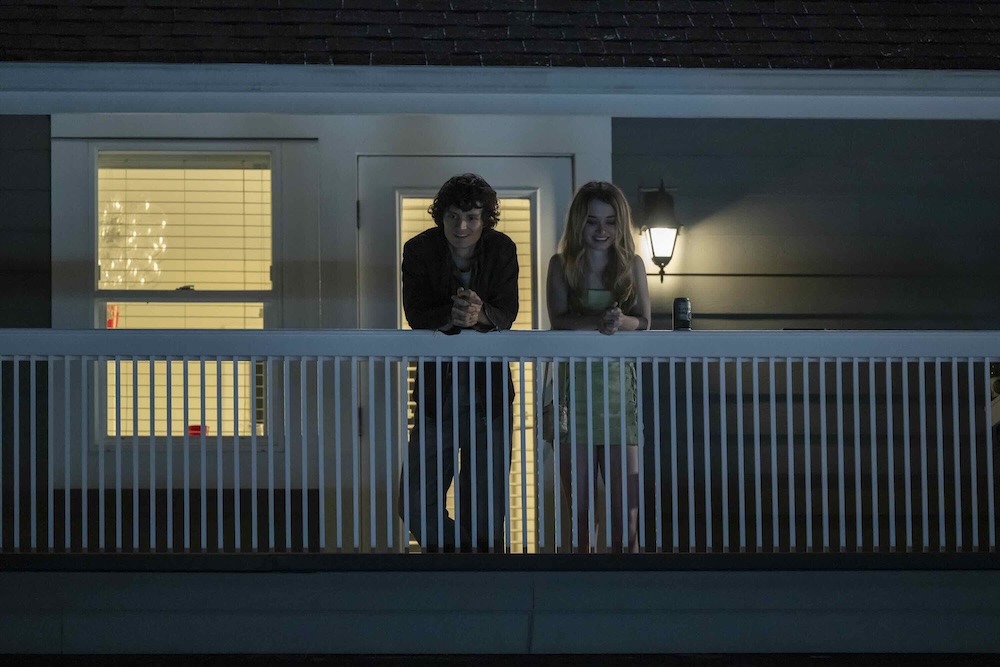
One of the most sympathetic characters is still Sue Snell (Siena Agudong), who does her best to befriend Carrie, even as she is facing her own problems.
But here too, the repercussions of her actions aren’t exactly straightforward.
It is Sue who inadvertently sets the stage for the epic conflagration after she convinces her boyfriend Tommy (Joel Oulette) to take Carrie to the prom.
The rest of the supporting players, including Matthew Lillard as Henry Grayle, the high school principal, Amber Midthunder as Rita Desjardin, the P.E. teacher and Billy Nolan (Arthur Conti), Hargensen’s juvie boyfriend, are all equally well-drawn and compelling.
The other, less-acknowledged character in the story is the Vancouver area itself. Eric Hamber Secondary School takes on the role of the fictional Ewen High School, with parts of Cloverdale standing on as the small town of Chamberlain, Maine. Burnaby and New Westminster also put in appearances in the series.
What is evil these days, anyway?
With greater room to extrapolate on the story’s major themes of teen alienation, bullying and religious fanaticism, director Flanagan adds in contemporary ideas like the ubiquitous forces of internet culture and social media. This opens an entirely new can of worms.
In some fashion, the teenagers are not even the true agents of chaos and evil. It’s the world they’ve inherited. From active shooter drills to viral videos to predatory pedophiles in positions of authority, the adults in the room are infinitely more problematic. After all, they created the world that kids are just trying to navigate.
This is explicitly evident in the character of Margaret White, Carrie’s mother, played by Samantha Sloyan. Again, earlier iterations of the character presented her as a religious zealot, consumed by ideas of sin and redemption. In this new version, she is still all those things, but now she has a platform called the internet to share her obsessions and incite followers to take up her lead.
Having homeschooled her daughter and isolated her from society, as well as the most basic facts of life and biology, Margaret is forced to contend with the world when her husband is accidentally killed at his job site. Carrie must attend public high school, and Margaret must get a job working as a cashier at the local big-box superstore.
As a Karen-on-steroids, Sloyan is a standout, ping-ponging between being an overprotective conspiracy theorist and religious loon to a would-be Instagram influencer. She makes videos, complete with a ring light, to warn other parents about the dangers of letting their kids lead independent lives. Her transformation, after getting a taste of online fame and attention, is perhaps even more frightening than her daughter’s.
One thing that becomes extremely clear throughout the series is that while some things have changed about high school, many things have gotten exponentially worse.
In the first episode, Carrie experiences her telekinetic powers during an active shooter drill at her new school. While her classmates greet the exercise with ennui and resignation, Carrie has no idea what is happening and loses her proverbial shit.
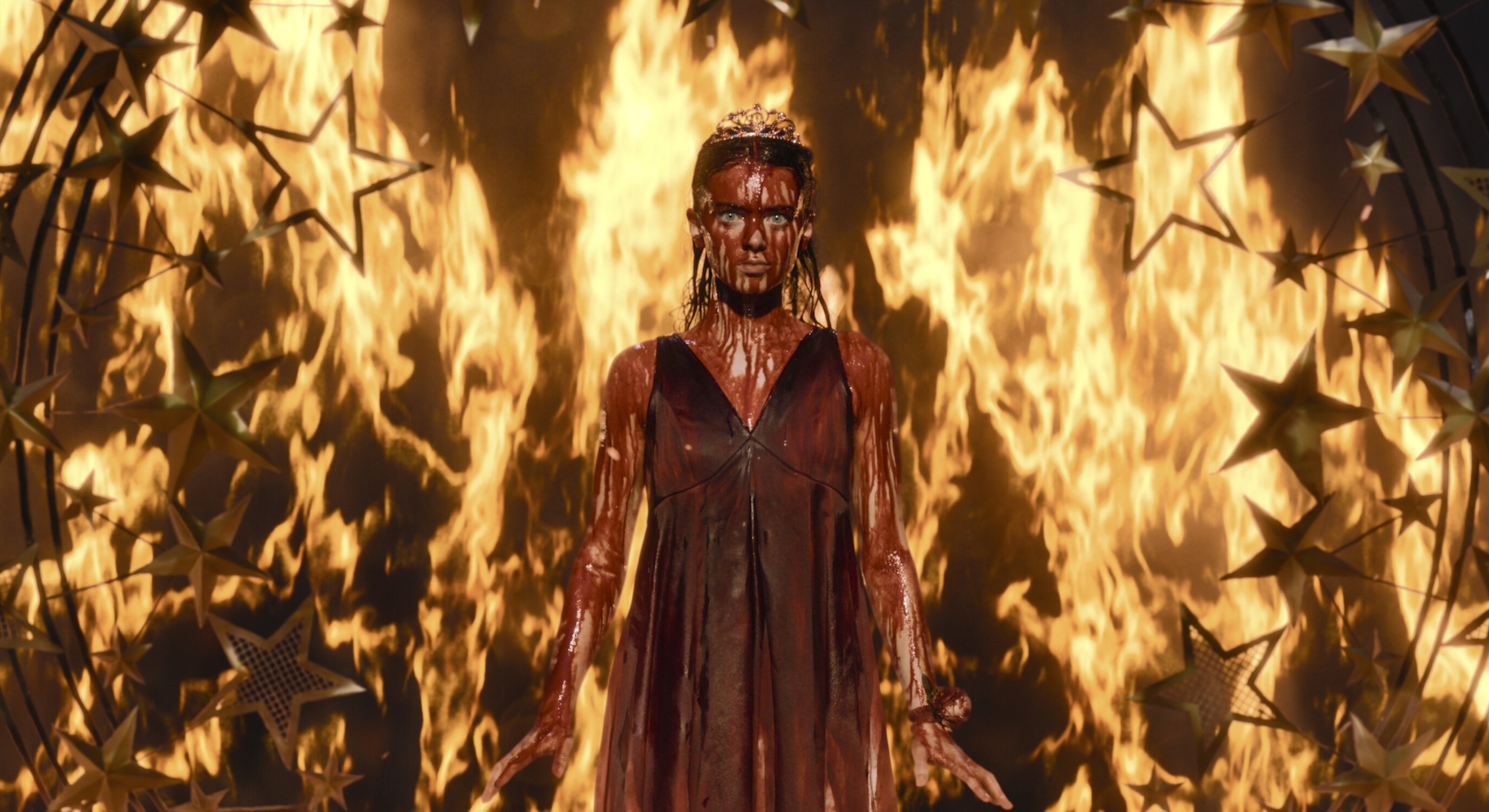
The original story functioned as a metaphor for the horrors of puberty and sexuality. This truly gets rolling when Carrie gets her first period after gym class.
Convinced that she’s bleeding to death, her howls of fear and misery are captured on a smartphone and shared in a viral video.
This humiliation is the catalyst for Carrie’s emerging abilities and before long, she is learning to move things with the power of her mind and revelling in her newfound telekinesis.
In all honesty, if I’d had psychic powers in high school, I would have burned down the place too, with nary a second thought. But that’s another story.
All the classic Carrie set pieces are duly trotted out. There’s the prom showdown, the buckets of blood, the final confrontation between mother and daughter. The series adds a shadowy network of other kids with different psychic abilities and a conspiracy network of adults determined to violently end them. The second season of the series has already been announced, so where Carrie goes from here is anyone’s guess.
The quality that lingers after viewing the first eight episodes is a terrible, foundational sadness, especially in the arc of the main character.
Carrie arrives as a bright and open girl, entranced by books and knowledge and thrilled at the possibility of making friends.
By the end of the series, she is an agent of total and utter annihilation.
The transformation that feeds the fury of the finale hit strangely. As one character after another meet their horrific end, it’s very hard to know who are supposed to feel sorrier for.
Is it poor Carrie White, who comes into her own sense of self, only to have it blow up in her face?
Is it her fellow teens, consumed by a society that values image and attention over everything else?
Or is it even terrible Margaret White, the mother from hell, forced to contend with a world and a child that she doesn’t understand anymore?
In all honesty, I’m not sure. The violence at the end of the story doesn’t feel epic or cathartic. It just feels awful.
Maybe that’s the true horror of the moment.
‘Carrie’ is now streaming on Prime Video. 








Tyee Commenting Guidelines
Please note that email notifications for replies are not currently working due to a software issue which may be resolved in a future update.
Comments that violate guidelines risk being deleted, and violations may result in a temporary or permanent user ban. Maintain the spirit of good conversation to stay in the discussion and be patient with moderators. Comments are reviewed regularly but not in real time.
Do:
Do not: