


 SHARE:

Premier-designate Lorne Doerkson has successfully built a big tent around many disparate elements. But that will quickly bring hard decisions.
None may be so consequential or revealing as his choice to be the province’s new Indigenous relations minister.
The Conservative Party of BC has promised to repeal the Declaration on the Rights of Indigenous Peoples Act, or DRIPA, the provincial law that — as courts have now made clear — binds other provincial acts to the United Nations Declaration on the Rights of Indigenous Peoples.
But, as Adam Olsen wrote in The Tyee, repealing DRIPA will be the easy part. The way the Conservatives go about that process and what they do after DRIPA is gone will have a profound impact on Doerkson’s reign and the government’s ability to avoid legal chaos.
Repealing DRIPA does nothing to address long-standing questions about Indigenous rights and title in B.C. or the legal and financial consequences of the province’s lack of treaties.
The province’s new Indigenous relations minister will shape the government’s approach, but Doerkson faces wildly different possible choices for the job.
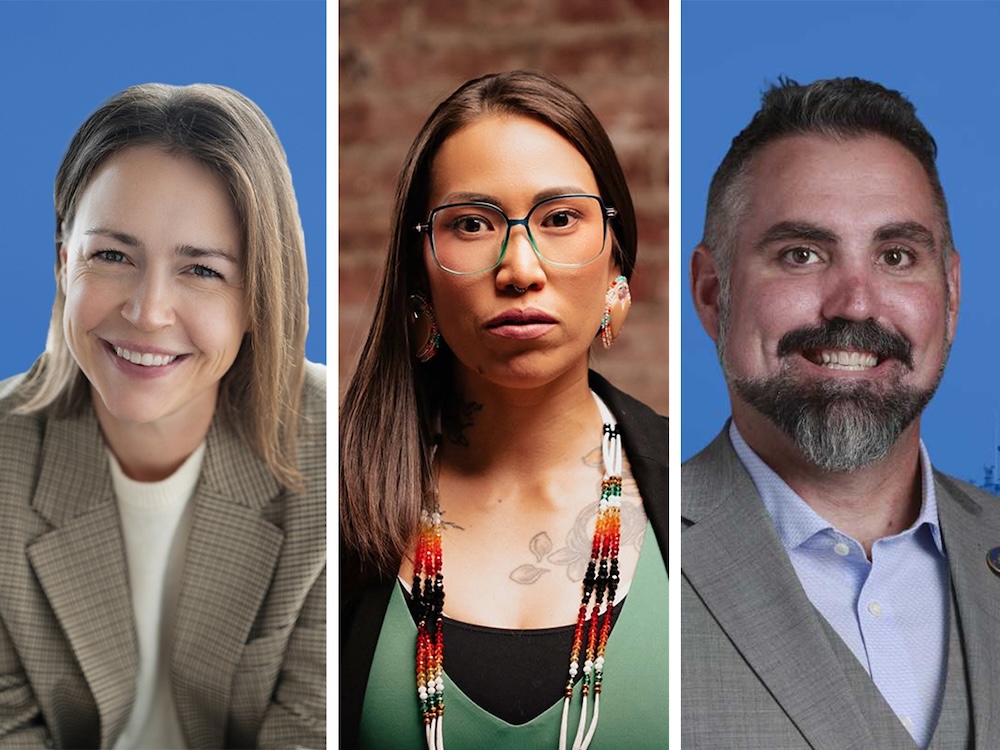
He could pick an anti-DRIPA stalwart like Caroline Elliott. He might go for a moderate like recent Indigenous relations and reconciliation critic Scott McInnis or Peter Milobar. Or he might choose Áʼa:líya Warbus, the Stó:lō Fraser Valley MLA who served as house leader under John Rustad and has suggested DRIPA needs to be replaced by a new legal framework and set of policies.
Doerkson’s choice will determine how the province navigates the profound legal, societal and political risks that accompany repealing DRIPA.
What put DRIPA in the hot seat
The campaign against DRIPA has largely been built on emotion and, often, misinformation. The act did not lead to the Cowichan decision that thrust property rights in the Richmond area into the news. Nor is it responsible for the constitutional duty to consult First Nations that has been repeatedly confirmed by Canada’s highest courts.
But it has created a new set of legal duties for the province. First and foremost, as the B.C. Court of Appeal ruled in December, DRIPA requires the province to align all of its existing laws with the United Nations Declaration on the Rights of Indigenous Peoples, including the declaration that “states shall consult and co-operate in good faith... in order to obtain their free, prior and informed consent before adopting and implementing legislative or administrative measures that may affect them.”
Although the Conservatives had pledged to repeal DRIPA prior to the ruling, the decision gave that commitment new political energy — especially after NDP Premier David Eby declared in April that DRIPA needed to be altered.
And while B.C.’s legislature unanimously passed DRIPA in 2019, the political tides have turned.
The NDP and the Conservatives have suggested DRIPA is increasing uncertainty surrounding economic development projects and property rights.
But more than 100 B.C. First Nations signed a joint statement in February saying that the act provides certainty because it sets out a framework for settling disputes and avoiding potential legal battles.
The statement said the push to change the act was rooted in fear, adding that DRIPA contributes to the dignity of First Nations and reflects the fact that the vast majority of B.C.’s land is unceded and was settled without treaties. The nations also emphasized that DRIPA increases economic certainty by further formalizing consultation rules.
“Repealing DRIPA is a slogan, not a plan,” said Nits’ilʔin Otis Guichon Sr., Tribal Chief for the Tŝilhqot’in National Government, in a statement released before the election. “Amending DRIPA will not make Indigenous people go away or erase our international human rights.”
But some Conservative First Nations politicians and leaders have agreed with the calls to repeal DRIPA. They’ve pointed to legal and logistical challenges, confusion over whether First Nations have a veto over projects on their land, and challenges arising from different nations’ overlapping territories and interests.
“It’s not working,” Warbus said last week during a panel discussion on APTN. “We need to find another approach.”
Whoever Doerkson chooses as minister will have to manage a potentially fractious relationship with the province’s First Nations if they hope to avoid a wave of lawsuits and disruptions that could derail the resource projects the new leader is so keen on advancing.
But Doerkson will also have to consider how his choice may affect the internal dynamics of a newly rebuilt big-tent party that still contains a lot of fractures and fissures along ideological lines.
Doerkson’s potential candidates
McInnis may be seen as Doerkson’s safest bet. McInnis was the party’s Indigenous relations and reconciliation critic for two years and managed to steer clear of personal controversy. He briefly left the party, saying he was concerned by links that had emerged between Kerry-Lynne Findlay’s leadership team and Alberta separatists. In September, when he rejoined the party, he called himself a “lifelong conservative” but said the province needed the Conservatives to represent British Columbians “from the centre of the spectrum to the right.”
Peter Milobar, a friend and ally of Doerkson’s, is a similar candidate for the job, as writer Robert Jago noted. But Doerkson may consider him for another prominent cabinet role.
Either McInnis or Milobar might suit Doerkson if he’s looking to take a middle way forward publicly while avoiding in-party fighting.
But the issue is so important and Conservative internal politics so fractious that he might see the need for a different approach, either to persuade B.C. First Nations to give him a chance or to assuage the party’s base and forcefully and quickly scrap DRIPA.
Given how adamantly and consistently the party has criticized DRIPA, Doerkson could appoint Caroline Elliott, who narrowly lost the party’s leadership to Findlay. The issue is of particular interest to Elliott, who has a PhD focused on the topic of Indigenous self-government and has vociferously opposed the use of Crown land as compensation to resolve outstanding land claims, calling such deals “odious.”
Elliott’s appointment as Indigenous relations minister would hand the file’s reins to a caucus member with huge support among the party’s base and could be justified by pointing to her academic background.
Her prolonged and public opposition to DRIPA and negotiations incorporating public land might make it difficult for Elliott to form the relationships with First Nations necessary to avoid public fights — and potential legal battles.
But Doerkson and his supporters could see value in appointing Elliott as minister to keep an ambitious would-be leader content and the party’s grassroots subdued.
Warbus would present the opposite risks and rewards. Although McInnis might be a safe bet, he lacks the personal cred of Warbus, who is the daughter of former lieutenant-governor Steven Point, a former Chief.
Warbus has played a key role in explaining her party’s anti-DRIPA position to the public, while also maintaining that the Conservatives must choose a new framework that recognizes Indigenous rights and title. Her appointment as Indigenous relations minister could function as an olive branch to skeptical B.C. First Nations.
Doerkson could turn to Warbus to prove that he and his party are serious when they say they want to replace DRIPA with something that is more workable but still reflects the need to settle old land issues and empower Indigenous communities. But her appointment could also bring a backlash from members of the party’s base who have expressed skepticism at Warbus’s Conservative bona fides and consider her insufficiently critical of — or even beholden to — the province’s First Nations.
An uphill battle
Doerkson faces a big choice, with large consequences. But he has a lot of work to do to persuade B.C.’s Indigenous leaders and communities that he is serious when he talks about the need to work with, rather than against, First Nations communities.
In early October, former Stó:lō Tribal Council president Doug Kelly wrote about the choice he was facing in the coming election. Kelly, who is Warbus’s uncle, wrote that he was proud of his niece, who briefly left the party amid September’s turmoil.
“I could easily support my niece as a candidate,” Kelly wrote. “I know her character, her intelligence and her capacity for public service. However, I must also consider the party she represents and what I see as a platform that reeks of intolerance. I am deeply troubled by the commitment to repeal DRIPA and by support within the Conservative caucus for dismantling existing human-rights protections.”
Doerkson faces an uphill battle to convince First Nations that his party respects their rights, understands the legal implications of the unceded nature of most of the province’s land and is serious about creating a post-DRIPA framework that can advance work on reconciliation.
It’s hard to overstate the stakes at play. Doerkson’s next minister could set the province on a course for legal chaos while pushing British Columbia’s century-old unceded-land question even further into the future. Or it could set the stage for diplomacy and resolution.
It could strengthen his leadership of his party, or lead to his removal.
The decision will be his. The consequences may resonate for decades to come. 
Read more: Indigenous, BC Election 2026, BC Politics







Tyee Commenting Guidelines
Please note that email notifications for replies are not currently working due to a software issue which may be resolved in a future update.
Comments that violate guidelines risk being deleted, and violations may result in a temporary or permanent user ban. Maintain the spirit of good conversation to stay in the discussion and be patient with moderators. Comments are reviewed regularly but not in real time.
Do:
Do not: