

 SHARE:

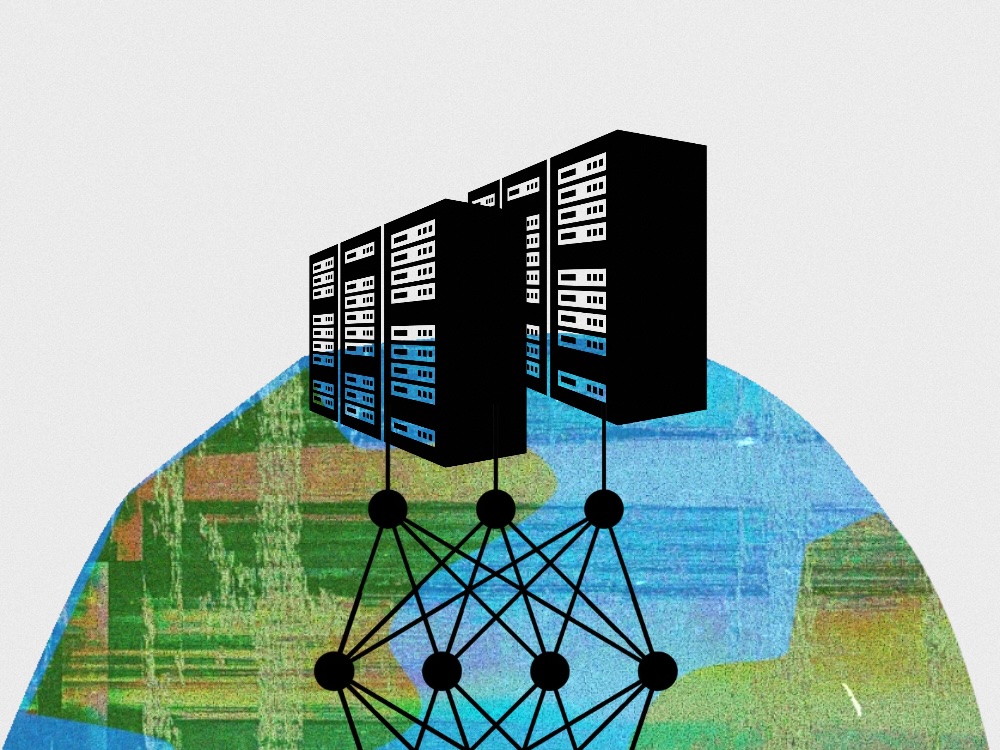
As the federal government and private industry invest billions in data centre construction across Canada, communities and researchers are wrestling with the potential energy and climate costs.
What will this nationwide buildout mean for our electricity grids, water resources and climate commitments? And what conditions, if any, would create the social licence for these developments?
On Nov. 19, join leading Canadian experts for “AI: Energy, Environment & Community,” a timely panel conversation examining the environmental, economic and social implications of Canada's expanding AI infrastructure.
The panel will discuss what a data centre buildout could mean for Canada’s environment, as well as what options local and national leaders have to regulate this new industry. They’ll also dig into the growing opposition in communities where companies are seeking approval to build.
Meet the experts
Paris Marx is a Canadian tech critic and host of the acclaimed Tech Won't Save Us podcast. He writes the Disconnect newsletter and is the author of Hyperscale: The Ambition and Excess of Big Tech's Data Empires.
Jeff Ward is the founder and CEO of Animikii Indigenous Technology, the company behind Niiwin, one of the world’s first data platforms built with Indigenous-first design. He is a founding board member of the Indigenous Tech Circle and also serves on the Organization for Economic Co-operation and Development Global Partnership on Artificial Intelligence experts working group on responsible AI.
Sean Mullin is a senior fellow at the University of Toronto's Munk School of Global Affairs and Public Policy, focusing on AI, sovereignty and economic competitiveness. As a special adviser to the prime minister, he helped launch the Canadian Sovereign AI Compute Strategy and authored “Sovereign by Design: Strategic Options for Canadian AI Sovereignty.”
Kate Harland is research director, clean growth, at the Canadian Climate Institute, with over 15 years of international climate policy experience. She has written extensively about aligning Canada's AI and electricity strategies and co-authored the institute's 2026 report “Power Play: How to Supercharge Canada's Clean Energy Advantage.”
The conversation will be moderated by Isaac Phan Nay, labour and work life reporter at The Tyee, who has covered data centre development from community and policy perspectives.
An audience Q&A will offer an opportunity to put questions directly to the experts.
Join the conversation on Nov. 19
“AI: Energy, Environment & Community” takes place Nov. 19 from 7 to 8:30 p.m. at the Djavad Mowafaghian Cinema in the Simon Fraser University Goldcorp Centre for the Arts, at 149 W. Hastings St. in Vancouver. Doors open at 6:30 p.m.
The event is co-presented by The Tyee, SFU Climate Innovation, SFU Public Square, the Dialogue on Technology Project and the Pacific Institute for Climate Solutions.
Canada's AI future is taking shape. Join the conversation about what it means for our environment and communities.
Tickets are $10 for general admission and $5 for Indigenous, senior and student attendees. A free livestream option is also available. Reserve your seat now for “AI: Energy, Environment & Community.” 
Read more: Science + Tech, Environment
This article is part of a Tyee Presents initiative. Tyee Presents is the special sponsored content section within The Tyee where we highlight contests, events and other initiatives that are put on either by us or by our select partners. The Tyee does not and cannot vouch for or endorse products advertised on The Tyee. We choose our partners carefully and consciously, to fit with The Tyee’s reputation as B.C.’s Home for News, Culture and Solutions. Learn more about Tyee Presents.






Tyee Commenting Guidelines
Please note that email notifications for replies are not currently working due to a software issue which may be resolved in a future update.
Comments that violate guidelines risk being deleted, and violations may result in a temporary or permanent user ban. Maintain the spirit of good conversation to stay in the discussion and be patient with moderators. Comments are reviewed regularly but not in real time.
Do:
Do not: