
 SHARE:

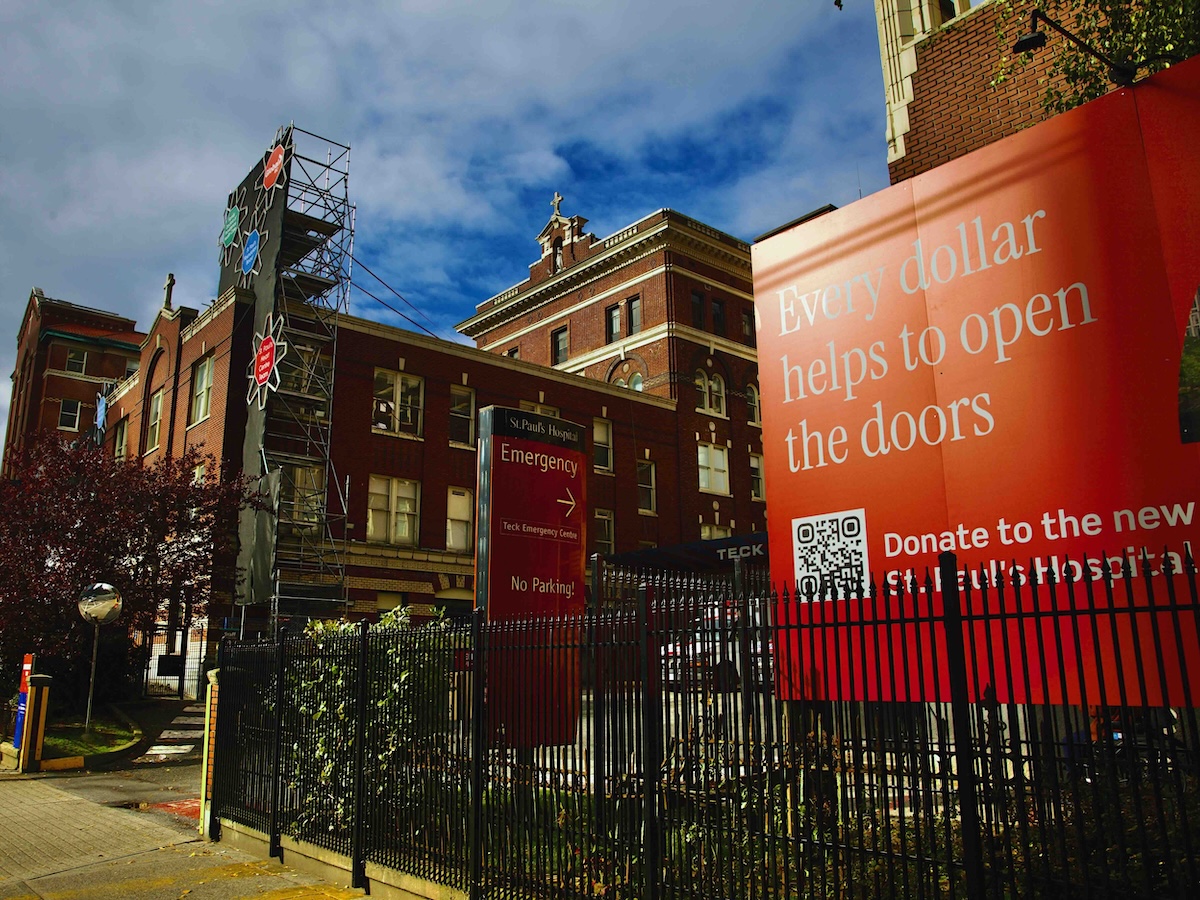
Vancouver voters may not have elected the municipal party responsible for the Oct. 17 ballot’s two plebiscite questions about cracking down on public drug use and increasing involuntary care.
But that did not stop residents from overwhelmingly voting in favour of strengthened enforcement against public illicit drug use — which is already illegal — and opening 100 involuntary care beds in the current St. Paul’s Hospital or a similar city site.
The previous ABC-majority council added the plebiscite questions to the ballot, at a cost of $500,000, just two months before the city council, park board and school board election. The two non-binding questions were:
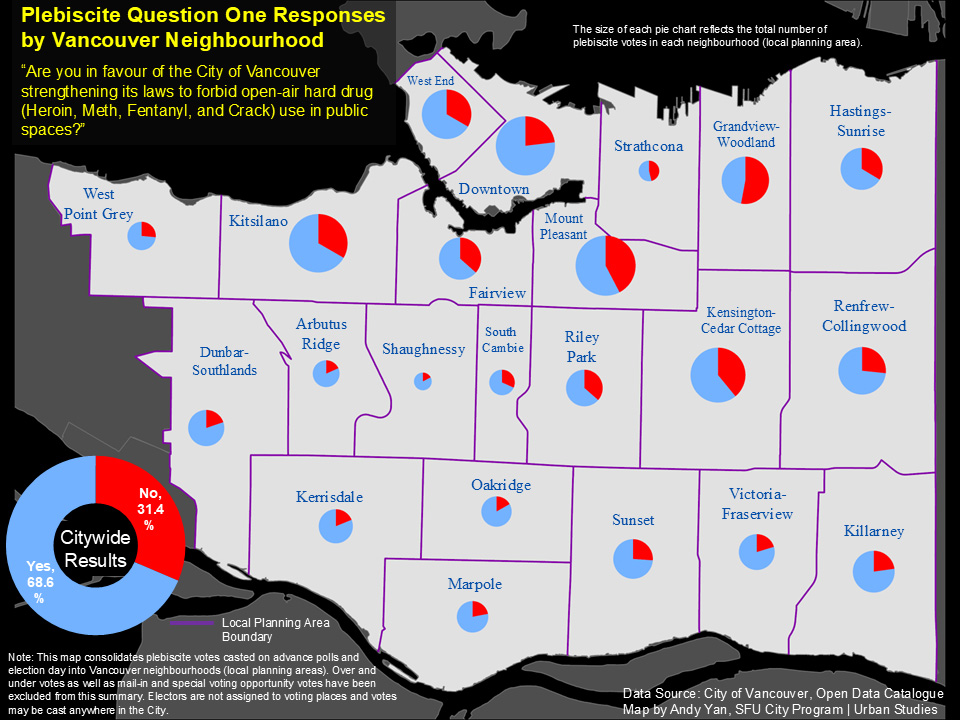
- Are you in favour of the City of Vancouver strengthening its laws to forbid open-air hard drug (Heroin, Meth, Fentanyl, and Crack) use in public spaces?
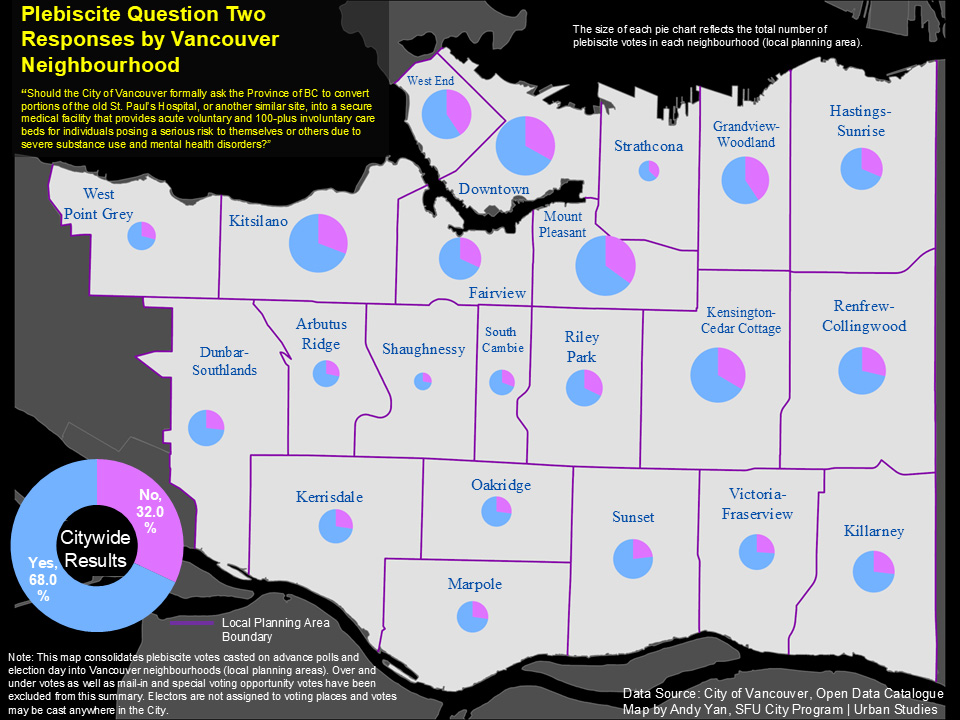
- Should the City of Vancouver formally ask the Province of BC to convert portions of the old St. Paul’s Hospital, or another similar site, into a secure medical facility that provides acute voluntary and 100-plus involuntary care beds for individuals posing a serious risk to themselves or others due to severe substance use and mental health disorders?
The plebiscite questions were introduced by then-mayor Ken Sim in an emergency August council meeting. Sim told news media and city councillors that the questions sought a mandate from voters to respond to overlapping public illicit drug use and mental health crises in Vancouver.
All six city councillors with Sim’s A Better City or ABC Vancouver party voted in favour of adding the questions to the ballot.
Then-opposition councillors Lucy Maloney (OneCity), Sean Orr (Coalition of Progressive Electors, or COPE), Rebecca Bligh (Vote Vancouver) and Pete Fry (Green) all spoke against adding the plebiscite questions. They accused Sim of playing to his party’s base of supporters during the election campaign.
Orr, Fry and Bligh walked out of the emergency meeting before the vote, leaving Maloney as the sole vote against adding the questions to the ballot.
The opposition parties’ election campaigns promised to increase the availability of affordable and supportive housing, raise the number of daytime shelter spaces, work on access to voluntary drug and mental health treatment, improve access to public bathrooms and support regulated overdose prevention sites.
Vancouver voters went on to elect Fry to the mayor’s seat and return Maloney and Orr to council. Four more Green councillors and three more COPE councillors were also elected.
Coun. Mike Klassen, who was re-elected to his seat, is now the sole ABC representative on council.
On Oct. 21 the city released the plebiscite results: 137,178 or 68.5 per cent voted yes on Question 1, and 135,509 or 68 per cent voted yes on Question 2.
The most “yes” responses to the question on increased enforcement were in ABC strongholds such as Dunbar, Kerrisdale and Yaletown.
But “yes” votes for the question on support for involuntary care beds in the current St. Paul’s Hospital location overlapped with some areas that overwhelmingly voted for the COPE, Green and OneCity council candidates — such as Mount Pleasant, which recorded the most “yes” votes in the city on that question, and Creekside and Trout Lake community centres in the Olympic Village and Grandview-Woodland neighbourhoods.
The results weren’t a surprise to the new city council.
“We already know people don’t like public drug use. We didn’t need to spend half a million dollars on this plebiscite,” Maloney said.
“And these results do not change the seriousness with which I take public safety, homelessness, the public poisoned drug crisis. And how it significantly impacts not just the unhoused residents themselves, but also their neighbours and our businesses.”
Coun. Stephanie Smith, a first time councillor with the Green Party of Vancouver, says public illicit drug use is happening because people don’t have access to safe, private homes or safe consumption or overdose prevention sites.
“ABC ran the plebiscite to exploit that crisis. They were trying to avoid their own record. They were trying to blame the people with the least power for [ABC’s] own failures,” she said.
Unpausing supportive housing
Vancouverites voted in favour of “strengthening” the existing laws against public illicit drug use. But they also elected all 12 candidates from COPE, a democratic-socialist party, to positions on city council and school and park boards.
“It shows that the public wants something to be done in response to the suffering that we are seeing,” COPE’s Orr said of the plebiscite and election results. Orr received the most votes of any councillor at 83,247, close to 5,000 more than the next most popular councillor, the Greens’ Annette Reilly.
“What that looks like, then... isn’t necessarily increased criminalization. But rather addressing the root causes of addiction, homelessness and street disorder.”
The Greens, COPE and OneCity council candidates all ran on platforms that included ending the city’s two-year pause on most new supportive-housing construction. Reversing the ban is Orr’s first council priority related to street disorder, he told The Tyee.
“Getting people inside, getting people the supports they need. Supports that include access to treatment on demand, that include access to mental health supports,” he said. Most people use drugs — and overdose — inside, he said. But people tend to notice drug use and overdoses more when they happen in public.
The city can provide land, but the money for building and operating supportive housing will have to come from the province, Orr added. Any change in how the law responds to drug use, especially in the wake of the recent Drug User Liberation Front win in the B.C. Supreme Court, has to come from the federal government.
“It’s very difficult, it’s a long process, it’s not a quick win,” Orr said, adding he didn’t see anything in the Conservative Party of BC’s platform that would prevent them from funding supportive housing.
“But we’re ready to do the work. We’re ready to tackle these nuanced and very difficult topics.”
A housing-first approach
As a parent raising teenagers in downtown Vancouver, Maloney said her family sees the consequences of failed government policy on homelessness, mental health and poisoned street drugs every day.
Maloney said her first order on council will be pushing for a housing-first approach to handling the overlapping poverty, homelessness, mental illness and public illicit drug use crises.
“We need to interrupt violence, send the right kinds of help and take a restorative justice approach — all the things we know actually work to meaningfully improve the situation, rather than just responding with extensive policing,” she said.
Accessible, affordable and adequate housing for people who are experiencing or at risk of homelessness is just one of what is referred to as the “four pillars” approach to respond to a crisis of substance abuse and drug poisoning: “prevention, enforcement, treatment and harm reduction.”
Enforcement, with a record $500-million 2026 police budget, and harm reduction, in the form of overdose prevention sites, clean needles and smoking kits, methadone and restricted safe supply of narcotics, have been implemented.
But the prevention and treatment pillars, consisting of everything from safe and affordable housing to voluntary detox, mental health and treatment beds, have not.
“If we want to improve the conditions on our streets, we need to actually implement the four pillars approach,” Maloney said, “not just haphazardly deal with one or two pillars, forget the rest and then just shrug our shoulders and say, ‘It’s not working.’”
Greens want an overdose prevention site downtown
The Greens, who hold the mayor’s seat and three council seats, want to restart the conversation around an overdose prevention site in Vancouver’s city centre, which has the second-highest overdose death rate in the health authority region.
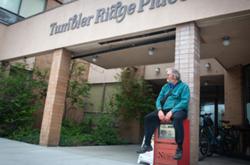
The previous ABC-dominant council pushed back against the opening of such a site at 900 Helmcken St. next door to a single-room occupancy hotel that neighbours already had issues with because of public drug use and people experiencing mental health issues.
However, many residents supported ABC’s suggestion that the current St. Paul’s Hospital just a block away should be converted into a 100-bed involuntary care facility. Kareem Allam, who ran for mayor with the Vancouver Liberals and strongly opposed the idea, warned the aging hospital is not seismically sound, has asbestos in the walls and is not set up to offer patients individualized care in their own room.
None of the COPE, Green and OneCity councillors The Tyee interviewed planned to ask the province to keep St. Paul’s open as an involuntary care facility.
St. Paul’s Hospital is set to be replaced by a new hospital at the north end of False Creek. Smith noted the new hospital, which will open in 2027, will have 90 acute and tertiary mental health-care beds, a blend of both voluntary and involuntary care.
In the wake of community and political opposition, Vancouver Coastal Health cancelled the overdose prevention site at 900 Helmcken.
Smith said the city plans to work with the health authority and neighbourhood residents to ensure overdose prevention sites are located where they are needed. But wherever the next overdose prevention site is located, it will not be at 900 Helmcken.
Fry and the Green councillors will push for city regulation and oversight of harm reduction services under a motion Fry introduced to council this summer, Smith said.
“We want to be sure that those community resources keep the whole community safe,” she said, referring to people who need to use harm reduction services as well as neighbouring residents and businesses.
“Community impacts have been an outcome of sites being under-resourced: too small, not having the facilities that people need. For example, only [supporting] injection when people are inhaling drugs. The sites haven’t had places for people to stay after they use.”
OneCity, COPE and the Greens also all support the restorative justice framework for Vancouver, which would provide some non-carceral options for repeat offenders of public illicit drug use, for example. Orr said that support would include providing city funding for implementing the framework.
As well, COPE and the Greens support the idea of peer response teams to non-violent, poverty-, drug- and mental health-related crimes or street disorder.
Instead of sending police, a team of people who have lived experience, paired with professionals such as social workers, nurses or paramedics, would respond to people in distress. Similar systems are already in place in Oregon and parts of B.C.
“That’s something we can look at pretty quickly,” Orr said. “Something like that for Vancouver would be huge.” 
Read more: Health, Municipal Politics





Tyee Commenting Guidelines
Please note that email notifications for replies are not currently working due to a software issue which may be resolved in a future update.
Comments that violate guidelines risk being deleted, and violations may result in a temporary or permanent user ban. Maintain the spirit of good conversation to stay in the discussion and be patient with moderators. Comments are reviewed regularly but not in real time.
Do:
Do not: