



 SHARE:

Last February, when Tumbler Ridge news reporter Trent Ernst got a tip that something was happening at the local high school, he headed down to investigate.
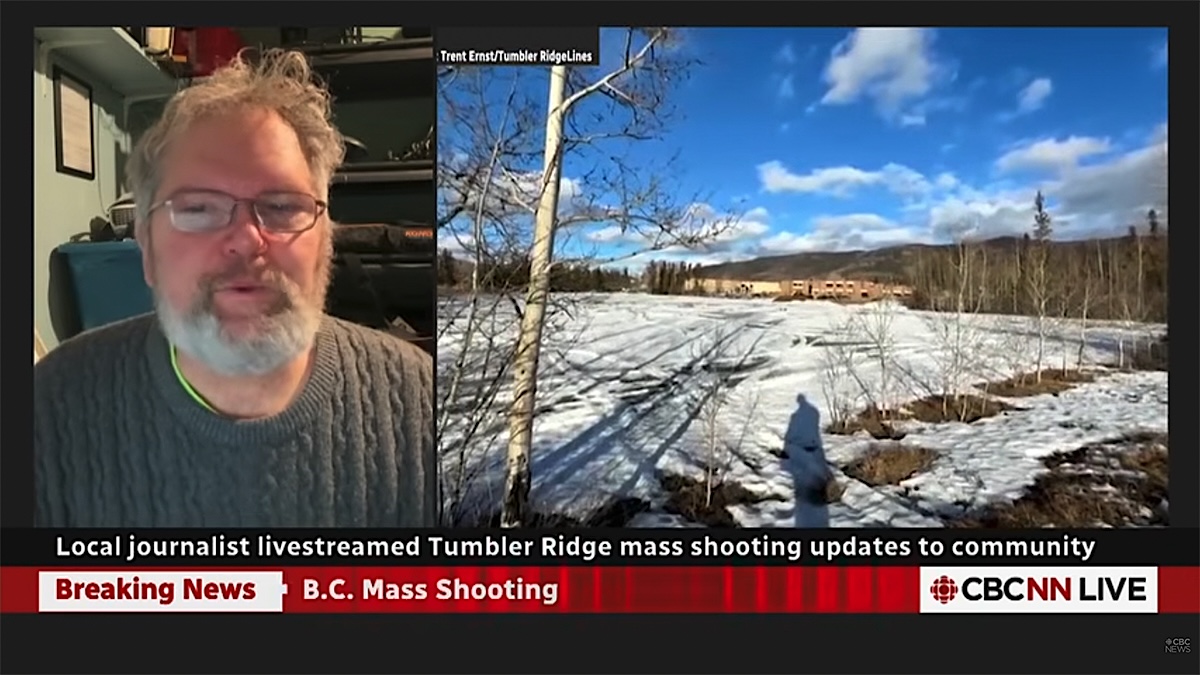
Ernst, who runs the town’s only media outlet, Tumbler RidgeLines, had spent time substitute teaching at the school. He knew the protocols enough to expect the disturbance to be a drill or a false alarm. But as municipal workers barricaded the street and police entered the school, he pulled out his phone and began livestreaming.
During his 20 years reporting in Tumbler Ridge, Ernst has covered things like dinosaur discoveries and, in his words, “local kids being cute and playing soccer.” He describes much of his reporting as stories about “the details you need to navigate life in Tumbler Ridge.” But they rarely garner interest outside the northeast B.C. community of 2,400 people.
This time was different. As he went live, an alert popped up on his phone. The RCMP was warning of an active shooter and telling residents to shelter in place. Ernst’s livestream quickly attracted hundreds of viewers.
As the video drained his phone battery, Ernst posted a final message warning residents to stay indoors, snapped photos at a nearby residence where police vehicles were present, then returned home to keep working.
“The next 36 hours, I tossed myself out as the sacrificial bone for the news hounds to chew on,” he says. “I didn’t really leave my computer, because I was either livestreaming to people or I was talking to reporters.”
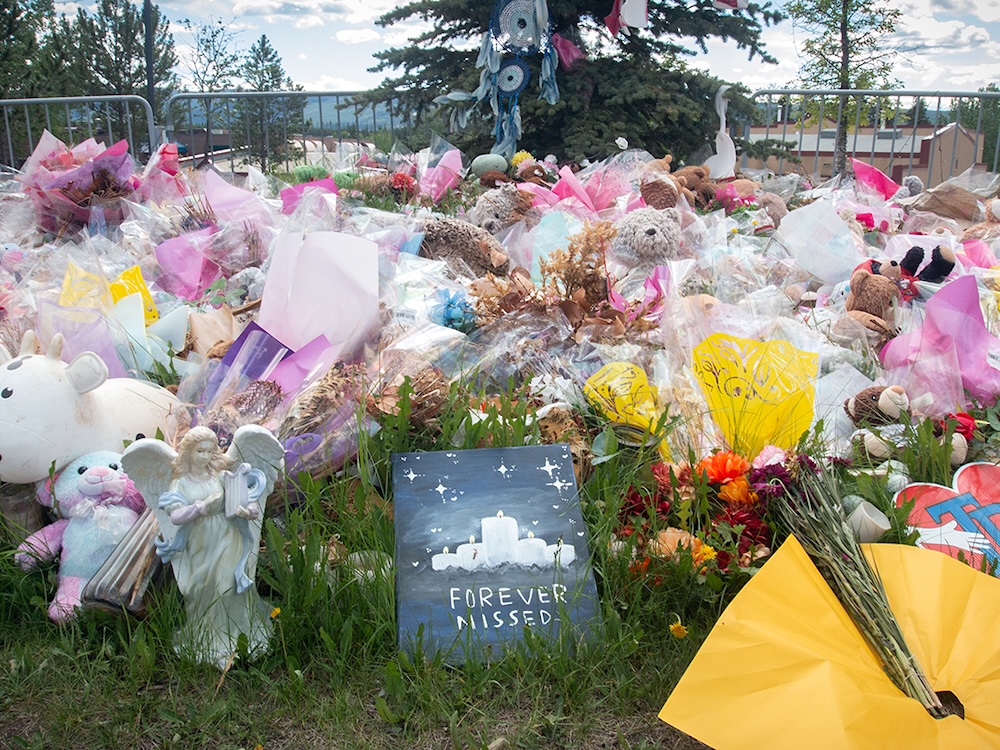
On Feb. 10, nine Tumbler Ridge residents died when a local teen shot her mother and half-brother in their home before heading to the school, where she killed five students and an education assistant, then turned the gun on herself. The Tumbler Ridge tragedy is among the worst school shootings in Canadian history.
The shooting attracted international attention. In the days that followed, Ernst was interviewed by media all over the world. His livestream video was picked up by news outlets such as the BBC, ABC, CNN and the New York Times. In his typical self-effacing style, Ernst describes it as “the most mediocre footage to be world-renowned.”
Ernst is, in fact, a skilled photographer and a gifted writer with a knack for a sardonic lede and a well-placed metaphor. He has lived in Tumbler Ridge for decades and his love for the community is matched by his passion for journalism.
But reporters like Ernst are becoming increasingly rare. Northeast B.C. has been described as a “news desert” after a series of newspaper closures over the last decade. With the next nearest working journalist almost 120 kilometres away in Dawson Creek, Ernst was the first reporter on the ground to provide verified, first-hand information as February’s shooting unfolded.
But small-town journalists aren’t only valuable when international news breaks. As Ernst points out, they provide the details that a community needs to function. Local news reporters are often the only ones sitting through council meetings and courtroom hearings, and their reporting contributes to a sense of shared identity and community cohesiveness.
The authors of a 2019 report on small-market newspapers wrote that such publications help to create a sense of community, making them “significant contributors to vibrant, well-functioning local democracies.” A 2022 study found a correlation between the health of a community’s local newspaper and municipal voter turnout.
But small-town news capacity has been in steep decline in recent decades.
The town’s previous newspaper, Tumbler Ridge News, had been operating for about a decade when Ernst began working there in 2006. When owner Lorraine Funk died in 2016, “the paper died with her,” he says. Ernst found himself an unemployed journalist in a coal-mining town. “Those skills do not translate well to driving a big truck,” he says.
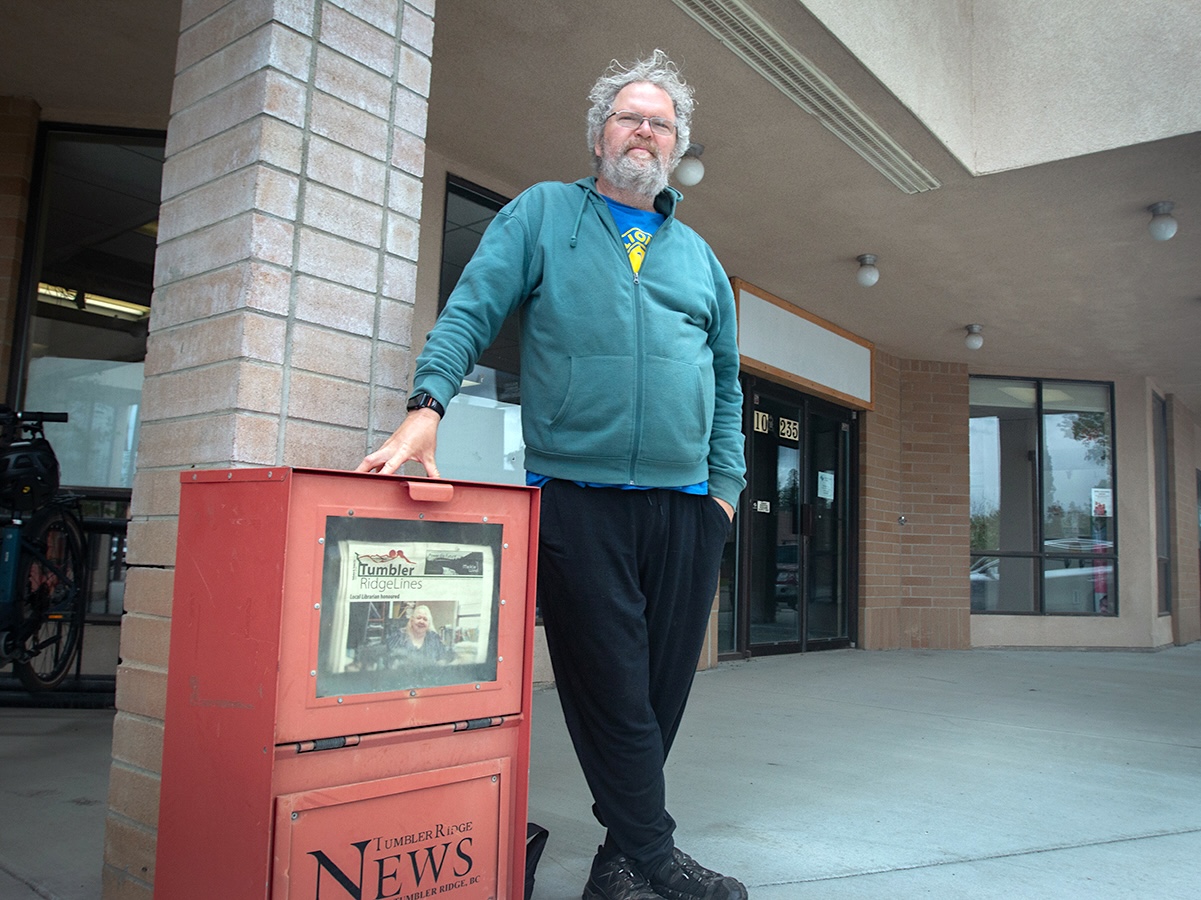
So, in 2018, he started Tumbler RidgeLines. Ernst is the entire editorial department for the eight-page newspaper, which publishes online and every other week in print.
Ernst and Tumbler RidgeLines may embody the future of local journalism, according to Tyler Nagel, a Southern Alberta Institute of Technology journalism instructor whose research explores how the decline in local news capacity is affecting communities, particularly in remote regions.
But Nagel says reporters like Ernst who work alone in remote areas carry a “heavy burden” as the sole source for verified information.
“I think it takes a special person, bordering on heroism, to do that,” he says. “It’s easy to focus on the crisis and then underplay the effort and grit it takes to do that week after week by yourself in the middle of nowhere.
“Trent is no less essential now than he was during the shooting.”
Rural areas are losing local voices
Ernst’s proximity to the Tumbler Ridge shooting gave him a unique perspective as the news cycle continued to roll out beyond the small community — and as misinformation quickly began to circulate online.
The errors ranged from mundane (northeast B.C.’s unique time zone caused some initial confusion) to malicious, as the shooter’s trans identity generated disinformation and directed hate toward the LGBTQ2S(IA)+ community. When internet sleuths misidentified an Ontario woman as the shooter, Tumbler RidgeLines was quick to point out the mistake.
Ernst also reminded readers that the biggest local news story prior to the shooting had a direct link to the tragedy. In September 2025, the Northern Health Authority, which runs the region’s hospitals, announced that it was immediately reducing emergency health-care services in Tumbler Ridge to daytime hours only. It meant that, for five months, the community had been without medical care overnight and on weekends.
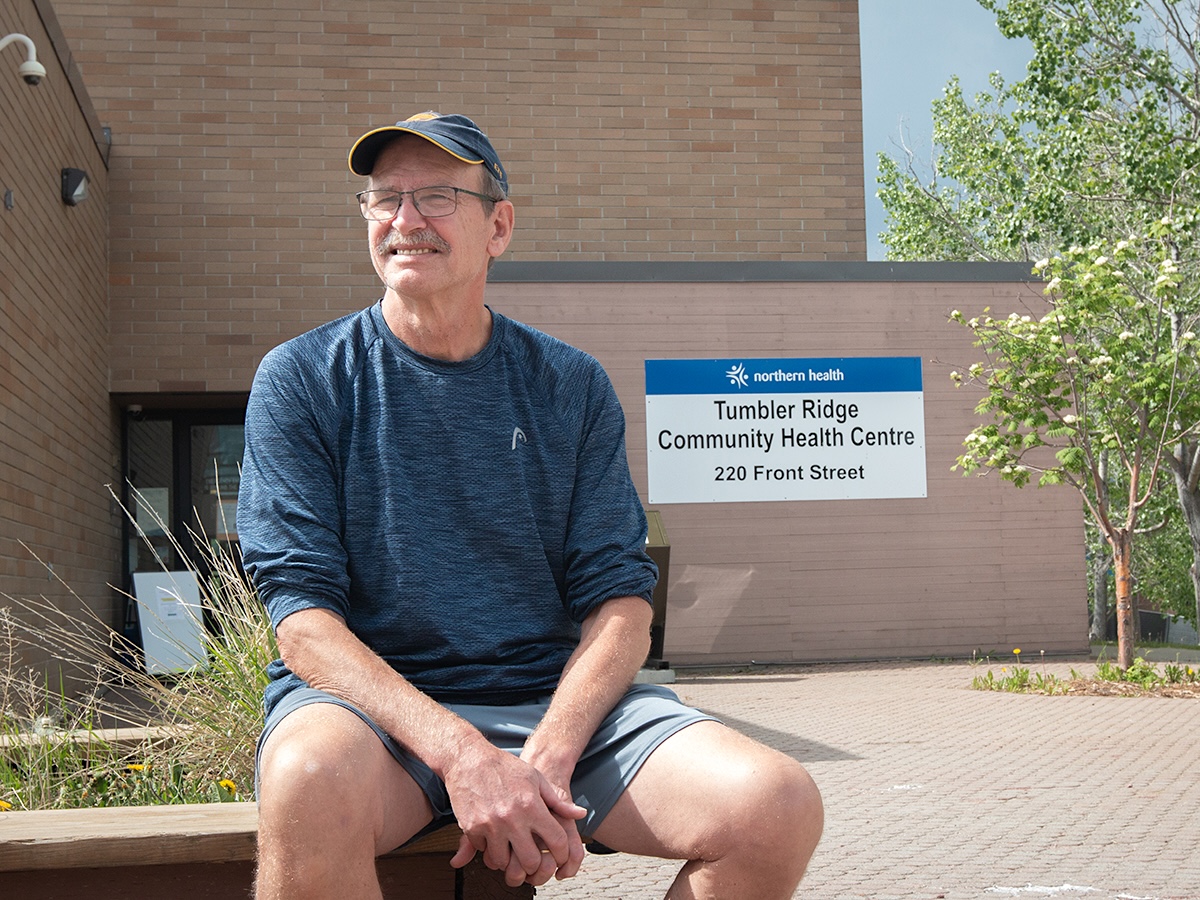
As horrific as the shooting was, local physician Dr. Charles Helm shudders to think about how much worse it could have been.
“Can you imagine if, instead of being in the school during a weekday, it had happened in the community centre at a hockey game on a weekend?” he says. There was potential for a scenario where “the roads are bad, weather’s terrible, so you can’t get helicopters in, you can’t get ambulances out and you’ve got no emergency room.”
The decline in local news has paralleled the decline in rural health-care services across B.C., says Paul Adams, the executive director of the BC Rural Health Network. In both cases, the shift from local to regional decision-making has led to changes that don’t always meet community needs.
In addition to emergency health care, northeast B.C. is lacking in mental health resources. Just as the term “news desert” is used to describe the drying up of local news media, the region was labelled a “mental health desert” after the Tumbler Ridge shooting to explain northeast B.C.’s lack of access to services.
Adams says supports that could have helped the shooter — who turned to AI to discuss carrying out the horrific shooting after years of trying to access mental health supports — are disappearing across the province as services and decision-making are centralized.
“Once you start taking out the experts from the small-town structure, then you remove that local knowledge,” he says. “I view Tumbler Ridge as the canary in the coal mine.”
One year after Northern Health cut 24-hour emergency care in Tumbler Ridge, it has reinstated weekend daytime services. But overnight care remains a one-hour drive away in Chetwynd or Dawson Creek. Helm, who acts as medical adviser to the District of Tumbler Ridge, has been working with the municipality and the health authority on a solution.
He credits Tumbler RidgeLines, which published a half-dozen open letters he submitted, for fostering local discussion and leading to broader coverage by media outlets in Fort St. John and Prince George.
“I just don't think you can underestimate how important that is,” he says.
When Ernst started Tumbler RidgeLines, he grappled with how to create a sustainable business model and monetize online content.
“I knew that [advertising] model had kind of fallen away,” he says. “My goal was to try to find something that would work.”
He didn’t want to charge for newspapers or use a paywall, which could create a barrier to accessing news and push some residents toward the “rumour, hearsay and whatever mush that you get on Facebook.”
He also didn’t want to be beholden to a single advertiser, fearing that it could compromise editorial independence. For example, when he reported critically on a local mine, he says, the company stopped advertising for two years.
Instead, he says, “I want the community to support the paper.”
He estimates that if every household in Tumbler Ridge contributed at least $3.25 an issue, he could cover his costs without relying on advertising. But persuading people to pay for journalism is an ongoing challenge. The Reuters Institute estimates that only 12 per cent of Canadians pay for online news. While Tumbler RidgeLines accepts donations, community contributions make up just five per cent of revenue. The rest remains advertising.
Ernst admits that he barely keeps things afloat some issues.
“It’s like flying a kite,” he says. “It’s just almost enough wind and you can kind of keep it up.”
The roughly 800 newspapers he prints every other week take up a significant chunk of his budget. But he plans to continue with print publication. “The strength with online is you have a wider broadcast,” he says. “But my schtick is hyper-local.”
Besides, he jokes, “people need to be able to start their campfires.”
‘I couldn’t face a blank page’
Local reporters also deal in another currency: trust.
When the media storm hit Tumbler Ridge earlier this year, stories quickly circulated about reporters behaving badly — knocking on doors with cameras rolling, posing as parents to get information and sneaking into a community centre that had been declared a media-free zone so that residents could gather to grieve. The experience left a lingering distrust of outside media.
As a reporter, Ernst understands the motivation.
“I know you want to get the story,” he says. “But you’re doing these things that are not engendering goodwill between you and the community.” Instead, his instinct was to take a step back and give people space.
Tumbler Ridge Mayor Darryl Krakowka can’t count the number of reporters who descended on his community in mid-February. But he can quickly count on one hand the ones he trusts — most, including Ernst, live within a two-hour drive. “That’s usually the only ones I’ll talk to,” he says.
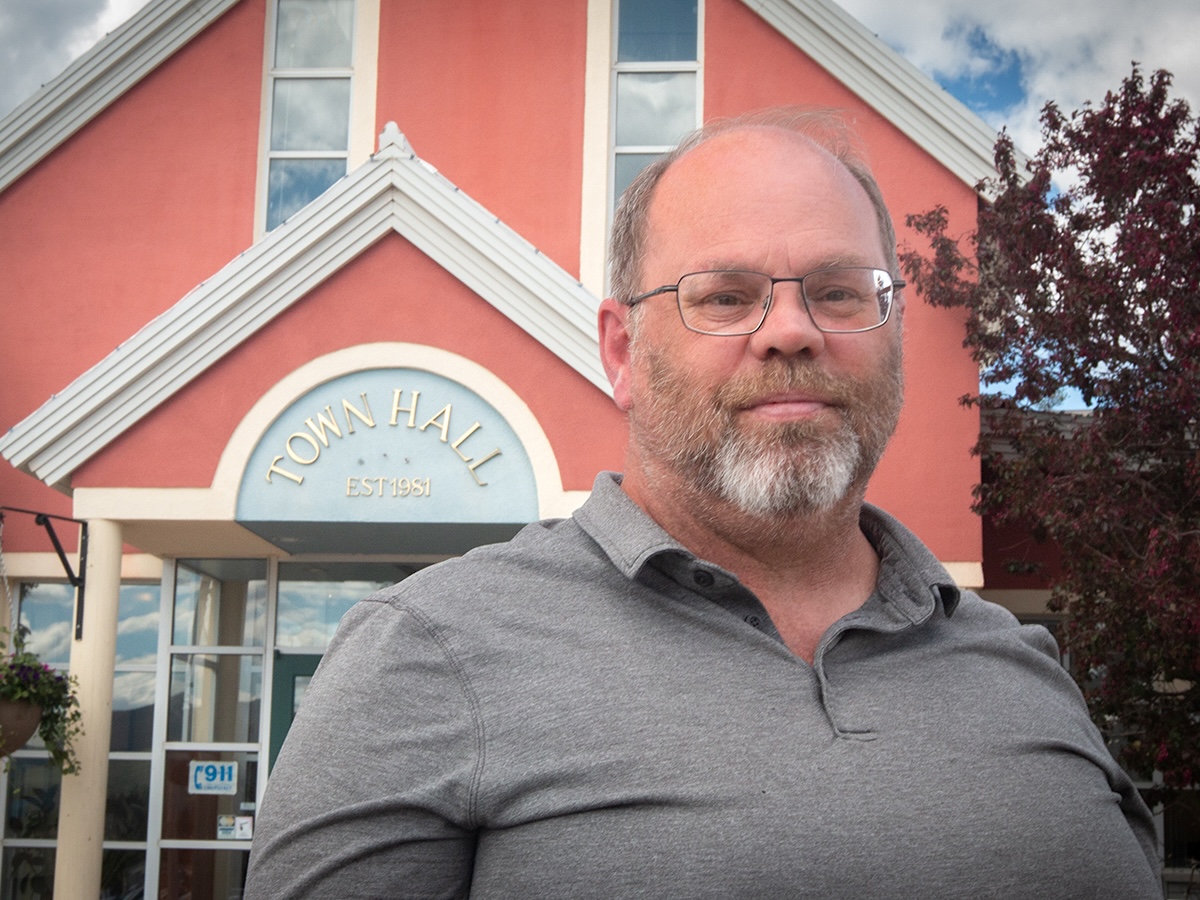
While Ernst’s proximity to the community provides an advantage, it also makes reporting difficult when the unimaginable happens. Once he surfaced from those dizzying initial days after the shooting, he found that he couldn’t write.
“I couldn’t face a blank page,” he says. “I would go to write a story and I just couldn’t.”
Among the people who offered support was Naomi Larsen, former editor of the Chetwynd Echo, 100 kilometres to the north. The newspaper closed in 2016, but Larsen came out of retirement to support Ernst.
In the days that followed, she contributed stories about Chetwynd’s vigil for Tumbler Ridge, Lt.-Gov. Wendy Cocchia’s throne speech, crisis support for local residents and updates from the RCMP.
“I’m not going to ever leave him hanging,” she says.
In the print issue that followed the shooting, Ernst waived advertising fees for anyone wanting to publish messages of support. A few days later, when a group of Canadian journalists established a GoFundMe to support him, Ernst did what any reporter would do — he verified it. Then, before the fundraiser reached its goal, he quickly cut it off.
“I didn’t want to look like I was using the tragedy in an exploitative manner to make money for myself,” he says.
Ernst subsidizes the newspaper by working odd jobs. In addition to substitute teaching, he has managed the local visitor information centre and this summer he worked as the local campground attendant. He also has a photography business and is helping to edit and publish a book about Tumbler Ridge’s early days.
While the media storm has passed, Ernst remains. He continues reporting on the fallout that has followed the shooting, such as the high school demolition, lawsuits against OpenAI, which failed to alert authorities about the shooter’s online activity, and the arrest of an alleged accomplice in the United States.
But he’s also still here covering elections, hockey and health care.
“You spend five or six years going, ‘Is this really worth it?’ And then what happened in February happens and suddenly, yes, it’s worth it,” he says. “The fact that I’ve been here doing this suddenly becomes justified.”
This is the fourth story in a five-part series produced through the support of the Government House Foundation and Jack Webster Foundation through the Lieutenant Governor’s BC Journalism Fellowship. The funders did not provide any editorial direction. 









Tyee Commenting Guidelines
Please note that email notifications for replies are not currently working due to a software issue which may be resolved in a future update.
Comments that violate guidelines risk being deleted, and violations may result in a temporary or permanent user ban. Maintain the spirit of good conversation to stay in the discussion and be patient with moderators. Comments are reviewed regularly but not in real time.
Do:
Do not: