
 SHARE:

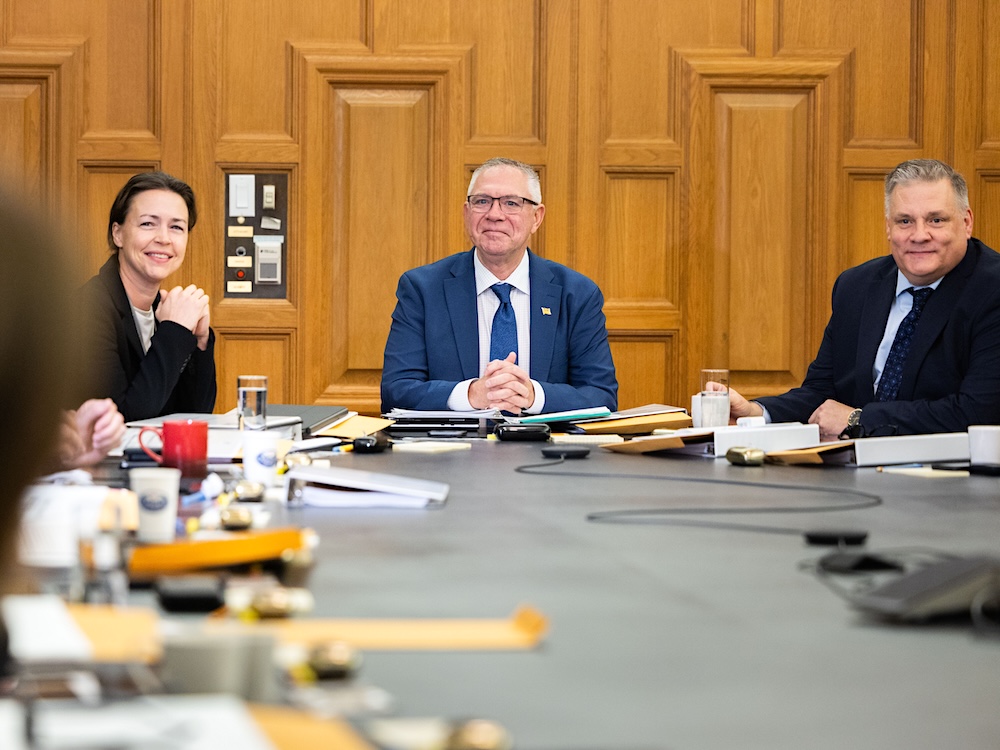
Ahead of the new B.C. government’s first cabinet meeting Wednesday, Premier Lorne Doerkson issued letters to each minister outlining what they are expected to work on.
The mandate letters include many of the promises the Conservative Party of BC made during the election campaign, in some cases adding detail.
They include removing SOGI 123 anti-bullying materials from schools, ending the safer drug supply program, scrapping the CleanBC plan for reducing greenhouse gas emissions and repealing the Declaration on the Rights of Indigenous Peoples Act, or DRIPA.
Not all of what’s in the letters is a repudiation of the previous NDP government, but much of it is, Doerkson said. “We’re committed to a different direction and British Columbians have given us a mandate to do exactly that.”
Doerkson’s letter to Finance Minister Peter Milobar directs him to “immediately appoint an independent panel to review the Province's true fiscal position and report its findings publicly.”
It calls on him to “chart a realistic return to fiscal balance over time, with spending benchmarks and guardrails as the economy grows,” and to protect frontline workers while trimming administrative and management staff.
On ICBC the letter to Milobar provides more nuance than the Conservatives campaigned on, saying he should “keep auto insurance affordable by maintaining ICBC as a public option and preserving no-fault for the vast majority of claims, while giving catastrophically injured victims access to legal representation, with capped legal fees so lawyers’ costs do not drive up premiums or reduce what accident victims receive.”
The letter does not name the speculation and vacancy tax but does say Milobar is to follow through on the promise to increase the personal income tax exemption and to appoint a panel to review B.C.’s tax system and report on it within six months.
He’s instructed to undo the changes the NDP made to property tax deferrals in last year’s budget “so seniors are not taxed out of their homes and can stay in their communities.”
The nine priorities set for Attorney General Caroline Elliott include repealing DRIPA and a related part of the Interpretation Act “with a transition framework respecting constitutional obligations to First Nations, with support from the Minister of Indigenous Relations and Reconciliation.”
Elliott is to “introduce a Property Rights Defence Act to protect private property rights and uphold the validity of B.C.'s land title system,” a response to the Cowichan decision that found Aboriginal title underlies parts of Richmond that include private properties. And she is to remove the directives that limited the arguments government lawyers could make in cases involving Aboriginal title and property rights.
Doerkson’s letter says Elliott is to develop an “Aboriginal Title Transparency Act” that will compel the government “to publish information about active claims, negotiations, legal actions and agreements affecting public or private land before they become binding.”
Other directions include hiring 50 more Crown prosecutors and appointing 20 more trial judges and making a law to ensure provincial and municipal elections are held at least 60 days apart, though Doerkson declined to say which he thought should move and that he would leave it as a “surprise” for later.
Health Minister Ryan Peterson’s letter includes 15 priorities.
A decade after a former BC Liberal health minister declared the toxic drug crisis a public health emergency, Peterson is to “work with the Minister of Public Safety and Solicitor General and the Minister of Social Development to end the ‘safe supply’ approach to drug use; expand drug courts; move funding to prevention, treatment and recovery; stop forcing drug-friendly facilities on communities; and review and reform overdose prevention sites and injection sites.”
He’s to “expand timely access to psychiatric services, community mental-health care, crisis response and residential treatment, with stronger early intervention,” and “expand detoxification, addiction treatment, and aftercare, including appropriate mandatory care for individuals at serious risk of harm.”
Keeping rural emergency rooms and maternity wards open, identifying opportunities to use technology to reduce paperwork and reworking the Health Professions and Occupations Act are among Peterson’s tasks.
Doerkson has asked him to “launch the 100-day Patients First review to identify reforms from other universal public systems that cut waits, expand capacity, keep ERs open, and strengthen rural services, without user fees.”
The mandate for Claire Rattée, the social development minister, includes increasing disability assistance rates by $100 a month, raising the earnings exemption before which payments are clawed back and establishing an annual review of assistance rates.
“Work with other Ministries to review and co-ordinate programs to help ensure effective outreach and support services for individuals experiencing homelessness or at risk of homelessness,” her letter says. “This review should include the full spectrum of programs throughout the cycle of treatment and recovery.”
The instructions to Education and Child Care Minister Lynne Block include removing the SOGI 123 anti-bullying resources from classrooms, restoring letter grades in grades 4 to 9 and mandating the daily singing of “O Canada” in classrooms.
On child care, the premier has asked her to “ensure independent child care providers can participate equally in expanding $10-a-day spaces” and to “prioritize new $10-a-day spaces for families with the greatest need and fewest alternatives.”
The 12 priorities given to Kiel Giddens, the forests minister, include providing at least 45 million cubic metres of harvest permits per year.
He’s also to “resolve the old-growth deferrals by protecting original old growth and the most endangered and rarest ecosystems while returning the remaining land to the working forest.”
Based on the recommendations of a technical advisory panel, the previous government temporarily deferred logging of 1.7 million hectares of the big-tree old growth and about 900,000 hectares of rare and ancient old growth.
Larry Neufeld, the minister of energy, mines and petroleum resources, has instructions that include removing “barriers to natural gas-fired electricity generation and industrial self-generation, ensuring all viable energy sources are considered.”
Natural gas is also included in the list of power sources he’s to pursue to meet electricity demand, alongside hydro, geothermal, wind and solar.
Citizens’ Services Minister Bruce Banman is to restore the public directory of government officials and “develop a provincial AI strategy to promote innovation, economic growth and responsible AI adoption and work with the federal government to ensure British Columbia is a partner in developing Canada’s AI strategy.”
Minister of Local Government, Housing, Sport and Culture Cathie Ounsted’s mandate includes undoing some of the former NDP government’s housing measures, including rules that allowed multiplexes in residential neighbourhoods in many communities.
“Restore municipal authority over the location, form and character of housing, respecting local Official Community Plans and community priorities,” Doerkson’s letter to Ounsted says.
He has also told her to “work with local governments to review municipal bans on gas connections and mandatory heating technologies” and to “celebrate British Columbia’s rich history and the contributions of people from all backgrounds who built our province through the work of provincial museums, cultural institutions and heritage programs.”
Minister of Public Safety and Solicitor General Jessy Sahota’s assignments include to “add police capacity: 250 more police recruits, 500 more RCMP, 30 sheriffs and 150 civilian staff over five years, and increase peace officer authorities.”
All of the letters can be found on the government’s web page for the executive council and parliamentary secretaries.
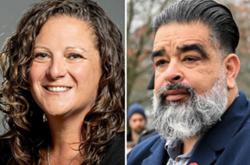
“My initial thoughts are that the letters reflect a real lack of clarity about what their plan is for programs for British Columbians,” said Jennifer Whiteside, the interim leader of the NDP. “I don’t see a reflection of the primary concerns for people that I hear: health care, housing, affordability.”
BC Green Party Leader Emily Lowan said: “British Columbians need immediate relief from the affordability crisis. They need social housing, we need a better bus system, we need effective health care.”
Judging from the mandate letters, that focus is “completely absent” from the government’s plan, she said. 
Read more: BC Politics



Tyee Commenting Guidelines
Please note that email notifications for replies are not currently working due to a software issue which may be resolved in a future update.
Comments that violate guidelines risk being deleted, and violations may result in a temporary or permanent user ban. Maintain the spirit of good conversation to stay in the discussion and be patient with moderators. Comments are reviewed regularly but not in real time.
Do:
Do not: