


 SHARE:

A bill the Carney government is rushing through Parliament would significantly weaken environmental protections and risks harming nature and human health, according to the Canadian Society for Ecology and Evolution, which represents 900 scientists.
Marie Auger-Méthé, co-chair of the society’s policy committee, told The Tyee that Bill C-39 — the Building Canada Strong Act — is “worse than what was done in the Harper era.”
“It’s going backwards decades,” said Auger-Méthé, a Canada Research Chair in statistical ecology and associate professor at the University of British Columbia.
The bill, which passed its second reading and is now being reviewed by a special Senate committee, aims to speed up project assessments by amending more than a dozen federal laws.
The government says the omnibus bill will allow priority projects such as the West Coast oil pipeline to be built quickly “while maintaining strong environmental protections.”
But when the Canadian Society for Ecology and Evolution studied the bill, it found that “multiple clauses of Bill C-39 significantly weaken environmental protections.”
“Our scientists were so alarmed by the changes that were proposed that we felt the need to get out of our little bubble and respond right away,” said Auger-Méthé, who teaches in UBC’s statistics department and its Institute for the Oceans and Fisheries.
Among other changes, Bill C-39 would weaken protections for fish and species at risk of extinction, let project construction activities begin before environmental impact assessments are completed and allow pipelines, including the West Coast oil pipeline, to be exempted from standard environmental review.
The bill would also exempt rivers, streams and other waters from some requirements of the Canadian Navigable Waters Act, reducing protections for ecosystems and the services they provide, such as drinking water.
In late October the society submitted a six-page brief to a House of Commons committee that was studying the bill, calling for amendments to “uphold Canada’s environmental standards.”
The society’s brief followed an open letter to the Carney government from 56 members of the Royal Society of Canada, who said Bill C-39 risks “costly and potentially irreversible harm” to nature.
Conservation and environmental groups have dubbed Bill C-39 the “Bulldoze Nature Bill.”
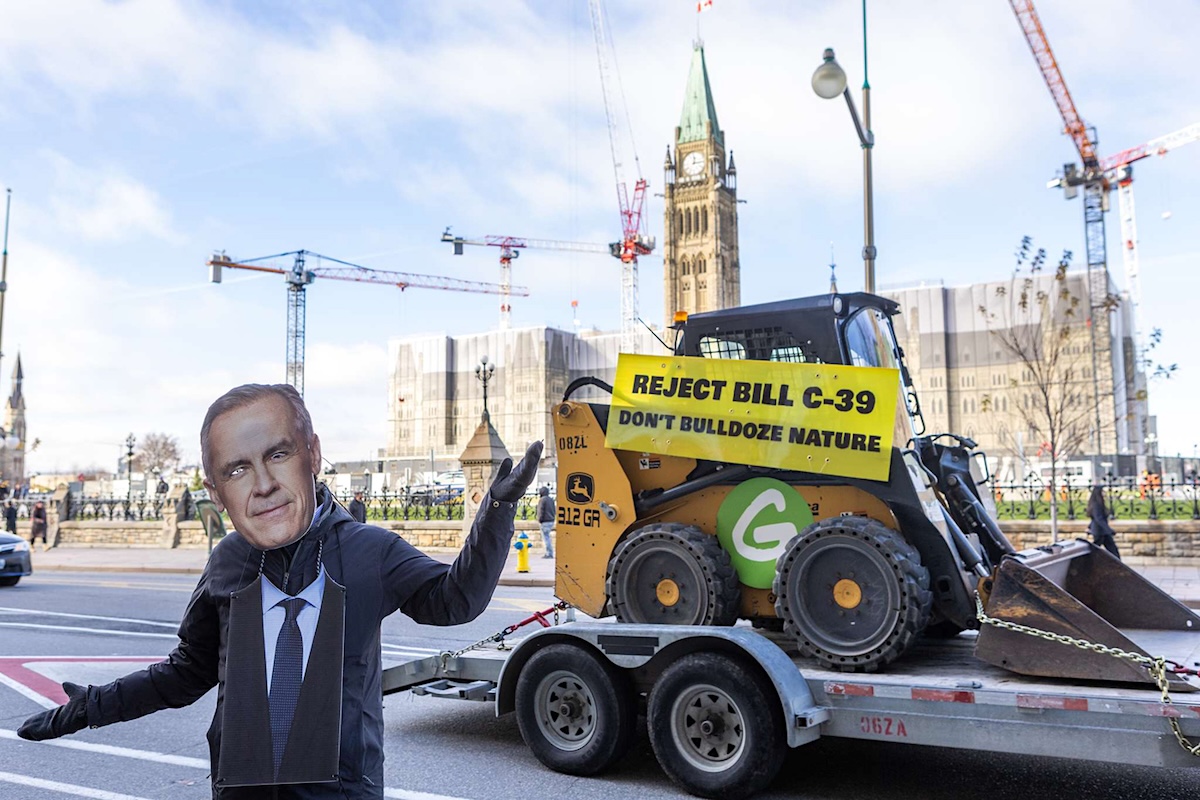
Last week, Greenpeace Canada drove a bulldozer to Parliament Hill to underscore the point, calling the bill a “complete rollback of environmental laws.”
First Nations leaders say the bill could undermine their constitutional and treaty rights, while labour unions contend it threatens the ability of workers to strike.
Bill C-39 will have the heaviest impact in BC, scientists say
Auger-Méthé said the impacts of Bill C-39 would be felt more deeply in British Columbia than anywhere else in Canada because of the West Coast oil pipeline and Roberts Bank Terminal 2 projects. They are the first two projects the Carney government has designated as “projects of national interest,” fast-tracking them and making it possible to grant all federal approvals at once.
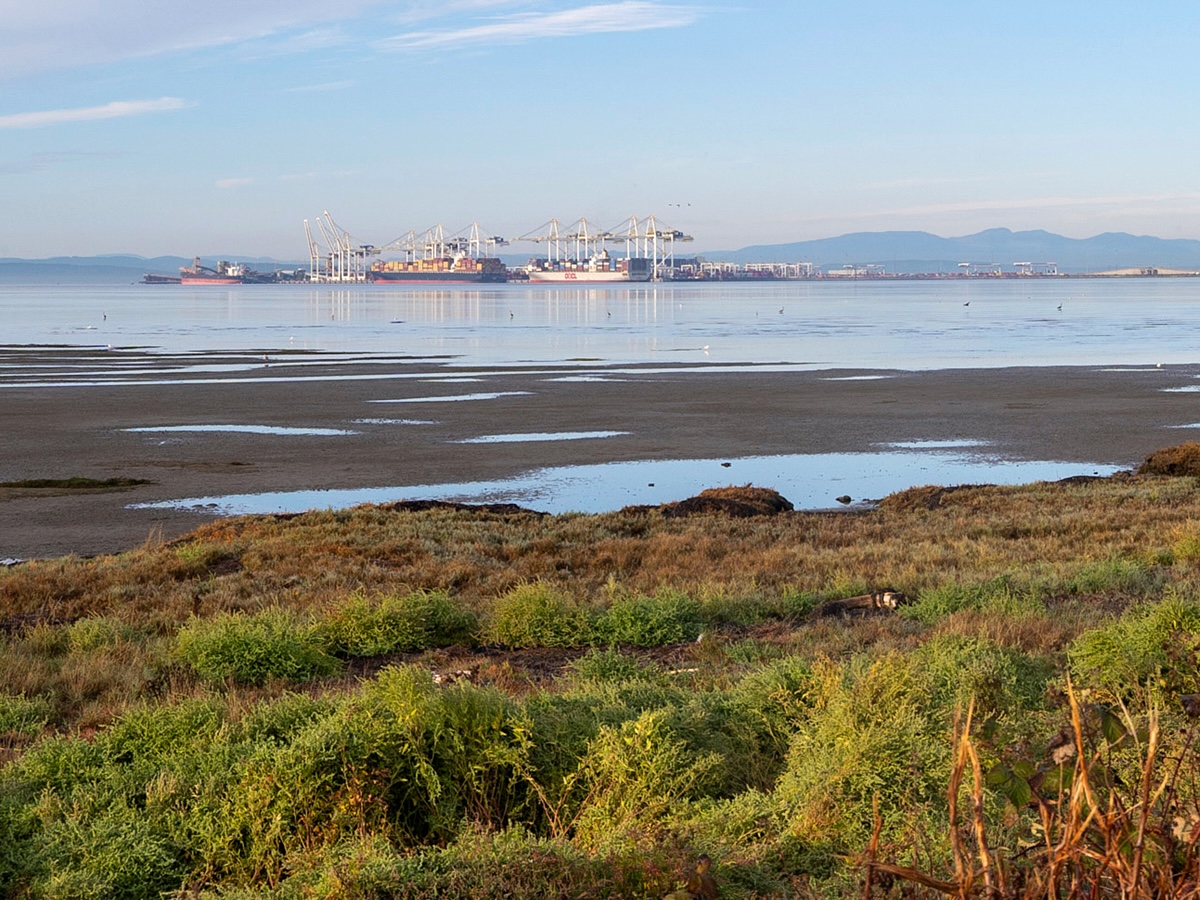
Speaking on behalf of the policy committee, Auger-Méthé said Bill C-39 could have immediate impacts on the Roberts Bank Terminal 2 project, a three-berth shipping container terminal approved for the Fraser River estuary, south of Vancouver.
The terminal will be constructed in an internationally recognized key biodiversity area that is home to many species at risk of extinction, including southern resident killer whales and salmon populations. Roberts Bank is also a critical stopover on the Pacific Flyway for millions of migratory birds.
A comprehensive environmental assessment found the new shipping terminal will have “significant adverse environmental effects.”
When the federal government approved the project in 2023, it imposed 370 legally binding environmental conditions on the Vancouver Fraser Port Authority, which is building the terminal.
The conditions include slowing down ships to avoid collisions with whales, and reducing ship noise in the whales’ habitat — both deemed essential for the southern resident killer whales’ survival.
Auger-Méthé said Bill C-39 would allow the federal minister responsible for the act to override environmental conditions attached to the Roberts Bank Terminal 2 project.
“They could remove or change the conditions that were put in place to lessen the impacts of the terminal on this important ecosystem,” she said.
The Tyee reached out to the federal department for Canada-U.S. Trade, Intergovernmental Affairs and One Canadian Economy for comment but did not hear back by press time.
Julie Dabrusin, Canada’s minister of environment, climate change and nature, previously told The Tyee that she values the opinions of scientists and others who have concerns about Bill C-39.
Dabrusin said the government’s intention is to “get it right and build well.”
Better to retain habitat than to restore it
The Canadian Society for Ecology and Evolution is also flagging a provision in Bill C-39 that would allow a project to destroy fish habitat in exchange for paying into an environmental damages fund. The fund would be used for conservation projects through “habitat credits.”
In its brief, the society pointed out that offsetting environmental damage is the “last, and least effective,” step in a mitigation hierarchy that the Carney government committed to follow in its 2026 strategy for nature protection.
Jessica Garzke, a policy committee member and research associate in the University of British Columbia’s zoology department, said allowing project proponents to destroy fish habitat and pay into a fund is “very concerning.”
It’s better not to destroy fish habitat in the first place, in part because restoration efforts are very expensive, Garzke, who studies marine science and marine food webs, told The Tyee.
Bill C-39 also allows the federal cabinet to designate “regions of national interest” such as energy corridors, automatically greenlighting projects without independent scrutiny and reducing opportunities for scientific review.
Garzke said ecosystems experience multiple stressors, including the impacts of climate change, and scientific study is needed to determine how stressors interact when a new project is added into the equation.
“Monitoring needs to be done to really understand what is going on,” she said.
‘Free rein’ for projects of national interest
Bill C-39 would also make the Building Canada Act permanent, granting the federal cabinet sweeping powers.
Even if Prime Minister Mark Carney’s cabinet opts not to use all these powers, a future government “will have free rein,” Auger-Méthé pointed out.
The Building Canada Act allows projects of national interest — including the West Coast oil pipeline and Roberts Bank Terminal 2 — to bypass environmental laws developed over decades to protect ecosystems, species at risk of extinction, migratory birds and fish habitat.
That act, Bill C-5, was created “as a response to the urgent geopolitical threats we are facing as Canadians” and included a five-year sunset clause, Auger-Méthé noted. Bill C-39 would eliminate that sunset clause.
The new bill would allow the federal cabinet to authorize construction activities before a project is approved, on the grounds that it’s in the public interest.
Yet early construction activities — which typically include site clearing and dredging — are often damaging for wildlife and ecosystems, “and much of it is irreversible,” the society noted in its brief.
“To some extent, we’re starting to play God and deciding that our economic benefit is above the survival of some species,” Auger-Méthé said.
She said Bill C-39 could have “dramatic impacts” on biodiversity in Canada at a time when scientists around the world are warning of an unprecedented decline in nature, with serious impacts for human communities.
Canada should be taking a leadership role in reversing biodiversity loss, Auger-Méthé said. “And now we’re removing the few safeguards we have in place that slow down this decline.”
“It’s not like Canada is being overly cautious in protecting species at risk,” she said, adding that it’s “demoralizing” that Canada is poised to erode safeguards for the small number of species it currently protects.
Existing safeguards protect only “a very small subset” of species at risk of extinction, because many species aren’t formally listed and don’t have critical habitat protections, she said.
The bill would also remove environmental safeguards that protect rivers and drinking water.
A recent report from Environment and Climate Change Canada found that almost one-quarter of river sites tested were in marginal to poor condition, with increasing pressures on watersheds contributing to declining water quality.
“Bill C-39 creates an easy mechanism for industry to further pollute the watersheds we all rely on for drinking water,” Auger-Méthé said. 
Read more: Environment









Tyee Commenting Guidelines
Please note that email notifications for replies are not currently working due to a software issue which may be resolved in a future update.
Comments that violate guidelines risk being deleted, and violations may result in a temporary or permanent user ban. Maintain the spirit of good conversation to stay in the discussion and be patient with moderators. Comments are reviewed regularly but not in real time.
Do:
Do not: