


 SHARE:

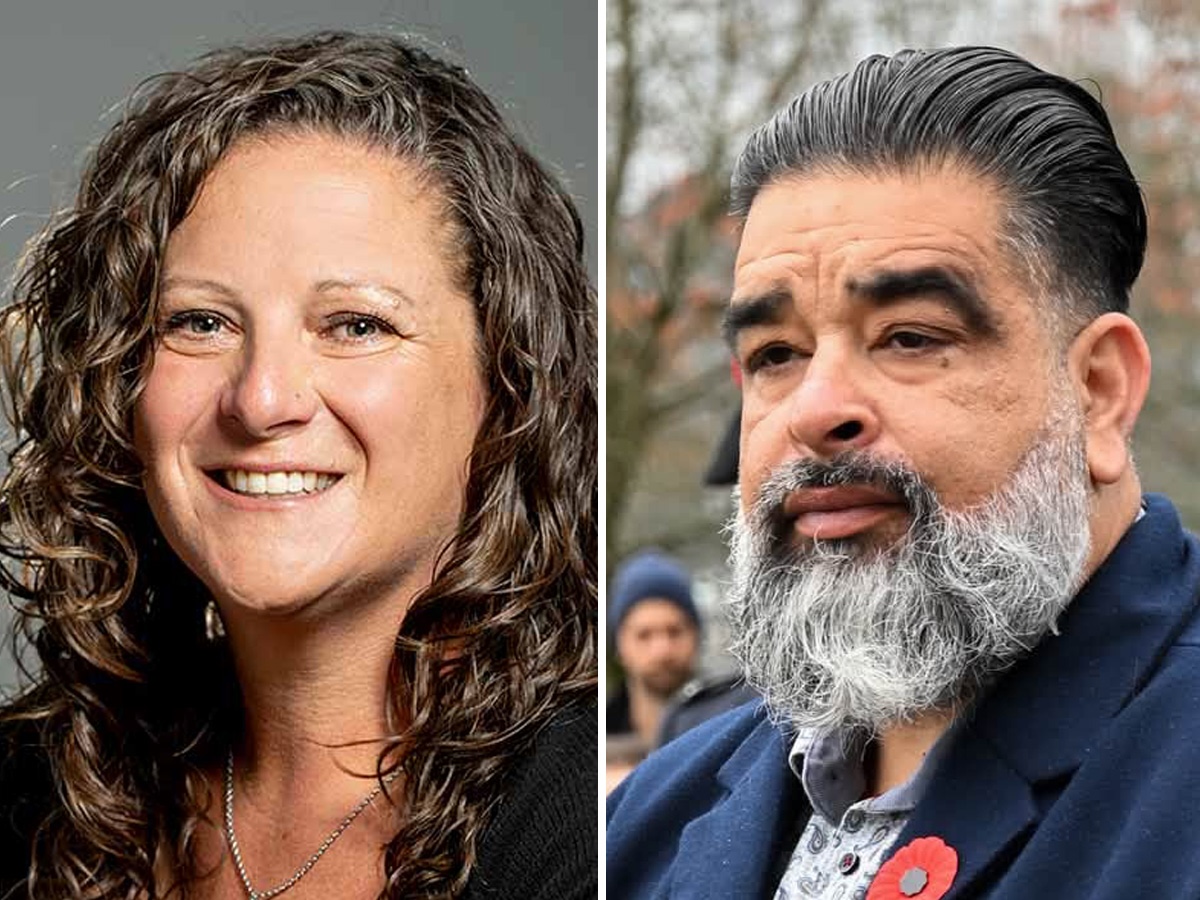
The BC Federation of Labour election this week pits the current president, who has strong ties to the BC NDP, against her former running mate, who promises to change the culture of B.C.’s labour movement.
The federation is British Columbia’s central organization for labour, representing more than 500,000 workers across its affiliate unions. It lobbies for workers and has in the past championed policies such as single-step union certification, increased minimum wages and skilled trades certification.
Its president is the full-time chief executive and spokesperson of the organization, often serving as a central voice for B.C.’s labour movement.
The leadership race is between incumbent president Sussanne Skidmore and current secretary-treasurer Hermender Singh Kailley. The two ran on a joint ticket in 2022 and have served alongside each other in the four years since. Around 1,000 BC Federation of Labour delegates will vote on Thursday morning, and the results will be announced soon after the vote takes place.
Several people involved with the federation, who agreed to speak to The Tyee only if granted anonymity, said the recent provincial election highlights culture issues within the federation and a growing divide between those who support the status quo and those who want the federation to distance itself from the New Democrats.
“Hermender is taking completely the opposite approach of how the labour and the party need to interact,” one source said. “For example, the federation needs to be holding the [NDP] to account and not just parroting the party line.”
The BC NDP had governed the province for nine years and had two more years before needing to call an election. But in September former premier David Eby called an early election just days after factions within the Conservative Party of BC pressured then-leader Kerry-Lynne Findlay to step down.
Eby lost the bet in spectacular fashion when the Conservatives quickly united behind interim leader Lorne Doerkson. Voters, who were not impressed with Eby’s decision to hold a snap election in the midst of an ongoing civic election, handed the Conservatives a majority 64-seat government on Oct. 24 and reduced the NDP to just 27 seats.
The BC Federation of Labour’s election comes as the organization must start working with the new Conservative government.
Skidmore said she has proven her ability to get big labour wins from the province and said she worries the new government could reverse policies such as single-step certification. Single-step certification makes it easier to start a union by eliminating the requirement that employees vote on whether to join a union.
“We are a bit worried about the storm clouds that are on the horizon for British Columbians,” she said. “Part of my role as the president of the federation of labour is to ensure that this new government doesn't take us backwards.”
Meanwhile, Kailley has branded himself as the change candidate. He pledges on his campaign website to take the labour movement in a “new direction,” promising to champion inclusivity and young workers.
“I believe we need fundamental change in the culture and direction of the BCFED,” Kailley said. “A federation should be a place where different perspectives are welcomed, and where disagreement is not treated as disloyalty.”
He also makes unspecified promises to find new ways to earn political power and engage with government in a different way, saying that “no party should ever take the labour movement’s support for granted.”
The Tyee made attempts to schedule an interview with Kailley but was not able to secure a time to speak with him for this story.
Skidmore has ties to the federal and provincial NDP. She has been a vice-president at the BC NDP for eight years and was also the national treasurer for the federal NDP until earlier this year. Still, she said she would stand up for worker interests against any party.
“Whoever is in government is our job to hold them accountable, hold their feet to the fire, and make tangible, real changes for working people that they can see and feel every day in their lives,” Skidmore said.
Skidmore said that in her time leading the federation, workers have seen several improvements to labour laws and employment standards.
“I have a proven track record of showing up and pushing the government, regardless of who it is,” she said.
While she was secretary-treasurer of the BC Federation of Labour, Skidmore noted, the provincial government introduced automatic union certification if at least 55 per cent of employees sign a union card.
The next year, she said, the B.C. government rolled out new training and certification standards for skilled trades.
During the BC Liberals’ tenure from 2001 to 2017, the administration was criticized for being reluctant to raise the province’s minimum wage. But in 2011, after the wage dropped to the lowest in Canada, former premier Christy Clark eventually announced increases.
In contrast, the BC NDP government regularly raised the minimum wage and tied it to inflation, reaching $18.25 in June 2026.
Several of the approximately 50 unions affiliated with the federation have thrown their weight behind the candidates. Some large B.C. unions, including the BC Nurses’ Union, Teamsters and Unifor, are not members of the organization.
Skidmore has been endorsed by several unions, including the BC Building Trades, United Food and Commercial Workers Local 1518 and the Canadian Union of Public Employees.
Meanwhile, Kailley has been endorsed for president of the federation by his union, the International Longshore and Warehouse Union Canada.
The two candidates ran together on a joint ticket in 2022 in an uncontested election. Skidmore became the second female president and the first LGBTQ2S+ leader in the federation’s 70-year history. Kailley was the first Punjabi Canadian to be elected secretary-treasurer.
The secretary-treasurer is a paid, full-time position responsible for all the federation’s financial and administrative operations.
Now Kailley says he thinks the federation can do more to stick up for marginalized voices and smaller unions in the labour movement, and to stick up for workers’ interests in government.
“I am running because I believe we need to ask harder questions and be prepared to do things differently,” he said on his website. “I am running because I believe we can be more ambitious, more courageous and more connected to the people we represent.” 
Read more: Labour + Industry








Tyee Commenting Guidelines
Please note that email notifications for replies are not currently working due to a software issue which may be resolved in a future update.
Comments that violate guidelines risk being deleted, and violations may result in a temporary or permanent user ban. Maintain the spirit of good conversation to stay in the discussion and be patient with moderators. Comments are reviewed regularly but not in real time.
Do:
Do not: