

 SHARE:

[Editor’s note: ‘The Seabird Trials,’ out now from Harbour Publishing, chronicles the story of how, in the wake of the 1986 Apex Houston spill, Canadian scientist Harry Carter and US prosecutor Valerie Lee won a settlement that put a price tag on the destruction of nature. That settlement was reached in 1994. The following excerpt recounts another spill, one that took place after the Apex Houston spill but before the settlement was reached; this spill would leave its own mark on history. Read Sarah Cox’s interview with Briony Penn, published Tuesday.]
By New Year’s Eve 1988, the Carmanah Point Lighthouse, on the west coast of Vancouver Island, had been buffeted by a winter southeaster for a week.
The lighthouse keeper was doing his daily inspections of sea conditions and had double reason to be on the watch: a spill had been reported from Washington nine days earlier and Carmanah was on its path.
Any plans for a New Year’s celebration quickly evaporated as he spotted the sheen of an oil slick covering the rocks around him. With no road within 100 kilometres in all directions, this oil on the water could only have come from one source.
The lighthouse keeper phoned in his report on the radio, and the Canadian Coast Guard mobilized within hours. They sent a plane to investigate and reported back that the spill was “inconsequential.”
It was the first of many miscalculations.
By Jan. 3, 1989, the oil was surfing into world-renowned Long Beach on Vancouver Island in the shape of gooey, desktop-sized pancakes. Mark Hobson, a naturalist and friend of scientist Harry Carter, was one of the first to watch his home beaches invaded by oil.
The Canadian Coast Guard continued to treat the incident as “relatively minor.” It had scant resources to fight oil spills.
The Canadians blamed the Americans and waited for them to clean up the spill. Meanwhile, the oil continued to disperse north and south, breaking up into smaller, less easily managed and no-less-deadly globs.
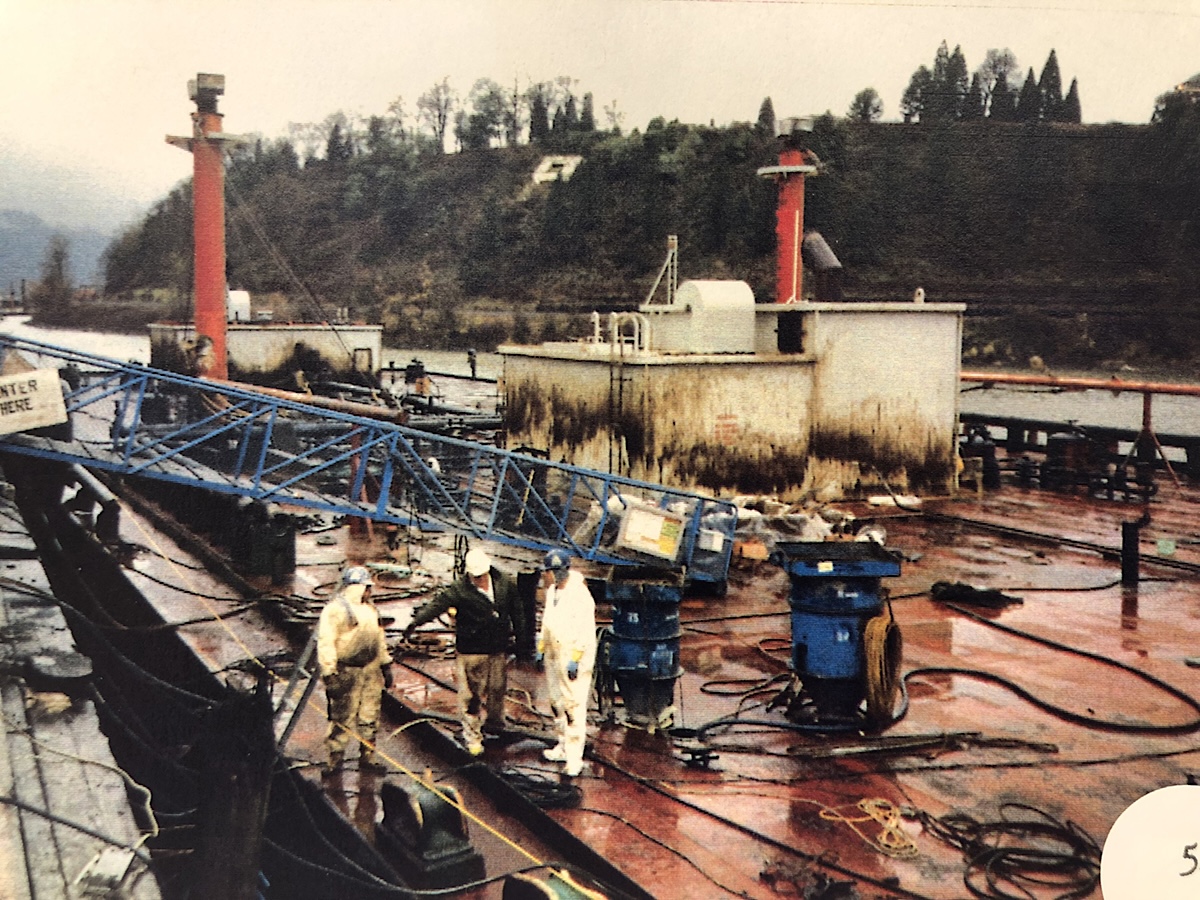
The spill had happened on Dec. 22 on a stormy night near Grays Harbor, Washington, when the tug Ocean Service, which was owned by Sause Brothers Ocean Towing, rammed its own barge tender, Nestucca, spilling 230,000 gallons of bunker oil into the harbour.
Bunker oil is the worst kind of oil to spill because, as one eyewitness reporter noted, “it just sticks to everything, like klister snow wax.”
In just over two weeks, the oil slick spread all the way to Triangle Island at the northernmost tip of Vancouver Island, the most important seabird colony on the coast, where Warburton Pike had documented millions of birds in 1909.
By the end of January, the oil slick had dispersed north to the Goose Islands off B.C.’s central coast and south to Oregon, oiling hundreds of kilometres of wave-scrubbed shoreline.
All told, 13,000 oiled seabirds were collected by volunteers walking the beaches near inhabited areas. Including the more than 700 kilometres of mostly remote and inaccessible beaches impacted, most of them in B.C., the estimate of actual bird mortality was closer to 56,000 birds, with the common murre suffering the highest losses.
Canadian seabird scientists tried to identify carcasses found on the shores, but three-quarters of them were too decomposed. Of those birds they could identify, 90 per cent were alcids, the family to which common murres, puffins and marbled murrelets belong. Of the oiled living birds picked up by volunteers, who scrubbed them with Joy dish soap and warm water, only 30 survived.
Harry Carter had every reason to be emotional at the thought of the Nestucca spill. The Carmanah lighthouse was just off Barkley Sound, where he had done his graduate school fieldwork on marbled murrelets.
Cleland Island in Clayoquot Sound was at the top of the list of seabird colonies most contaminated by the Nestucca spill. Cleland Island was an island of firsts for Carter: his first seabird colony, his first close-up of tufted puffins, his first common murre nest and his first colony to go silent. The last time common murres had been found nesting on Cleland was in 1982. After that year, birds had been seen, but not nests. In the spring of 1988, after the Nestucca spill, Carter’s colleagues surveyed Cleland and found no common murres at all.
The final Natural Resource Damage Assessment settlement was reached in May 1992, resulting in $1.75 million for the restoration of marine bird habitat to compensate for the Nestucca spill. It was a minor sum for the more than 56,000 marine birds, mostly alcids, killed. Each murre’s life was coming in at around $30 in value. With the Nestucca spill, the data was not enough and the modelling of impacts was insufficient. The Nestucca settlement, in Carter’s reckoning, sold the environment far short of the actual environmental loss and the costs of restoration.
Separate legal proceedings were launched by the U.S. District Court for the District of Oregon against the Sause Brothers for cleanup. The defendants settled the case with the Nuu-chah-nulth Tribal Council, representing the First Nation whose territory the Nestucca spill impacted, at $505,000 for cleanup costs and $700,000 for environmental impact to their food sources, while the Canadian government and the province of British Columbia received $4.4 million in cleanup costs under the Canadian Migratory Birds Convention Act and the U.S. Federal Water Pollution Control Act.
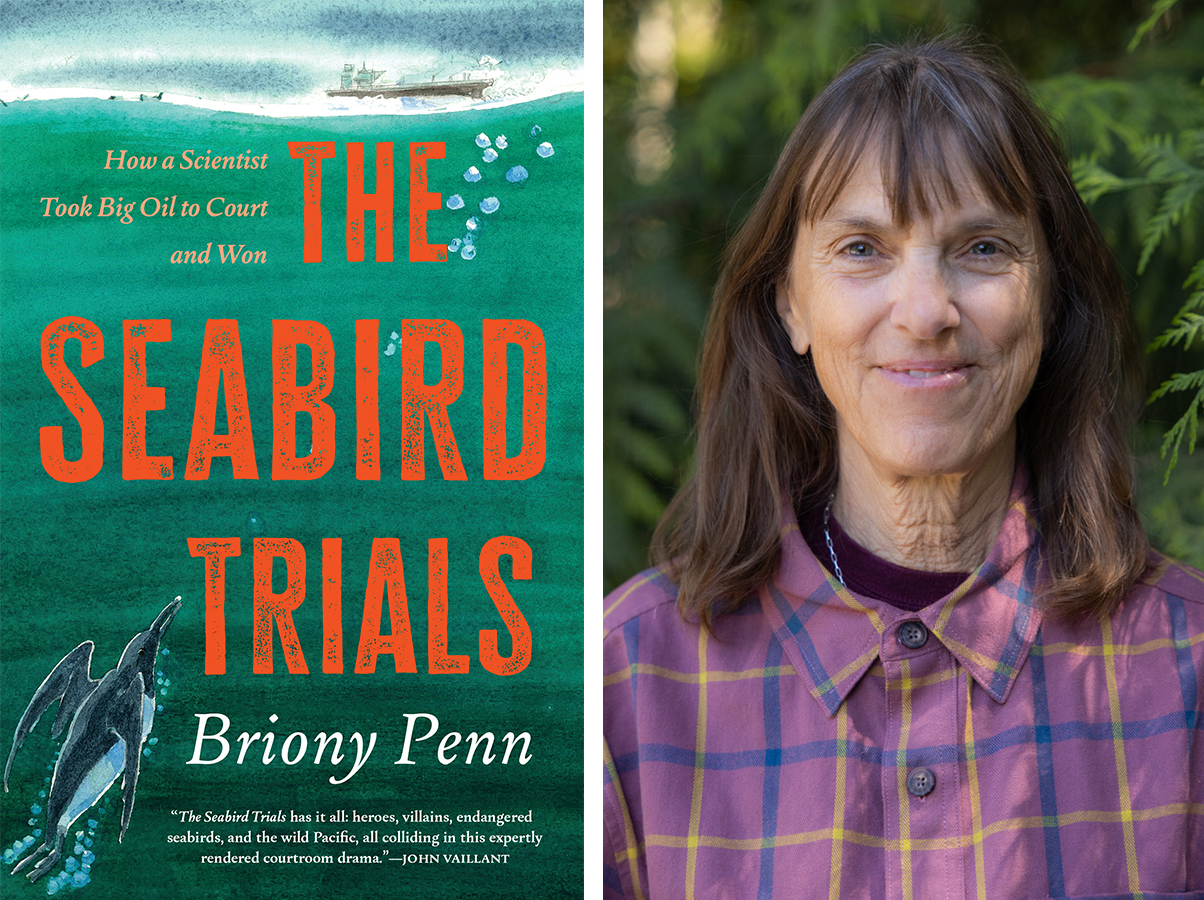
Excerpted from ‘The Seabird Trials: How a Scientist Took Big Oil to Court and Won’ by Briony Penn (Harbour Publishing, copyright 2026). Reprinted with permission by the publisher.
Read Sarah Cox’s interview with Penn, published Tuesday. 
Read more: Books, Environment





Tyee Commenting Guidelines
Please note that email notifications for replies are not currently working due to a software issue which may be resolved in a future update.
Comments that violate guidelines risk being deleted, and violations may result in a temporary or permanent user ban. Maintain the spirit of good conversation to stay in the discussion and be patient with moderators. Comments are reviewed regularly but not in real time.
Do:
Do not: