
 SHARE:

When I met Stephen Stehli at a beer garden in Magdeburg a few nights before election day, he had a simple message he wanted me to relay to the people of Canada on his behalf.
“Please tell the people that this country is not coming back to Nazism,” the German politician implored me. “We are not putting Hitler back into power.”
We were in Saxony-Anhalt, a small, quiet state in eastern Germany that was only days away from holding an election with major implications for the future of democracy. Although Stehli was feeling quietly optimistic, headlines around the world were ringing alarm bells that the far-right Alternative für Deutschland, or AfD, was in striking distance of winning an absolute majority — potentially the first time a far-right party could form government in this country since before the Second World War.
I wanted to meet this state parliamentarian to better understand what was driving the surge in support for the far right in this part of Germany. Not only did Stehli have first-hand experience dealing with the AfD in the Landtag as chair of Saxony-Anhalt’s education and culture committee, he was also a member of the state’s incumbent centre-right Christian Democratic Union, or CDU, party.
The Saxony-Anhalt section of the AfD is officially classified as a far-right extremist party and a threat to Germany’s constitution by the country’s federal domestic intelligence agency, the Office for the Protection of the Constitution. But Stehli emphasizes that not all AfD voters are themselves extremists.
“The electorate of the AfD, they are of course not all fascists and Nazis,” he told me, pointing out “most of them voted CDU in their lives.”
Stehli, who is also an ordained Lutheran minister, believes a large number of people supporting the AfD are simply mad at his own party, owing to the unpopularity of Germany’s CDU chancellor, Friedrich Merz. While Germany struggles with rising costs of living fuelled by an energy crisis prompted by Russia’s invasion of Ukraine, Merz is stubbornly pushing unpopular future austerity measures and pension reforms.
Yet Stehli also acknowledges it feels like something deeper and more profound is changing in Germany.
“People have changed,” he said.
A few days later, on a windy afternoon in Magdeburg’s city centre, I witnessed something that seemed to illustrate a few of the changes in German society Stehli was alluding to.
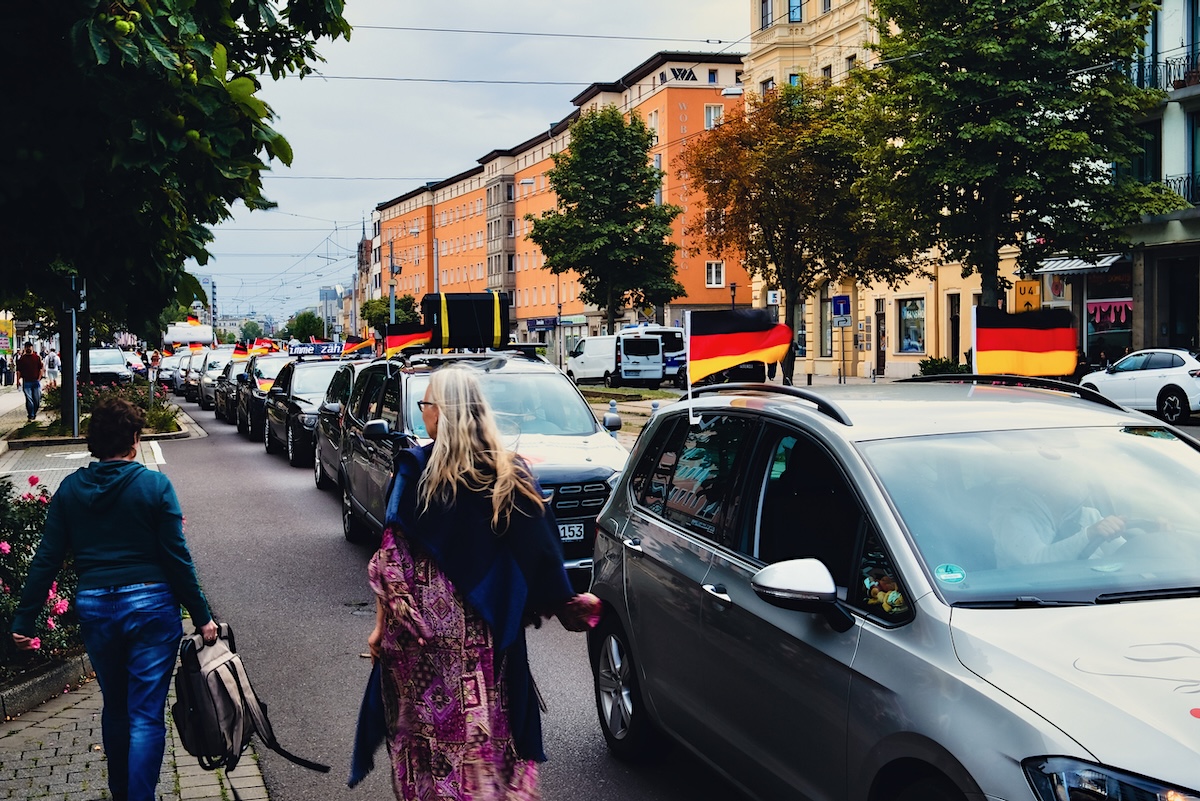
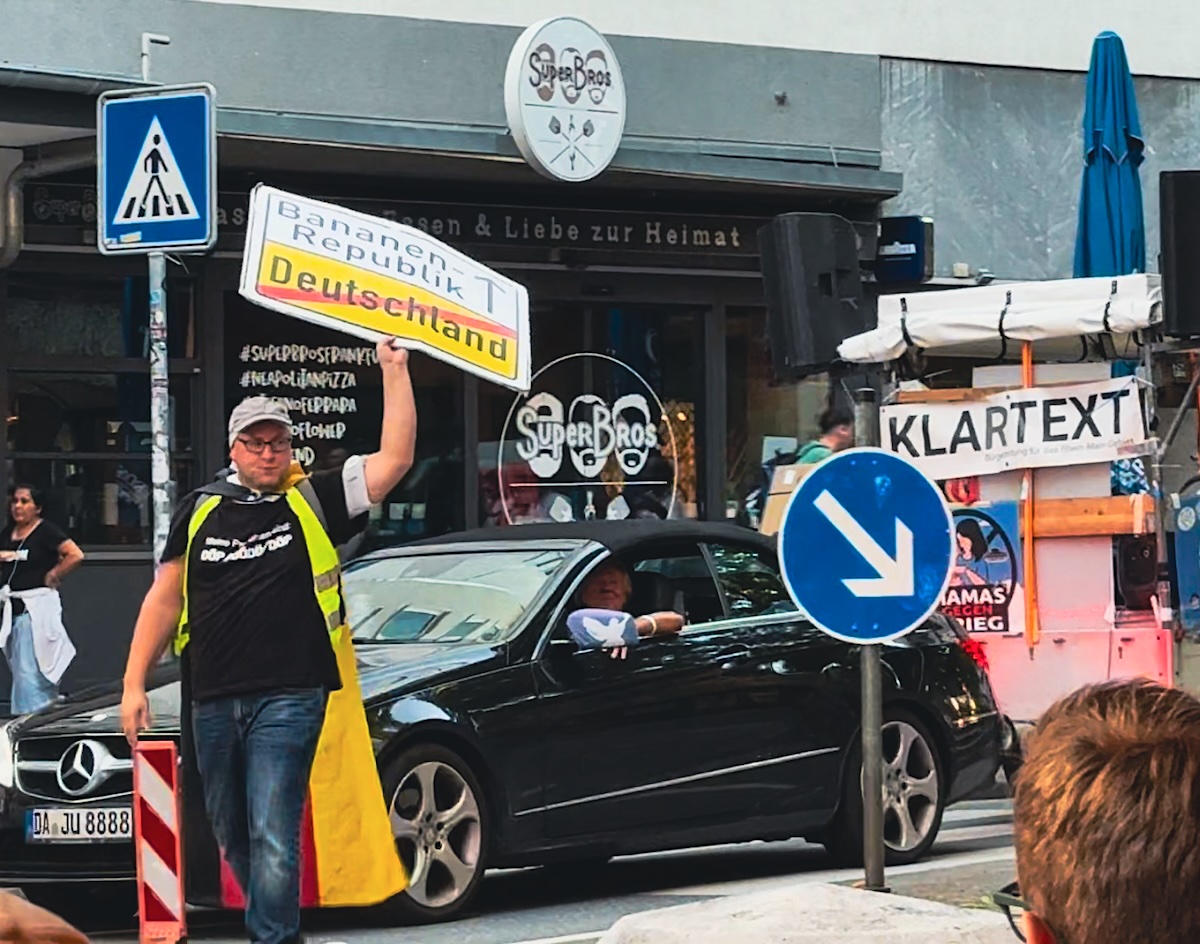
I was standing in the middle of an old Soviet-era boulevard as a convoy of BMWs and Volkswagens lined the street with black, red and yellow flags. Many of these vehicles featured rambling, conspiratorial signs with anti-government messages and grievances about green policies. Several displayed the word Freiheit, the German word for “freedom.”
In that moment, I felt a strange sense of déjà vu. I was reminded of a snowy winter’s morning back home in Ottawa four years earlier when I opened my front door and found 50 trucks occupying the street in front of my house with upside-down Canadian flags and signs referencing every crackpot internet conspiracy under the sun, along with that magic word again: “freedom.”
I was 6,000 kilometres away from home on the other side of the world. Why did this all feel eerily familiar?
What Canada can learn from Germany
I’ve been covering right-wing politics and far-right extremism as an investigative journalist in Canada for nearly a decade and a half.
For me, covering the far right is often less a story about politics than it is a story about how social media platforms are melting everybody’s brains.
From the days of Gamergate to the rise of the so-called “alt-right,” the modern far right has always been a phenomenon rooted in online culture. When we’re talking about the far right, we’re often talking as much about subcultures and online communities as we are about a political movement.
But something seemed to go especially haywire during the COVID-19 pandemic. During the earliest days of the pandemic, I tracked people inside conspiratorial Facebook groups as they evolved into a disruptive and potentially dangerous movement that ultimately led to the so-called “Freedom Convoy” occupying the streets of my hometown. Something long bubbling beneath the surface of polite Canadian society seemed as if it had burst open in a big way.
This movement is confusing to understand and difficult to pin down. At its core, it is a movement that is ideologically incoherent and always shifting its focus from one conspiratorial crisis to the next. It’s a bit like an out-of-control snowball that keeps growing bigger and bigger as it smashes through things and absorbs everything in its path, incorporating elements of different conspiratorial narratives into one great big mega-conspiracy that makes little sense to anyone outside their own online circles.
When a German think tank focused on environmental issues and green politics offered me a transatlantic journalism fellowship and the opportunity to travel to Germany this summer, I knew I wanted to go to eastern Germany to better understand what is driving support for the far right in a region that is rapidly turning into a stronghold for the AfD.
What I learned about what is happening in the German states of Saxony, Thuringia and Saxony-Anhalt also gave me a better understanding of what is happening in Canada in surprising ways.
There’s never been a better time for Canadians to pay closer attention to what’s happening in Europe.
As Prime Minister Mark Carney has been charming global leaders at the World Economic Forum in Davos, Switzerland, and courting the European Parliament in Strasbourg, France, Canada’s far right has also been busy networking with kindred spirits on the other side of the Atlantic.
Look no further than Tamara Lich. The Freedom Convoy figurehead has become a globe-trotting star of the international far-right speaking circuit in recent years. Like Carney, Lich also made an appearance at the European Parliament and has spoken at global summits alongside the elites of the international far right, including Reform UK Leader Nigel Farage, French far-right leader Éric Zemmour and allies of Viktor Orbán’s far-right Fidesz party in Hungary.
Lich’s frequent collaborator Chris Barber has also delivered pep talks in the Netherlands to Dutch farmers associated with their own convoy-inspired movement against green policies.
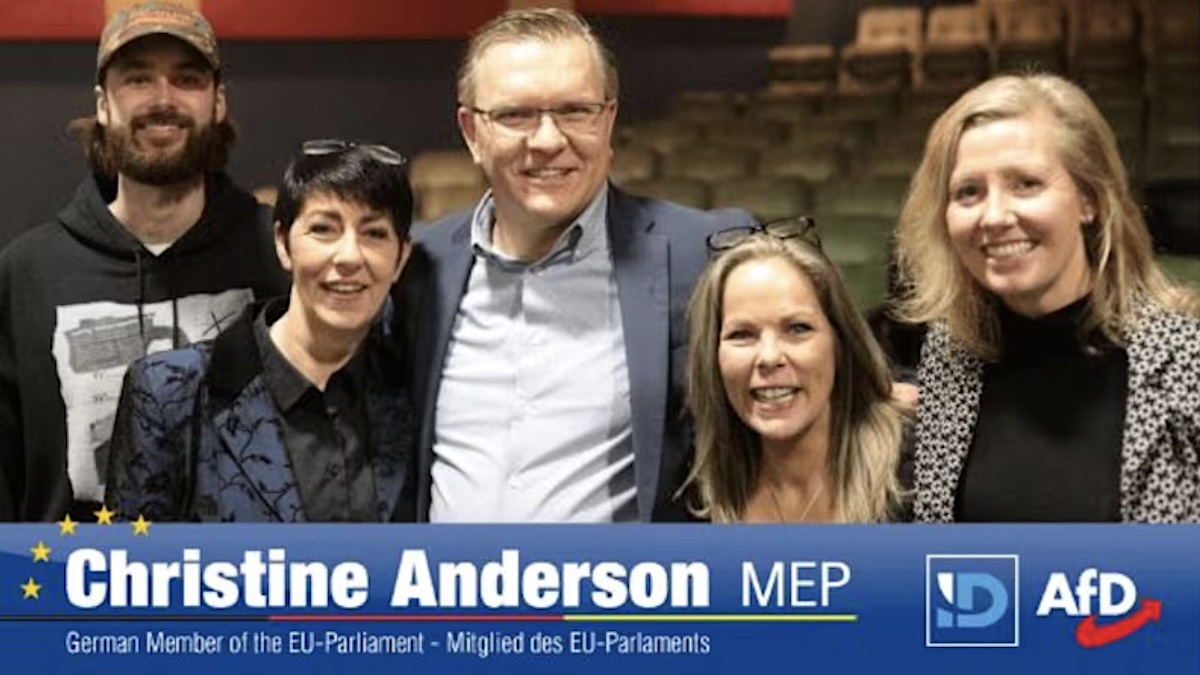
You may also recall the story of Christine Anderson. She’s an AfD member of the European Parliament who made headlines after meeting with Canadian convoy figures and Conservative MPs a few years ago. Anderson has made multiple cross-country tours of Canada in recent years, including one tour with a prominent Dutch far-right influencer named Eva Vlaardingerbroek, and has continued to make connections with the convoy supporters who helped organize her Canadian tour.
After Anderson was photographed with several Conservative MPs during that tour, party leader Pierre Poilievre denounced the AfD politician and her “vile views.”
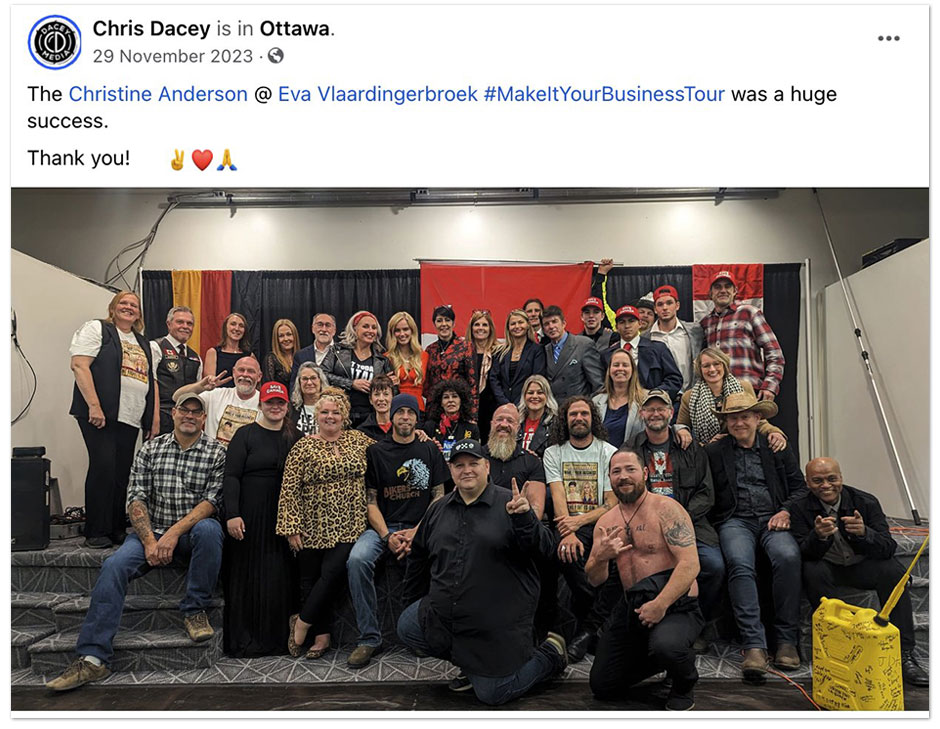
“Like many social and political movements, the far right is transnational,” says Hazel Woodrow of the Canadian Anti-Hate Network. “Ideas, strategies and rhetoric move freely across all borders.
“The Canadian far right learns and absorbs at the same time as it permeates and influences far-right, authoritarian and anti-democratic movements all over the world.”
More recently, a Canadian white nationalist organization called the Dominion Society was spotted networking with their European cousins, including Vlaardingerbroek, at an international conference in Portugal to plot out ways to popularize and mainstream the idea of “remigration” — a concept that experts say boils down to ethnic cleansing.
The term “remigration” was coined by an Austrian far-right influencer named Martin Sellner, who prompted massive countrywide protests in Germany after investigative journalists revealed that he presented his “remigration” plan to AfD leaders during a secret meeting in Potsdam, Germany.
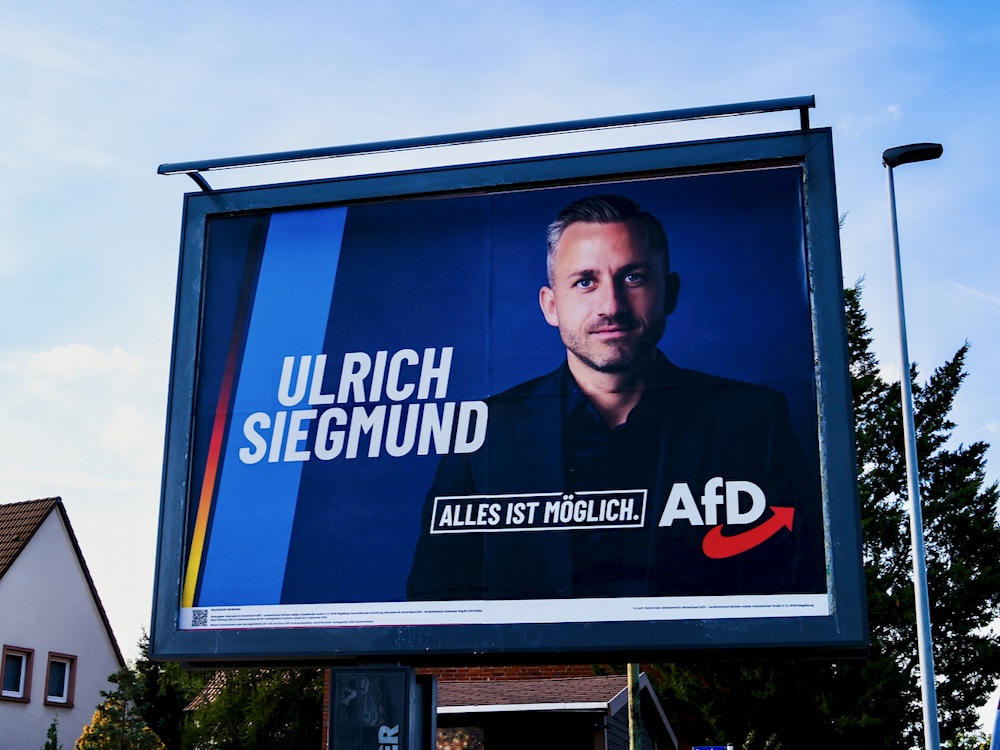
One of the attendees at the secret remigration meeting in Potsdam was the AfD’s leader in Saxony-Anhalt, Ulrich Siegmund.
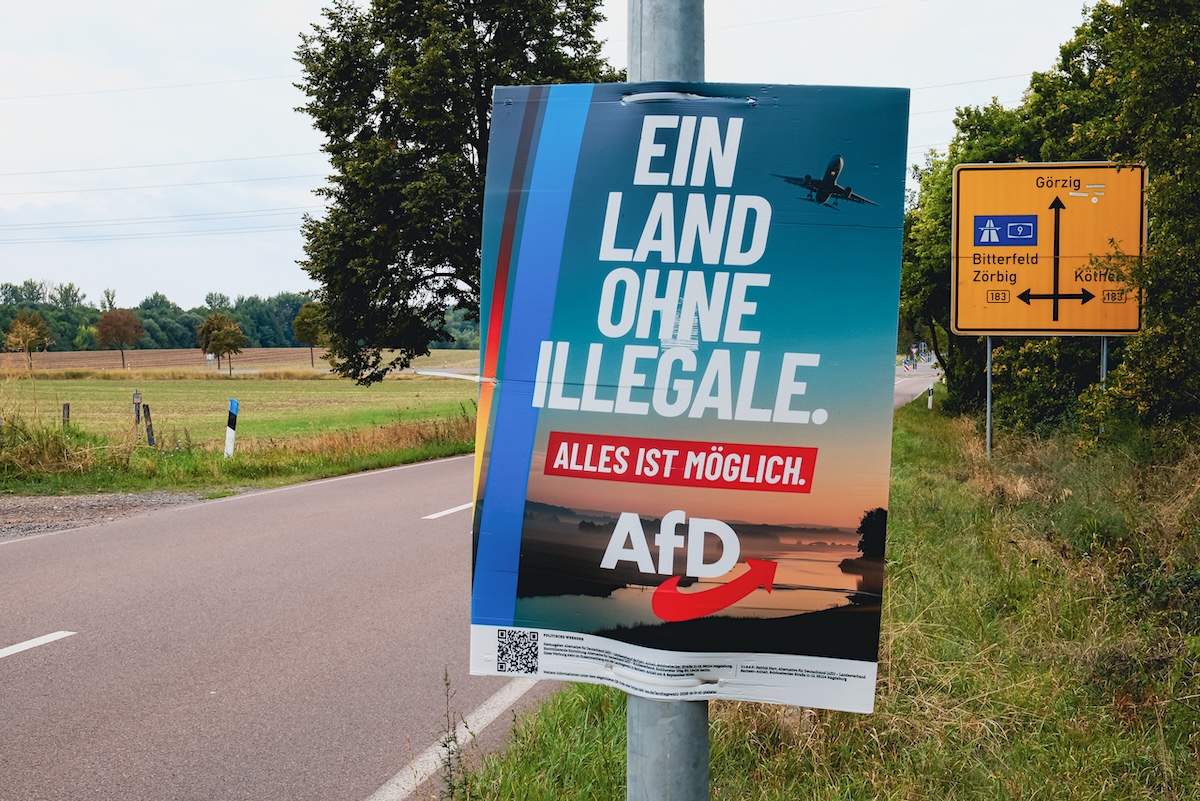
Inside Saxony-Anhalt
Germany’s eastern half is the part of the country where you can still find classic mid-century communist-era apartment blocks and busts honouring Karl Marx and Yuri Gagarin in public squares. It’s also, maybe paradoxically, where support for the far right has surged in recent years.
Before I visited in person, my impression of eastern Germany was largely shaped by U.S. and British media coverage. U.S. journalists draw comparisons to the Rust Belt areas of the United States where left-behind blue-collar workers turned to Donald Trump. British journalists sometimes see parallels with post-industrial parts of England that voted for Brexit. The New York Times and the BBC often use photos of abandoned factories and urban decay to visually represent this region.
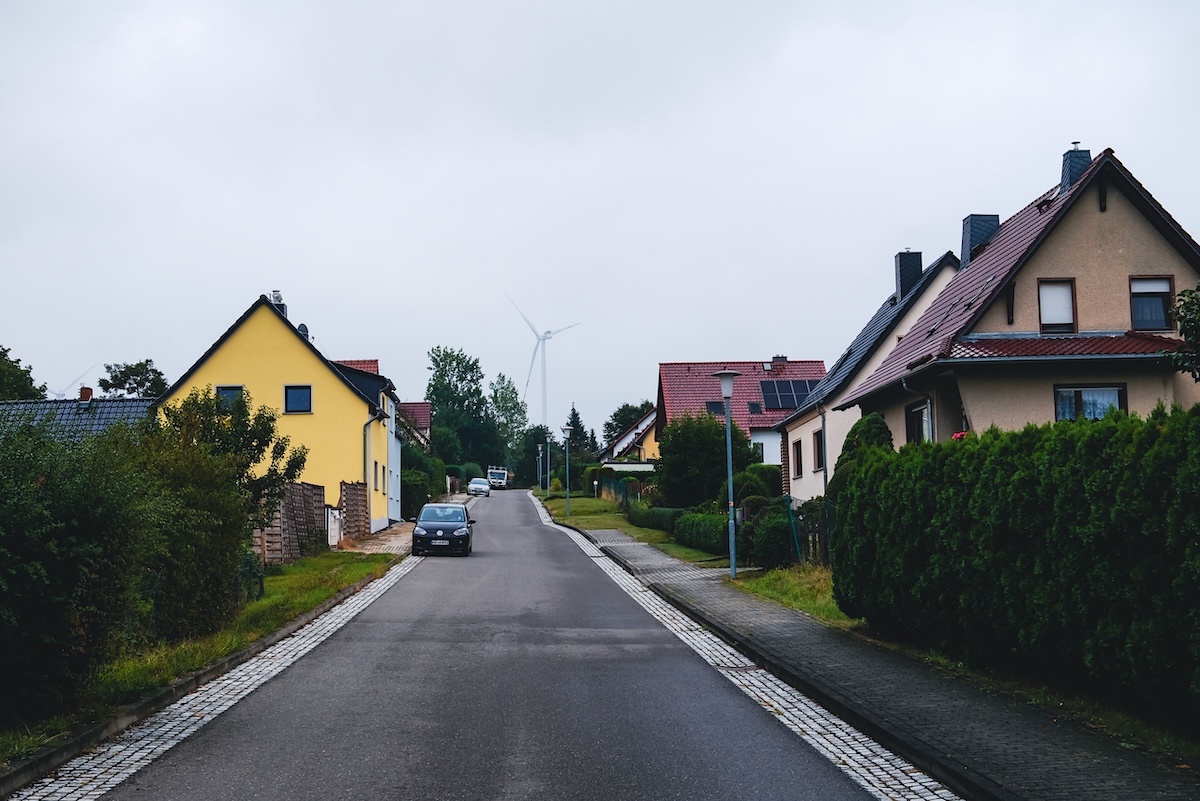
The reality is less black and white. Yes, you will find communities hollowed out by the closure of factories and coal mines, but you will also find young, diverse, progressive cities and green countrysides dotted with quaint timber-framed homes with solar panels on rooftops, fuel-efficient SUVs in laneways and rolling farm fields with clean-energy wind turbines peeking out of the soil like spears of asparagus.
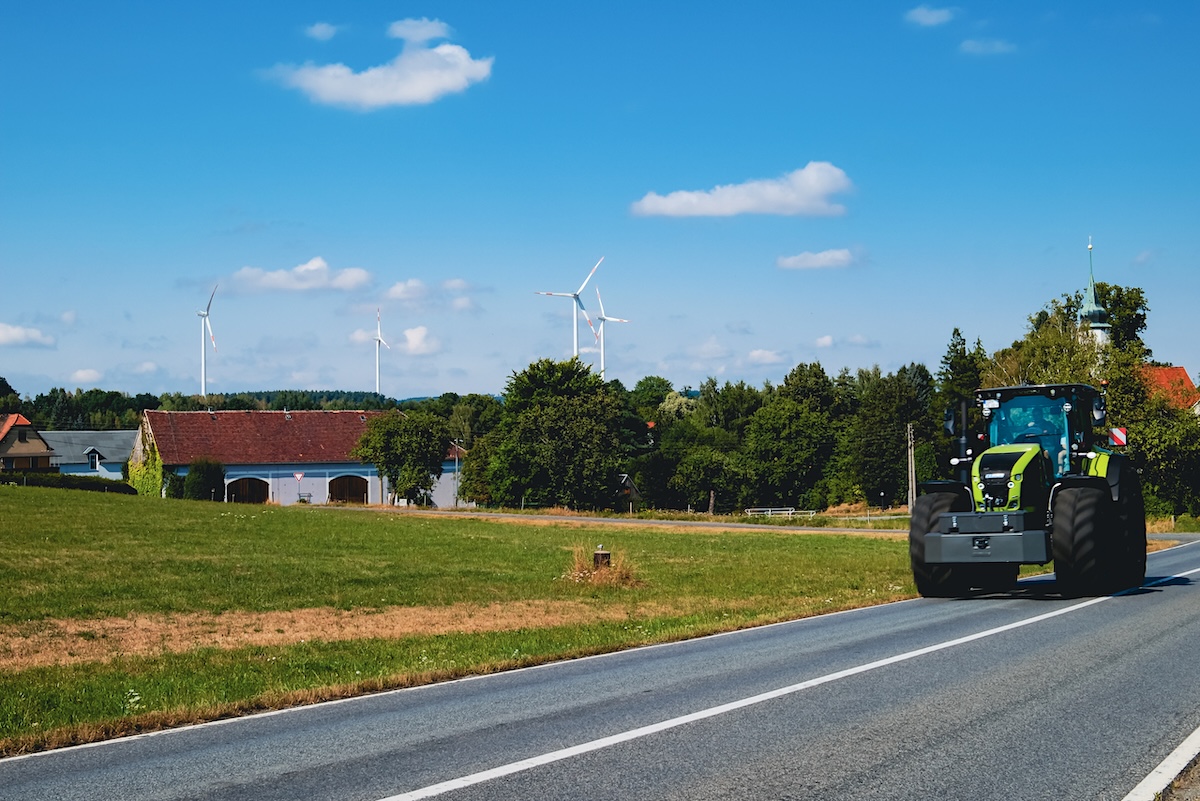
When you ask people from around here why the AfD is gaining support, you will inevitably hear a variation of the same explanation emphasizing the differences between eastern and western Germans — just as Canadians talk about western alienation, eastern alienation is a thing here in Germany too.
To be sure, this outsider feeling is understandable. In the 1990s, German reunification didn’t go as many had hoped following the fall of the Berlin Wall. The period of liberalization that followed saw wealthy investors from western Germany swoop in and scoop up newly privatized industries, only to later shut those same factories down. For many workers, system change meant needing to reinvent and reorient themselves to a new economy after losing good, secure jobs. This experience has left real scars.
It’s also difficult as a Canadian to wrap your head around the layers of history and intergenerational trauma in this part of the world. There are people still alive today in these communities who have lived multiple lives under fascist, communist and capitalist systems in a single lifetime.
While unemployment remains higher and wages remain lower in eastern Germany, economic indicators suggest things have somewhat improved and may not be quite as bad as perceived. At least not to the extent that it provides a satisfactory explanation for the embrace of far-right, anti-democratic politics.
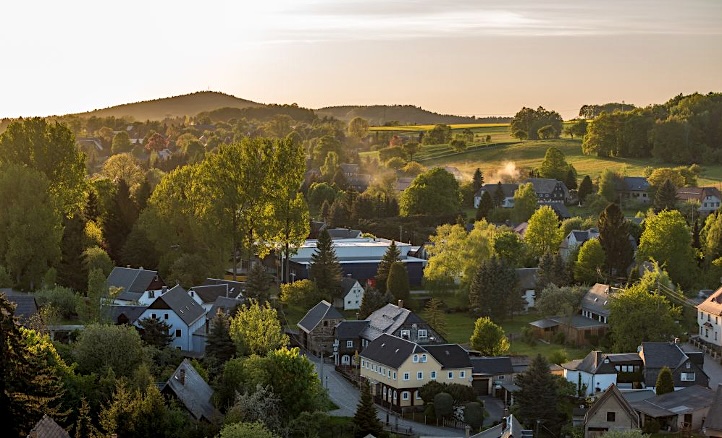
It’s even more perplexing after visiting some of these communities. Nestled in the green rolling hills of the Upper Lusatian Highlands near the Czech border, the 700-year-old village of Schönbach (which translates to “pleasant stream”) seems untouched by time. Local residents live in rustic wooden homes with quiet gardens full of apple trees, many of which are classified as cultural monuments. The municipal government describes this community as an “idyllic village” where “tradition and nature” meet. Many residents work at the local factory and showroom of Möbel Starke, a company known for stylish modern furniture.
And yet, four in five people in this idyllic village voted for the AfD — the far-right party’s highest percentage of votes in one place during the last federal election.
On the surface, it’s difficult to understand what could compel people living in a postcard-perfect village like Schönbach to turn to the far right in such overwhelming numbers.
Understanding the AfD can be challenging for a Canadian journalist, particularly given their inherent distrust for outsiders that sometimes borders on paranoia.
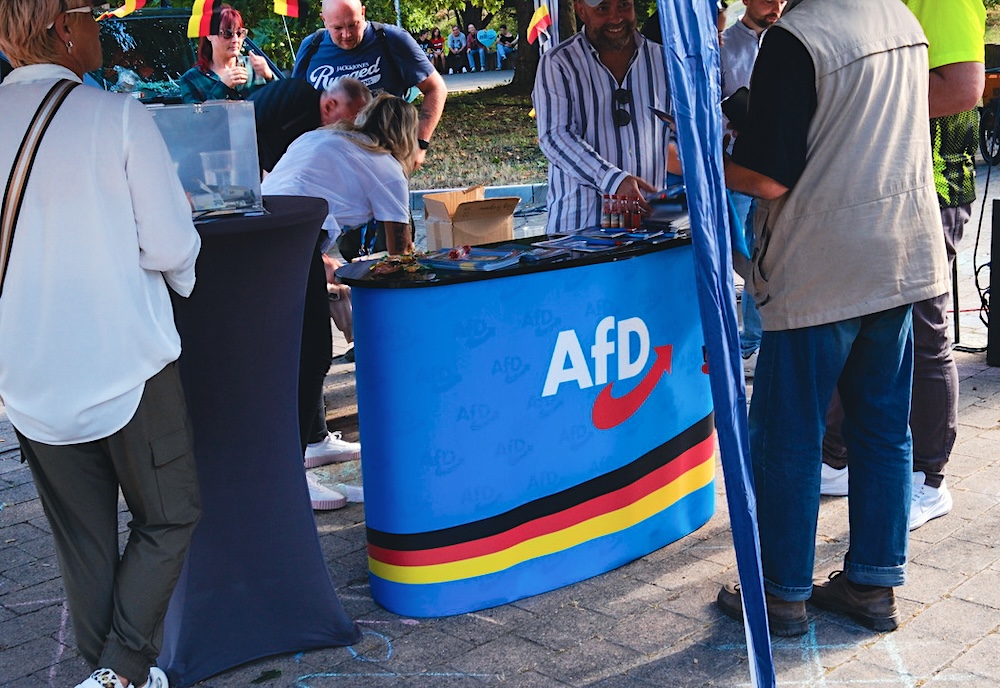
Given the AfD was the only party that did not return my media requests, I decided to take a trip to a small town called Schkopau, a major rubber-producing hub in Saxony-Anhalt’s “chemical triangle,” where the AfD was holding a “family festival.”
In an effort to counter impressions that they are hateful and extreme, the AfD began holding these so-called family festivals as a way to normalize the party and build a sense of community.
At this family festival in Schkopau, AfD supporters gathered in a local park where they ate bratwursts, drank beer and smoked cigarettes on a lazy Sunday afternoon. AfD organizers handed out heart-shaped signs with the party’s logo, distributed candy to children and even set up bouncy castles, something that again reminded me of the Freedom Convoy’s efforts to project a family-friendly image.
One bouncy castle, which was shaped like a police wagon, was slightly unusual and seemed somewhat out of place at a family event. It inexplicably featured images of assault rifles, handguns and bullet-hole markings on its side.
Other than that, the family festival was pretty unremarkable. At least until an AfD organizer confronted me and began shouting at me loudly in German, causing several AfD supporters to surround me.
“Entschuldigung, Entschuldigung,” I told her, recalling my Duolingo lessons. “Ich spreche kein Deutsch.” (“Excuse me, I don’t speak German.”)
Thankfully, one of the AfD supporters spoke English and was able to de-escalate the situation. The AfD organizer had seen me taking photos of the party’s information stand and suspected I might be working for “antifa,” he told me. After explaining I was simply a Canadian traveller passing through Schkopau, the man breathed a sigh of relief: “Ah, Kanada!” After educating me about the clandestine tactics of antifa, he gave me a hearty tap on my shoulder, sending me on my way without further incident.
‘COVID accelerated stuff’
The Alternative für Deutschland is often characterized by international media as an extreme, xenophobic, anti-immigrant, far-right party. It absolutely is all those things, but it is also built on a movement that feels, similar to the Canadian far right, more like an out-of-control snowball than something with a focused and coherent political agenda.
The rise of the AfD is maybe best understood as a reaction to a series of crisis moments in recent history. The party was originally founded by a group of ultra-libertarian economists resentful about Germany bailing out other countries during the eurozone crisis. It wasn’t until the 2015 Syrian refugee crisis that the AfD took a turn down a darker path. The party’s original founders eventually quit the AfD, complaining that the party had been hijacked by figures with “anti-Islamic and anti-immigration views.”
Sebastian Haak is the chair of the Thuringian state press gallery and founder of the local news outlet Fokus Thüringen — an effort to reverse the decline in local news in eastern Germany. He says one of the defining features of the AfD is how it keeps seizing on these crises to mobilize new people into their movement.
“They have different topics that they use to mobilize people,” Haak tells me. “The topics change but... the ideas, they are spreading, they are very much the same.”
In 2020, the AfD pivoted in response to the pandemic. After initially criticizing the German government for failing to impose stronger public health restrictions, the AfD noticed the emergence of protests opposed to these measures, including protests organized by conspiratorial online communities. The AfD repositioned itself as the voice of the forces mobilizing against the government’s pandemic response.
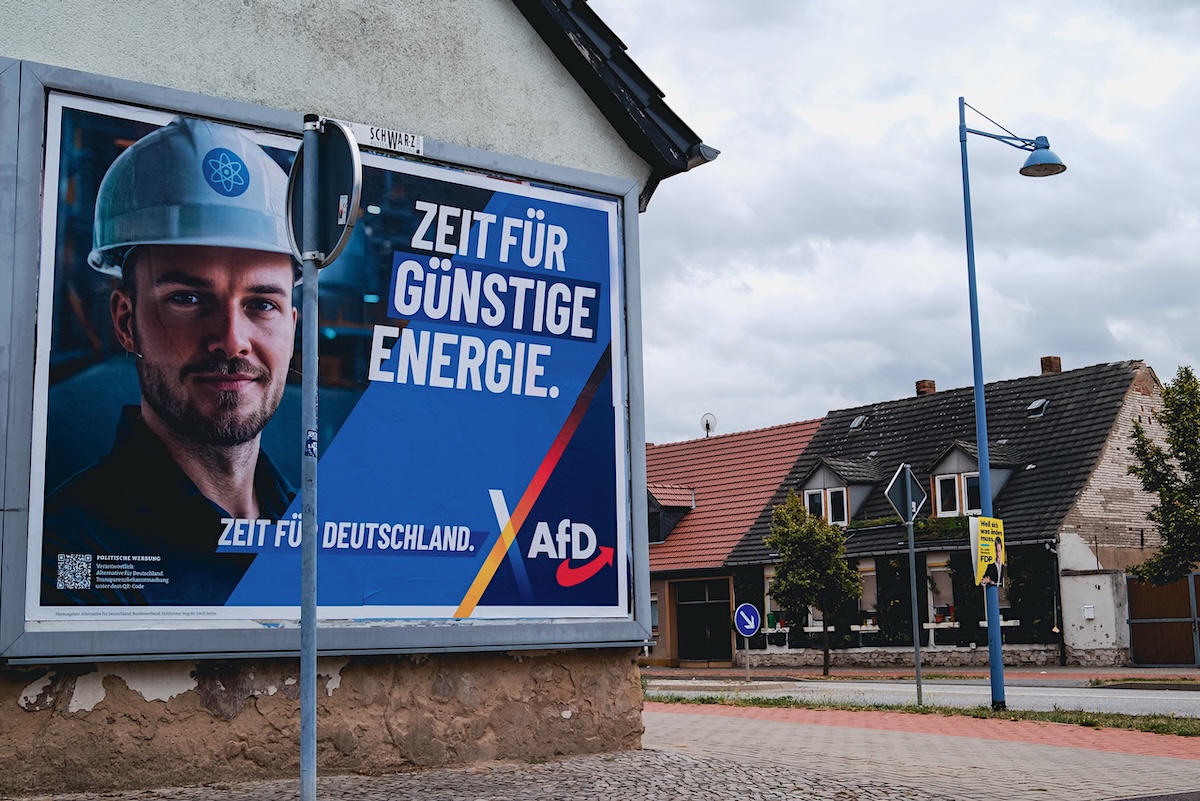
Since the pandemic receded, the AfD has again pivoted to focus on the rising cost of living, which has been fuelled by the energy crisis prompted by Russia’s invasion of Ukraine, but which the AfD blames on environmental policies. But the AfD’s base remains a coalition of racists, conspiracy theorists and other extremists long relegated to the margins of mainstream German politics.
“COVID accelerated stuff,” Haak says, pointing out that “a lot of what happened during COVID” is now “driving the far right.”
That’s not only Haak’s view. The head of Saxony-Anhalt’s Office for the Protection of the Constitution, Germany’s federal domestic intelligence agency, has justified placing the AfD under surveillance on the grounds that the party had become “so radicalized” during the COVID-19 pandemic.
COVID-19 conspiracy groups and the so-called “Querdenker” movement (or “lateral thinkers,” who view themselves as freethinkers unconstrained by mainstream German society) have also been on the radar of Germany’s domestic intelligence agency for some time.
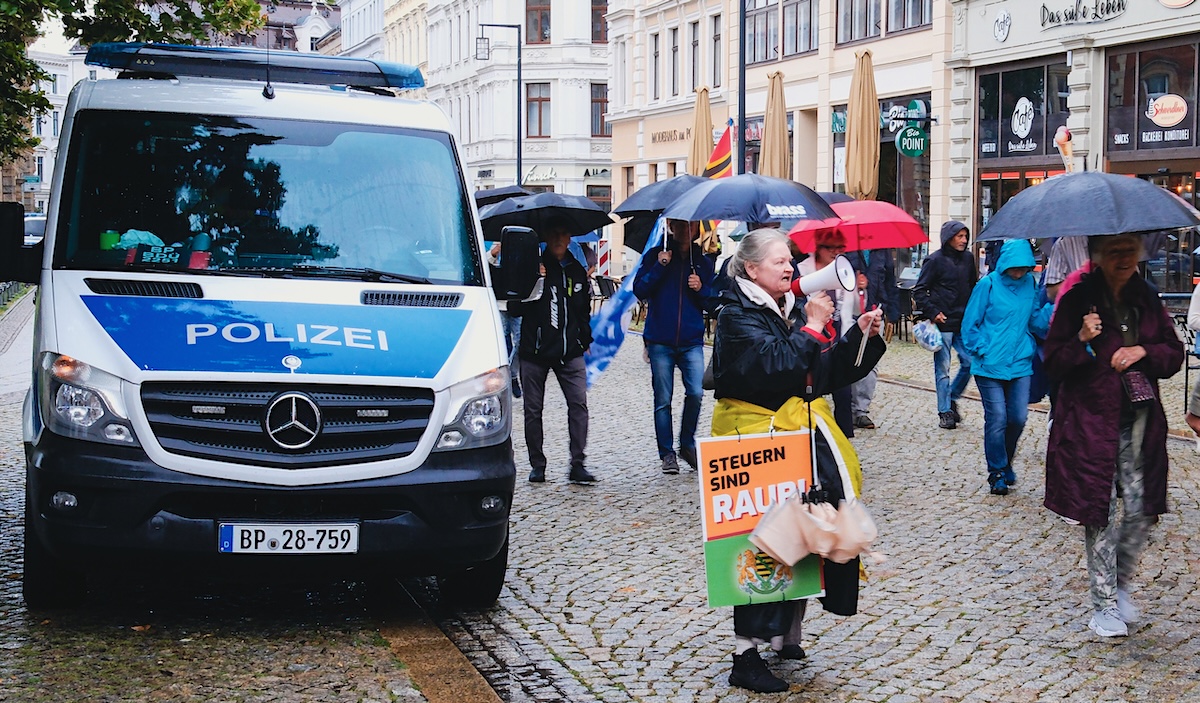
Some of the groups mobilizing against public health restrictions began holding weekly “Monday marches” in town squares and city centres across Germany. These marches were modelled after the anti-communist protests that took place in East Germany in the late 1980s before the fall of the Berlin Wall.
The marches continue to this day. In Görlitz, a worn-down storybook town along the German-Polish border, I found one group of Monday marchers gathering in a plaza around the corner from an abandoned department store used by filmmaker Wes Anderson as the set for The Grand Budapest Hotel. The group’s leader, a local used-car salesman, was warming up a crowd of mostly elderly German couples with the Bangles’ “Manic Monday” on a portable speaker before launching into anti-government speeches.
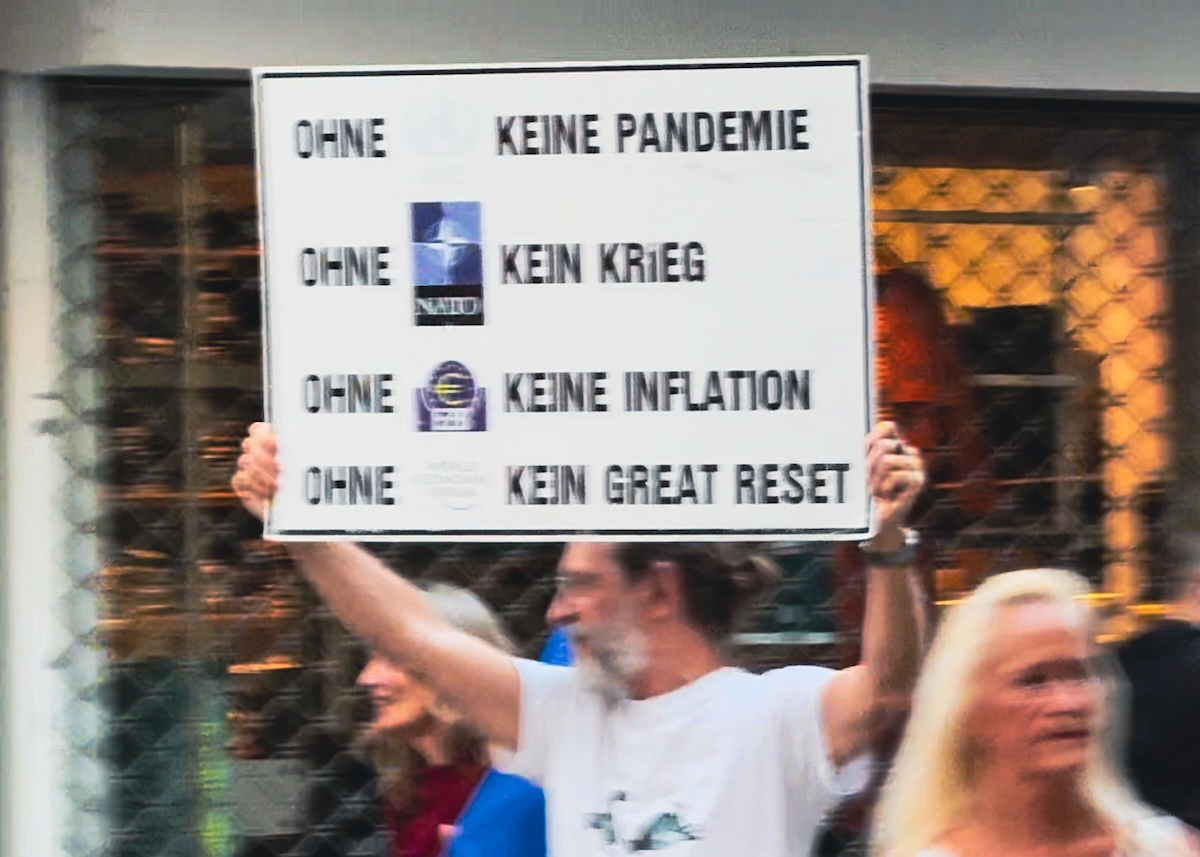
As the march through the streets of Görlitz began, the group unfurled a banner featuring the Kingdom of Saxony’s coat of arms next to a message calling for “peace, freedom and sovereignty” by exiting NATO, the European Union and the World Health Organization. It’s not uncommon to see “Monday march” protesters carrying signs featuring antiwar slogans or advocating cutting off support for Ukraine these days. One Monday marcher in another city even had a sign quoting former Soviet leader Mikhail Gorbachev’s plea to end the Cold War.
Franziska Schubert, the state leader of Saxony’s Green Party, who is from the rural border region around Görlitz, says the Monday marches are increasingly sympathetic to Russia.
“If you do the Monday demonstrations here, you see people with freedom flags and Russian flags,” Schubert tells me in a café across the river in Poland. “For me it is disgusting. People believe in Putin’s Russia, in these times, after all that we know?”
She explains that given the region’s complex history and a cultural nostalgia rooted in a longing for the imagined stability promised by the former communist system, “people in this part of Germany tend to be Russia-friendly.”
Schubert says there is no cognitive dissonance for people nostalgic about the old communist system while simultaneously embracing the far right. “They don’t see a problem,” Schubert says. “Not all were revolutionaries. A lot of people arranged themselves with the system.”
Marches like the one in Görlitz are organized and promoted through Telegram channels. One of these channels, which calls itself Freie Sachsen, is a far-right separatist group that aspires to restore the king of Saxony to his rightful throne. The group has over 100,000 followers on Telegram.
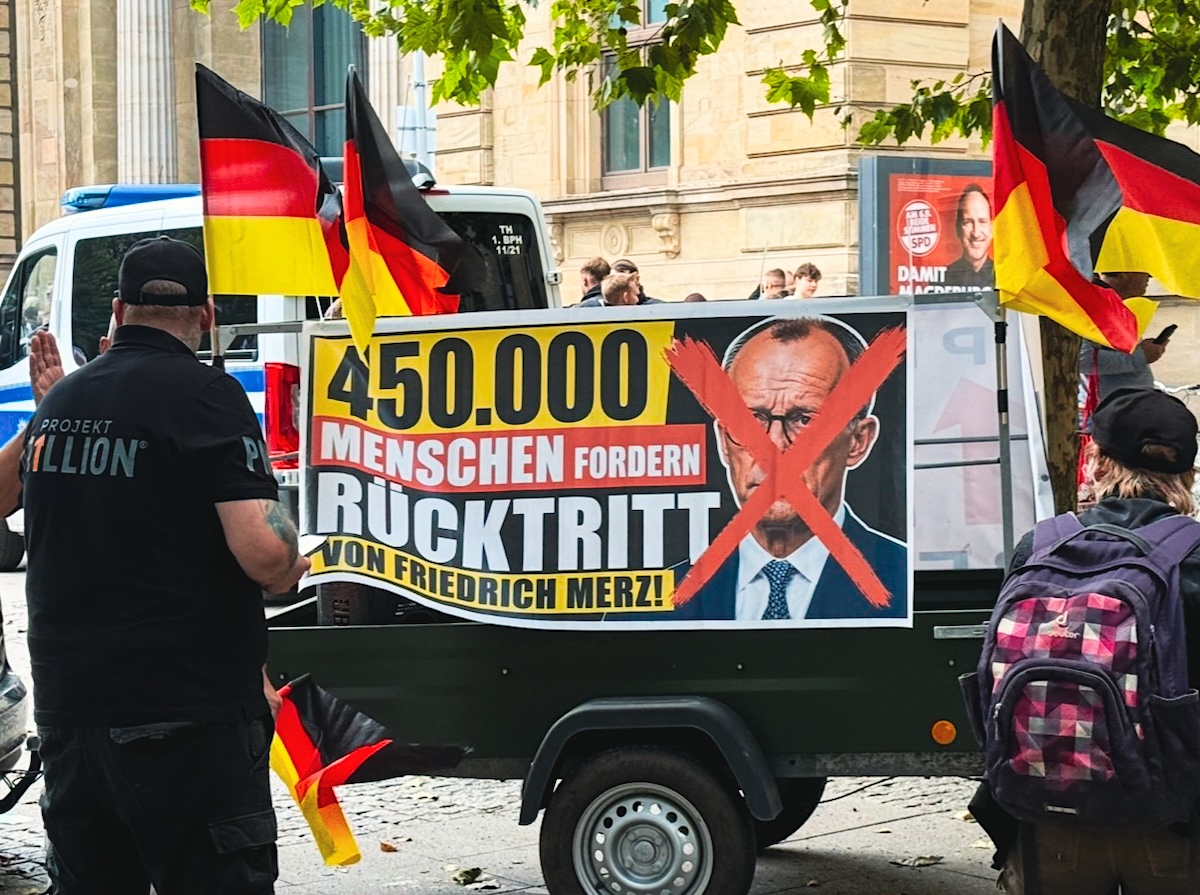
Even the flag-waving BMW convoy I encountered in Magdeburg is organized through a similar network. That slow-roll car protest was organized by a Telegram channel that calls itself Autokorso Magdeburg, which is associated with another conspiratorial far-right group called Projekt M1llion that believes political elites are criminally oppressing the public. Their aim is to mobilize one million Germans behind an 11-point plan that includes forcing the resignation of Germany’s government, ending support for defending Ukraine and abolishing carbon taxes.
It’s all very wacky stuff and easy to dismiss. But many people I spoke to referred to the growth and visibility of these conspiratorial groups in their attempts to explain the AfD’s recent surge in support.
Maxi Hoke of Kulturbüro Sachsen, a civil society group focused on monitoring and countering the far right in Saxony, has been on the ground in smaller communities, watching the influence of these groups as they grow in eastern Germany.
“The internet became a multiplier,” Hoke says. “The protest movement was like a door opener towards far-right topics.” Hoke says this anti-public-health movement forged an “alliance” between everyone from anti-maskers and anti-vaxers with Reichsbürger conspiracy theorists, QAnon people and neo-Nazis.
“The AfD tried to be the voice of the protest movement.”
Conspiracy theories, social media and authoritarianism
These conspiratorial narratives are uniting a diverse and heterogeneous circle of extremist groups and online communities, but they also have an important ideological function.
Academic literature focused on the history of fascism has long recognized a connection between conspiratorial beliefs and authoritarianism. At the University of Leipzig’s Else-Frenkel-Brunswik-Institut, or EFBI, which releases an annual report on authoritarian attitudes in Germany, academics have been studying the “overlap between conspiracy beliefs and right-wing authoritarianism.”
Their academic approach proposes that authoritarianism functions by splitting reality into “good” and “bad” parts, attributing everything “good” to an in-group and everything “bad” to an out-group or scapegoats. “In conspiracy beliefs, this projection leads to aggression towards supposed conspirators while fostering a heroic self-image as the ‘awakened.’”
According to EFBI’s research, one of the main distinguishing identifiers of AfD supporters is an inclination towards conspiratorial beliefs.
It’s not difficult to imagine how these kinds of people would react to a global pandemic. “The COVID-19 pandemic not only triggered a public health emergency but also precipitated a profound collective loss of control,” their research notes. “Theories linking a deprived need for control with political radicalization suggest that feelings of powerlessness may foster right-wing extremist attitudes.”
EFBI characterizes the rise of these conspiratorial beliefs and extreme right-wing backlash as a “dysfunctional attempt to restore a lost sense of control.”
Germany’s experiences during the pandemic are broadly the same as what happened in Canada and other industrialized countries around the world.
When governments ordered lockdowns to flatten the curve and save lives in early 2020, people began filling the time streaming videos, ordering things online and overcoming social isolation through parasocial relationships on social media. According to Statistics Canada, three-quarters of Canadians reported that their internet activities increased during the pandemic.
Many people’s social lives shifted from physical reality to virtual spaces. While some rekindled old friendships, others found community in conspiratorial Facebook groups, extremist Telegram channels or Zoom calls chaired by sovereign citizens with messianic complexes.
During the pandemic, I spoke with family members of people who went off the deep end and became obsessed with conspiratorial online content. I was struck by how many people described the same recurring pattern. It always started with some pre-existing personal trauma, followed by them becoming socially isolated and cut off from their normal support networks. They turned to the internet, became extremely online and were swept away down rabbit holes by social media algorithms.
For some, these online spaces offered a sense of community and belonging that they’d lost following rifts with friends and family members over public health rules or vaccines.
Numerous people I spoke to in Germany shared similar anecdotes about family members or neighbours who’d undergone dramatic ideological transformations in recent years.
Wolfgang Höffken organizes workshops on countering the far right for the Friedrich-Ebert-Stiftung, a social democratic think tank. Höffken says this is a familiar story he hears often in smaller rural communities.
“Here in east Germany, you can ask anyone, they will have people in their family like this,” he tells me, citing conspiracies about “Bill Gates,” “vaccinations” and “wearing masks.”
Höffken says many older people in these communities originally signed up for social media accounts to stay in touch with family, but over the last decade their feeds have become extremely politicized. “The constant information that people can get on social media and the algorithms... you can’t compete with it.”
Felix Steiner, who works with a civil society group based in Thuringia called Mobit, sees the explosion of conspiratorial beliefs as a symptom of a profound “technological transformation” taking place in Germany and across the world in recent decades.
From conspiracies about Bill Gates and the World Economic Forum’s Klaus Schwab to QAnon, Steiner says “it doesn’t matter which language... they are spreading all over the world.”
“You can’t even talk to these people,” Steiner laments. “If you think there’s a small group of people controlling the whole world, if you think coronavirus is not real, how can we talk with each other?”
Steiner thinks the widespread adoption of mobile phones and people shifting their lives online during the pandemic contributed to a new cultural condition where people are overwhelmed by having instant access to all the news and information in the world in their pocket at all times.
“You look for ways to understand the world, and one way is conspiracy theories,” Steiner says, reasoning that the world feels a lot less complicated when you believe “there’s one group controlling the world and everything that happens, it’s caused by them.”
This “technological transformation,” as Steiner puts it, is also having profound impacts on Germany’s electoral politics — a danger, ironically, that younger progressive influencers with hundreds of thousands of followers seem most clear-eyed about.
“If you’d like to understand the rise of the AfD, you have to look at social media,” says Hannes Kreschel, a 23-year-old democratic activist and one of Saxony-Anhalt’s most famous social media personalities.
“The AfD created a whole network, a whole parallel universe,” Kreschel explains. “It’s like MAGA. It’s basically the same methods, it’s the same talking points.”
Over the last several years, Germany has seen the growth of a far-right information ecosystem consisting of alternative media outlets, influencers, podcasters and livestreamers who are creating the conditions for the AfD’s messages to resonate with voters.
The AfD and this alternative media network are relentless in pushing narratives of social decline and setting up scapegoats for people to blame and rail against. “It’s this message of ‘You are feeling bad and there is a scapegoat for that,’” says Kreschel. “‘You’re feeling bad? Yeah, immigrants are the problem.’”
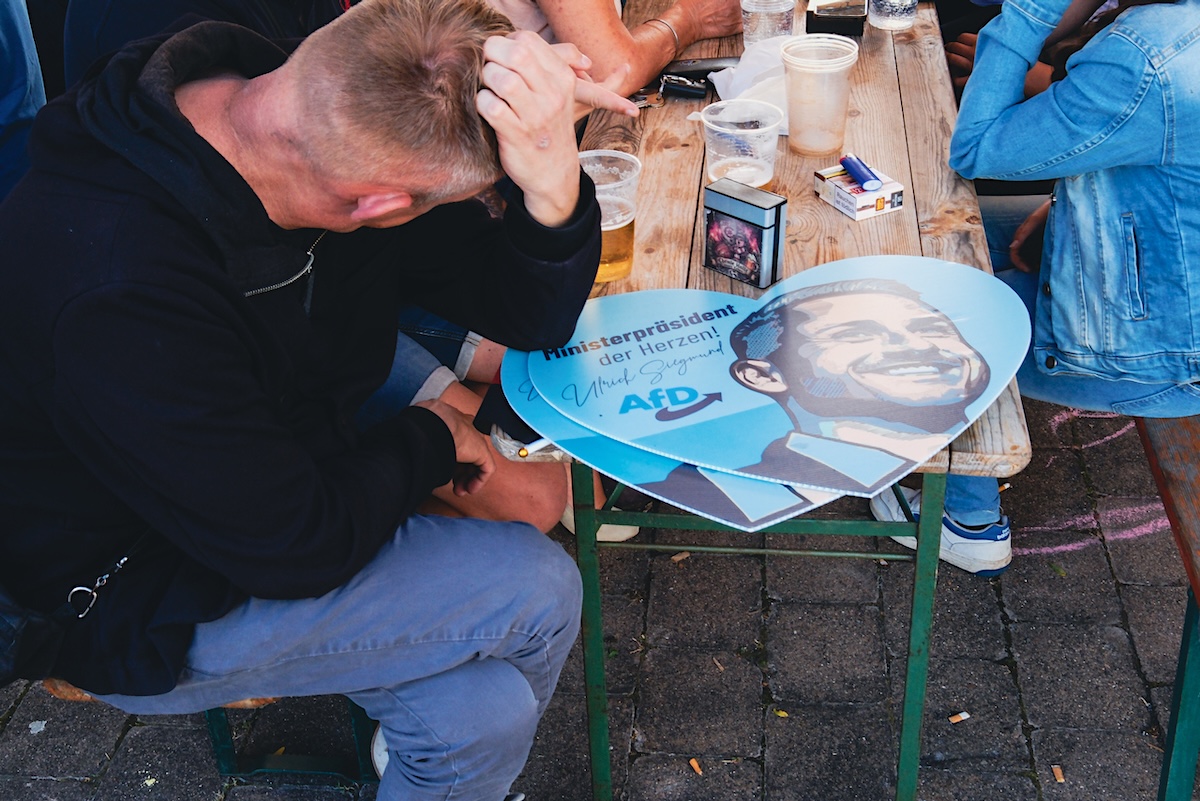
Ulrich Siegmund, the AfD’s leader in Saxony-Anhalt, has described this alternative information machine as the “foundation” of their success.
“The era has begun where they can no longer simply get away with their fairy tales, their fake news and their lies,” Siegmund said in one campaign speech. He declared that the AfD had helped to create an “alternative offering in this country so that people can, finally, for the first time, form their own impression and then quite automatically land with the Alternative für Deutschland.”
Siegmund, a 35-year-old former perfume salesman, rose to national prominence making TikTok videos railing against public health restrictions during the pandemic.
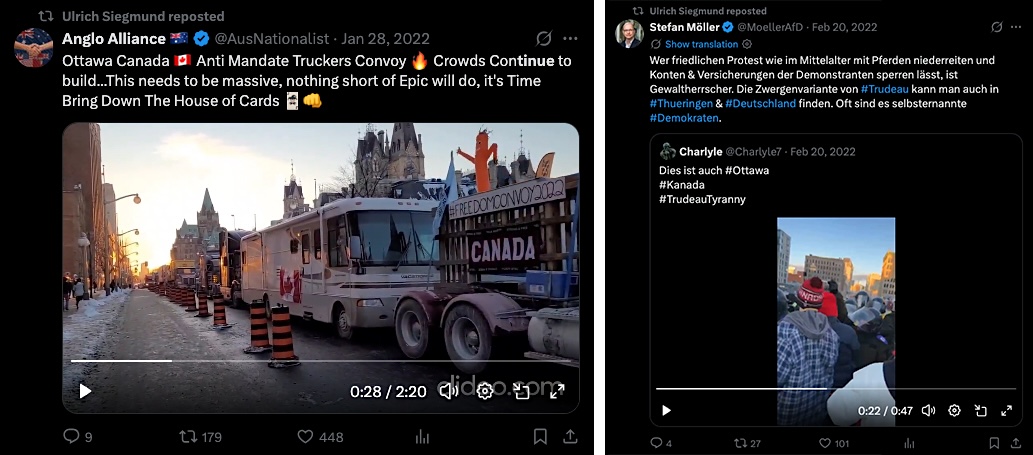
In the winter of 2022, Siegmund was posting anti-vaccine TikToks and videos of himself giving speeches at Monday marches in small towns around Saxony-Anhalt, when he began taking notice of an event happening 6,000 kilometres away in Ottawa. The AfD leader repeatedly retweeted content supportive of the Freedom Convoy, including statements drawing comparisons between the convoy’s struggles with the Canadian government and the AfD’s own struggles in Germany.
Two years later, Siegmund now presents a softer image that comes across more like a reality television star than a raving anti-vaxer. The AfD leader carefully stages his public appearances for social media audiences, including his one million TikTok followers, with help from an entourage of livestreamers and a personal team of videographers and boom mic operators who follow him around everywhere.
(For what it’s worth, it turns out Siegmund’s video production team also has links to far-right extremists, including individuals with ties to the Identitarian movement and the youth wing of a German neo-Nazi party.)
Despite Siegmund’s softer image, the AfD’s platform is an extreme document. It vows to carry out mass deportations as part of a “remigration” program largely focused on Syrians and Ukrainians, promises to rewrite school history curriculums to restore pride in German nationalism, and pushes to defund arts and cultural programs — specifically targeting “anti-German art” and Saxony-Anhalt’s iconic Bauhaus museum. (An Associated Press article noted the AfD’s targeting of the famous school of design came “nearly a century after the Nazis shut down the world-famous Bauhaus.”)
By all accounts, Siegmund’s social media strategy — particularly on TikTok — appears to be paying off. But there remain questions about how organic that engagement truly is.
Numerous studies in recent years have found social media platforms are serving users disproportionate amounts of right-wing content. One 2025 study by Global Witness found TikTok and X in particular were overwhelmingly recommending pro-AfD content to users who weren’t even following the party.
Elon Musk, the world’s richest man and owner of X, has been accused of manipulating his platform’s algorithms to push far-right content. On his own personal account, Musk repeatedly amplifies extreme views on race and white nationalist narratives to his quarter of a billion followers.
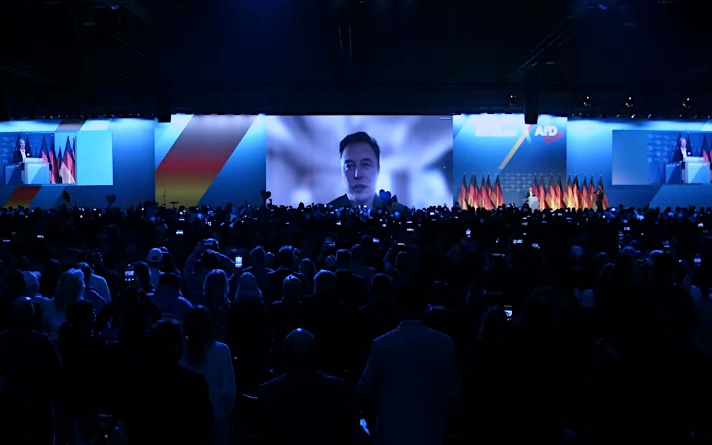
While it remains unclear why the platform is suddenly awash in extreme content, Musk’s appearance at an AfD rally in 2025 (where he told AfD supporters Germans needed to get over their “past guilt” and learn to “be proud of German culture” again) has done little to inspire trust.
Musk has also commented on Canadian politics: in 2022, he posted in support of the Freedom Convoy that had taken over Ottawa and said, “It would appear that the so-called ‘fringe minority’ is actually the government.”
Luisa Neubauer, a German climate activist who has over a million social media followers, sees a causal relationship between the unchecked influence of social media platforms and the AfD’s growth in support.
“It’s the algorithms and the platforms owned by big tech oligarchs,” Neubauer tells me in Magdeburg. “They are radicalizing its users.”
While it might be tempting to imagine mad tech billionaires manipulating democracies around the world by flicking buttons at random, Maik Fielitz, a political scientist at the University of Jena who has researched the AfD’s social media activities in recent elections, says the mechanics of how this actually works are much more convoluted in practice.
In one academic paper looking at the AfD’s social media use in the 2024 state election in Thuringia, Fielitz observes that the party’s reach on social media was amplified by a decentralized network of alternative media and far-right influencers more than it was driven by algorithms. While there is data showing the AfD does benefit from platforms’ recommendation systems, he stresses these systems are complex and can vary widely depending on “which kinds of signals [users] give to the platform.”
“The AfD is very present on social media, but it’s not the central driver,” Fielitz says. In his view, he thinks the AfD is actually “dependent on the platforms.”
“The AfD understood how to outsource their own campaigning,” he says. “They understood how social media works in a way that a centralized campaign never works.”
His research suggests it is this far-right information ecosystem consisting of alternative media outlets, influencers and livestreamers, as well as extremist groups operating through Facebook groups and Telegram channels, that explains how the AfD’s messages are spreading to the mainstream.
“This is much more effective than trying to just use party accounts,” Fielitz says, pointing out the AfD is building “mutually beneficial” relationships with these online actors, giving some exclusive interviews, special access and perhaps, in some cases, even arranging “funding” and “support.”
Who are ‘the people’ and who are ‘the elites’?
The AfD is often described as a “populist” party, but what does that word really mean — and is it relevant to describe the phenomena we are dealing with today?
Populism is traditionally imagined as a form of politics pitting “the people” against corrupt elites or other external threats. It’s a term that describes a rhetorical style more than it describes the forces that bring them into existence. In the 21st century, in an age of digital platforms and algorithmic feedback loops, this concept seems far too simplistic to convey what is actually fuelling the far right or creating the conditions for a political party like the AfD to emerge.
The reality is we no longer exist in a world of mass audiences or a single public square. Our perceptions of social reality have become so fragmented by different platforms, online communities and alternative media that it’s hard to form any consensus on who “the people” are and who “the elites” are.
If traditional populism mobilized a singular people against the establishment, the new populism emerging in Germany, Canada and other democracies is bringing together a confusing coalition of extreme groups and strange online communities that exist on the fringes of the internet against the norms and symbols of a vaguely defined mainstream society. And on this base, it’s building something bigger.
In some ways, the AfD might be best adapted to these new political conditions. Not because the party made a strategic choice to be the vehicle of these disparate constituencies, but because it is itself ultimately a product of the same toxic information environment that it now appeals to.
You might even say the AfD effectively functions as a big-tent party for the audiences belonging to a network of alternative media outlets, far-right influencers and conspiratorial online communities that are mobilizing a growing number of people against both real and imaginary grievances.
Siegmund credits this alternative information machine for the rise of the AfD. It might be the case that his party is ultimately more dependent on it than the other way around.
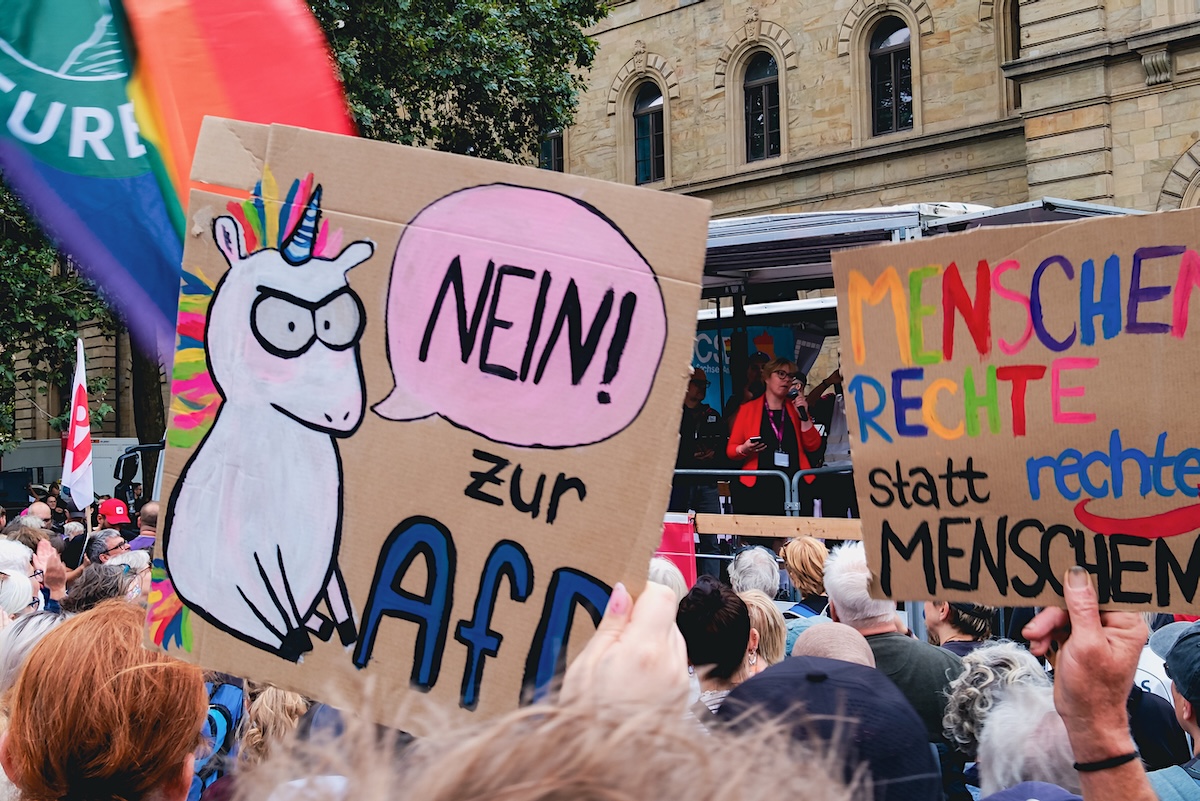
Election night in Saxony-Anhalt
On election night in Saxony-Anhalt, I found myself at the Christian Democratic Union’s election-night party at an upscale four-star hotel in Magdeburg alongside party officials, young staffers and international reporters from Reuters and the New York Times. As far as I could tell, no ordinary party supporters were present.
When local TV stations announced the brutal exit poll results, you didn’t need to speak German to see the look of disbelief on the faces of the party’s senior leadership. The AfD had won 44 per cent of the vote, falling just short of an absolute majority. You could feel the ground shifting under everyone’s feet.
Shortly after, I spotted Stephen Stehli — who’d confidently predicted the AfD’s vote would fall around the low 30s, but certainly not greater than the high 30s — grabbing a drink at the hotel bar.
I asked him what he thought of the AfD’s support reaching the mid-40s.
“What can I say?” he said, smiling. “This is democracy in action.” He took a long, sad sip from his glass of beer.
When I left the CDU’s election-night party, most of the TV screens had been flipped over to soccer.
Since election night, the AfD has been working to consolidate power despite lacking an absolute majority. In October, the party secured the speakership in the state parliament, and in December, Siegmund will attempt to win the confidence of parliament to serve as minister-president.
If he is successful, Siegmund will attempt to govern a state that identifies his own party as a threat to Germany’s democratic constitution. It would be the first time the AfD forms government in Germany.
A few weeks after the vote in Saxony-Anhalt, the AfD placed first again in another state election in Mecklenburg-Western Pomerania. The AfD is now leading in national polls, prompting some to contemplate how a far-right government in Berlin could upend the world.
I decided to check back with Stehli a few months after flying home to Canada to see how things were going in Saxony-Anhalt.
“I’m quite sure that the AfD will take over the state government in December, a terrible prospect,” Stehli told me, predicting his party “will be in the opposition for at least 10 years.”
With the benefit of hindsight, Stehli attributes the AfD’s results to a charismatic AfD leader combined with “anger against Berlin” and “all traditional politicians.” He suspects this is not exclusively a local issue but part of a wider trend across Europe and North America.
“Maybe Germany is becoming more ‘normal’ in the sense that we will experience populist governments... like in Poland or Hungary or the U.S.A.,” Stehli suggested, though he reiterated that “Saxony-Anhalt has only 2.6 per cent of the German population.”
“We ain’t that important.”
Yet what’s happening in Saxony-Anhalt does feel important. The dramatic shift to the hard right in this part of Germany is not a local issue or an isolated incident. It’s a symptom of something deeper playing out not only in Saxony-Anhalt, or eastern Germany, but in democracies around the world — including Canada.
I’ve already seen how extreme and conspiratorial ideas that start off in obscure corners of the internet can suddenly spring off a screen and materialize in the real world. Four years later, on the other side of the planet, what’s happening in Germany right now feels both foreign and familiar.
Travel associated with this reporting was made possible through a transatlantic journalism fellowship sponsored by the Heinrich Böll Stiftung, a German think tank that focuses on green politics and environmental issues. The foundation had no involvement in the reporting, research or editorial process of this article. 
Read more: Politics






Tyee Commenting Guidelines
Please note that email notifications for replies are not currently working due to a software issue which may be resolved in a future update.
Comments that violate guidelines risk being deleted, and violations may result in a temporary or permanent user ban. Maintain the spirit of good conversation to stay in the discussion and be patient with moderators. Comments are reviewed regularly but not in real time.
Do:
Do not: