
 SHARE:

The province’s biggest long COVID clinic has laid off the majority of its staff and slashed the programs it offers after the government made recent billing changes to the provincial Medical Services Plan, capping how many patients can participate in online sessions.
The clinic currently supports 9,000 patients. It will retain its five doctors but laid off 11 part-time allied health workers and one of its five medical office assistants.
In B.C., allied health workers include 70 professions that provide a wide range of health-care services, including care, support and diagnostic services. The BC Centre for Long COVID, ME/CFS, and Fibromyalgia, or BC-CLMF, worked with physiotherapist, occupational therapist, psychologist, counsellor, dietitian and naturopath allied health workers.
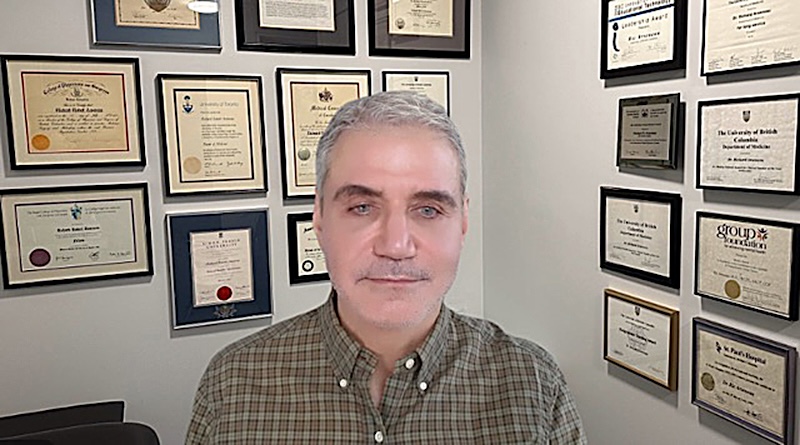
The billing changes have radically reduced what services the BC-CLMF clinic can offer, Dr. Ric Arseneau told The Tyee.
Arseneau, who is a specialist in internal medicine, runs the clinic with fellow internal medicine specialist Dr. R. Jane McKay.
Arseneau and McKay built their clinic using online group medical visits.
This style of visit was introduced by the province during the early days of the COVID-19 pandemic; the only stipulation was that each patient needed to get a one-on-one interaction with the doctor during the visit.
Before the recent MSP changes, the BC-CLMF ran long-term weekly structured group medical visits, small group medical visits, group medication visits and a special lecture series, which drew anywhere from 10 patients for a one-hour session to 150 patients for one-and-a-half-hour session.
All in all, the clinic was running 70 different groups, and the average session was attended by 50 patients, Arseneau said. Sessions were often co-run by a doctor and an allied health professional.
Riel Hahn, who lives with long COVID and previously spoke with The Tyee, compared the care she receives at the clinic to finally having the proper operating manual for her body and brain. She credited the group format for helping alleviate the extreme isolation that can come with living with a complex chronic illness, and said ultimately the clinic gave her hope.
The clinic grew quickly. In 2024 there were 2,258 patients. By the summer of 2025 there were 5,200 patients. By September 2026 it had grown to 8,500, and by November it had hit 9,000 patients, Arseneau said.
Patients and staff The Tyee spoke with said roughly one-third of every session was dedicated to patient questions. Receiving answers in a large group setting was useful, sources told The Tyee, because patients often had similar questions.
Arseneau estimates that around 300,000 British Columbians are living with long COVID, which he defines as a form of post-viral syndrome.
Post-viral syndrome patients can develop conditions such as myalgic encephalomyelitis/chronic fatigue syndrome, fibromyalgia or postural orthostatic tachycardia syndrome, which have clinically diagnosable criteria, Arseneau said.
While these diseases can also occur after the body goes through extreme stress, such as a car accident or childbirth, Arseneau’s clinic focuses on the post-viral versions.
And the care provided by the clinic seemed to be working. A commissioned independent review of the clinic by MNP found almost one in five patients got back to work and 80 per cent got better.
But on Nov. 1 the Medical Services Commission, in collaboration with Doctors of BC, changed how doctors could bill MSP for online group medical visits, radically reducing the BC-CLMF clinic’s income.
While the official line is that the changes were instituted after a scheduled review, sources told The Tyee they suspected the underlying reasons could be that the clinic had grown too large, saw patients solely online instead of in person, or billed too high.
BC zeroes in on telehealth group size visits
On Nov. 1, B.C.’s Medical Services Commission updated its MSP billing codes, introducing a 30-person limit on online group medical visits and slightly decreasing how much a doctor can bill for groups of 23 to 30 patients. Groups smaller than 23 patients are not affected, though patients are now limited to attending two online sessions per week.
Doctors of BC and the provincial Health Ministry told The Tyee these changes had been in the works for more than a year and followed a scheduled review of the temporary fee codes introduced to facilitate virtual care options during the pandemic.
The province first tried to cap the size of telehealth group medical visits in 2025 but delayed implementing the changes until earlier this month.
The more patients there are in a group, the less time a doctor has to dedicate to each patient, so “the 30-patient-per-physician limit was introduced to ensure that doctors can deliver quality care while balancing the needs of the group,” Dr. Adam Thompson, president of Doctors of BC, told The Tyee in an email.
The Health Ministry told The Tyee it would not answer questions during the interregnum period — between the NDP government and the swearing-in of the Conservative government — on why these changes were made. The ministry did tell The Tyee it had consulted with the BC-CLMF clinic about the MSP billing changes while it was considering and developing the changes.
Arseneau said he told the ministry his clinic could be financially viable with the 30-person cap, but he was not consulted on the reduced fees and the limit of two sessions per week per patient. Those two changes mean the clinic is no longer viable, he said.
Arseneau also told The Tyee that he believed the changes were targeted at his clinic and were made due to a misconception that his clinic wastes money.
In the 2024-25 financial year, doctors at the BC-CLMF clinic billed MSP for about $1.8 million.
The physical address of the clinic is Arseneau’s $3-million waterfront home on Bowen Island.
Arseneau told The Tyee he pays himself $700,000 a year. McKay billed MSP $544,000 in 2024-25. That’s at the high end and middle ground, respectively, of what physicians can earn in Canada, according to data released by the Canadian Medical Association in 2019.
The clinic’s overhead is about $1 million a year, which included the cost of software and the five medical office assistants who were paid close to $100,000 a year, Arseneau said. According to the federal government, most medical office assistants in Canada make about $57,000 a year, on the high end.
But Arseneau said his clinic saves the health-care industry money by providing patients effective care. His patients do not have to endure long waits to see specialists or turn to emergency departments for care.
Although other long-COVID clinics exist, such as the Provincial Health Services Authority’s BC Women’s chronic diseases program and Post-COVID-19 Interdisciplinary Clinical Care Network, Arseneau said he and McKay are the only long-COVID specialists in the province.
The Provincial Health Services Authority declined to provide any details about its clinic during the interregnum period.
The Tyee reached out to the Conservative Party of BC for comment but did not hear back. The party told CBC its health minister would “take a careful look at what happened here” once sworn in.
The challenges with the group care payment model
To get more clarity on why these billing changes may have been implemented, The Tyee spoke with Andrew Longhurst, a senior researcher and political economist with the Canadian Centre for Policy Alternatives.
Longhurst said that while he has not been following the clinic’s story closely, he can identify some systemic issues at play.
Longhurst’s main critique was of the province’s fee-for-service structure, called the longitudinal family physician payment model, which he said has “never been effective” at providing team-based care.
Under this model, doctors can bill MSP for each patient they see, for administrative time and according to the complexity of the patient. The money flows to the doctor, and the doctor distributes funds to pay for overhead costs and staff as needed.
The model structures how doctors think of patients and limits how well allied health-care workers can be integrated into a team, Longhurst said.
He said a better way to deliver care would be through funding team-based, clinic-style models of care with salaried or capitated positions for doctors and allied health workers alike, with funding for administrative support.
(Capitation refers to a health-care billing model where the health-care professional gets paid per patient, rather than per interaction with that patient.)
These team-based, clinic-style models could be structured as non-profits or as public clinics, but either way, their organization and payment structure would “create cohesion among the team because you’re all there to work together for the patients,” he added.
Flagged as ‘a factory model’?
Longhurst said it’s also possible the government implemented these changes because the clinic was flagged as making too much money or having too many patients.
Doctors of BC’s Thompson said it’s common for clinics with several doctors to have several thousand patients. But it’s less common for those clinics to be fully online.
“I’m guessing the ministry had concerns about [the clinic] because they saw it as a bit of a factory model, like, ‘You saw how many patients virtually?’” Longhurst said.
Longhurst added he has no reason to think the clinic isn’t well-intentioned, “but it’s also true they were making very good money.”
During the pandemic era, the clinic billed MSP anywhere from $713 per half-hour for a session with 50 patients to $2,139 per half-hour for 150 patients.
For a 90-minute session with 150 people, which happened weekly in a lecture format, the clinic could bill MSP $6,417. Arseneau said that generally 500 patients attended the virtual lecture, but the clinic billed MSP for only a fraction of them.
“Fifty comes from what’s manageable as an interactive group, and 150 was a number that we thought was fair to help cover overhead for the clinic and management,” Arseneau said. As the clinic had 9,000 patients, it needed five medical office assistants to handle the large volume of patient emails, he added.
As of Nov. 1, the government has capped online group medical visits at 30 patients, and a new graded billing system means doctors will earn less on bigger groups and be able to bill only $343 per half-hour with 30 patients.
That means doctors can bill MSP between $370 and $1,796 less per half-hour than they could before the Nov. 1 changes.
As a result, the clinic has cut most of its programs, except the ones provided by the clinic’s five doctors, Arseneau said.
Longhurst questioned why Arseneau or McKay didn’t instead take a slight pay cut to be able to keep the allied health workers onboard.
“I think physician compensation is getting completely out of control in B.C.,” he said. “Do physicians need to be making $700,000? In my opinion, no.”
He continued: “If you’re not willing to set aside more of the gross billings to go towards providing allied health professionals, I think that speaks to a lot of the self-interest we see among a lot of physicians.”
Arseneau said his clinic offers the best results for the least amount of money.
“Our model is actually not that expensive,” he said, especially when compared with the complex chronic diseases program at BC Women’s Hospital, which Arseneau said sees 100 patients a year and costs $3 million annually.
He pointed to a recent study, which reviewed 10 years of the program. The study found that while patients had a slight improvement in overall physical and mental health, more needed to be done to address patients’ symptoms.
“We’re actually saving money, we’re cheaper, and we actually have results that are not seen anywhere else,” Arseneau told The Tyee.
“They don’t realize that we are keeping 9,000 patients out of the emergency room, out of their family doctors’ offices, saving them from seeing other specialists,” he added.
The BC-CLMF clinic has also been getting international attention. Arseneau said he presented his clinic model to the World Health Organization, and doctors in Mexico have since reached out asking for help to set up a similar model.
“While the rest of the world is recognizing the work that we’re doing, we’re fighting locally to survive,” Arseneau said.
‘Life-changing’ help
The Tyee spoke with two current patients at the clinic: Angela Cruikshank, who lives with myalgic encephalomyelitis/chronic fatigue syndrome, and Riel Hahn, who lives with long COVID.
Before she was referred to the BC-CLMF clinic, Cruikshank was on a “specialist merry-go-round” where she was sent from specialist to specialist to try to explain her weird symptoms, with little success, she said.
A friend recommended the BC-CLMF clinic. It was “life-changing,” Cruikshank said.
For the first time, Cruikshank said, her doctor could describe, diagnose and understand everything that was going on with her.
The doctor also told her she was a really good candidate for recovery. “It took me a long time to actually believe it, but I do believe that now,” she said.
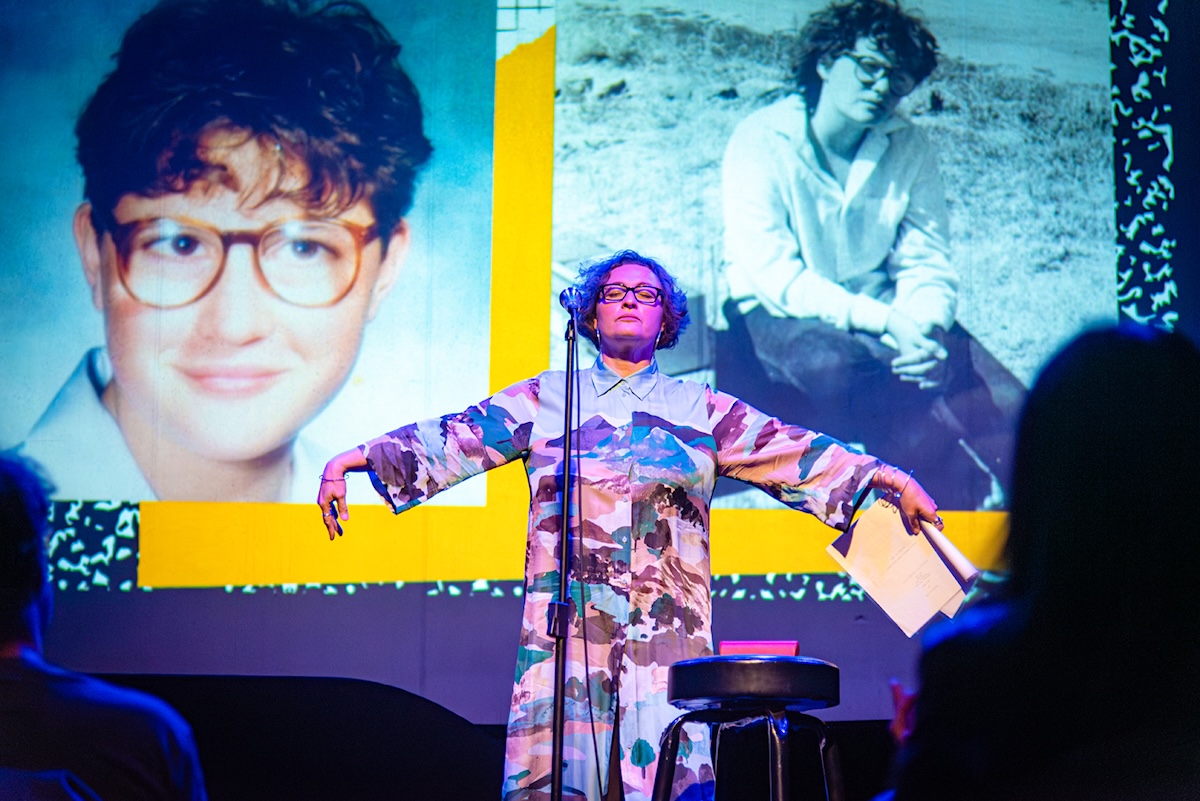
Hahn similarly struggled to find adequate care before being referred to the clinic. She said the clinic taught her about her condition, including the skills and coping mechanisms needed to navigate her day-to-day experiences.
“I did not think I would have any quality of life at all and was confused and terrified for a long time,” she told The Tyee in an email. Now she “absolutely” believes she will be able to get to remission and have a life “with a lot of joy and total confidence in my ability to manage and care for my condition — and even thrive.”
Angela Grace, a registered psychologist who specializes in long COVID and is one of the allied health workers recently laid off by the clinic, praised the work the clinic was doing.
Grace said she was working with BC-CLMF’s Dr. Lana Dyment to set up a group for youth aged 12 to 30. Young people who develop long COVID are hit particularly hard because they have to adjust to living with a chronic illness before they can finish their education and get established in a career, she said.
Kids would go from being high-energy to “not being able to think, not being able to remember, not being able to spell, not being able to concentrate, not being able to do sports anymore. Like, they just couldn’t get out of bed,” Grace said.
Kids could also develop severe psychiatric disorders such as obsessive-compulsive disorder or suicidal ideation “out of nowhere,” she said.
The clinic offered medical support with medication and educational group visits and created a place for youth to connect.
“When youth are really isolated at home without a community to talk to, it becomes really important to connect where they can,” she said.
Online group medical visits provided “such an efficient model of delivering information, education, evidence-based best practices, updates on research,” she said. The online nature of the clinic also meant that patients from rural and remote communities, or who were housebound or unable to travel due to their health, could access care.
An article published in JAMA Pediatrics calculates that 10 to 20 per cent of kids in the United States will develop long COVID symptoms after a COVID-19 infection. Canadian numbers are harder to calculate because cases aren’t tracked, Grace said.
Grace thinks the recent MSP changes are related to government unwillingness to invest in allied health, where doctors work alongside other health professionals such as physiotherapists and dietitians.
“It’s time to get out from under a dinosaur model and move to what works, what is actually going to be serving the public — especially in areas where there’s a lack of access to services, to doctors, to allied health professionals,” she said.
Grace is frustrated that the province is effectively rolling back funding for the BC-CLMF clinic while failing to invest in other long COVID supports, for example educating health-care professionals about the condition and how to treat it.
Outside of what Dyment can offer at the reduced BC-CLMF clinic, “there are literally no publicly funded services for youth with long COVID” in the province, Grace added.
There’s also an element of COVID denialism here, where the government downplays the seriousness of the disease, Grace said.
“COVID infections are still happening,” she said. But hospitals no longer require masking and schools don’t have the necessary air ventilation to prevent infections, she said.
The patient group advocating for the clinic
LifeLine BC, a patient-led advocacy group and self-described independent organization, has been running a campaign to promote the BC-CLMF clinic and decry the MSP changes.
In October, shortly after the province announced its MSP billing changes, the group organized a letter-writing campaign to ask journalists to cover how these changes would affect the clinic.
The Tyee received at least 77 of these emails, though some were repeats sent to different staff members. Many of them were heartbreaking calls for help from patients who were terrified they were going to lose access to the BC-CLMF clinic.
All of the letters said the clinic served 8,500 patients and received 50 referrals per week. Most of the letters cited the MNP report, which said the clinic saved the health-care system $2.3 million.
Dozens also inaccurately said the BC NDP had ordered the changes after it called the election. In fact, the changes had been decided on before the election but were announced shortly after the election was called. A governing party does not have the ability to make these kinds of changes after an election is called.
Grace, the registered psychologist who had been laid off by the clinic, was one of the people to reach out to The Tyee during this campaign.
When The Tyee reached out to LifeLine BC to ask for an interview with a representative of the advocacy group, someone who identified themselves only as Patrick offered to set up an interview with the clinic’s doctors and cc’d Dyment, who works at the BC-CLMF clinic, in all emailed correspondence.
Shortly after The Tyee interviewed Grace, she called to say she had been told by LifeLine BC that she had to kill the interview. Later that day Patrick emailed The Tyee with additional information from Dyment, answering questions The Tyee had spoken with Grace about in the now-killed interview.
When The Tyee asked Patrick to identify themselves, given that they were setting up interviews for the clinic and potentially involved with asking sources to kill interviews, they refused. When The Tyee followed up, they said their health had taken a turn and they would not be able to continue corresponding.
While The Tyee does sometimes grant anonymity to sources to protect their safety or privacy, it is highly unusual for a source to refuse to identify themselves to the journalist they are speaking with. When The Tyee grants anonymity, we take extra steps to independently verify a source’s identity and credibility, and these steps are also often vetted with a reporter’s editor. As The Tyee could not verify Patrick’s identity, we have not included any information they shared with us in this article.
After following up with Arseneau about why the interview with Grace had been pulled, The Tyee was given permission to use our interview with Grace.
Kayli Jamieson, a LifeLine BC member and BC-CLMF patient, who agreed to speak with The Tyee before Patrick declined to continue communications, said the advocacy group is a loose collection of “patients, physicians, allies and researchers” who “advocate on behalf of” the clinic. She and Arseneau both told The Tyee that the clinic does not pay LifeLine BC for its advocacy work.
Jamieson, who is a master’s student at Simon Fraser University’s school of communication and a long COVID research assistant in SFU’s faculty of health sciences, said she’s worried B.C. is following a national pattern of shutting down and defunding long COVID clinics.
The province’s remaining Post-COVID Recovery Clinic doesn’t offer prescriptions or one-on-one appointments with physicians like the BC-CLMF clinic does, she said.
The Tyee was not able to confirm this because the Provincial Health Services Authority declined to provide any details about its clinic.
Jamieson’s research lab at SFU recently published a guidebook recommending virtual integrated care for treating long COVID patients.
“This needs to be the way forward because as more and more people go without a primary care physician or und up in the ED, there just isn’t holistic care being put at the forefront,” she said.
“So many are getting lost or falling through the cracks in the system,” she added. 
Read more: Health








Tyee Commenting Guidelines
Please note that email notifications for replies are not currently working due to a software issue which may be resolved in a future update.
Comments that violate guidelines risk being deleted, and violations may result in a temporary or permanent user ban. Maintain the spirit of good conversation to stay in the discussion and be patient with moderators. Comments are reviewed regularly but not in real time.
Do:
Do not: