


 SHARE:

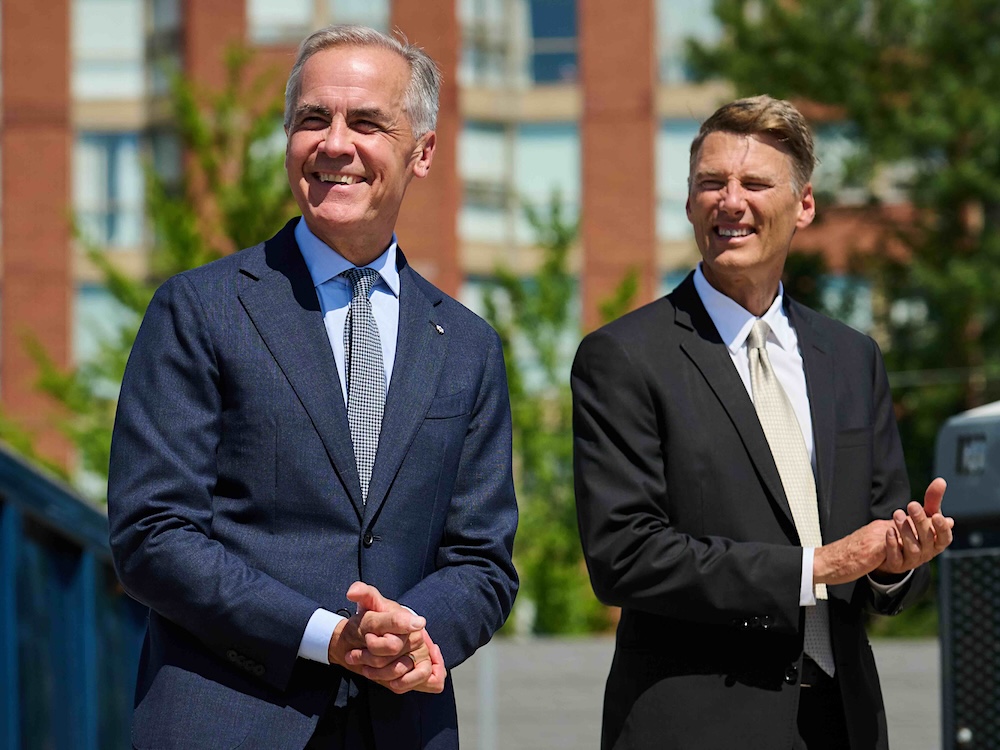
The federal Liberal government, led by Prime Minister Mark Carney and Housing Minister Gregor Robertson, wants Canadians to believe it has a serious plan to end homelessness.
Budget 2026 announced nearly $29 billion in homelessness-related investments over 10 years. But look beyond the headlines and a troubling picture emerges. The government's commitments fall an estimated $14.7 billion short of what is needed, even before accounting for the investments required to prevent people from becoming homeless or the need for provincial operating funding to realize the affordability and service needs in housing projects.
Robertson has once again promised to end homelessness within 10 years. He made a similar pledge when he ran for mayor of Vancouver in 2008.
Yet, after his decade in office, Vancouver was left with a legacy of market-oriented development that failed to deliver the affordability promised.
Canadians have reason to question whether this latest commitment is anything more than another political promise.
For over three decades, Liberal and Conservative governments have prioritized market solutions, investor incentives and private-sector development. The result is a housing system increasingly out of reach for ordinary Canadians, with rents soaring, deeply affordable housing disappearing and homelessness rising.
More of the same approach will not deliver a different outcome, as CBC Massey lecturer Leilani Farha, the former United Nations special rapporteur on the right to adequate housing, has pointed out through her research.
The $14.7-billion funding gap
Budget 2026 allocates $29.1 billion over 10 years to end homelessness. This funding is divided into four major streams, including $15 billion for supportive and transitional housing and integrated supports through Build Canada Homes.
Sounds impressive. But a deeper look reveals funding for supportive housing and the Canada Housing Benefit falls significantly short.
On the cost estimate side, using Toronto's Dunn House’s benchmark for the type of housing Build Canada Homes is expected to support, a City of Toronto report on Rapid Housing Initiative projects put its construction cost at approximately $425,000 per apartment.
The 2025 national Point-in-Time count recorded approximately 65,000 people experiencing homelessness across 75 participating communities, though this is almost certainly an underestimate, as these counts miss hidden homelessness, including people living in cars or couch surfing.
Notwithstanding, using 65,000 people as a benchmark for housing need and Dunn House's $425,000-per-apartment cost, the required capital investment would be approximately $27.6 billion.
The government’s $15-billion commitment for supportive housing leaves a whopping $12.6-billion gap.
Though this is not a comprehensive national costing, as construction costs and individual housing needs vary, it does demonstrate the scale of the challenge and the inadequacy of the government’s commitment.
Similarly, the Canada Housing Benefit presents another significant shortfall. The benefit provides direct financial assistance to help low-income households afford rent.
The Canadian Alliance to End Homelessness examined 64 potential program designs and recommended a model costing approximately $7.7 billion, compared with the government’s $5.6-billion commitment. The $2.1-billion difference means fewer families will receive the assistance they need and households will remain exposed to housing insecurity.
Furthermore, this funding allocation is for the renewal of existing funding, not new investment for new units. Rebranding funding renewal of an existing program as part of a homelessness prevention strategy does not make it a new commitment.
Together, these two gaps amount to approximately $14.7 billion. These figures are illustrative benchmarks, but they demonstrate how far the government’s commitments remain from the scale of the need.
We cannot end homelessness without preventing it
Aside from the significant funding shortfall, there is a fundamental flaw in the government’s approach: it focuses on housing people after they become homeless without adequately addressing why they lose their homes.
Homelessness depends on the balance between how many people lose their housing and how many are successfully housed. If people become homeless faster than the system can house them, a 10-year target will remain out of reach.
Budget 2026 does not establish a comprehensive national eviction-prevention strategy or meaningful protections against evictions into homelessness. Nor does it adequately confront unaffordable rents and the loss of deeply affordable rental housing.
Research from the Canadian Alliance to End Homelessness found that homelessness increased most in communities where the lowest-cost rental housing became more expensive and harder to find.
This helps explain why homelessness has doubled since 2018 due to a severe shortage of affordable rental housing and extremely low vacancy at the lowest-cost, most affordable end of the market.
Policy choices that push people out of their homes are the underlying cause to escalating homelessness.
Sadly, the government’s plan to end homelessness fails to address this.
Housing is a human right. Not an investment strategy
For years, Canadians have been told that affordability will return if governments deregulate, increase market supply and attract more private investment. Yet rents and prices have continued to rise, while financial investors have taken a growing share of the housing stock.
Budget 2026 continues this failed approach. It subsidizes private investment through construction loans, GST rebates on new rentals, mortgage insurance and reductions in development charges, without adequately requiring that these public subsidies deliver genuinely affordable housing.
Where are the enforceable conditions requiring private developers and investors to deliver homes that ordinary Canadians can afford? Public money should deliver public value, not simply improve private investment returns.
The contrast is particularly striking when the government commits $36 billion to its Productivity Mega Deduction, a single corporate tax measure worth vastly more than the government’s housing investment.
The government has found considerable fiscal room to incentivize private investment but has not matched that ambition with the public investment needed to guarantee affordable homes.
Canada has already recognized housing as a fundamental human right through the National Housing Strategy Act. Yet Budget 2026 continues to measure success primarily through investment and construction targets rather than whether people can actually access adequate, secure and affordable housing.
The government's objective to serve the developer class is further reinforced by Robertson’s comment: “Every Canadian should have access to a housing market that works for them.”
If the government truly wants to end homelessness, a human rights approach should guide its policy development.
It would prioritize those in greatest need, strengthen accountability and ensure public resources reach people excluded from the housing market.
It would also recognize that housing means security of tenure, affordability and the ability to live with dignity.
The choice ahead
The Carney government cannot claim to be ending homelessness while underfunding the programs that provide homes and prevent people from losing them. It must close the estimated $14.7-billion funding gap, strengthen the Canada Housing Benefit for new homes, expand deeply affordable and non-market housing and establish a comprehensive national homelessness prevention strategy.
New supportive housing also requires sustained provincial/territorial operating subsidies, mental health and addictions services and wraparound supports, but the federal government has yet to secure those agreements. Without these investments, construction announcements will not translate into the housing stability people need.
Homelessness is not inevitable.
But ending it requires political ambition, sustained public investment and a willingness to challenge the status quo.
It requires funding for the entire housing continuum, from eviction prevention and affordable rentals to transitional and permanent supportive housing.
Carney and Robertson cannot promise to end homelessness in 10 years while continuing to rely on the market-driven approach that helped produce the crisis.
Canadians need more than another decade-long promise. They need a government prepared to treat housing as a fundamental human right and invest accordingly. 
Read more: Federal Politics, Housing










Tyee Commenting Guidelines
Please note that email notifications for replies are not currently working due to a software issue which may be resolved in a future update.
Comments that violate guidelines risk being deleted, and violations may result in a temporary or permanent user ban. Maintain the spirit of good conversation to stay in the discussion and be patient with moderators. Comments are reviewed regularly but not in real time.
Do:
Do not: