

 SHARE:
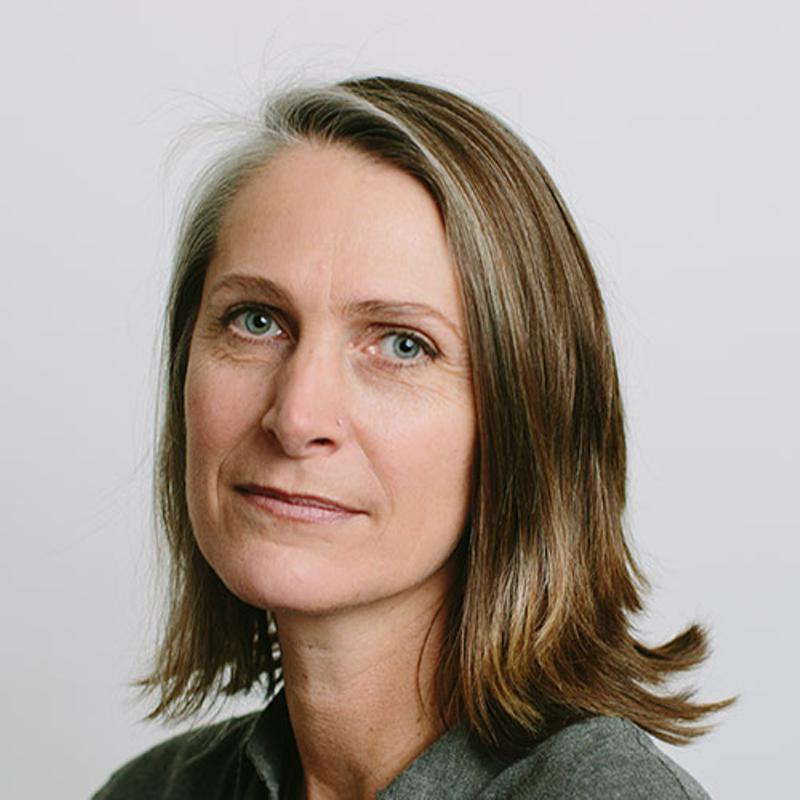
Lisa Pineault was in her 30s when she developed a medical condition that required regular doctor appointments in Vancouver over several months.
For the average B.C. resident, visiting a specialist multiple times a week could be an inconvenience. But Pineault lives on Haida Gwaii, and a trip to the Lower Mainland requires either a two-hour flight or a multi-day road trip involving ferries and long drives.
So it was sheer luck that Pineault’s medical needs coincided with a work secondment to Vancouver that allowed her to temporarily live in the urban centre while undergoing treatment. Most residents of the remote archipelago aren’t so fortunate.
“What it enforced to me at the time was I could not have afforded to go for two medical appointments a week and I could not have afforded to stay somewhere,” Pineault recently told The Tyee. “When you’re already in a bad situation health-wise and then all of a sudden you’re facing a financial crisis [it’s] like, ‘Do I go for these appointments? Can I afford it?’”
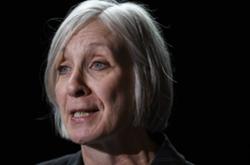
A lifelong Haida Gwaii resident, Pineault is now the mayor of Daajing Giids, a village with about 1,000 residents at the southern tip of Haida Gwaii’s Graham Island. Pineault is now calling on the federal and provincial governments to put a price tag on accessing medical care in remote areas.
Pineault wrote a March 6 letter to Prime Minister Mark Carney, Premier David Eby and the federal and provincial auditors general asking the governments to “undertake a comprehensive audit and review of the real costs of health care for rural and remote British Columbians requiring onerous and unreasonable travel to access services.”
Costs like lost wages, child care and travel expenses “add up quickly and substantially,” she wrote, and Pineault hopes an audit could be the first step in creating a more equitable health-care system in the province.
The Northern Health Authority has 300,000 people — six per cent of B.C.’s population — spread over the province’s northern two-thirds. While the region may not have the “economy of scale” of more urban areas, Pineault said residents pay equally into the health-care system and should receive a similar level of care.
“We understand those constraints but, provincially, what is the responsibility there? We are all still British Columbians. We’re all still Canadians,” Pineault said.
The Prime Minister’s Office told Pineault that it had forwarded the letter to Canada’s health minister, but she has not yet had a reply from the provincial government, she said. The Tyee contacted Eby’s office and asked whether the premier is considering the request but did not receive a response prior to deadline.
In Haida Gwaii, access to medical services that many British Columbians take for granted — such as CT scanners, surgery, addictions treatment and optometry or dental care — often requires, at minimum, a six-hour ferry ride to northern communities like Prince Rupert, Terrace or Kitimat.
The distances can delay care for life-and-death ailments, Pineault said.
When it comes to routine medical care, residents will often forgo the trip altogether.
“It is not uncommon for island residents not to proceed with the off-island appointments and procedures simply because of affordability,” Pineault said. Northern Health has the highest mortality in the province from preventable or treatable causes, according to a 2024 report.
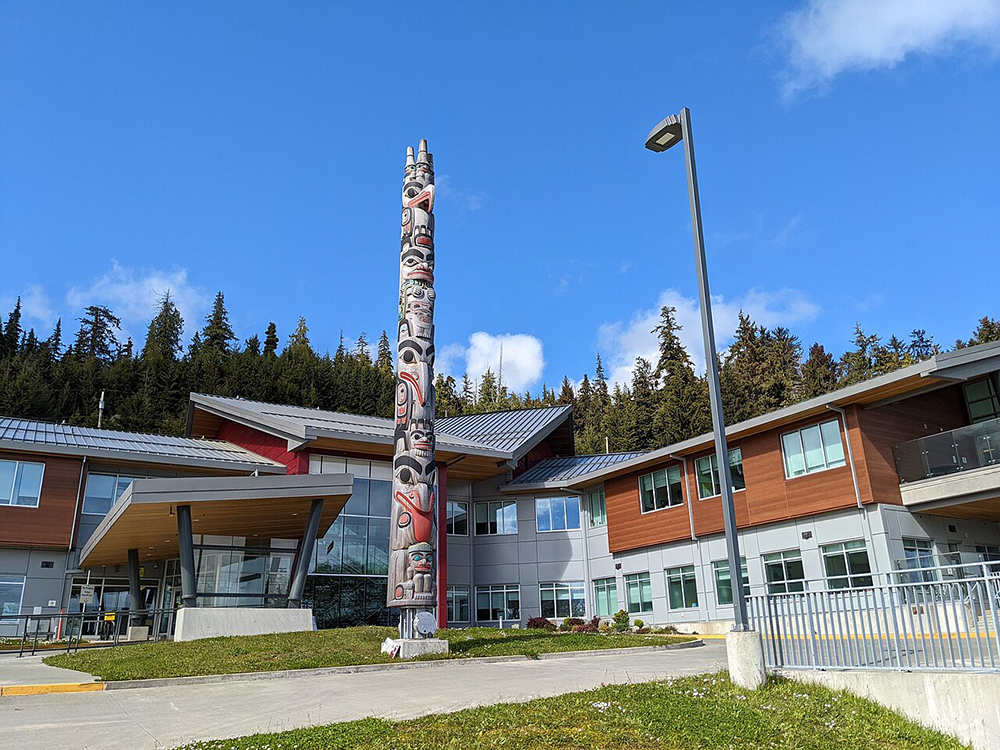
Daajing Giids has health-care facilities, including the Haida Gwaii Hospital and Health Centre — Xaayda Gwaay Ngaaysdll Naay and a “satellite hospital” 100 kilometres to the north in Masset, but they are limited to emergency services. During significant health crises, including strokes, Pineault said, patients need to be flown to hospitals on the mainland for diagnostics tests, such as CT scans and MRIs.
The travel day on either side of an appointment means the “best-case scenario” can take a patient away from home for three days, Pineault said.
She said the community has been told it will need to fundraise for a CT scanner. But she said residents are already tapped out from local raffles, 50/50 draws and GoFundMe campaigns raising funds for community members who need to go off island for their medical needs.
She would like to see an annual audit like Living Wage BC, which calculates the hourly wage that residents must earn to meet their basic needs in communities across the province.
While the 2025 survey put Daajing Giids’ living wage at just over $25 an hour — about $3 below the provincial average — the calculation doesn’t include medical costs, Pineault said. She calls it a “glaring gap” in the study.
“I’m asking for a specific study for health care, and I’d prefer it to be annual, that looks at the service availability in a catchment area,” she said.
Pineault has approached other municipalities, the North Coast Regional District and the North West Regional Hospital District board for support, and she plans to put forward a resolution at the Union of BC Municipalities convention in September.
She said she has had a positive response.
“Every different area has their gaps,” she said. “Let’s look at what those gaps are, let’s look at what the real costs are, and let’s look at what harmonizing looks like.”
Dawson Creek Mayor Darcy Dober said his city’s council supports Pineault’s letter and understands the struggles of accessing health care in rural and remote areas.
“It’s a challenge here, too,” Dober said about the city of around 12,000 residents. Dawson Creek is located 400 kilometres northeast of Prince George, and accessing care often means travelling by car or bus to B.C.’s “northern capital” or taking a flight to Vancouver. The nearest airport is 75 kilometres away in Fort St. John.
Rising costs for everything from flights to fuel to food and hotels are making those trips more expensive, Dober said.
“We live in a time when the financial pressures that families face is significantly high,” he said. “It’s tough, too, because when you need medical help, that is something that should be accessible to everybody, no matter where they’re at.”
While Dober agreed there are gaps, he also said that the provincial government — particularly the Ministry of Health — is working to address them.
“I just feel like Minister [Josie] Osborne has done a really good job at listening and is very open to looking at ideas and suggestions on how we can improve things,” he said.
On March 1, the Health Ministry announced that B.C. has renewed its agreement with Alberta to allow cross-border access to scheduled surgeries, a move that Dober described as “really impactful” for his community, which is within 20 kilometres of the provincial border.
In recent years, the province has also expanded its Travel Assistance Program, a private industry partnership that provides reduced fares for non-emergency medical travel in the province, adding ferry routes and $20 million in funding for cancer patients.
That followed a $10-million contribution to Hope Air, a donor-funded program that provides flights for remote patients.
Northern Health Connections, which is operated by the health authority, also offers low-cost bus transportation throughout much of the north.
One benefit from the COVID-19 pandemic, Pineault said, is increased access to virtual health care. It means that she can attend annual followup appointments with her specialist in Vancouver virtually — rather than make the trip for a 20-minute appointment.
But she said that calculating the true cost of accessing health care in the north isn’t simply about the costs. She also hopes it could improve services at home on Haida Gwaii.
“It just has to be looked at in a bit of a creative way.” ![[Tyee]](/design-article.thetyee.ca/ui/img/yellowblob.png)
Read more: Health










Tyee Commenting Guidelines
Please note that email notifications for replies are not currently working due to a software issue which may be resolved in a future update.
Comments that violate guidelines risk being deleted, and violations may result in a temporary or permanent user ban. Maintain the spirit of good conversation to stay in the discussion and be patient with moderators. Comments are reviewed regularly but not in real time.
Do:
Do not: