


 SHARE:


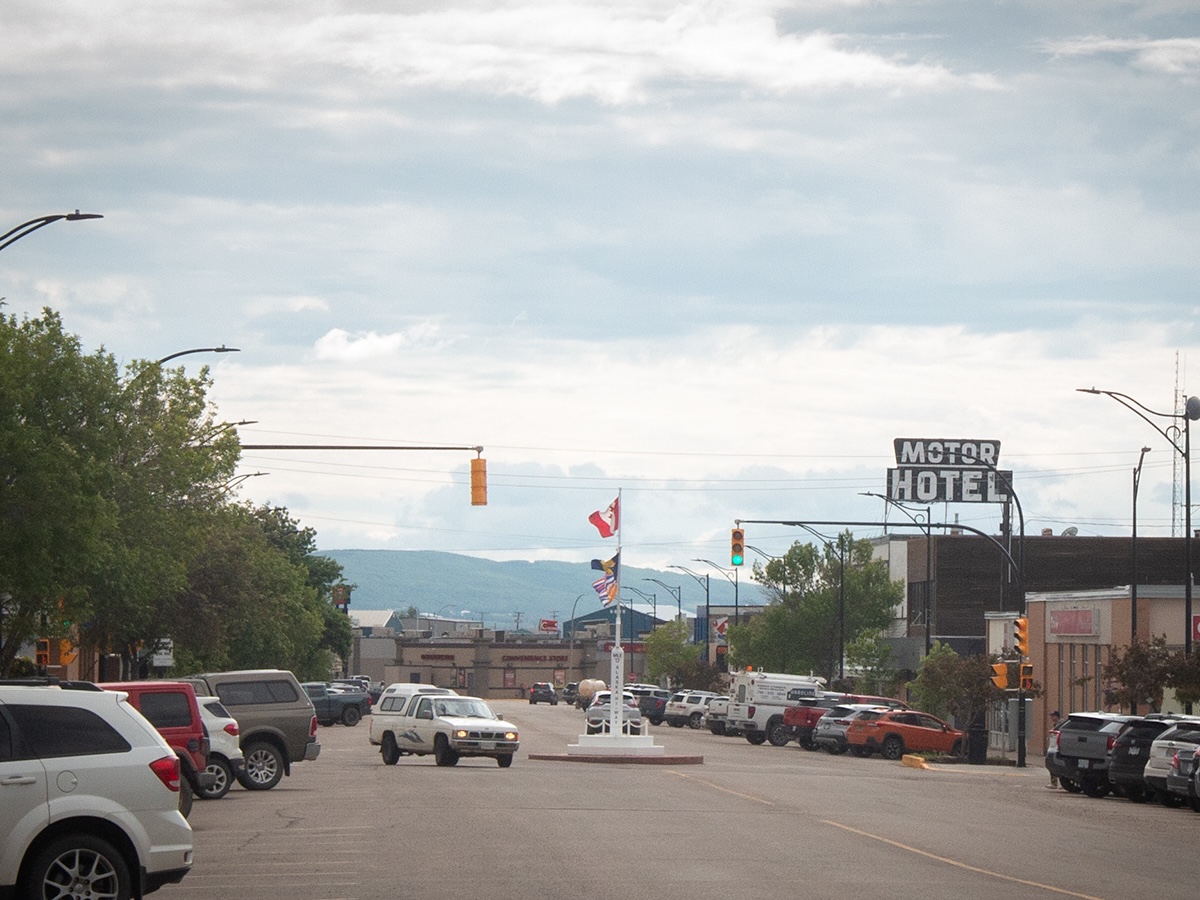
The glass door leading from Dawson Creek’s main street into the CJDC-TV station is locked, but a handwritten sign invites visitors to call for access. Michael Popove’s cheery voice answers and he’s soon at the door, welcoming me in.
Inside, the reception desk sits empty. The lobby is stark and echoey, lined with doors into unused offices. The vacancies are due, in part, to a series of layoffs in recent years by the station’s owner, Bell Media. Several years ago, the CTV-affiliated station began locking the door as a safety precaution.
Today, the only occupied office off this lonely lobby belongs to Popove. When he was hired as CJDC-TV’s news director five years ago, the station had a fully staffed newsroom. Now he’s often the only one reporting the news, writing web stories, anchoring the evening broadcast and generally making sure the station runs smoothly.
There’s no shortage of news to report. The decline in staff has coincided with a wave of violent crime in recent years, including more than a dozen murders in this city of just over 12,000 people. The reporting has taken a personal toll.
“I’ve looked over my shoulder almost every day getting out of my car,” Popove says. “It’s been personally taxing.”
Local news reporters have the difficult task of reporting on communities to which they belong. They have relationships and important context that help them accurately reflect the community back to itself. But they are becoming increasingly scarce as Canada’s news media shrink, particularly in rural and remote areas.
Since 2008, more than 600 local news outlets have closed across Canada, nearly three-quarters of them community newspapers. Almost 100 newsrooms closed in B.C.
The province’s northeast has been hit especially hard. It has lost a half-dozen newspapers over the past decade. In 2023, the Dawson Creek Mirror and Fort St. John’s Alaska Highway News — the region’s longest-running newspapers, both dailies until 2016 — closed after covering their communities for nearly a century.
The wave of closures and layoffs has been slower to hit broadcast media but is now catching up, as advertising revenue and audience figures both decline, experts say.
Bell’s cuts resulted in dozens of journalists across Canada losing their jobs, and this year Rogers Sports & Media cut about 80 television and radio positions when it closed six stations, two of them in Vancouver.
“They’re following the pattern of what’s happened in community newspapers,” says April Lindgren, the director and founder of the Local News Research Project and a professor emerita at Toronto Metropolitan University.
Asked whether Bell Media plans to further reduce staffing at CJDC-TV, communications manager Rob Duffy says there “are no changes planned at the station.”
In northeast B.C. communities where dozens of reporters once covered council meetings, attended events and sat through court hearings, the remaining journalists are stretched thin and important information isn’t making it to the public.
The region has been called a news desert — an area without consistent access to reliable news reporting. It’s a label many here reject. They point to journalists who continue to report the news independently after they were laid off when their newsrooms closed. They point to independent news outlet Energeticcity.ca and a new CBC bureau, both of which provide coverage from Fort St. John, 75 kilometres to the north.
They also point to Popove, whose investigative work at CJDC-TV has been nominated for awards and credited with solving crimes. But community members wonder: What would happen if he, too, left Dawson Creek?
Relationships the ‘most important thing’
Popove has the look of a classic television anchor. He’s neatly coiffed, his white polo shirt paired with plaid trousers. As we chat, he crosses his legs to reveal white Lacoste sneakers and matching white Lacoste socks.
In many ways, he conjures the image of famed Canadian broadcasters like Peter Mansbridge or Lloyd Robertson.
But Popove didn’t follow a typical path to broadcast journalism.
After high school, he walked away from an interview with the British Columbia Institute of Technology’s broadcast journalism program minutes before it started, the result of a crippling case of nerves. Instead, he entered the restaurant industry, working his way from the dish pit to managing high-end establishments.
But the lifestyle took its toll. By 41, he was living in Vancouver’s Downtown Eastside.
“I’d run out of drugs and the RCMP froze my bank account because I was a missing person,” Popove says. His single-room apartment at the Balmoral Hotel had a bloody mattress on the floor and, scrawled across one wall in lipstick, a message for someone named Gloria describing what would happen to her if she didn’t pay up.
As he lay there listening to a podcast, Popove knew something had to change.
“I called a friend and said, ‘Can I come over and figure some things out for a week?’ During that week, it was just like, ‘I’m going to be a news anchor.’”
This time, Popove was immediately accepted into BCIT. He spent his time in the program diligently polishing his broadcast skills. But when he landed his first job in Medicine Hat, he quickly realized that his ability to deliver the news was secondary to how he reported it.
“It doesn’t matter how smart you are. It doesn’t matter how educated you are. Your ability to have relationships and interpersonal skills is the most important thing,” Popove says. “If we’re going to reflect what goes on in our community, the only way you can do it is get to know people and have them trust you to tell their stories.”
When CTV offered Popove a job in Dawson Creek in early 2021, he accepted on the condition that CJDC-TV act as a training station. He wanted to teach those skills to recent journalism grads.
His second condition: “My dog comes to work with me every day.” The company agreed.
In the years since, Popove, now in his 50s, has formed relationships in Dawson Creek with everyone from police to those involved in the local drug trade.
“I started forming this huge network of underground sources, and it came from me walking my dog, talking to homeless people on the street or drug addicts. They’d be like, ‘You’re the guy on the news,’” says Popove, who would share his journey from the Downtown Eastside to journalism.
“What I was able to do was work my way up the chain as far as contacts go in the drug hierarchy here in the Peace region.”
The connections he’s made extend hundreds of kilometres north to Fort Nelson, where Popove broke the story two years ago that notorious B.C. gangster Jarrod Bacon was living in the community.
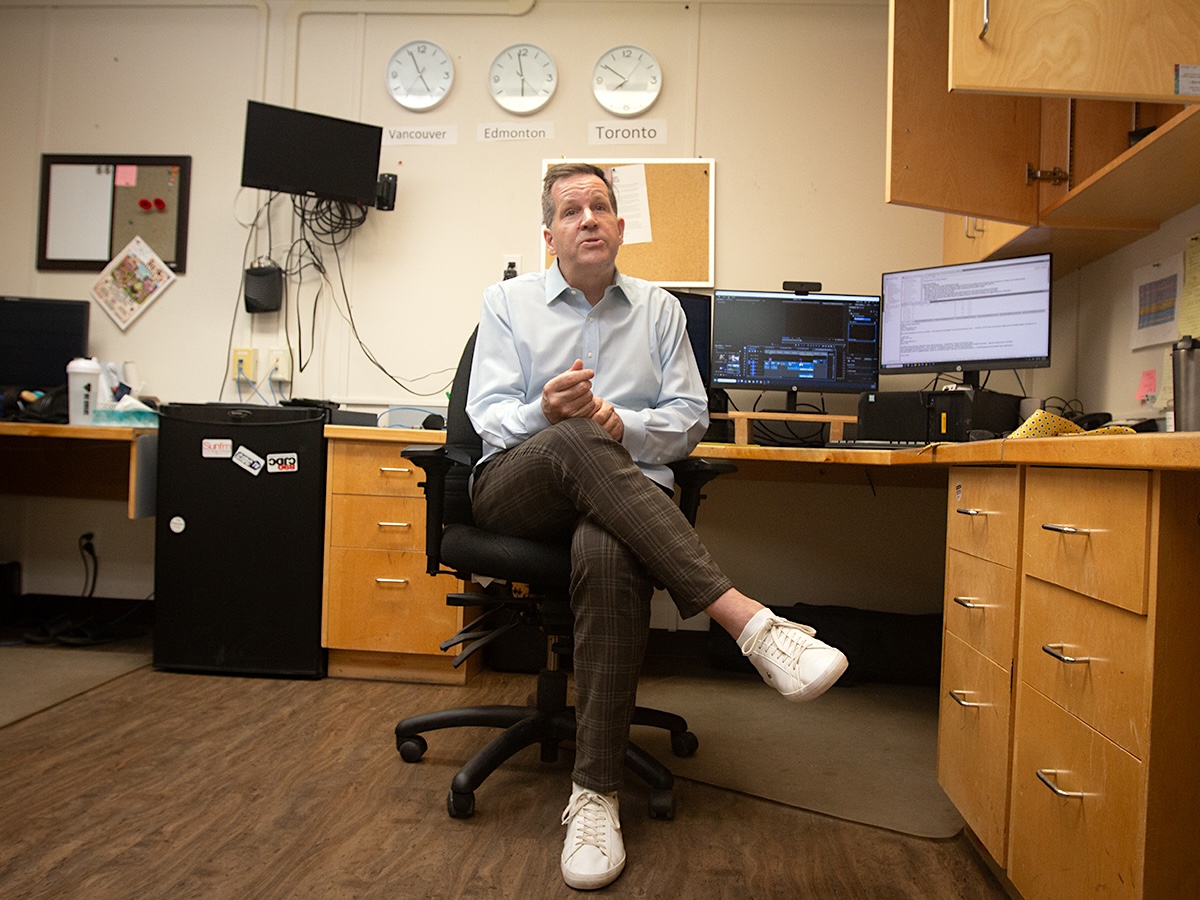
Popove’s reporting at the CTV affiliate caught the attention of CBC’s The Fifth Estate two years ago. The national broadcaster had put out a call for stories in regions underserved by declining news media.
By that time, 11 people had died or gone missing under suspicious circumstances in Dawson Creek since 2021. When a community member suggested The Fifth Estate investigate, its team found Popove’s reporting and reached out.
Popove says the collaboration was a first for the two national news outlets. His work features prominently in The Fifth Estate’s two-part documentary series released in late 2024 and late 2025. In August, CBC Podcasts further released a seven-part series, “The Mile Zero Murders.”
Popove describes CBC’s reporting as “spectacular journalism.” The two-year investigation revealed new evidence and provided some answers for families and the public. But it also left the community shaken. While police were closing in on arrests by late 2025, that information didn’t make it into the documentary.
“It wasn’t a true reflection of what the city is about,” says former Dawson Creek mayor Darcy Dober, who served four years until he declined to run for re-election in October. “It’s frustrating because it gives us a name that’s tough to overcome.”
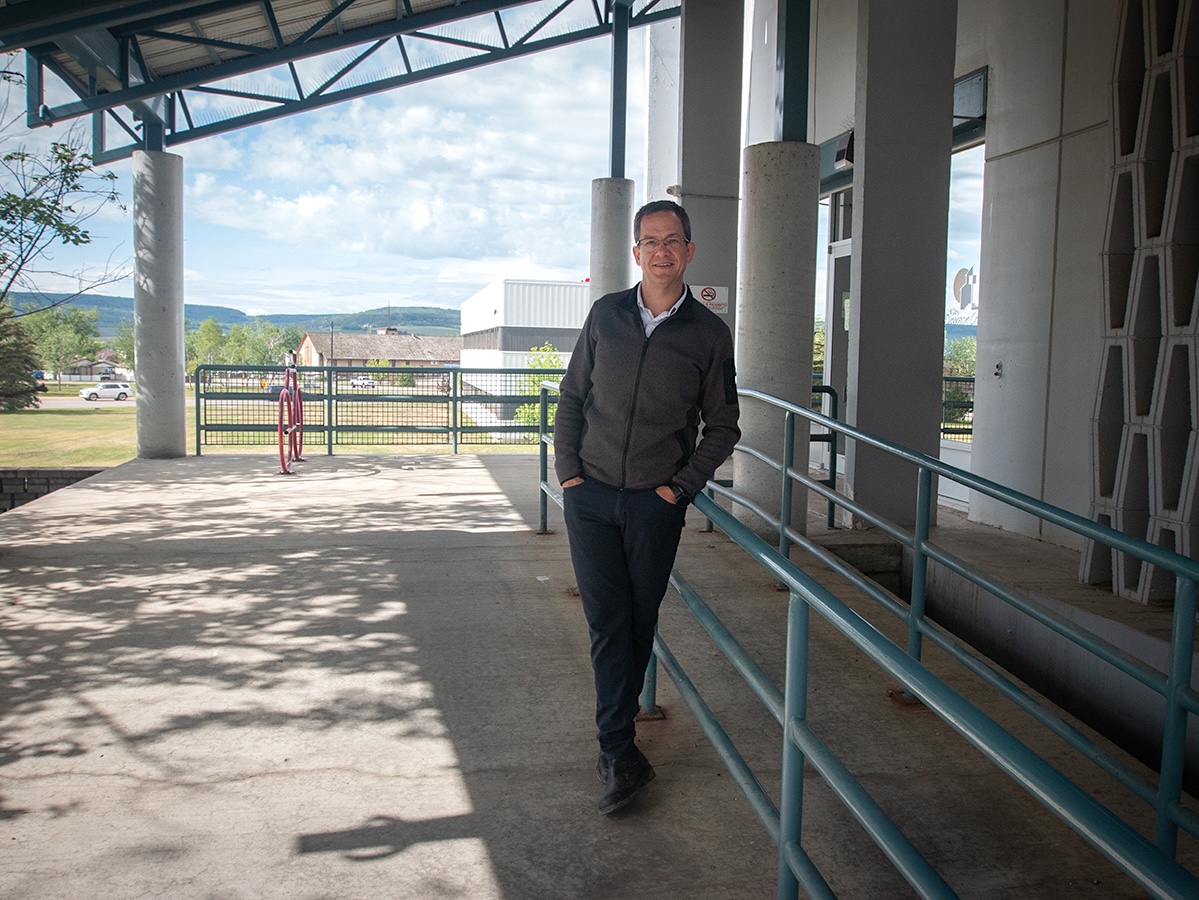
On a Tuesday evening in June, the parking lot at Browns Socialhouse is jam-packed with massive pickups, many of them equipped with welding rigs. Inside the crowded restaurant, the music is pumping.
The bustling business is a “good bellwether” for the local economy, Jerimy Earl tells me.
Dawson Creek sits at the start of the Alaska Highway, 400 kilometres northeast of Prince George and 15 kilometres from the Alberta border. The regional economy relies heavily on oil and gas, and the money flowing into town has been blamed for fuelling the local drug trade and related gang violence.
Media attention on the spate of recent killings, which police say are linked to drugs, is important. But Earl, the communications manager for the local credit union and until recently a city councillor, worries that the focus on crime can “suck up most of the oxygen in the room,” leaving fewer resources for reporting other news that matters to residents.
He points to the aging Taylor Bridge, a critical piece of infrastructure that desperately needs to be replaced, and frequent emergency room closures as examples of topics that don’t get enough attention.
“I think there’s all kinds of things that don’t get covered,” he says.
When Earl moved to Dawson Creek in 2010, the community was served by both a daily newspaper and a weekly regional newspaper. CJDC-TV had “at least four people” doing the evening newscast. Now, it’s just Popove.
“He does a really good job with the resources he has,” Earl says. “But they’re not what they once were.”
The vacuum has caused many to turn to social media. But misinformation has proliferated since Meta, owner of Facebook and Instagram, banned Canadian news on its platforms in 2023 — a response to the federal government’s attempt to get the social media giant to pay for links to news content.
Earl points to the “never-ending conspiracy” that the government is busing unhoused people from the Lower Mainland to rural communities. It simply isn’t true: a recent audit shows that nearly half of Dawson Creek’s unhoused population consists of lifelong residents. But it’s one example of how social media has replaced verified reporting, causing disinformation to fester.
An absence of information has also caused problems. When Dawson Creek council voted recently to end its contract with the SPCA, the decision had been a long time coming. “We’ve discussed the issue half a dozen times over the last two years,” Earl says.
But without journalists consistently reporting on council meetings, including the budget discussions that led to the cuts, residents were surprised to learn that the municipality was ending animal control. The decision met with backlash.
“People were surprised because it hadn’t been on their radar in the way that maybe once upon a time it would have been,” Earl says.
The city has taken steps to fill the gap. Since the newspaper closed three years ago, it has hired a communications manager and shifted an existing position, which previously marketed recreational programs, to promoting city services broadly. In July, it added a third position dedicated to managing online communications.
The expanded capacity helps, but Earl says it’s no replacement for good journalism.
“We can’t do what the media does,” he says. “We can’t hold ourselves to account. At the end of the day, we’re the government.”
As mayor, Dober tried to fill the void by getting out into the community more, including meeting regularly with youth organizations, the business community and seniors’ groups. He says CJDC-TV continues to be a “very trusted source for the community.” But they can’t cover everything.
As we chat in his office, Popove’s phone rings. It’s RCMP Staff Sgt. Rob Hughes.
Hughes, the local detachment commander, is calling from the courthouse with a tip that a repeat violent offender has just been released on bail. The story will lead this evening’s broadcast.
I’ve also been trying to reach the RCMP and have sent several emails and left voice mails asking to meet with officers and learn how the decline in community news is affecting them. A response arrives weeks later. A media relations officer in Fort St. John writes that “from a policing perspective the basic answer as far as I can tell is no, there seems to be little effect with absence of newspaper. [sic]”
It’s no secret that police and the media often have a difficult relationship. CBC’s Fifth Estate report documents its journalists’ repeated attempts to connect with police in Dawson Creek; in the end they interviewed a senior officer nearly 1,000 kilometres away in Surrey.
“I think it put lots of pressure on the RCMP,” Jan Atkinson says about reporting by both Popove and The Fifth Estate. “I think the biggest thing we need up here is accountability, and one of the things that Michael is good at helping with in this area is accountability.”
Atkinson is an outreach worker and advocate for vulnerable women who lives just across the border in Alberta. The region has a large Indigenous population, and among those who went missing and were later found murdered are cousins Renee Didier and Darylyn Supernant, two Cree women discovered within weeks of each other in 2023.
When vulnerable community members disappear, Atkinson is quick to report it to the RCMP. But it can be hard to get traction. She credits Popove with helping to raise awareness.
“In other communities, people are too afraid to put out those kinds of articles,” she says. “If nobody’s reporting on it, nobody’s sharing about it, nobody’s going to come forward.
“If Michael’s not here, what’s somebody going to do?”
‘If I leave here, I don’t know what happens’
After a nudge from Popove, Hughes invites me to meet with him.
In his office at the RCMP detachment later that day, his discomfort is apparent. He admits he rarely does interviews, and it’s clear he’s doing this one as a favour.
“Michael and I have a really good relationship,” Hughes says. Shortly after he took the job several years ago as Dawson Creek’s top cop, Popove invited him for coffee. “We just started building a trusting relationship. We can speak candidly, speak openly back and forth. It just works.”
Hughes credits Popove’s reporting with helping to solve crimes in Dawson Creek. Then he repeats the concern that other community members have shared: “If Michael wasn’t there, to lose that communication would be detrimental to the community,” he says.
Popove has forged deep and trusting relationships within the community that are hard to replicate.
In January, the RCMP arrested three people in connection with one of the Dawson Creek homicides. Tanner Allan Murray, Robert James Sinclair and Benjamin James Elliott Touchette were charged with first-degree murder. They remain in custody.
Shortly after the arrests, CJDC-TV produced a three-part series called “Disturbing the Peace.” It was meant to provide closure and an update after the alarming Fifth Estate documentary.
Popove says he had a “huge reaction” when he learned police had made arrests. “It was three years of release of stress that I didn't know I was carrying,” he says.
He admits there are days when he wonders why he came to Dawson Creek. But he also says he knows. During his five years in the community, he’s worked with 16 rookie reporters, teaching them community news reporting, pairing them with mentors at CTV and helping them reach their career goals.
Often, that’s a job in an urban centre. Most leave within a year.
Popove isn’t sure how much longer he’ll stay in Dawson Creek. “If I leave here,” he adds, “I don’t know what happens to the station.”
This is the third story in a five-part series produced through the support of the Government House Foundation and Jack Webster Foundation through the Lieutenant Governor’s BC Journalism Fellowship. The funders did not provide any editorial direction. 
Read more: Media







Tyee Commenting Guidelines
Please note that email notifications for replies are not currently working due to a software issue which may be resolved in a future update.
Comments that violate guidelines risk being deleted, and violations may result in a temporary or permanent user ban. Maintain the spirit of good conversation to stay in the discussion and be patient with moderators. Comments are reviewed regularly but not in real time.
Do:
Do not: