


 SHARE:

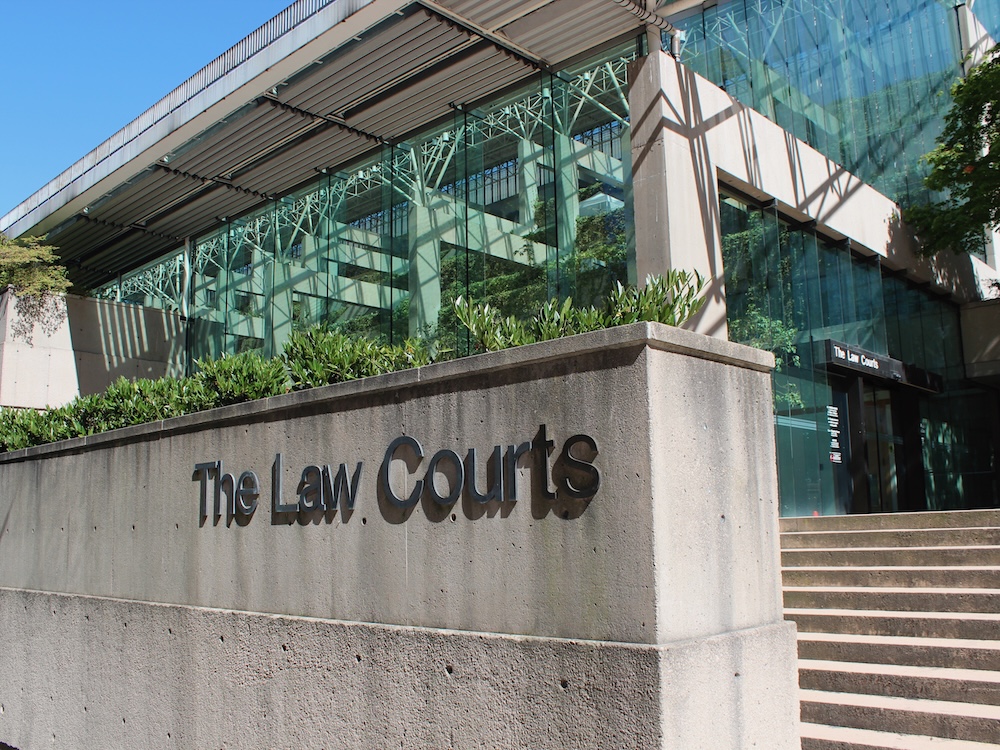
Last week, the Supreme Court of British Columbia heard oral arguments in the appeal of Amy Hamm v. the British Columbia College of Nurses and Midwives. The case, when decided, may set new legal precedents about the language of anti-trans discrimination and professional regulation.
The case involves disciplinary action taken against Hamm, a former nurse, who made a series of anti-trans statements online while publicly identifying herself as a nurse. Hamm was suspended for one month and ordered to pay $93,639.80 in legal fees after the college deemed that three of her statements were discriminatory and/or derogatory and reflected negatively on the nursing profession in B.C.
“By identifying herself as a nurse or nurse educator while posting discriminatory and/or derogatory opinions regarding a vulnerable and historically disadvantaged group on various online platforms, [Hamm] undermined the reputation and integrity of the nursing profession,” the panel wrote in its original decision.
Hamm brought her appeal of the panel’s ruling to the B.C. Supreme Court, arguing that her free speech was suppressed and that the college weighed the feelings of trans people over the value of “sex-based rights.” As B.C.’s regulatory body for nurses and midwives, the British Columbia College of Nurses and Midwives issues nursing licences and maintains professional standards. In cases like Hamm’s where professionalism is called into question, the college can suspend or revoke nursing licences under B.C.’s Health Professions and Occupations Act.
The concept of “sex-based rights,” as deployed by activists like Hamm, suggests that excluding trans women is a fundamental right of cis women, and that the concept of gender identity is a threat to cis women’s rights. Baked into this is the idea that trans women are “men,” and thus inherently dangerous to cis women. The phrase has become so pervasive, it was referenced in U.S. President Donald Trump's 2025 executive order seeking to redefine gender.
Hamm is represented by lawyer Lisa Bildy — who previously worked on the case of an Ontario couple who alleged their child’s Grade 1 teacher was discriminating by teaching about gender identity. Christian political advocacy group the Association for Reformed Political Action also served as an intervener, arguing that Hamm’s advocacy for “sex-based rights” does not amount to anti-trans discrimination.
During oral arguments I attended on Nov. 10 and 12 in Vancouver, the courtroom’s gallery was full of Hamm’s supporters. This included members of trans-exclusionary group the Vancouver Lesbian Collective. The decision from Justice Jacqueline Hughes is expected to take several months, and it may set new legal precedents about anti-trans discrimination.
Here’s what you need to know about how this case fits into the larger landscape of anti-trans speech in Canada.
Amy Hamm is one of Canada’s most prominent anti-trans voices. A writer, commentator and former registered nurse based in New Westminster, B.C., Hamm is one of the founding members of Canadian Women’s Sex-Based Rights, or caWsbar, an anti-trans group that engages in advocacy and lobbying around “sex-based rights.”
Hamm and caWsbar have recently engaged in campaigns around banning trans women from women’s prisons and sports teams. Hamm also currently works as communications manager for the Halifax-based law firm Acuity Medical Law, and maintains a large social media following of around 90,000 followers on X. In her column at the National Post, she has repeated far-right talking points around the Tumbler Ridge shooter, gender-affirming care for minors, and trans women in women's sports, among other topics.
In 2021, Hamm, alongside anti-trans activist “Billboard” Chris Elston, notably paid for a large billboard advertisement in Vancouver reading “I <3 JK Rowling,” in support of the author’s anti-trans positions. Several of Hamm’s online comments related to the billboard were investigated as part of the panel’s disciplinary review.
She has called gender identity “metaphysical nonsense” and has a long track record of referring to trans women as “men” and “biological males” in her social media posts, as well as intentionally misgendering and outing trans people.
Is this about hate speech?
While it shares many aspects with recent and precedent-setting cases dealing with anti-2SLGBTQ+ hate speech, this ruling will not add to or change how anti-trans hate speech is defined in Canada. In the Hamm case, both sides agree that defining her statements as hate speech or not is not the actual issue at play. Rather, this is a case of professional misconduct.
However, in both written and oral arguments around Hamm’s appeal, both sides repeatedly cited rulings related to William Whatcott and Barry Neufeld regarding anti-2SLGBTQ+ hate speech.
A 2019 BC Human Rights Tribunal ruling against Whatcott, a social conservative activist, found that flyers distributed by Whatcott targeting Morgane Oger, a trans woman running for public office, were a “discriminatory publication likely to expose a person or a group or class of persons to hatred or contempt.” The case was one of the first legal instances of anti-trans speech being characterized as hate speech in Canada.
Earlier this year, Barry Neufeld, a former British Columbia school trustee, was ordered by the BC Human Rights Tribunal to pay the Chilliwack Teachers’ Association $750,000 for violating the Human Rights Code by repeatedly posting hateful and discriminatory statements against 2SLGBTQ+ people. In their ruling, the tribunal agreed that several of Neufeld’s statements contained one or more “hallmarks of hate” and exposed 2SLGBTQ+ people to hatred and discrimination. Neufeld is appealing the ruling.
The disciplinary panel from the British Columbia College of Nurses and Midwives is concerned with only the statements Hamm made while identifying herself as a nurse and whether those statements reach the level of being “discriminatory” or “derogatory” towards trans people. In its ruling, the panel said that in making these statements about trans people, she compromised faith in the nursing profession. They reviewed several examples, including Hamm’s statement that “men cannot become women,” as worthy of discipline on these grounds.
Intervening on the side of the nursing regulator were Egale and other 2SLGBTQ+ advocacy groups. In its submissions to the case, Egale argued that trans people are particularly vulnerable to discrimination in health-care settings, and this makes Hamm’s statements more egregious.
“Health profession regulators must consider how discriminatory comments about vulnerable communities impact those communities, including whether they worsen existing barriers to accessing health care,” the organization wrote.
What happens next?
It’s important to talk about what this case is not. It is not a judgment on whether or not trans women are women in Canadian law. It’s not a treatise on “sex-based rights.” It’s not even a judgment on what constitutes anti-trans hate speech.
It is about where the line is when it comes to a health-care professional’s conduct.
Despite the relatively narrow focus of this appeal, Hamm and her supporters have turned the situation into a larger free speech fight. During oral arguments, Hamm’s lawyer repeatedly invoked ideas of “gender ideology” being in opposition to “sex-based rights,” and suggested that Hamm was not being discriminatory towards an individual trans person, but rather engaging in political speech about a belief system or way of life, and that should be allowed.
During oral arguments, lawyers from Egale encouraged Justice Hughes to not accept terms like “gender ideology” into the record, because they have the potential to set new precedent for legal and public discourse about trans people in the future.
Hamm’s supporters want to see this legal fight continue. Her case is funded by the Justice Centre for Constitutional Freedoms, a socially conservative legal organization that represented several persons involved with the so-called “Freedom Convoy.” It has also attracted the attention of prominent anti-trans voices outside of Canada, including Graham Linehan. 
Read more: Rights + Justice












Tyee Commenting Guidelines
Please note that email notifications for replies are not currently working due to a software issue which may be resolved in a future update.
Comments that violate guidelines risk being deleted, and violations may result in a temporary or permanent user ban. Maintain the spirit of good conversation to stay in the discussion and be patient with moderators. Comments are reviewed regularly but not in real time.
Do:
Do not: