

 SHARE:

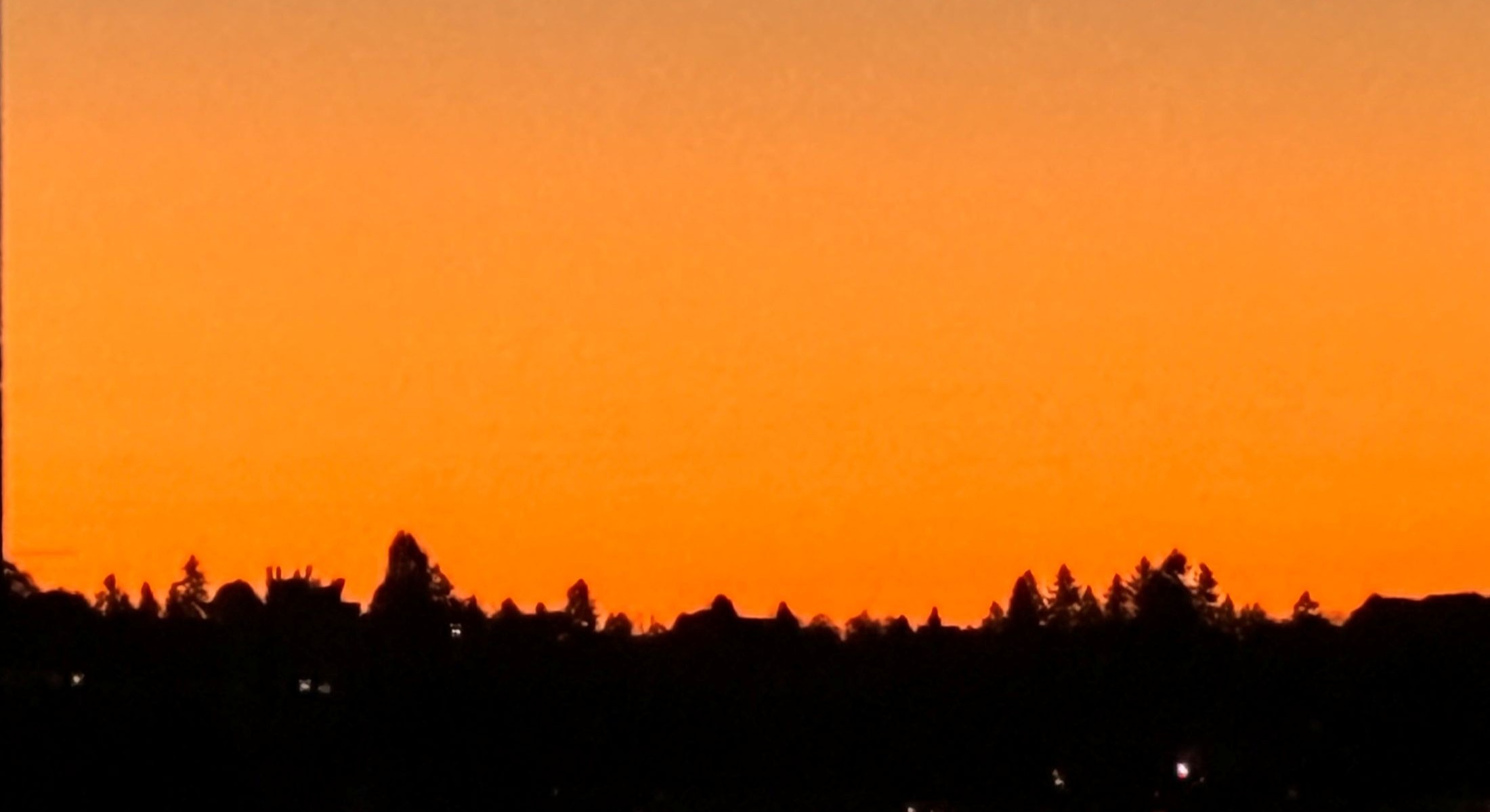
When I wake up every day at 6 a.m., the first thing I do is open the blinds. At this time of year, it’s dark as night. Judging by the black windows, most of my neighbours are still asleep.
I’ve developed a quiet kinship with those people who are like me, curiously awake. One person on a higher floor usually has all their lights on. Maybe they work an early shift. And no matter how ungodly the hour, there’s one apartment across the street with the TV tuned to action movies, cooking shows, sports highlights and sometimes the American version of The Office. Maybe the shows help to keep them company, or help them sleep.
I love watching the sunrise. Our living room faces east, and the moment the morning light hits the sky feels like a small daily miracle.
But today I looked out the window and felt confused. Although it was nearly 8 a.m., it was still almost as dark as it was when I had woken up a few hours earlier.
In British Columbia, we’re now three weeks into permanent daylight time, a move that more than 93 per cent of provincial survey respondents approved of in 2019.
Based on this resounding acclamation, former premier David Eby formally adopted the change earlier this year. In March 2026, Eby celebrated one final changing of the clocks when people across B.C. “sprang forward” for the last time.
The move came after years of debate about the health impacts of transitioning to permanent daylight time, which puts our body clock out of alignment with the sun’s movement.
But I’m kind of enjoying how weird this all is.
I was happy to skid into the first Sunday of November on a wave of leftover Halloween candy. The sudden freedom felt great. The travelling-without-moving jet lag that had characterized daylight saving Sundays of old was finally gone.
Many of my digital tools are still glitching because of the change, and I am probably confusing folks who think I am sending them emails from my work account at odd hours.
There’s also the low-key chaos of being out of sync with the western United States.
And of course, the comically dark November mornings are especially dreary when it’s pouring rain. The darkness carries with it the feeling of an even deeper seasonal shift than before.
Perhaps the move to permanent daylight time offers a useful reminder that we are mammals, accustomed to following the seasons by resting and slowing down in the darker, colder months.
Those rhythms are easy to ignore, especially in an age when our relationship to time is distorted by the attention economy. But they are worth paying attention to.
Hello darkness, my old friend
I have a distinct memory of the days leading up to provincial health officer Dr. Bonnie Henry declaring a B.C. public health emergency for COVID-19 on March 17, 2020. I was on a crowded Friday morning bus taking my son to daycare.
My phone buzzed with notifications. One by one, work events, meetings and parties were cancelled. I didn’t realize then that the daycare was about to shut down too. The teachers made macaroni and cheese with the kids that morning and sent leftovers home with me because my son liked it so much. Perhaps this also functioned as a quiet goodbye.
Writing for The Tyee that April, culture editor Dorothy Woodend published an essay on what the sudden stillness of the pandemic had shown her.
“Our bodies have been trying to tell us stuff for a while. But now is the first time in a long time that we’re listening,” she wrote.
“What comes out of this moment in history will hopefully be different from what preceded it. I guess we’re about to find out whether humans descend or transcend.”
Six years later, I worry that we learned too little from those early pandemic years. I sincerely hoped they would present an opportunity for everybody to move beyond business as usual and create a friendlier, more accessible society. Particularly for people with chronic health conditions and disabilities.
But I wonder if permanent daylight time, a shift much smaller than a global pandemic, might speak to the wider-ranging challenges the pandemic presented to us, and which we’re continuing to reckon with. Among them, how to be more inclusive and contribute to a community that honours everyone’s need for rest.
The coming days will grow darker as we approach the winter solstice. Consider it a cue to move more slowly, attuning to the seasons and the greater patterns of nature.
Then again, I’m a tragic optimist. There is a distinct possibility that permanent daylight time in B.C. could go severely downhill. The shift has inadvertently revealed how much time is ultimately a construct. We can change it, then change back if necessary!
Writing for Canada’s History this fall, Michelle Cyca pointed out that the U.K. abolished permanent daylight time in 1971, three years after its implementation. Russia also lasted just three years with permanent daylight time before stopping in 2011 due to a spike in youth mental health concerns.
I wonder where we’ll be on dark November mornings three years down the line in the year 2029. Much will have changed by then. But other things will probably endure. I bet I’ll still be up at six, peering into the gloom at a Top Chef rerun across the street. 
Read more: Environment









Tyee Commenting Guidelines
Please note that email notifications for replies are not currently working due to a software issue which may be resolved in a future update.
Comments that violate guidelines risk being deleted, and violations may result in a temporary or permanent user ban. Maintain the spirit of good conversation to stay in the discussion and be patient with moderators. Comments are reviewed regularly but not in real time.
Do:
Do not: