


 SHARE:

In old timey tabloid magazines, there was a regular spread called “Stars — They’re Just Like Us!”. The weekly compilation featured candid shots of famous folks doing everyday things like grabbing a coffee, schlepping to the store, walking on sidewalks, breathing air. Simply existing.
Now airing on CBC, The Assembly resurfaced this concept with a vengeance. Turns out that famous people endure the same things as the rest of us. They also grapple with anxiety, embarrassment, insecurity and grief.
The Assembly is ostensibly an interview show but with a critical difference. The celebrities drawn from film, sports and music are familiar and well-known. The key difference is that the panel of interviewers asking them questions are neurodivergent.
When I first read about the conceit of the program, my initial thought was, “That sounds terrible.” But I have since eaten my words.
I initially worried that the show would be exploitative, embarrassing or other variations of cringe.
I was wrong. It is extraordinary.
Expansive, accommodating and done with care
The premise originated in France in 2022 with the title Les Rencontres du Papotin, which translates to English as The Chatterbox Encounters, and has been adapted to 21 different countries around the world, including Canada.
The idea for the show emerged from the work of French filmmakers Éric Toledano and Olivier Nakache. It took the form of magazine before its televised version.
Julien Bancilhon, a psychologist and editor of the Papotin Magazine who moderates the conversations on the show, explained how the format came to be after a series of unsuccessful attempts.
“Le Papotin is a joyful mess, difficult to structure,” he said.
“Putting together a show by snapping your fingers, making something rigid with a set, precise and repeated questions, a specific speaking time for everyone — that doesn’t work here.”
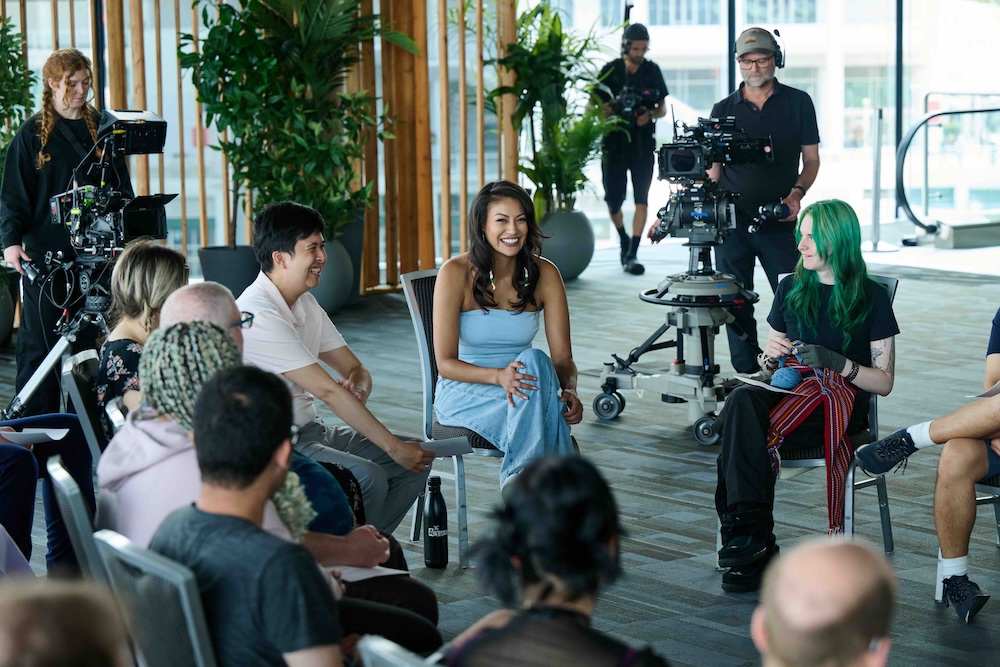
The expansive and accommodating nature of the production requires time and attention. Quiet is one aspect, as is natural light. The episodes, filmed in Vancouver by director of photography Ian Kerr and others, have an ease and naturalness about them that comes from expertise, thoughtfulness and care taken.
The first Canadian season of the show kicked off in November 2025 with interviews of comedian Howie Mandel, musician Jann Arden, Dragon’s Den maven Arlene Dickinson, funnyman Russell Peters, actor Allan Hawco and actress Maitreyi Ramakishran.
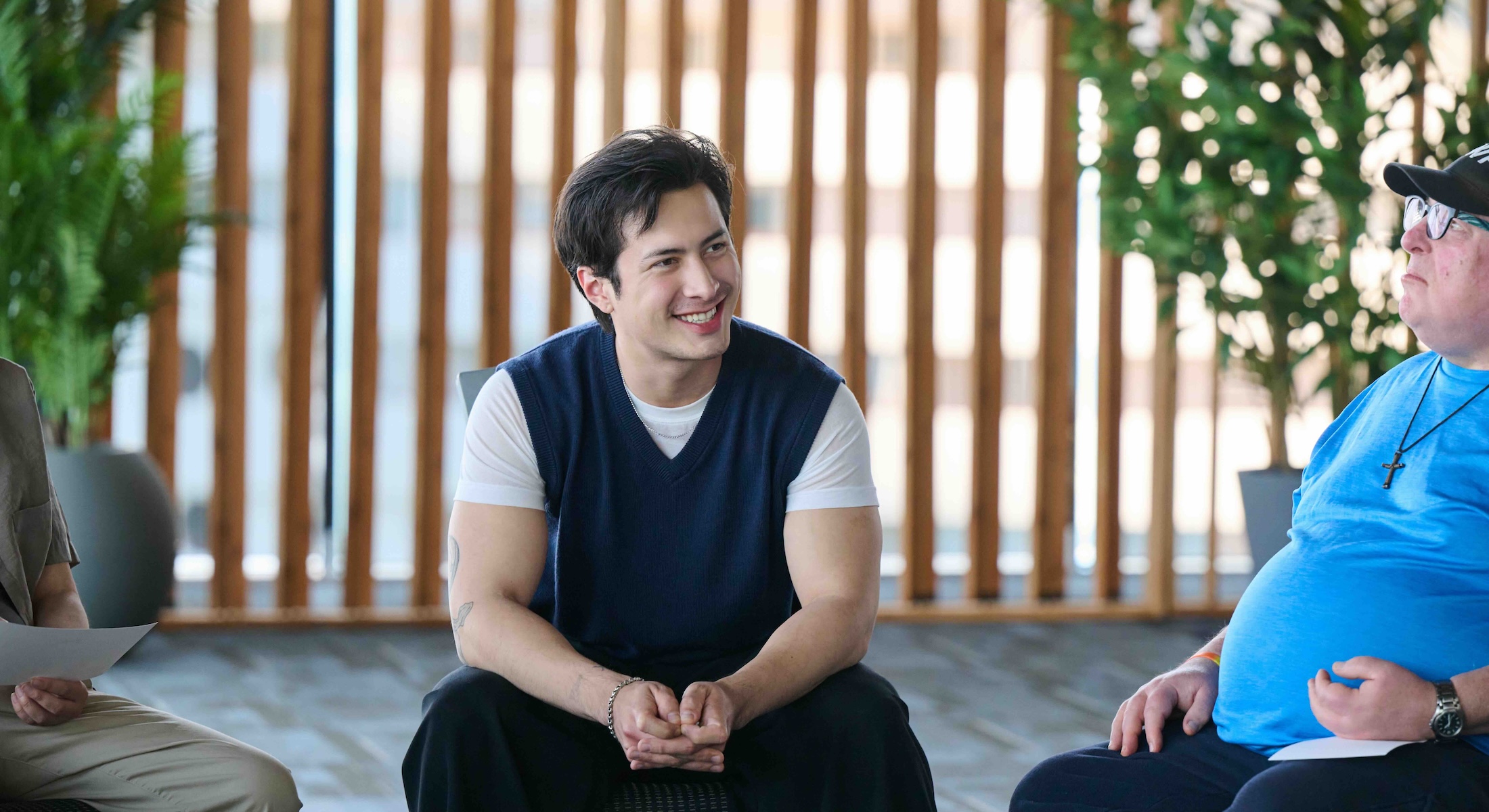
The second season, which premiered this month, includes interviews with Heated Rivalry star Hudson Williams, Olympic hockey star Marie-Philip Poulin, musician Lights, actor/director Jay Baruchel, beauty queen/actress Ashley Callingbull and comedian/hippie gardener Zach Galifianakis.
The rules of the show are stated at the outset. Nothing is off the table, no subjects are out of bounds and anything can happen. And with that idea ringing in our ears, off we go.
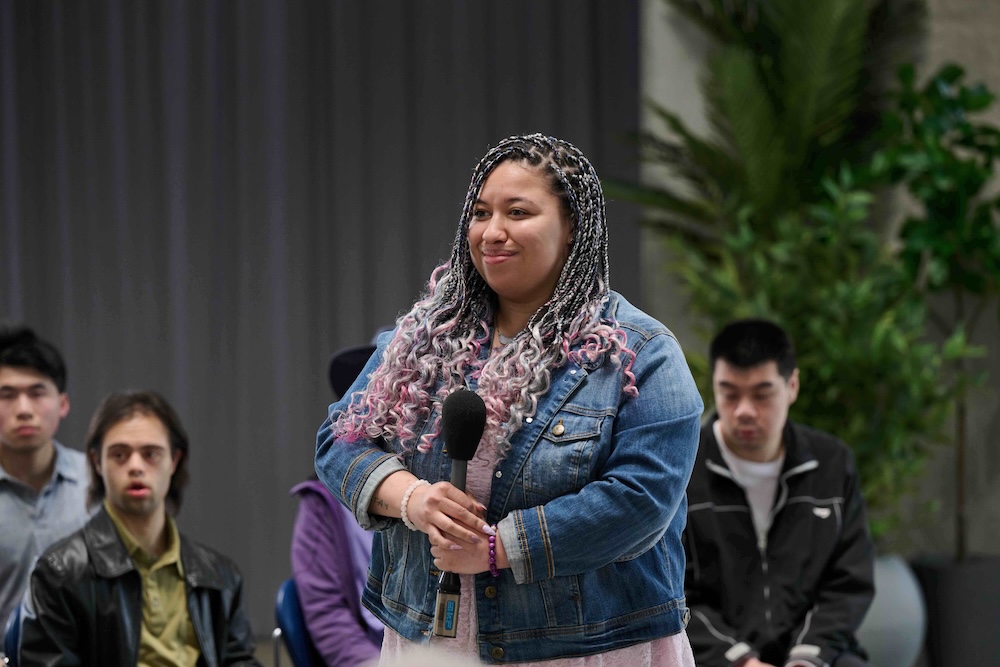
The interviewers themselves are a diverse group. Some are non-verbal and use augmentative and alternative communication, or AAC, devices to type and share their questions. The interviews are all neurodivergent, and some live with a range of overlapping conditions including Down Syndrome, blindness and other disabilities.
The questions they pose to the invited guests are some of the best I’ve ever heard in media interviews. They are clear, profound and often wildly funny.
It is a curious process to watch the different celebrity subjects going through exactly what I, as a viewer, went through. There’s the initial uncertainty, and the dawning understanding that this is going to be a very different experience. Then, finally, the sunrise feeling of acceptance, understanding and compassion.
It’s the very humanness of thing, that we all suffer, that we all want to be seen and understood, that comes blazing forth. It is hard to deny the purity and simplicity of these exchanges.
In the first season on CBC, actor Howie Mandel, who has been very open about his own struggles with obsessive-compulsive disorder was joined by singer-songwriter Jann Arden talking about her issues with addiction, as well as her coming out and marrying her girlfriend. The rest of the interviewees offered similarly honest, even raw, versions of their own experiences, not only in their careers, but in the more intimate and personal aspects of their lives as well.
Even the hardest stuff was addressed. Arden’s brother’s conviction for murder was discussed openly. The activism and advocacy work of actress Maitreyi Ramakishran was also explored with frankness and curiosity.
In other editions of the show in France and the U.K., the reaction to the openness of these exchanges has been similarly surprising. The original series started with an interview of French President Emmanuel Macron. In the U.K., the roster of celebrity interviews has included Michael Sheen, Stephen Fry and David Tennant, among others. Fry was asked about his suicide attempts as well as his favourite sexual positions.
Get ready to cry
The second season of the Canadian version of The Assembly is even more moving than the debut series.
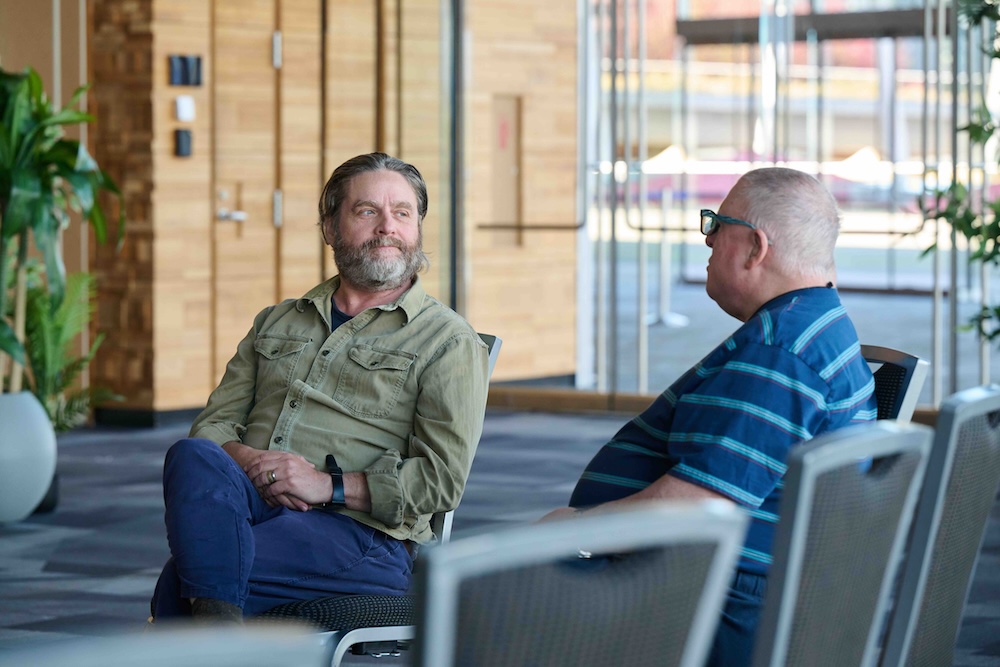
I never expected to burst into tears over the experiences of comedian Zach Galifianakis, but here we are.
To be frank, I always associated the actor with the characters he has played in films like The Hangover. But as it becomes abundantly clear, this kind of larger typecasting has all kinds of hidden impacts.
The common ground shared by famous personalities and the people who society has often deemed less worthy becomes clear in this exchange. It caught me off-guard and brought about a reconsideration not only of Galifianakis, but also the very idea of judgement, unexamined assumptions, and bias about other people.
Some of the most moving moments in Season 2 happen musically. The assembled interviewers themselves step into the spotlight performing songs inspired by the celebrity subjects.
In the case of Galifianakis, it’s a song from musician Will Oldham (who performs as Bonnie “Prince” Billy). I had forgotten that the two men shared an affinity as well as musical taste. The performance of Oldham’s song by the cast members is remarkable. And of course it brings on more tears.
The show has turned into a bonafide hit for CBC and it’s not hard to understand why.
Beneath the more obvious appeal — movie stars, probing questions, unexpected candour — there is something else. A place of genuine contact between people. It is so rare that it feels almost shocking in an era of near-constant press junkets and media barrage for every film and television series. Having participated in such media events myself, the difficulty in overcoming the shallowness inherent in a precisely timed 15-minute conversation is hard, if not impossible, to overcome.
The current season of The Assembly has expanded to 30 different interviewers, but there are many from the first season that have returned. They seem just as fascinating as their celebrity subjects.
Of the current Season 2 episodes, it’s hard to pick a favourite, but I have new appreciation especially for Jay Baruchel, whose struggles with anxiety and insecurity are particularly hard.
So, too, is the episode and the question that causes an emotional breakdown from Galifianakis. It comes from a place of genuine curiosity and shared experience.
It’s also strangely comforting to sit in on a conversation with the likes of Hudson Williams, whose meteoric rise to fame reminds me of the infamous tale of starlet Lana Turner being discovered in an ice-cream parlour.
In the case of Williams, who went from being a Langara College film student and waiter at the Old Spaghetti Factory to global super-duper star, the almost overnight fame was stunning. This doesn’t stop Assembly interviewers from asking about Williams’ sex life, both on and off the show.
Other questions about being an only child, contending with ADHD in an Asian family or having a parent who is also on the spectrum, lead into fascinating discussions of perceptions of disability.
Part of the appeal of the show is something so basic and fundamental that it’s almost overlooked. Honesty seems too simple a word, but in an era of carefully packaged, controlled media access, as well as the extremity and insularity of fame, the sense that some people matter more than others is upended.
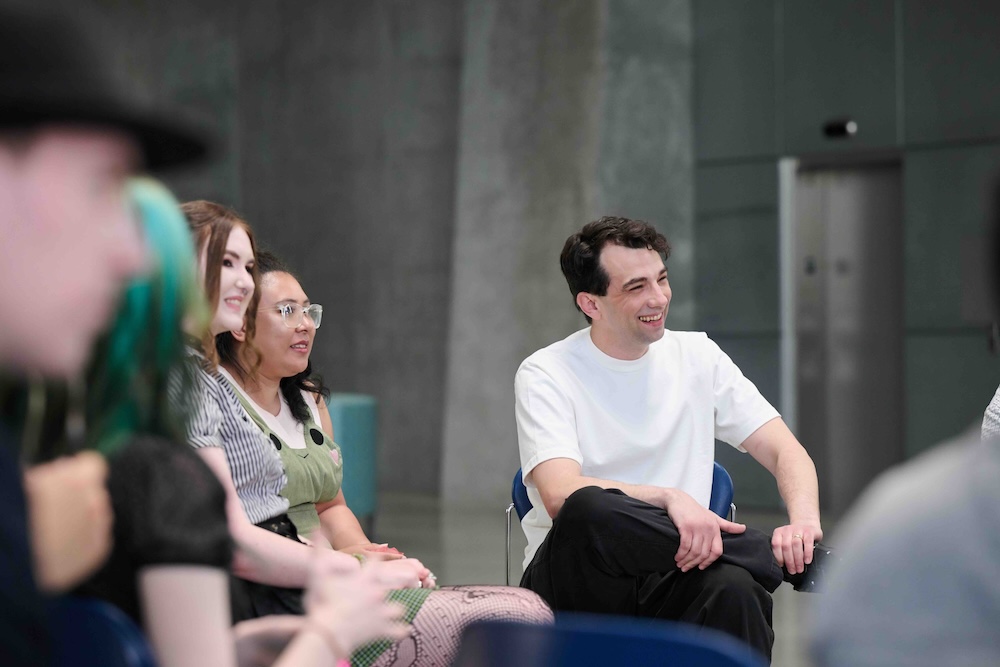
Everyone on the show, both interviewees and interviewers, are treated with the same kindness and grace. It’s a reminder that we’re all weird little gremlins in our more private moments.
My initial fears that the show would be maudlin or awkward were also turned on their head.
It turns out that awkwardness is actually a good thing. Patience and surprising gentleness are a large part of the exchanges in the series.
Awkwardness is also something of a shortcut to deeper, more interesting conversations. Not that there aren’t cornier moments in the series, but so what? Life is corny, after all.
The assorted groans, whoops and laughter that attend certain questions removes any stuffiness or pretentiousness.
At the risk of being a bit of a cheerleader, I was so surprised by the show that I want other people to have a similar experience. So, take a look, folks.
All episodes from Season 1 of ‘The Assembly’ are on CBC Gem. New episodes from Season 2 air on Sundays on CBC Television and CBC Gem at 9:30 p.m. 
Read more: Media





Tyee Commenting Guidelines
Please note that email notifications for replies are not currently working due to a software issue which may be resolved in a future update.
Comments that violate guidelines risk being deleted, and violations may result in a temporary or permanent user ban. Maintain the spirit of good conversation to stay in the discussion and be patient with moderators. Comments are reviewed regularly but not in real time.
Do:
Do not: