
 SHARE:

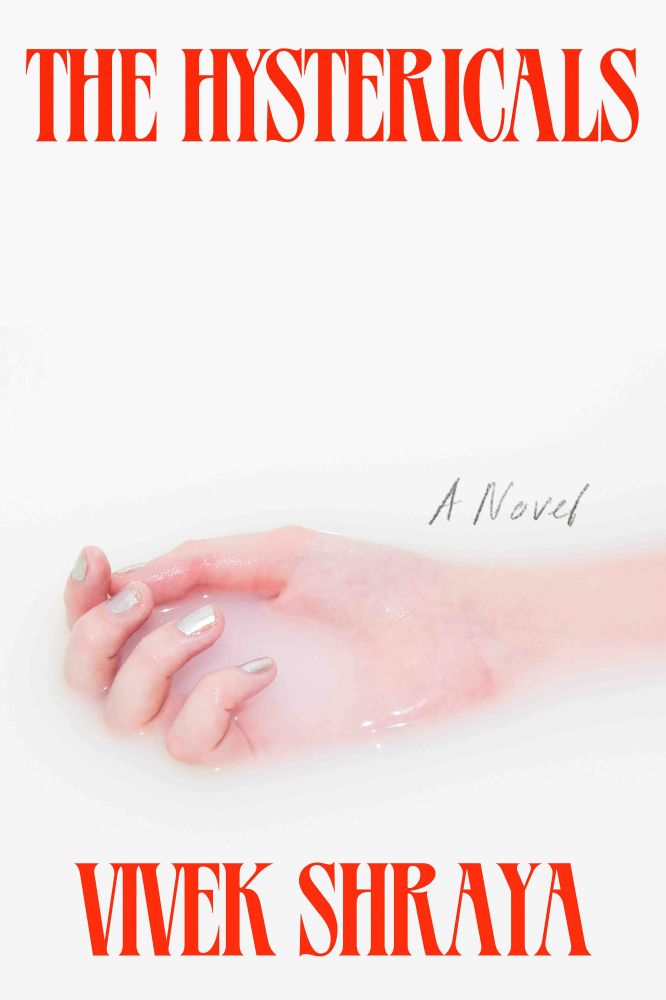
The Hystericals: A Novel
Vivek Shraya
McClelland & Stewart (2026)
[Editor’s note: This article includes discussion of sexual violence and self-harm.]
How far is too far? Whether it’s a marathon, a daring hike or a trek across a bustling town square — what is the distance we won’t climb?
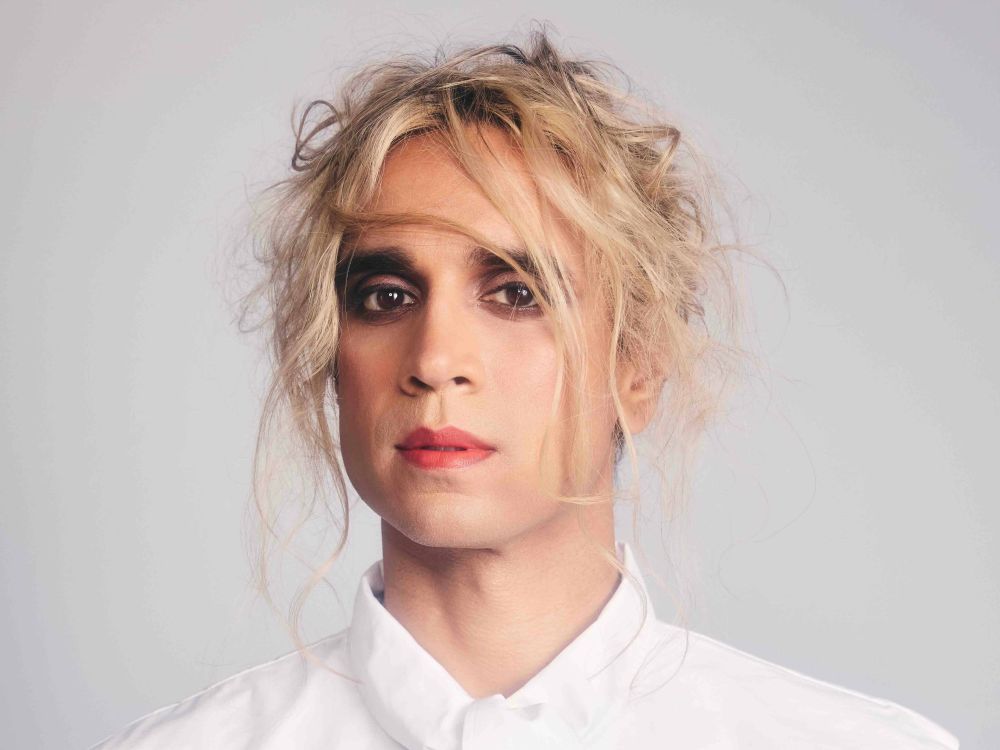
Vivek Shraya raises this question in The Hystericals, her latest bestselling novel that invites readers to consider the extreme harms of male violence. How far do women have to go before men take misogyny seriously? The multidisciplinary artist and writer challenges readers’ worldviews in a work of speculative fiction set in a post-#MeToo world.
The story centres on Sarah, a university student who is sexually assaulted on campus. She files a complaint against her attacker, but he isn’t expelled or arrested. The book takes a dystopian turn when Sarah takes her own life to “free” herself, which then spawns a radical movement of women who take up “Sarah’s Call” via suicide.
The Hystericals was released just days after the “Cornell 7” case broke this fall. A former student at Cornell University alleged she was drugged and raped by seven Chi Phi fraternity members, dubbed the Cornell 7, at the university.
The student, referred to as Jane Doe in court documents, brought a suit against the university, the seven men, the Chi Phi fraternity, Moonies Bar & Nightclub and others.
The lawsuit alleged Doe was pressured to snort ketamine, which men also snorted from her naked body, and that one of the frat brothers sent a Snapchat message inviting others to join them for “free pussy.”
The New York Times also reported that while some of the seven men were expelled or not allowed on campus for three years, two of the men were ordered to write “reflection papers” as part of their consequences for involvement.
Just as Shraya kicked off her book tour that included a B.C. stop at the Vancouver Writers Fest last month, readers of The Hystericals were watching a parallel story take place at Cornell.
This interview has been edited for length and clarity.
The Tyee: What is The Hystericals? Why did you want to write this story?
Vivek Shraya: The Hystericals is a cautionary tale of what might happen if we end up continuing on the path that we’re on right now. It takes place in the not-so-distant future, where women’s rights have been completely battered down more than, believe it or not, the time we’re living in.
I had the idea for the novel in 2018 — actually in B.C. I was touring my memoir I’m Afraid of Men and reading from that book every night, on the heels of #MeToo, and there had been more to say about the violence that women and femmes experience.
I had been recently hired at the University of Calgary as a creative writing teacher. I ended up teaching an English course about speculative fiction, which I learned about while I was teaching. I also wanted my entire curriculum to feature only BIPOC, queer or women writers, instead of my university experience where one week was dedicated to BIPOC and queer authors.
I’d never really thought about this medium outside of watching Lord of the Rings. It was in learning and studying speculative fiction that I started to see the possibilities of how it can be wielded to imagine different futures — like authors Cherie Dimaline and Octavia E. Butler used the genre.
Stories about violence against women and femmes can still be dismissed or not taken seriously.
With dystopia, you’re pushing to the edge as a way to wake people up and think about misogyny in a different way.
Why are there only white characters?
The Hystericals’ state has been beaten down by waves of a virus and femicide. In this process, people of colour have either disappeared or been eradicated. There are some conspiracies that a vaccine was withheld from people of colour to deliberately silence the movement, activism and people speaking about oppression. There are also theories that people of colour opted to escape.
People of colour are often easy scapegoats. But, what happens when queer, trans and people of colour are gone? White women overtly become the target.
I care deeply about representation and wanting to see more stories about us, by us. My novel The Subtweet featured mostly brown women.
But the thing about being a marginalized person trying to represent a marginalized community is often that people in your community are both grateful and satisfied, but also unsatisfied by the way you’ve represented a particular group.
As a writer, there’s a level of pressure and sense of responsibility to represent people of colour.
But what would it mean, 12 books in, to give myself the freedom not to feel that burden?
I don’t feel burdened writing about white people — I’ve listened to Fumbling Towards Ecstasy by Sarah McLachlan enough.
How does The Hystericals echo the Cornell 7 case?
Rape culture, which continues to be condoned in post-secondary spaces in North America and beyond, is very much echoed in the beginning of the book.
The Hystericals is an extreme take of what could happen, but for some people, it doesn’t seem that far off. If you continue to rob, denigrate and assault women, there’s a future that looks like The Hystericals.
Jake, the protagonist’s boyfriend, sees himself as a modern sensitive man. He’s read the feminist texts and cares about being a good man, and yet, he has some fatal flaws — and I think that that is true of many men.
My hope is men read this book as a way to think through misogyny. Who gets to look away? Who has the privilege of saying nothing?
I think one of the most disturbing things to me about the Cornell case was that there were 57 people in the group chat.
While there were seven men directly involved, there were 57 other people who saw what happened and did not get involved or stop it from happening.
And for me, that is an extreme concern.
In I’m Afraid of Men, you wrote, “But I’m especially afraid of women because my history has taught me that I can’t fully rely upon other women for sisterhood, or allyship, or protection from men.” Does allyship or sisterhood arise in The Hystericals?
There are many ways women come together, and activism is one of them.
The book is trying very hard to not create a monolith out of women, especially the way women and femmes experience misogyny. How I experience misogyny as a trans and queer person is not the same as a cisgender person, which then informs me by making sure that the women characters have very different approaches and responses to Sarah’s Call and the “FreeToo” movement.
The book is titled The Hystericals after the fictional government reclassifies all women as “hystericals.” Why did you choose this name?
The term “hysterical” gets used as a pejorative a lot when women have any emotion, feeling or response.
I was hearing it a lot in 2018 when I first got the idea for the novel — Donald Trump was in his first term, and I remember some politicians using it quite regularly in the news. All of a sudden, I felt like there was a resurgence of the word. I’m always interested in how language changes and evolves, and how writers and speakers can play a role in shifting the meaning of language.
As a writer, there was a part of me that wondered if I were to hyperbolize the word “hysterical,” and pluralize it by tacking an “s” to the end — is there a part of that gesture that could then mock how “hysterical” gets used? Could it remove some of the power it has?
What do you hope readers take away from The Hystericals?
People are extremely burnt out — with COVID, genocide, climate change and artificial intelligence — and don’t know where to direct our focus. My hope is that by telling an extreme story, it wakes people up, shakes us out of our complacency and engages us in the world in different ways.
There are a lot of men who walk around in 2026 and think they are good men — that would even say, “Yeah, I didn’t participate in that.” But what did you do to stop it? How did you use your voice? How did you use your body?
These are the questions at the core of The Hystericals that I’m hoping readers, especially male readers, will pick up. I hope non-male readers find a space to rage through the book.
I think that the book is an invitation to be angry and have a form of release and grief.
Writing about sexual violence and gendered violence can be hard on the spirit. What do you do to take care of yourself as you move through this material?
One of the ways that I’ve tried to show care for myself in this process, at least in the dissemination of the book, is by collaborating with other writers. I toured with Kai Cheng Thom, who is a dear friend of mine. Thom’s book, The Shapeshifter’s Guide to Gym Class, is a utopia. So, it’s a nice balance.
The writing process was also a lot longer than I expected. Idea generation to publishing was almost eight years, which is the longest I’ve ever worked on a project. I tend to be a lot more reactive, and at most, a project will take about four years.
Part of it is because there was a lot of care from myself, but also my editor, with the topics of body autonomy, suicide, and me being a trans writer in this particular moment.
While I worked on the book, I had the pleasure of working on other projects, including a CBC Gem show, How to Fail as a Popstar, and many albums.
Sometimes we need space from a project and the best gift I inadvertently gave myself was working on other things during this time. 
Read more: Books, Rights + Justice, Gender + Sexuality



Tyee Commenting Guidelines
Please note that email notifications for replies are not currently working due to a software issue which may be resolved in a future update.
Comments that violate guidelines risk being deleted, and violations may result in a temporary or permanent user ban. Maintain the spirit of good conversation to stay in the discussion and be patient with moderators. Comments are reviewed regularly but not in real time.
Do:
Do not: