


 SHARE:
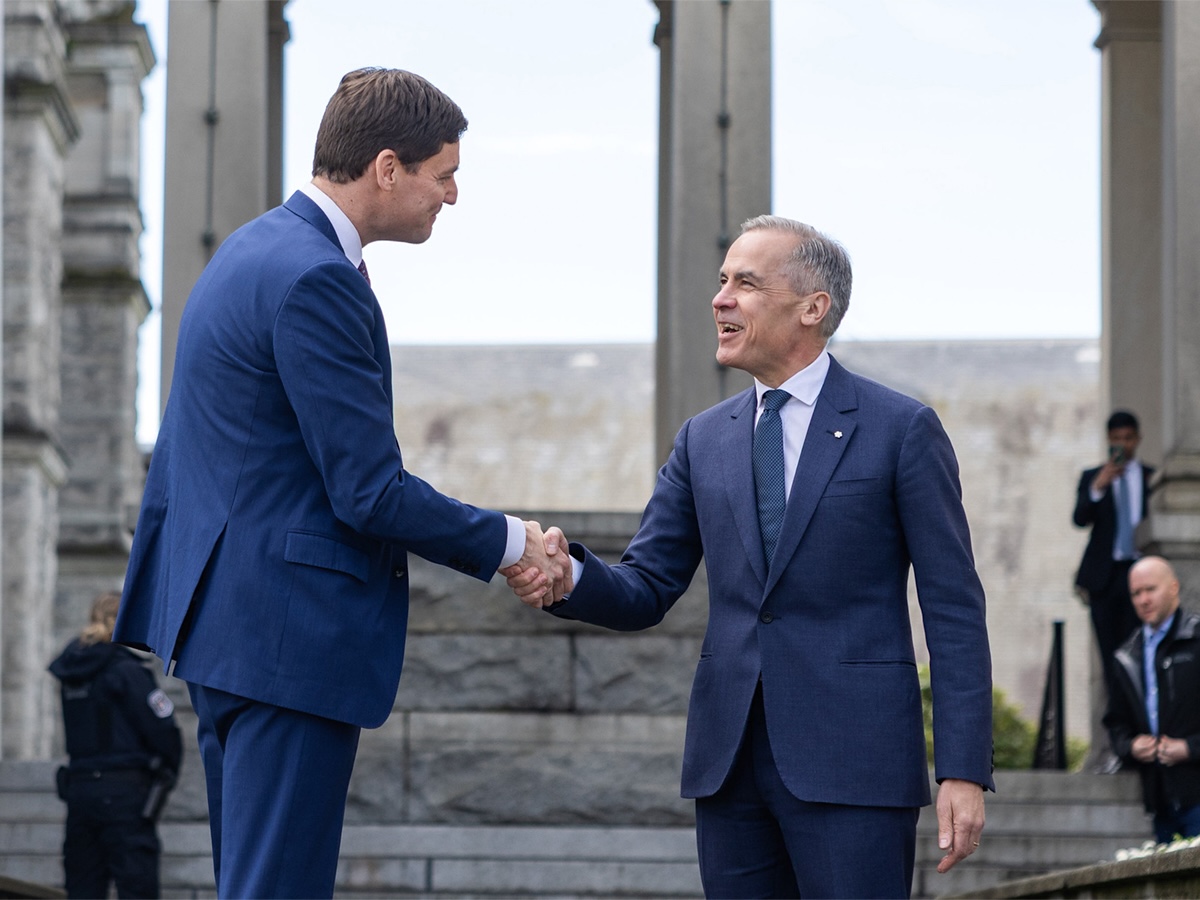
The Mark Carney government has been open-handed this year when it comes to funding major projects in B.C. that it deems to be in the national interest.
The government promised $3.9 billion for the North Coast Transmission Line, which will provide publicly subsidized power for liquefied natural gas and mining projects.
It invested $500 million to expand the Red Chris gold and copper mine in northwest B.C., owned by U.S.-based Newmont Corp. and Vancouver-based Imperial Metals, and pledged financial support for the $10-billion Roberts Bank port expansion and related upgrades in Delta.
And the perks don’t end there, because the government also promised to fast-track the port expansion and to accelerate permitting, financing and construction for four LNG export projects, including Woodfibre LNG in Squamish.
But there’s a hitch.
A Canadian scientist and a University of British Columbia professor say the federal government’s funds and perks are subsidizing the destruction of nature, contravening Canada’s global biodiversity commitments.
“Biodiversity again loses out,” Justina Ray, president and senior scientist for Wildlife Conservation Society Canada, told The Tyee.
Ray and Jessica Dempsey, a University of British Columbia professor who studies the political economy of biodiversity loss, both said Prime Minister Mark Carney’s investment summit in Toronto last week underscores that the government’s priority is to facilitate resource extraction, despite the toll on nature.
Dempsey, who teaches in UBC’s geography department, said nature in Canada is being put at increased risk at a time when species and ecosystems are already under stress from climate change.
“When ecosystems are degraded, they’re more susceptible to fire and, as we’ve seen, to flooding. The impacts are not just to nature; they’re really to everyone,” she told The Tyee.
A ‘historic moment for nature’?
Four years ago, as scientists around the world warned of unprecedented biodiversity loss, with potentially dire consequences for human societies, representatives from 196 countries gathered in Montreal to seek solutions.
Ray, who is an adjunct professor at the University of Toronto and Trent University, was a member of the Canadian delegation to the talks.
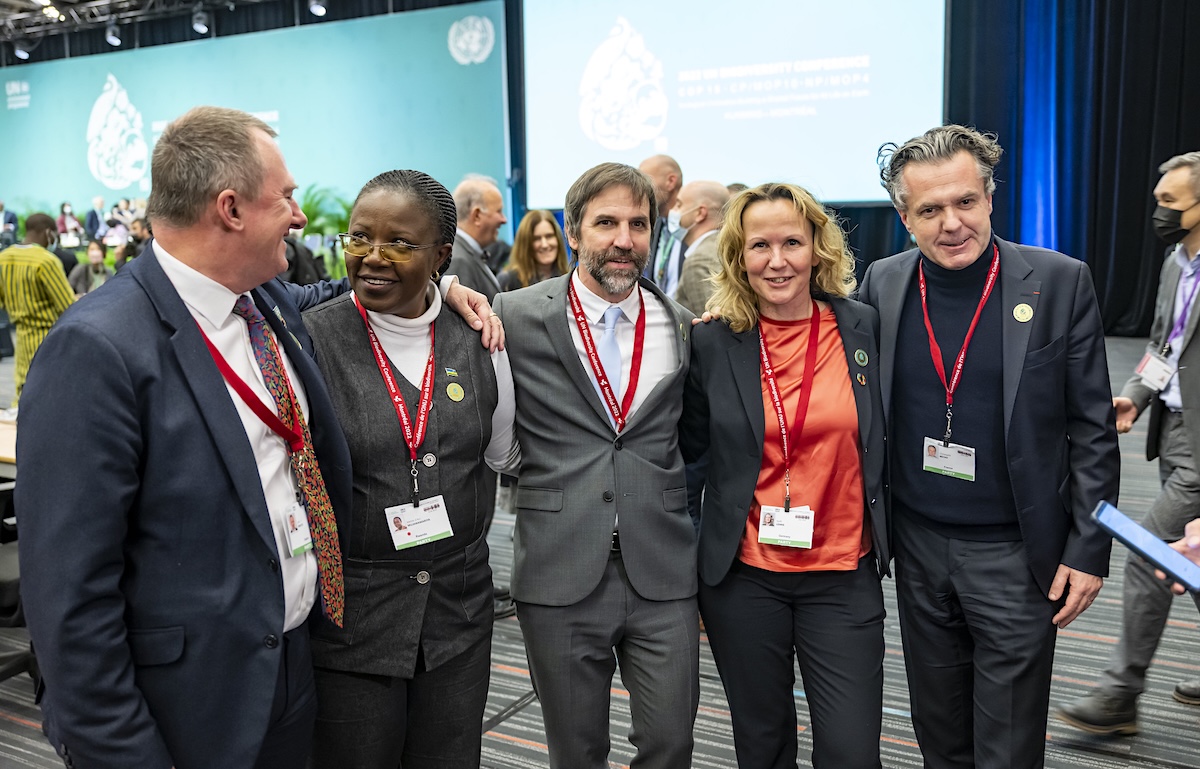
The talks led to a global agreement called the Kunming-Montreal Global Biodiversity Framework, which was heralded by former federal environment minister Steven Guilbeault as “a historic moment for nature... and our only chance to save what we love and hold dear.”
The nature agreement laid out a path for halting and reversing biodiversity loss.
It committed Canada and other countries to stop human-induced extinctions of threatened species, protect 30 per cent of the world’s land and waters by 2030 and restore degraded ecosystems such as forests and wetlands.
It also required countries to identify subsidies and other incentives that harm biodiversity by mid-2025 — and to eliminate, phase out or reform them by 2030. That part of the framework is known as Target 18.
It’s Target 18, Ray said, that Canada is flouting.
A subsidy harming biodiversity
Take the North Coast Transmission Line, a 450-kilometre high-voltage line under construction from Prince George to Terrace.
Ray outlined why Ottawa’s contribution to the line is a subsidy that harms biodiversity.
To start, she said, government action gives an advantage to private companies such as Western LNG, the Texas-based owner of Ksi Lisims LNG, which will receive power from the line.
Ottawa is paying for the electricity infrastructure that Western LNG and other companies need to operate, Ray pointed out. (BC Hydro customers will also help pay for the $6-billion transmission line.)
Western LNG and other companies will receive “something valuable they did not pay for,” Ray said, and the result is industrial activity “in areas where it would otherwise be uneconomic, with consequences for biodiversity.”
The Ksi Lisims floating LNG terminal will sit near the Nass River estuary, in an area home to many fish species, including eulachon and salmon, as well as mammal and shellfish species important to local First Nations.
When the B.C. government approved the project last year, it recognized that Ksi Lisims LNG, which is being co-developed with the Nisg̱a'a Nation, “will contribute to the cumulative effects on ecosystems” in the region.
The North Coast Transmission Line itself will also have significant impacts on biodiversity, although the public will not be privy to most details because the B.C. government exempted the line from an environmental assessment.
Prior to the exemption, BC Hydro said the line would affect up to 100 private properties, including agricultural land, cut through traplines and woodlots, overlap with designated winter habitat for moose and cross waterways that include habitat for at-risk white sturgeon.
But, as The Tyee reported earlier this month, BC Hydro was recently obliged to carry out an environmental impact assessment for 1.1 kilometres of the line that it proposes to run through the Swan Creek provincial protected area, affecting regionally important old-growth forest, winter habitat for moose, wetlands, fish-bearing tributaries of the Zymoetz River and habitat suitable for multiple species at risk of extinction.
Ray pointed out that government benefits for the North Coast Transmission Line could include legal concessions as well as money. The 12.4 hectares that BC Hydro wants to remove from the Swan Creek Protected Area is land the project “cannot lawfully use until the boundary is redrawn,” she noted.
Changing the protected area boundaries “removes a constraint that would otherwise force a longer or more expensive route,” Ray said, adding that skipping an environmental assessment that could take several years also gives the project an advantage.
The transmission line and the projects it supports will damage biodiversity by clearing land, using water and fragmenting wildlife habitat, she said.
The loss of part of the Swan Creek Protected Area would be a “direct, permanent reduction in conserved land,” Ray noted, “in a watershed that was protected in 2005 because it was undisturbed.”
Ray said Ottawa’s contribution to the Red Chris mine also makes that project’s expansion — which will clear and disturb land in a largely undeveloped area of B.C. — “cheaper and more likely.”
Ottawa’s payment increases activity harmful to biodiversity, she said, “which is what Target 18 asks countries to find.”
Canada is falling behind
In February, Canada reported to other countries that its deliverables for the global nature agreement were “incomplete.”
Canada also reported that “no data” is available on the value of subsidies and other incentives harmful to biodiversity.
The federal Ministry of Environment, Climate Change and Nature did not directly answer questions about whether it believes federal supports for the North Coast Transmission Line and other B.C. projects count as subsidies that harm biodiversity.
Keean Nembhard, senior strategic communications adviser for Minister Julie Dabrusin, told The Tyee that Canada’s 2030 Nature Strategy, announced in 2024, charts a path for implementing the global nature agreement domestically.
The strategy acknowledges the complexity of Target 18 and the strong need for policy coherence, “as subsidies that are strategically important from a climate perspective could have environmental consequences for biodiversity,” Nembhard said.
Ray noted that Canada still does not have a test to identify such subsidies. “Lowering emissions per unit of production does not reduce the land that mines and LNG facilities clear, and improving their economics makes that development more likely,” she said.
Nembhard said the government sees nature as central to Canada’s identity “and protecting it supports our jobs and economy, strengthens our nation’s sovereignty and sustains our way of life.”
Nembhard also said Carney’s plan to protect nature, announced earlier this year, includes commitments to protect and conserve more lands and waters and connect habitats so species can move more safely, design infrastructure projects “that work with nature rather than against it,” and use finance tools to fund conservation.
But Ray said the Carney government’s plan only addresses raising new funds for nature and says “nothing about the public money already being spent in ways that harm it.”
The federal government has already determined that the Roberts Bank port expansion will harm biodiversity. The government found the project would cause significant adverse environmental effects that cannot be fully mitigated. That includes destroying critical habitat for southern resident killer whales and harming chinook salmon.
“Public money is now being directed to a project the government's own assessment says causes permanent, incurable harm to species at risk,” Ray said.
As a contrast, she pointed to $4.7 billion in federal funding for Via Rail cars that Carney announced earlier this month.
“The activity being funded does not damage biodiversity,” she said. “The cars run on existing tracks, on existing routes. No new corridor is being cut, no land is being converted, no extraction is being enabled, and nothing is being made more viable that wasn’t already operating.”
Dempsey told The Tyee that recent federal contributions to industrial projects are layered on top of Canada’s long history of subsidizing resource extraction activities that harm nature.
Resource extraction is responsible for about 90 per cent of biodiversity loss on land, she said, and the risks to nature increase and magnify as the number of resource projects grows, especially in the context of climate change.
Canada is not the only country that has failed to meet its commitment to identify subsidies that harm nature.
Dempsey pointed to a recent analysis by Carbon Brief, which found that only 21 of 134 signatory countries that submitted national reports had identified nature-harming subsidies, as promised.
“That is not to excuse Canada,” she said. ![[Tyee]](/design-article.thetyee.ca/ui/img/yellowblob.png)
Read more: Energy, Politics, Environment









Tyee Commenting Guidelines
Please note that email notifications for replies are not currently working due to a software issue which may be resolved in a future update.
Comments that violate guidelines risk being deleted, and violations may result in a temporary or permanent user ban. Maintain the spirit of good conversation to stay in the discussion and be patient with moderators. Comments are reviewed regularly but not in real time.
Do:
Do not: