


 SHARE:
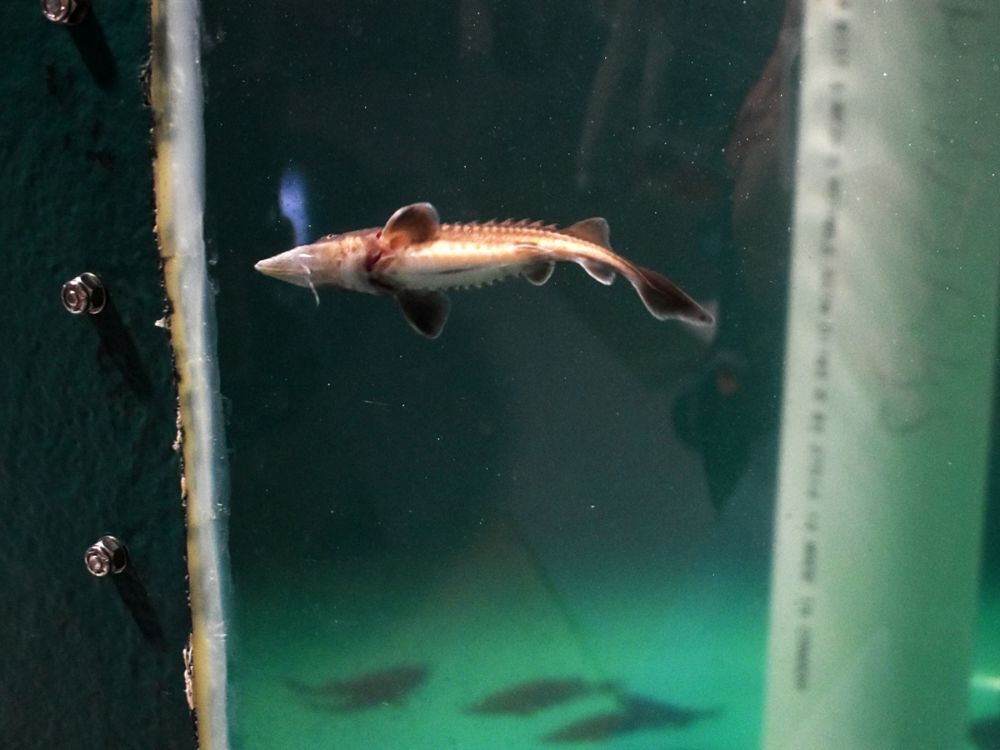
Kara Geary is a matchmaker for fish.
It’s not a particularly romantic job — not unless you find syringes of sturgeon semen, fishy fundal massages and bowls of sticky eggs romantic. But for the roughly 550 adult white sturgeon left in the Nechako River, her job is vital.
Since the ’90s, people have known that white sturgeon in the Nechako were in trouble. A multi-year study of the species found that the population was aging, and very few babies were making it to adulthood.
“The next five to 20 years represent the most critical period in recovery of Nechako sturgeon,” a 2004 recovery strategy for the species found. The species could become functionally extinct by 2044 if nothing was done, the strategy said.
Fast forward a quarter of a century. Nechako white sturgeon were listed as endangered in the Species at Risk Act in 2006, and the Freshwater Fisheries Society of BC established a test hatchery the same year. Now, thankfully, it appears the end is not quite nigh for the sturgeon.
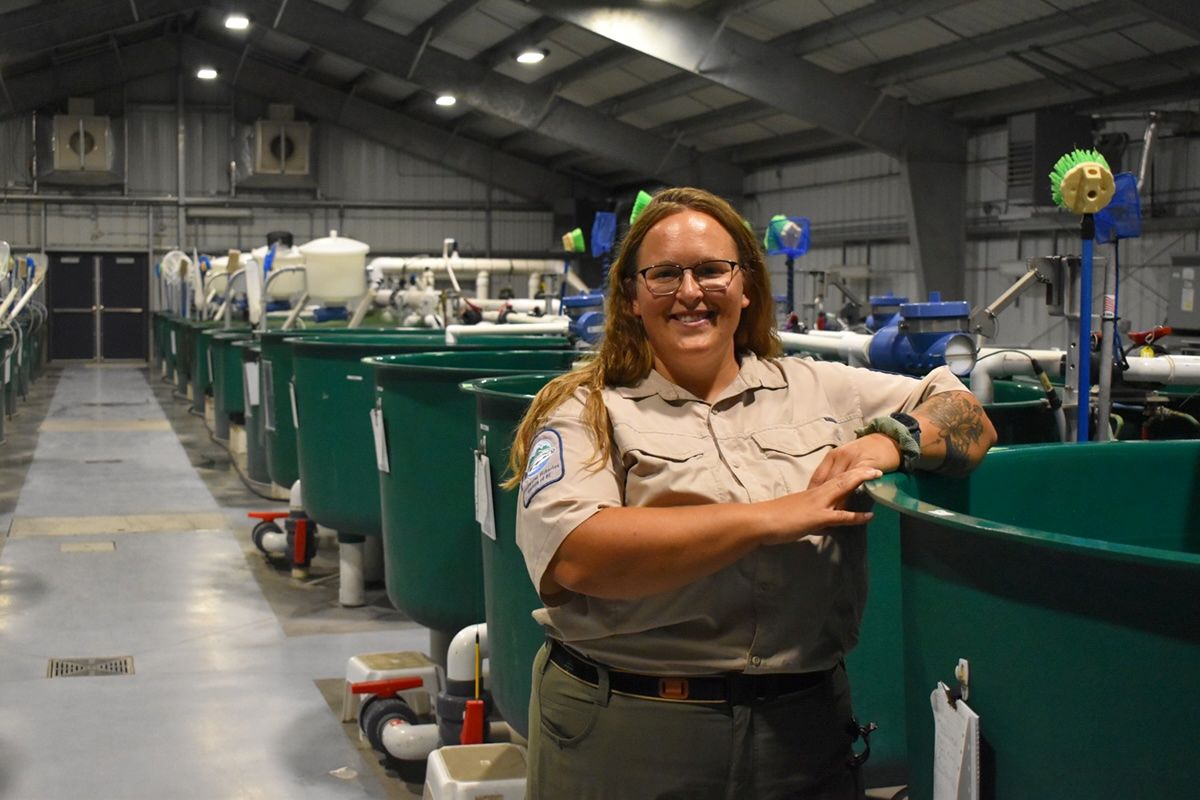
The Nechako White Sturgeon Conservation Centre in Vanderhoof, opened in 2014, is responsible for breeding new generations of Nechako River white sturgeon, as well as helping researchers learn more about the endangered species.
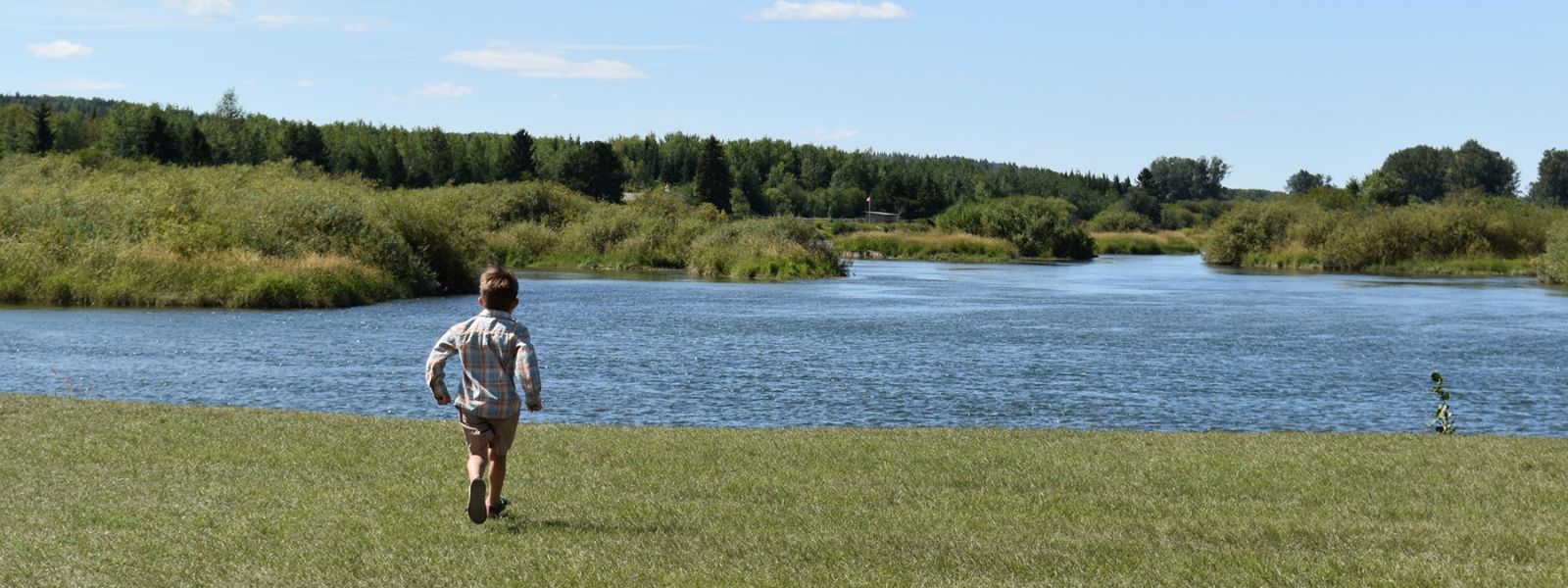
“Sturgeon are a really challenging species to study,” explains Geary, whose official title is research technician and outreach coordinator.
“A lot of the things of interest can take years, even decades, to really understand. And honestly, every time you answer one scientific question, three more questions we didn’t even know we had are uncovered.”
One of the big questions plaguing experts for years: why are there so few baby sturgeon?
In the beginning, there were fish
White sturgeons first entered the fossil record 4.5 million years ago, making them contemporaries of our first human ancestors.
While our ancestors looked more like chimpanzees than modern people, white sturgeon have changed little over the millennia.
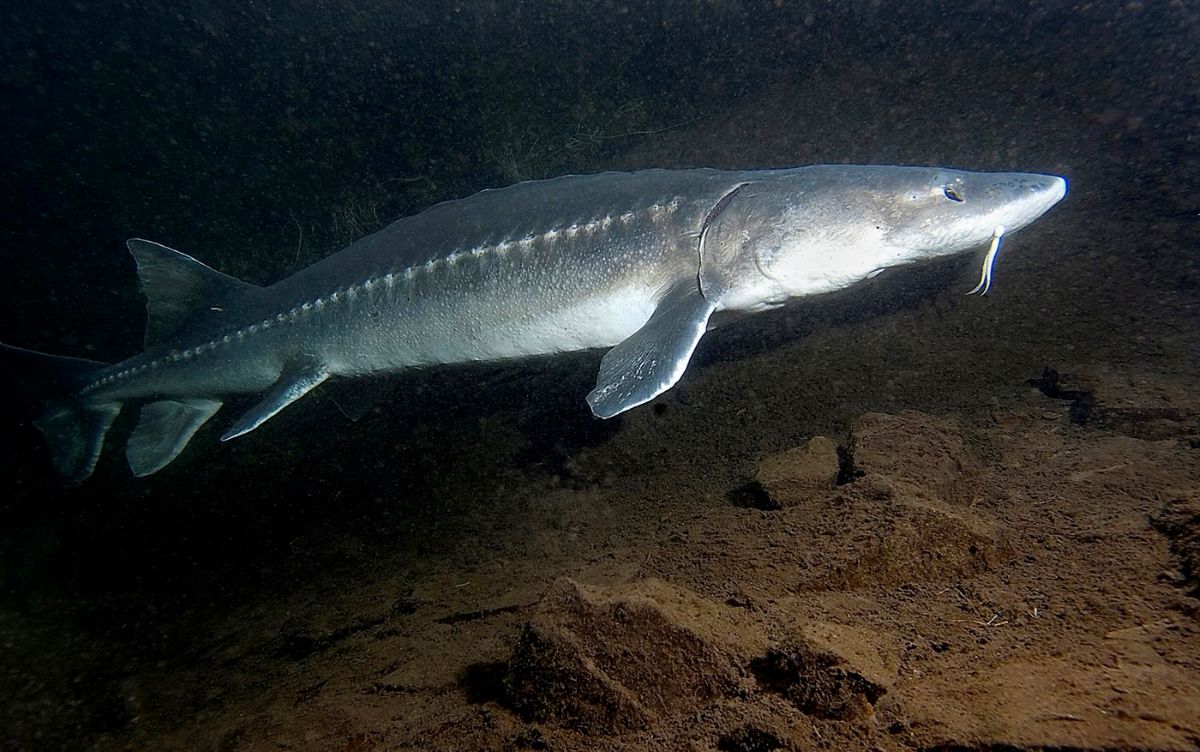
Huge and long-lived — sometimes, over 100 years — they are scale-less, and suck in food through their toothless mouths.
They find their reproductive success through the quantity of their offspring, rather than dedicated parental care. One female sturgeon can release more than a million eggs at a time. She broadcasts those eggs into the fast-moving water near the river bottom. Males release milt — sturgeon semen — at the same time. Larvae emerge from successfully fertilized eggs about a week later.
Female sturgeon in the Nechako spawn for the first time at around 40 years of age. Sometime between three and 10 years later, they are ready to spawn again. Males mature at the relatively tender age of 20, although they too follow a spawning cycle afterwards.
In the Nechako, the sturgeon traditionally spawn at gravel beds outside of Vanderhoof’s Riverside Park. Pheromones in the water released by spawning sturgeon inspire others to head there to spawn, too.
Prior to the construction of the Kenney Dam in the 1950s, these gravel beds were relatively free of fine sediment thanks to the fast-flowing water. Eggs were able to stick to the rocks, with the semi-permeable exterior allowing oxygen in for the developing fish.
Today, the sturgeon are spawning in what is essentially a “new river,” Geary said.
The Kenney Dam significantly altered the flow of the river and changed both water temperatures and the amount of sediment saturating what had once been a largely silt-free waterway.
A 2005 study suggested that a series of landslides likely caused by the construction and operation of the dam caused a million cubic metres of dirt, silt and gravel to wash downstream. The silt arrived at the spawning site near Vanderhoof around the same time that the sturgeons’ traditional spawning cycles began to fail to produce strong new populations of young fish.
Today, these spawning grounds are still laced with sediment. The silt attaches itself to the outside of the eggs, creating a coating that prevents oxygen from getting through. The fish die before they can even be born.
“They’re suffocating,” Geary said. “That is really the biggest thing that is stopping that recruitment.”
The art of making babies
When winter arrives in the Cariboo, and a crust of ice forms over the Nechako River, they slow down, gather together in back eddies or deep holes and wait for spring.
When spring arrives, they are still cold and slow — which makes it the perfect time for the conservation team to fish for the next round of parents: eight females, and as many males as they can get.
From the outside, all white sturgeon — male or female — look the same. Staff and volunteers are able to tell if a sturgeon is a “flowing male,” one that is ready to spawn that year, by sticking a tube into the vent on the underside of their bodies. If milky fluid comes out, then the sturgeon is producing milt. If clear fluid comes out, then staff make an incision into the abdomen and look inside.
With a tool suspiciously similar the one used to check your ears at the doctor, the conservation team can check for eggs. Using a chart with written descriptions of each stage of the cycle, the team can tell when the sturgeon will be ready to spawn. Spawning sturgeon are taken to a trailer, placed inside an oxygenated tank and driven back to the Nechako White Sturgeon Conservation Centre.
Eventually, the team will have eight female sturgeons of varying ages in eight round tanks, and a number of males bunking together.
“We keep track of maternal families here,” Geary said. “The males, on the other hand, don’t get as much hands-on attention.”
All the sturgeon, male and female, are given LHRHa, a luteinizing hormone that helps synchronize their spawning schedule. (The hormone also helps make sure the females don’t reabsorb their eggs — something that can happen if the sturgeon decide they are living in less-than-ideal conditions.)
When it’s time, the female sturgeon will start releasing their eggs onto the floor of the tank.
Hoisting the sturgeon onto an inclined stretcher, Geary or others will massage the area around the female’s vent, pushing the three-and-a-half millimeter eggs out into a plastic container. They will take only a fraction of her eggs. The ones they remove are immediately placed into a cooler. Then, it’s back to the river for the mom-to-be.
The boys stick around a little longer, so they can fertilize eggs from all the females. Staff go into the tanks with the male sturgeon, flip them on their backs and use a catheter-like syringe to pull out 120mL of milt.
Once all the eggs and milt are collected, it’s time to do the matchmaking.
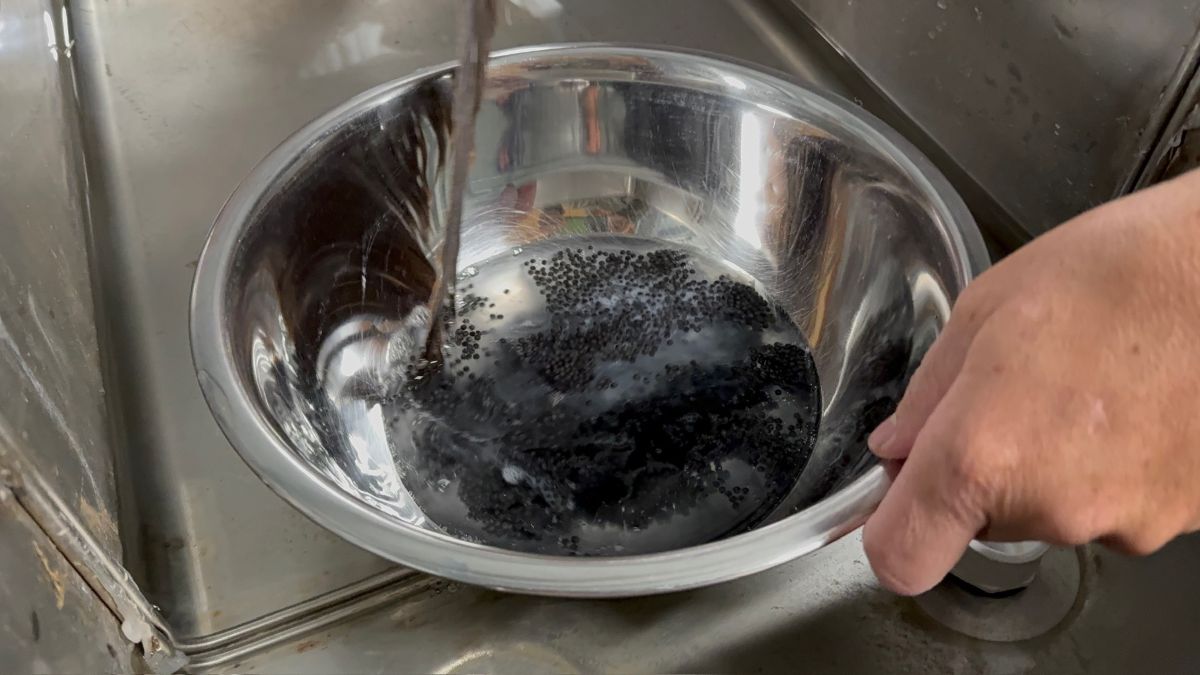
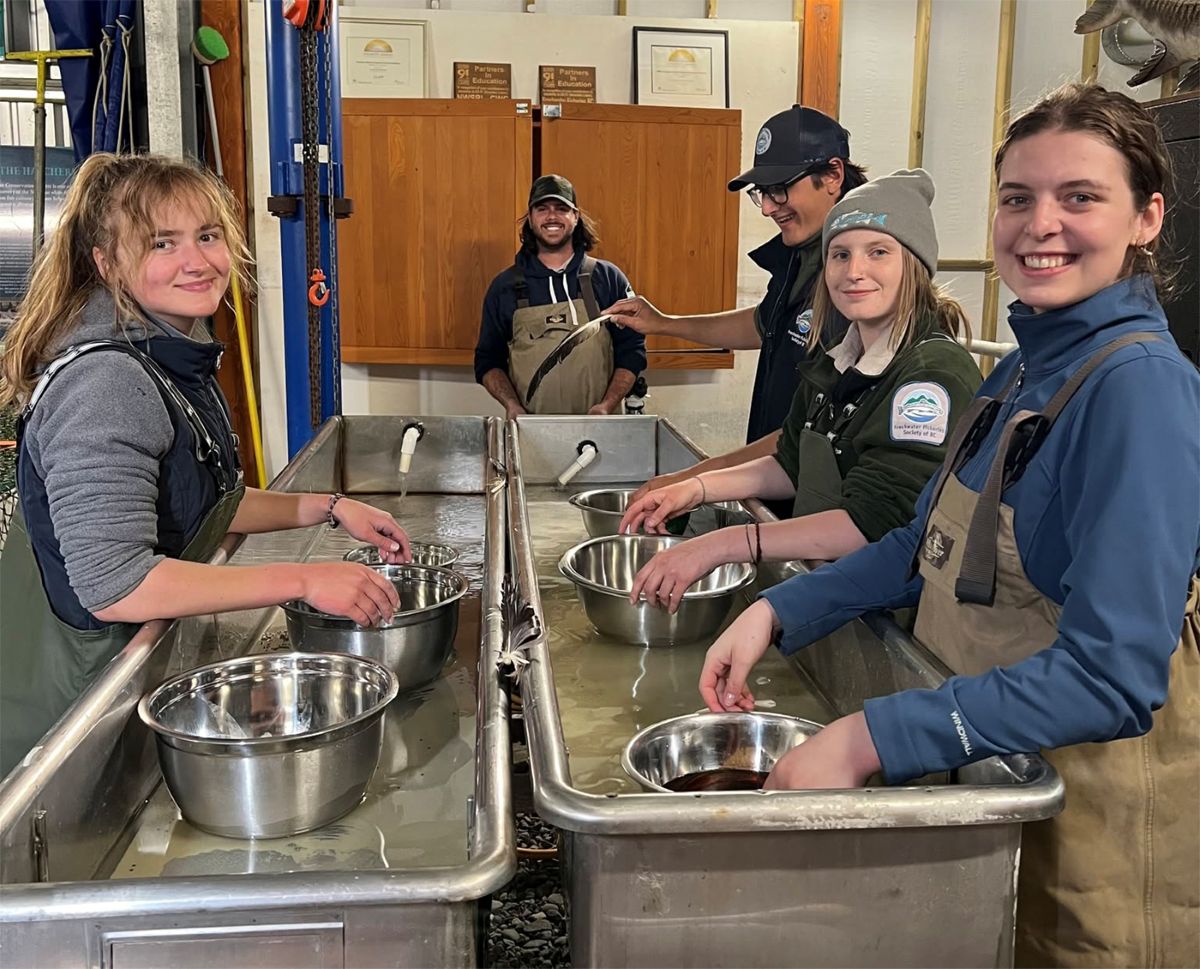
Taking the coolers into the dark shed attached to the conservation centre’s main building, they will divide each female’s eggs into stainless steel bowls. The number of males will determine how many bowls there are; each bowl gets an equal amount of eggs and a squirt of milt.
Technicians gently mix the eggs and milt with a feather, add some water, mix a bit more, and presto: fertilized eggs.
(Gentle is the operative term here: if you mix too vigorously, you could induce extra sets of chromosomes to form in the eggs. The fish with the extra gene sets may survive in the hatchery, but their progeny will eventually become sterile — something the conservation centre desperately wants to avoid.)
After a few days, the eggs hatch. Two years of feeding and growth later, the juveniles are released into their native river by gaggles of school children.
The next steps
Thanks to the efforts of the Nechako White Sturgeon Conservation Centre, the river’s sturgeon population has increased. The first fish released by the test hatchery efforts are now reaching maturity. The population isn’t teetering on collapse.
But the river is still hostile to the sturgeon’s fragile eggs.
In 2011, the province added clean, coarse gravel to two sites just upstream of the Burrard Avenue Bridge in Vanderhoof. At first, the project was a success, with eggs being found the following year. But sediment soon filled in the cracks where the eggs would normally stick, and now the province is working to find ways to clean the gravel and improve the introduced habitat.
Another potential solution is to figure out how to get spawning sturgeon to give up their traditional grounds for a better spawning habitat just upstream.
This year, the centre and its partners tried something new.
To trick the sturgeon, they trickled pheromone-laced water into the river and crossed their fingers.
Getting the pheromones, which were collected during the centre’s breeding process, into the water was more challenging than they expected, and it’s not clear if their efforts inspired any sturgeon to visit the location at all.
But there’s hope it will work better next year.
“The ideal situation” for sturgeon spawning would not involve human matchmakers, Geary told The Tyee.
“We want them to be successful on their own in the river,” she said. “We’re not quite there yet. But I think it’s looking good.” ![[Tyee]](/design-article.thetyee.ca/ui/img/yellowblob.png)
Read more: Environment












Tyee Commenting Guidelines
Please note that email notifications for replies are not currently working due to a software issue which may be resolved in a future update.
Comments that violate guidelines risk being deleted, and violations may result in a temporary or permanent user ban. Maintain the spirit of good conversation to stay in the discussion and be patient with moderators. Comments are reviewed regularly but not in real time.
Do:
Do not: