

 SHARE:
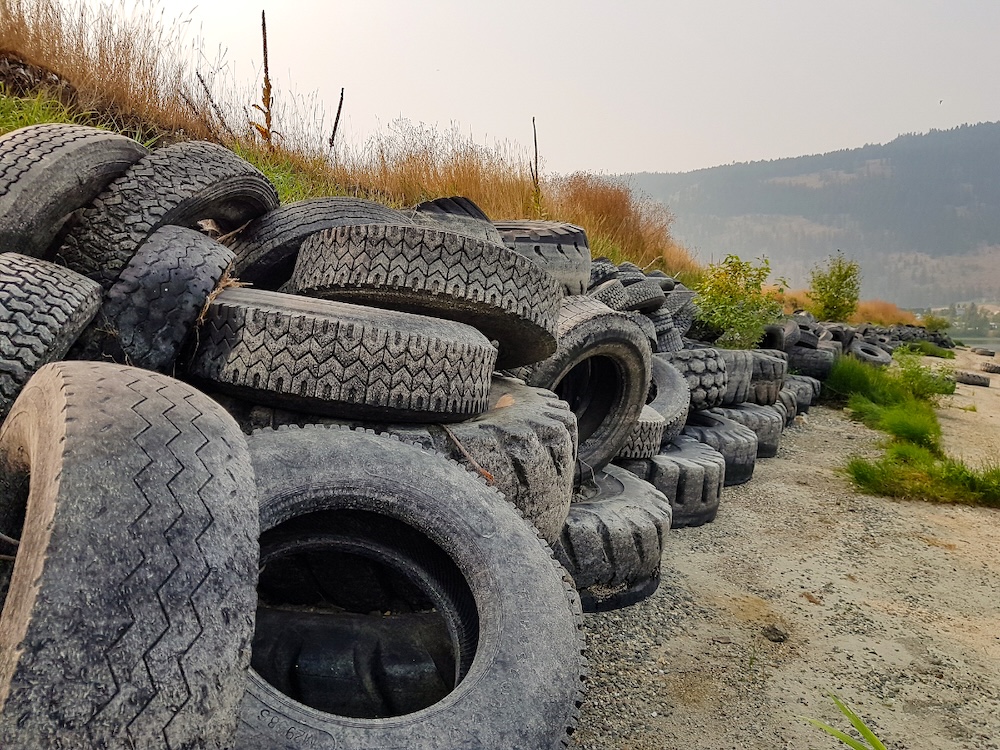
A community group in Chase is urging the provincial government to do something about a berm made of thousands of stacked tires on the shore of Little Shuswap Lake.
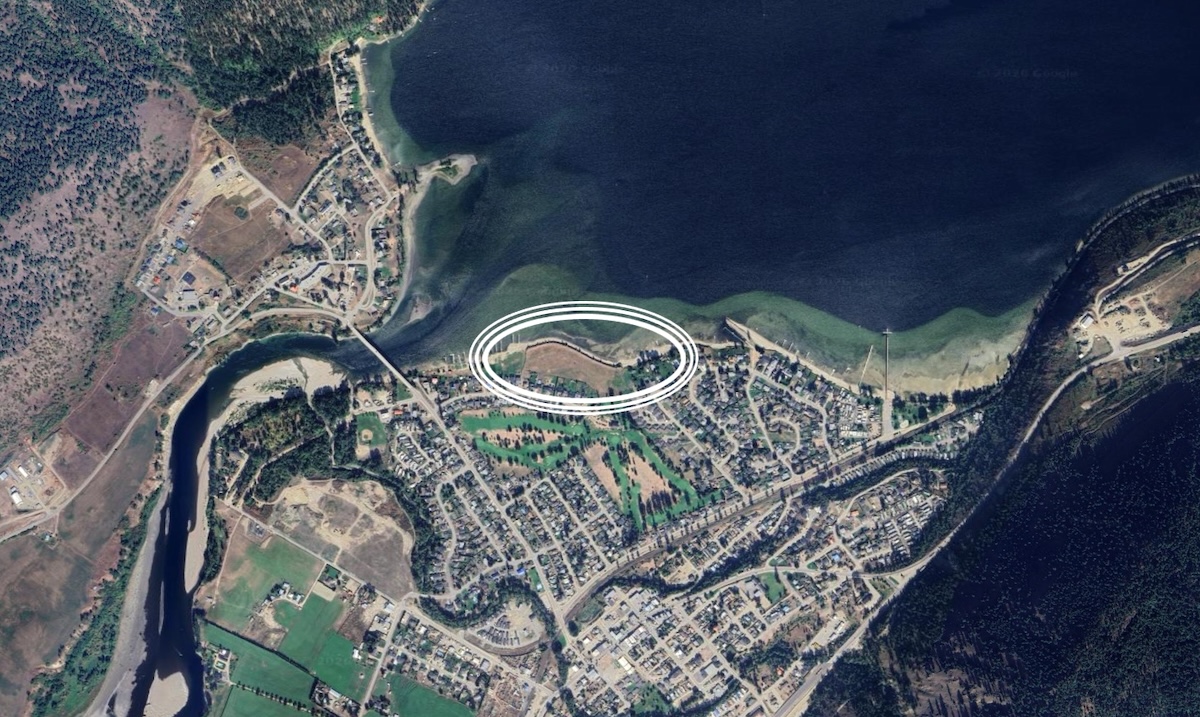
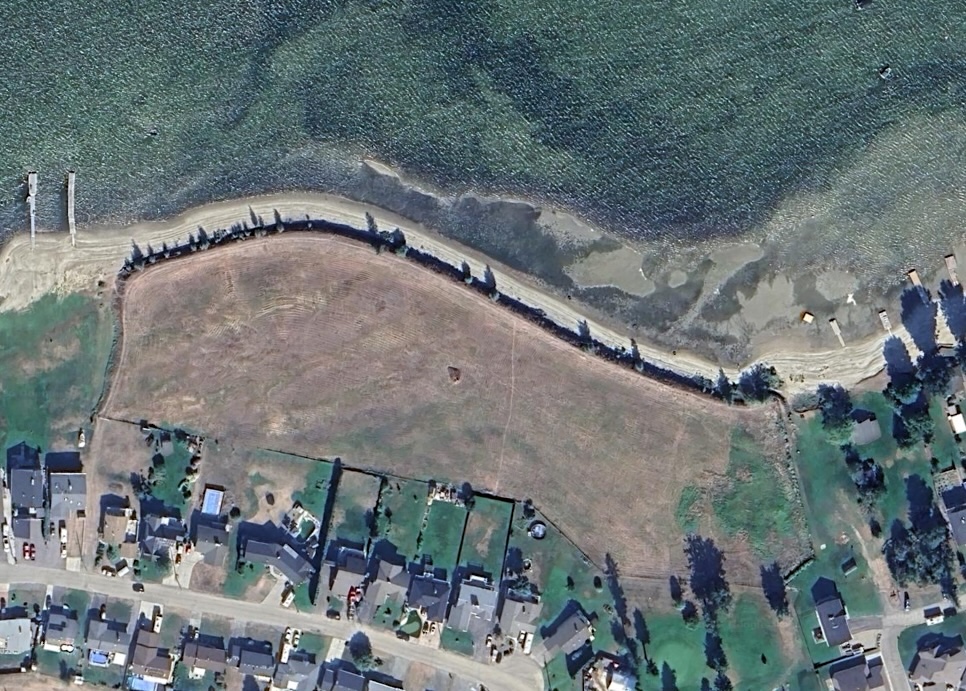
The Chase Environmental Action Society says the 300-metre-long structure, built in 1991 to control erosion, is falling apart and leaching a toxic chemical into the lake.
The tires are held together by cables and weighted down by pieces of concrete and asphalt. But the cables are breaking, the asphalt is spilling out onto the beach, and individual tires are escaping onto the shore and into the lake.
Many residents and two local governments have expressed concerns, but B.C.’s Ministry of Water, Land and Resource Stewardship said it has no plans to take action or assess the danger.
Because the berm was constructed on the foreshore between the high-water and low-water marks, the tires sit on Crown land and are under the jurisdiction of the province, even though the land itself sits within the village of Chase.
Carolyn Parks Mintz, a member of the Chase Environmental Action Society, said the structure is a dangerous eyesore.
“Every year it's worse,” she said. “When my husband and I go down and look at the mess, we are horrified.”
She said the floating tires pose a danger to people and to property.
In the spring, the society hired equipment operators and recruited volunteers to remove 11 tons of asphalt pieces from the beach in front of the berm.
The group also collected water samples in and around the tires and sent them to Erik Krogh, an adjunct professor of chemistry at Vancouver Island University who specializes in water quality.
Krogh analyzed the samples for a compound known as 6PDQ, a known toxin for certain types of salmon, particularly coho.
“The 6PDQ concentrations are above the B.C. water quality guideline for freshwater acute sensitive species,” Krogh told The Tyee.
Little Shuswap Lake is important coho habitat, and populations have declined enough in recent decades for Fisheries and Oceans Canada to prohibit coho fishing in the lake year-round.
“We ought not to be using end-of-life tires themselves, or tire products, in close proximity to sensitive habitats, like freshwater ecosystems,” Krogh said.
The average of four samples was more than double the B.C. water quality guideline.
The readings “were not alarmingly high,” he said, adding that the tires have been there so long that most of the toxins that were going to leach out have already done so over the past several decades.
Krogh’s report said that concentrations of 41 to 90 nanograms per litre had the potential to kill half of the population of coho.
But he said that does not indicate an acceptable limit.
“That’s not a target that we should be aiming for, right?” said Krogh. “We’re not trying to kill half of the fish.”
The fact that the water samples were taken near the tires and not from the body of the lake does not change Krogh’s assessment.
“I think it is safe to say that they are a source of an acute toxin that will ultimately make its way into the lake. We cannot say what effect this is having on the concentrations in the lake itself or that this is responsible for fish mortalities.”
He said the tires are probably releasing microplastics into the water as well.
In response to an inquiry from The Tyee, a ministry spokesperson said in an email that the ministry has not tested the water at the beach for tire leachate.
As for the physical breakdown of the berm, a spokesperson wrote: “Ministry staff have not identified any evidence that the berm is out of compliance with the terms of its original authorization. As a result, an engineering assessment has not been required.”
Asked if the berm would meet present-day engineering standards for such a structure, the ministry wrote: “Stacked tires are not identified as an accepted best practice for erosion control or bank stabilization.”
The berm shores up a 2.8-hectare property that consists of unoccupied grassland. Its owner, Shawnessy Enterprises Ltd., did not respond to The Tyee’s request for comment. Parks Mintz said the company has also been unwilling to discuss the berm issue. The land is zoned for use as a golf course.
Last November, Kamloops-North Thompson MLA Ward Stamer visited the berm.
“If there’s a negative environmental impact from this, we should be determining what it is, what the risk levels are, what’s the responsibility of the provincial government and/or the federal government on this,” Stamer told Castanet. He said he would attempt to get answers from the province.
But there’s been no action over the last year.
In February, Parks Mintz sent a 200-signature petition to the ministry asking it to review and reconstruct the berm.
She also wrote a letter to the Thompson-Nicola Regional District asking for its support. In September, the regional district board referred the matter to the Shuswap Watershed Council, a partnership of organizations dedicated to the protection of water quality.
Parks Mintz also made a presentation to Chase council, after which the council voted to express its support for “the development of a restorative plan informed by appropriate structural and water quality assessments.” ![[Tyee]](/design-article.thetyee.ca/ui/img/yellowblob.png)
Read more: Environment






Tyee Commenting Guidelines
Please note that email notifications for replies are not currently working due to a software issue which may be resolved in a future update.
Comments that violate guidelines risk being deleted, and violations may result in a temporary or permanent user ban. Maintain the spirit of good conversation to stay in the discussion and be patient with moderators. Comments are reviewed regularly but not in real time.
Do:
Do not: