


 SHARE:
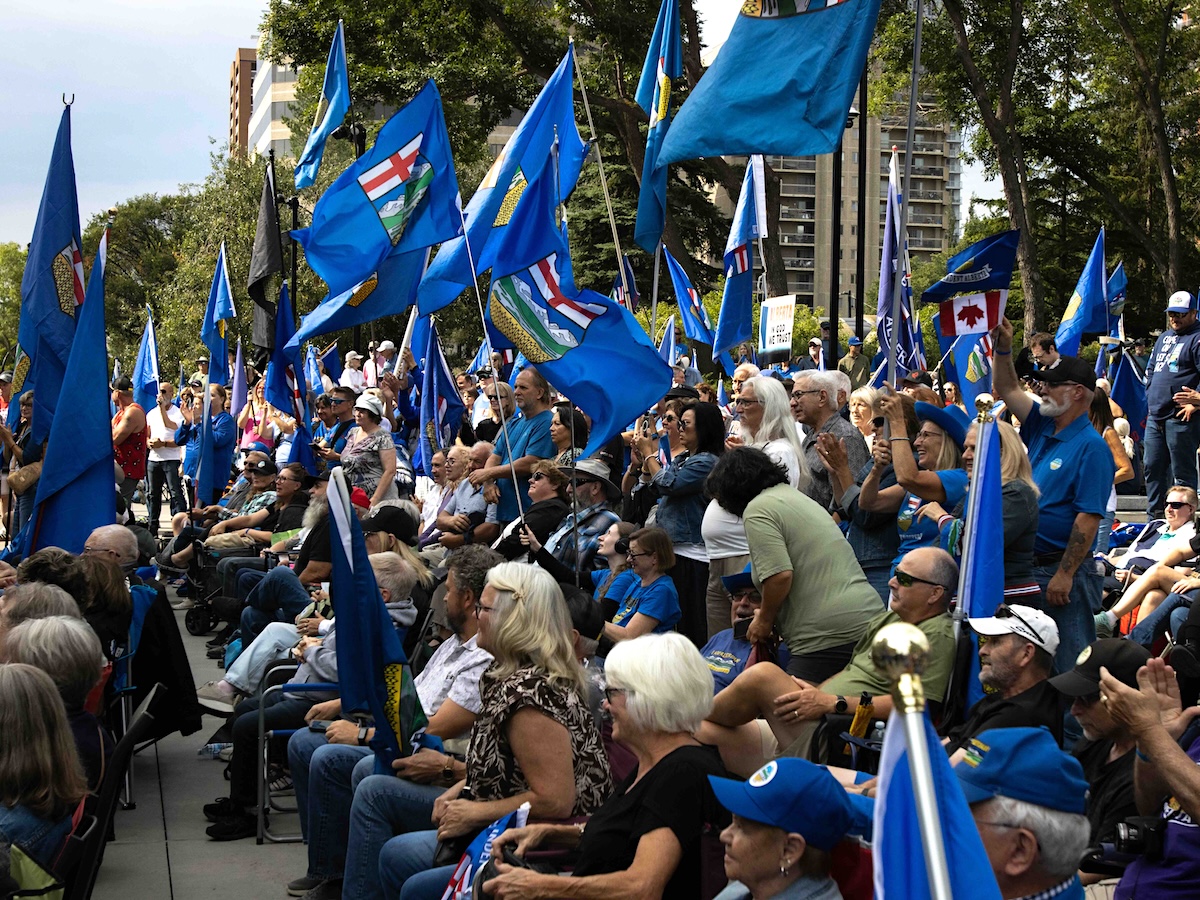
Separatism has gone from an idea on the margins of the conservative movement to one at the centre of Alberta’s government.
Over the last decade, a cadre of libertarian think tanks has been instrumental in bringing Alberta separatism into the mainstream, promoting the idea through research, conferences, social media and the press. They’ve helped craft government policy to prepare Alberta for independence and to make the threat of secession a powerful “or else” in the province’s standoff with Ottawa.
Connecting this web of institutes and academics are their ties to the U.S.-based Atlas Network, and the revolving-door relationship between members of the network and the administration of Alberta Premier Danielle Smith.
Atlas Network is a U.S. non-profit that acts as the hub connecting a global network of about 500 libertarian think tanks in more than 100 countries.
The separatist timeline
The separatist story can be seen as two related but distinct timelines divided by a crucial federal election, said historian Mack Penner, “the most pressing one being the post-2015 timeline.”
Penner is a post-doctoral fellow in the history department at the University of Calgary whose research has focused on the history of neoliberalism and conservatism in Alberta.
Penner said there has been a shift among prevailing conservative academics, who “have their fingers all over various nodes of the Atlas Network.” With aspirations for constitutional reform and sweeping deregulation dashed at the federal level by the election of Justin Trudeau’s Liberal government, attention turned to fortifying a libertarian stronghold in Alberta.
“Maybe the horizon should be closer to home, and we can have the kind of state that we want in Alberta by wielding this threat of separatism as we see fit for those goals,” Penner said.
“Call that state whatever you want: the radicalized version of the neoliberal state, the market state; I'm quite fond of calling it an antisocial state.”
Sociologist Melinda Cooper has used the term “antisocial state” to describe U.S. President Donald Trump’s administration’s dismantling of public welfare protections and increasing concentration of state power.
“I think it works quite a bit here too, indicating that this ideological outlook takes as its enemy the social state, broadly constructed,” Penner said. “I think for them, separatism is a threat to say, ‘If you won't federally give us what we want in policy terms, we'll wield this stick to say we'll do it here on our own if we have to.’”
The think tank that creates think tanks
Backed by multimillion-dollar funding from foundations linked to American billionaires, Atlas and its partners have waged a decades-long campaign to shift public opinion through research and frequent appearances in media and shape government policy through their exceptional access to world leaders.
More than a dozen Atlas-affiliated alumni were appointed to cabinet positions in Boris Johnson’s post-Brexit U.K. government. Deputy Prime Minister of New Zealand David Seymour began his “journey in the world of libertarian ideology” as a director for a Canadian Atlas member group.
The policy recommendations in former Atlas partner the Heritage Foundation’s Project 2025, from rolling back 2SLGBTQIA+ and reproductive rights to imposing immigration restrictions and ramping up deportations, have served as a blueprint for Trump’s second term in office.
As of 2022, when Atlas stopped publishing the names of partner organizations, there were 11 affiliated Canadian think tanks: Alberta Institute, Canada Strong and Free Network (formerly the Manning Centre), Canadian Constitution Foundation, Canadians for Democracy and Prosperity, Canadian Taxpayers Federation, Frontier Centre for Public Policy, Institute for Liberal Studies, Macdonald-Laurier Institute, Montreal Economic Institute, Second Street and Fraser Institute.
Nicolas Graham, a post-doctoral fellow in the University of British Columbia department of sociology, has researched Canadian Atlas affiliates and their efforts to thwart policy action on climate change.
Graham described the network as an umbrella that brings together groups sharing a “broad general purpose for promotion of free market economics, limited government, deregulation and privatization.”
Some of these groups are quite focused on producing policy analysis that might directly be taken up by governments, Graham said. Others are often focused more on influencing public opinion through social media activity and “publications that feed into news outlets.” Groups like Canada Strong and Free Network have most recently concentrated on bringing together different political players through their conferences.
“The theme of western alienation is really prominent in the network and a number of the groups,” Graham observed.
His 2022 research, published in the Canadian Review of Sociology, documented nearly 600 ties between Canadian Atlas think tank members and universities, the financial sector and energy or extractive industries.
“There's a huge amount of ties to various prominent conservative political figures within the Atlas Network,” and revolving-door relationships with government offices, Graham said.
Perhaps the largest overlap in personnel, and the most notable policy influence on any current government in Canada, is between the Alberta Institute and the United Conservative Party government.
‘Political tyrannies are unpredictable’
The Alberta Institute describes itself as an “independent, libertarian, public policy think tank that aims to advance personal freedom and choice in Alberta.”
Its well-connected alumni and spinoff groups have been responsible for promoting a number of ideas popular with the separatist movement.
Peter McCaffrey left his position at the Manning Centre to found the Alberta Institute in 2018. The think tank has since spawned a number of offshoots like the Alberta Parents’ Union, Project Confederation and the Free Alberta Strategy.
The Free Alberta Strategy was published in 2021 with the goal of having the Government of Alberta pass its proposed legislation and policy initiatives to “free Alberta from Ottawa’s overbearing control and restore self-determination for all Albertans.”
Authored by former Wildrose party MLA Rob Anderson, political scientist Barry Cooper and lawyer Derek From, the strategy calls for terminating equalization and establishing a provincial police force, pension plan and tax collection agency, and adds judicial appointments and unemployment insurance to the list of federal programs to be brought under provincial jurisdiction.
What sets the strategy apart from similar platforms is the authors’ proposal for a Sovereignty Act and the “final resort” of national independence.
Cooper is also a senior fellow at the Frontier Centre, and From has previously worked with the Canadian Constitution Foundation and the Fraser Institute.
The proposed Sovereignty Act would give Alberta’s government the power to refuse to enforce any federal legislation deemed to interfere with provincial jurisdiction or the “interests of Albertans,” such as the carbon tax and other energy sector regulations. In a 2022 blog post to the Free Alberta Strategy website, then-executive director Anderson also suggested the legislation could be used to nullify the Canada Health Act in Alberta, allowing the province to opt out of vaccine mandates and to dismantle Alberta Health Services, the provincial health authority.
If there is pushback from Ottawa on the proposed bills asserting provincial powers, on legal or constitutional grounds, Alberta would be left with only one option: secession.
“Political tyrannies are unpredictable when their power and authority is threatened,” the strategy reads. “In the event that Ottawa refuses to recognize Alberta’s provincial rights of sovereignty... it may leave our province with no other recourse but to leave Confederation entirely.”
During the 2022 UCP leadership race, the Free Alberta Strategy hosted a leadership panel moderated by Anderson. And Smith campaigned on several of the strategy’s proposals.
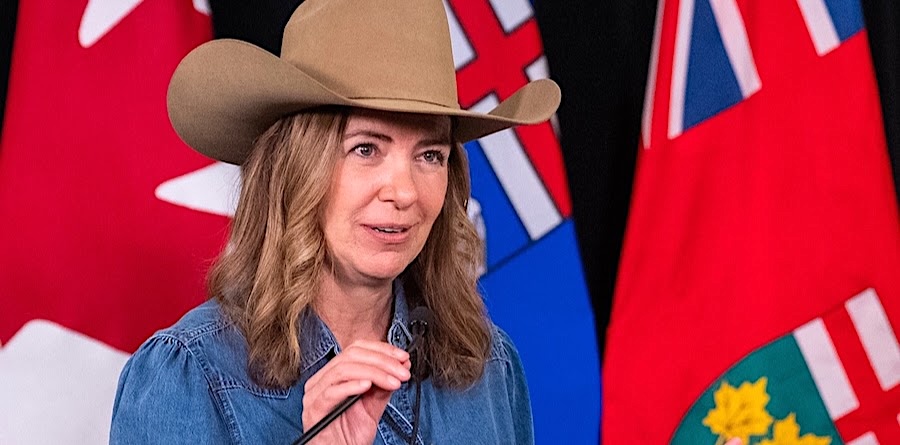
In her first official act as premier, Smith tabled the Alberta Sovereignty Within a United Canada Act, which the province has since invoked to challenge federal net-zero electricity grid requirements and emissions regulations.
The United Conservative government has introduced four pieces of legislation to create a provincial police agency, and in February threatened to withhold funding for judges if the federal government didn’t give Alberta more say in selecting new judicial appointments.
The Smith government also overhauled provincial rules for citizen-initiated referendums, helping clear the way for a vote on independence. The 2025 amendments lower the number of signatures required to trigger a referendum to 10 per cent of eligible voters from 20 per cent and extend the signature-collection period to 120 days from 90 days.
The Alberta Institute and the UCP
Anderson now serves as chief of staff to Smith, one of several people connected to the Alberta Institute who have gone on to positions within the government.
Another Alberta Institute offshoot, Project Confederation, was announced in 2019 by Josh Andrus on Smith’s CHQR 770 radio show. The group went on to publish “A New Alberta Agenda,” endorsing similar priorities to the Free Alberta Strategy, as an open letter to then-premier Jason Kenney in 2020, and Andrus regularly appeared in the media speaking on Alberta independence, within or outside Canada.
Project Confederation partnered with the Institute for Liberal Studies to host an event titled “Alberta: Autonomy, Independence or Separation?” in 2020. The event brought Free State Project founder Jason Sorens, who advocates for libertarians to move to New Hampshire to concentrate their political power, to speak on secessionism in Calgary. Ahead of the event, Sorens also spoke on Alberta independence as a guest on Smith’s radio show.
Andrus left Project Confederation in February 2025 to take a position as the policy adviser to Alberta’s minister of education and child care. He later acted as a policy adviser to the minister of Service Alberta and Red Tape Reduction until leaving the position in March of this year.
Before immigrating to Canada, Alberta Institute founder McCaffrey was president of the youth wing of New Zealand’s right-wing ACT party. McCaffrey said he was introduced to Atlas partner Frontier Centre for Public Policy by David Seymour, who directed the think tank’s Saskatchewan office before returning to New Zealand to resume his political career with ACT.
Since being elected to the New Zealand Parliament in 2014, Seymour has denied his links to Atlas Network, calling questions about his connections to the group a “conspiracy theory.”
McCaffrey replaced Seymour at the Frontier Centre’s Saskatchewan office in early 2012, went through the Atlas Network’s leadership academy program in 2013 and worked for the Manning Centre from 2014 until establishing the Alberta Institute.
McCaffrey has also been active in the UCP since its founding, including as a member of the party’s 2018 policy committee.
Megan McCaffrey, his wife, served as the director of operations for the Alberta Institute. She also ran as a candidate in Calgary-Elbow for the Wildrose party in 2015 and failed to win the UCP nomination for Calgary-Buffalo in 2018.
She is currently the chief of staff for the Ministry of Affordability and Utilities.
McCaffrey told the Investigative Journalism Foundation that the Alberta Institute is independent and non-partisan and the “organization that does not endorse or support any particular politician or party at any level of government.”
“Our staff are free to be involved in political parties or other political organizations in their own free time, so long as it does not affect or impact on their work, in much the same way as how public servants are still permitted to have their own personal political views in their own free time,” he said.
Atlas Network funding
On its website, the Alberta Institute says it is “funded by thousands of small-dollar donors from across Alberta.”
An Atlas Network funding report obtained by the Investigative Journalism Foundation shows that in the first quarter of 2020, the Alberta Institute was awarded between US$15,001 and $30,000.
As a registered non-profit, the Alberta Institute doesn’t have to publicly report the sources of its funding. Atlas Network does report the amount of money it invests in countries outside of the U.S. in its tax filings, but the names of recipients are not disclosed.
Since 2015, Atlas Network has provided more than US$3.1 million in grants and assistance to groups in Canada and Mexico, according to U.S. tax returns. The organization's activities in both countries are reported as one region in the tax filings, and the names of individual recipients are redacted. Atlas Network’s 2016 annual report discloses that US$204,671 of the $220,615 in funding reported for Canada and Mexico went to Canadian groups, but a similar breakdown for other years isn’t publicly available.
“Alberta Institute has received support related to think tank training and for attending our networking and professional development programs, which we provide for non-partisan, non-profit think tanks operating in over 100 countries,” Atlas Network spokesperson Adam Weinberg told the Investigative Journalism Foundation.
“Atlas Network does not manage policy initiatives or take legislative positions and, as a grant-making organization, Atlas Network has never supported projects related to Alberta’s status in Canada,” Weinberg said.
Weinberg did not respond to questions about the total amount of funding Atlas Network has provided to the Alberta Institute.
McCaffrey said his organization has a standing rule that it doesn’t discuss or disclose funding information or details to protect donor privacy. He and Alberta Institute staff have enjoyed and benefited from various Atlas Network events, training and networking programs “that have given us the opportunity to meet and learn from people doing similar work,” McCaffrey said.
McCaffrey said the Alberta Institute takes no position on separatism.
“We have supporters who are both in favour and against separation and we have published commentaries and policy proposals from authors who argue both in favour and against separation, but that is not the same as adopting a position as an organization,” McCaffrey said.
“We are happy to be contributing to a healthy and informed democratic debate on this and many other important issues facing Albertans.”
Landlocked
The Calgary-based think tank Canadians for Democracy and Prosperity, or CDP, was a short-lived but active player in promoting Alberta separatism between 2018 and 2021.
Founded by Prem Singh, a conservative activist whose Alberta Can’t Wait campaign helped kick-start the merger of political parties that created the UCP, CDP partnered with several organizations for conferences and research initiatives promoting separatism.
One project between CDP and the Haultain Research Institute addressed the problem of Alberta being landlocked in Canada, proposing independence as a path to open markets.
“When it comes to trading in markets beyond its boundaries, Alberta would have better options as an independent state than under the status quo currently blocking some of its resources,” Haultain Research Institute president Marco Navarro-Génie wrote in a 2020 column for the joint project.
“An independent Alberta can’t transform its blockading cousins into decent folks. But if Alberta were independent and cultivated good relations with the United States, it would no longer be politically enclaved inside its own national home.”
Navarro-Génie is currently the vice-president of research for the Frontier Centre, and served as the president of Atlas partner the Atlantic Institute for Market Studies prior to its merger with the Fraser Institute in 2019.
Weinberg told the Investigative Journalism Foundation that Atlas Network stopped partnering with CDP in 2021, and that it did not provide grant funding to the organization.
‘We must have American assistance’
Just as media campaigns and networking conferences sponsored by groups like CDP and Canada Strong and Free have created an audience for Alberta independence, academics in the Atlas Network orbit have helped give separatism intellectual credibility.
In the post-2015 timeline, “people with some pre-existing sense of professional authority and maybe some of the gentility you would typically associate with that posture, are now openly considering separatism,” the historian Penner said, “[Barry] Cooper being the most radical among them.”
An essay from Cooper in the 2020 collection Moment of Truth: How to Think About Alberta’s Future lays out the challenges for western independence. A referendum on equalization or secession would face constitutional and political challenges from Ottawa, and so for westerners the consideration of independence is “not a bargaining position” but one that “entails some controversial and even dangerous political measures,” Cooper wrote.
He proposes a scenario where, following an “intensive and effective educational campaign detailing the long trail of abuses suffered by the West,” Alberta and Saskatchewan vote overwhelmingly to be independent of Canada. If the legal path to secession doesn’t recognize the vote, two questions follow: “Then what?” and “Where are our arms?”
“The great weakness of the West is its lack of an army,” Cooper wrote. This means that “if westerners are serious about independence we must have American assistance for the same reason that the Thirteen Colonies required the assistance of France.”
He went on: “From the oil sands as a strategic North American petroleum reserve to the use of the third largest air base in the world at Cold Lake, Alberta, westerners certainly have military bargaining chips to offer the Americans.”
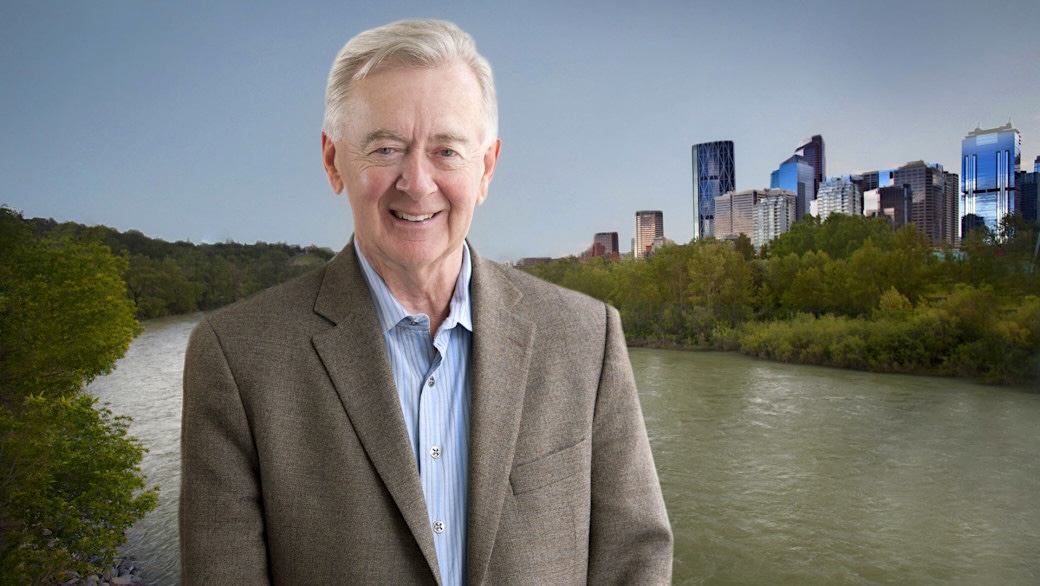
Years before Trump began suggesting Canada become the 51st state, Manning Centre founder Preston Manning floated the benefit an offer of statehood would have for Alberta in its own negotiations with Ottawa.
Speaking at the 2021 Canada Strong and Free Conference, Manning raised the threat of separatism and the “fear of the United States” in a panel discussion with Danielle Smith and Bruce McAllister, who is now executive director of the premier’s office.
“What if Alberta did actually secede? There will be an offer from the United States for Alberta to become the 51st state,” Manning said. “Is there some way that fear of the United States can be used as a lever to get some of the things that the West needs to have addressed?”
Jack Mintz, a distinguished senior fellow of the Macdonald-Laurier Institute and board member of ExxonMobil’s Canadian subsidiary Imperial Oil, made the economic case for “Albexit” in 2018. Canadian environmental regulations that interfere with oil and gas development and export, Mintz argued, gave Alberta more reason for independence than Britain had for Brexit. The positives — unhindered resource development, control over taxes, pensions and health care — outweighed the potential negative impacts of independence, he wrote.
One step closer to separatism
Despite their willingness to get behind separatism sentiment, Penner said he questions how many of the academics promoting the idea of separation are really “dyed-in-the-wool Alberta nationalists.”
“The sort of mainstream separatists, or the people for whom separatism, I think, is only a threat, they do seem to be flying very close to the sun here,” Penner said.
In part, the reason the threat of secession is effective now is that there are more nationalistic separatists with official positions in the UCP, who are “at once goofier and more serious in some ways when it comes to separatism than these intellectual types,” Penner said.
“But I think that the energy there is owed in some part to that relationship between intellectuals and policy types thinking of separatism as a strategy and a kind of idea, and then the political figures who keep that energy in the air such that these intellectuals can get leverage off of it.”
For both committed separatists and disgruntled federalists, however, the legislative framework needed to make the threat of separation real is the same required to make secession possible.
In the final chapter of Moment of Truth, editors Mintz, Ted Morton and Tom Flanagan summarize the three intertwined options on the table for a sovereign Alberta:
At one extreme, reforms that give the province more power in Ottawa. At the other, separation. And in between them, “autonomism,” using provincial powers to “opt out of federal programs that are disadvantageous to the province.”
This option, later proposed in the Free Alberta Strategy and adopted by the province as the Sovereignty Act, might be a useful weapon in negotiations within Confederation, “as it would take Alberta one step closer to separatism” by enabling Alberta to collect its own taxes, do its own policing and otherwise manage its own affairs, the authors wrote.
“And autonomism is more likely to be taken seriously if it is backed by robust threats of separation.”
Morton, co-author of the 2001 Alberta Agenda, was a Fraser Institute fellow prior to being elected as an MLA in 2004. Flanagan is currently a senior fellow of the institute.
‘Autonomism’ and the 10 referendum questions
On Oct. 19, Albertans will vote on whether the province should remain a part of Canada or if the government should begin planning for a binding referendum on separation.
Support for another nine referendum questions on the same ballot, Smith has said, would also send Ottawa a message, and give her government “a mandate to pursue greater and greater autonomy.”
The questions include whether the province should take greater control over immigration, pursue constitutional amendments allowing provinces “to opt out of federal programs that intrude on provincial jurisdiction” and take control over judicial appointments.
“The premier has been clear that our government, our caucus, and our party support Alberta remaining in Canada,” Sam Blackett, Smith’s press secretary, said in a statement.
“During the Alberta Next town halls, Albertans made it clear that the status quo of consistent federal overreach, unequal representation within confederation and unsustainable federal immigration policies cannot continue. Albertans have demanded real change, and these nine questions are how we deliver it,” Blackett said.
“We remain focused on our work to restore Albertans’ hope in our country by building a stronger, more sovereign Alberta within a united Canada.” ![[Tyee]](/design-article.thetyee.ca/ui/img/yellowblob.png)
Read more: Alberta








Tyee Commenting Guidelines
Please note that email notifications for replies are not currently working due to a software issue which may be resolved in a future update.
Comments that violate guidelines risk being deleted, and violations may result in a temporary or permanent user ban. Maintain the spirit of good conversation to stay in the discussion and be patient with moderators. Comments are reviewed regularly but not in real time.
Do:
Do not: