


 SHARE:
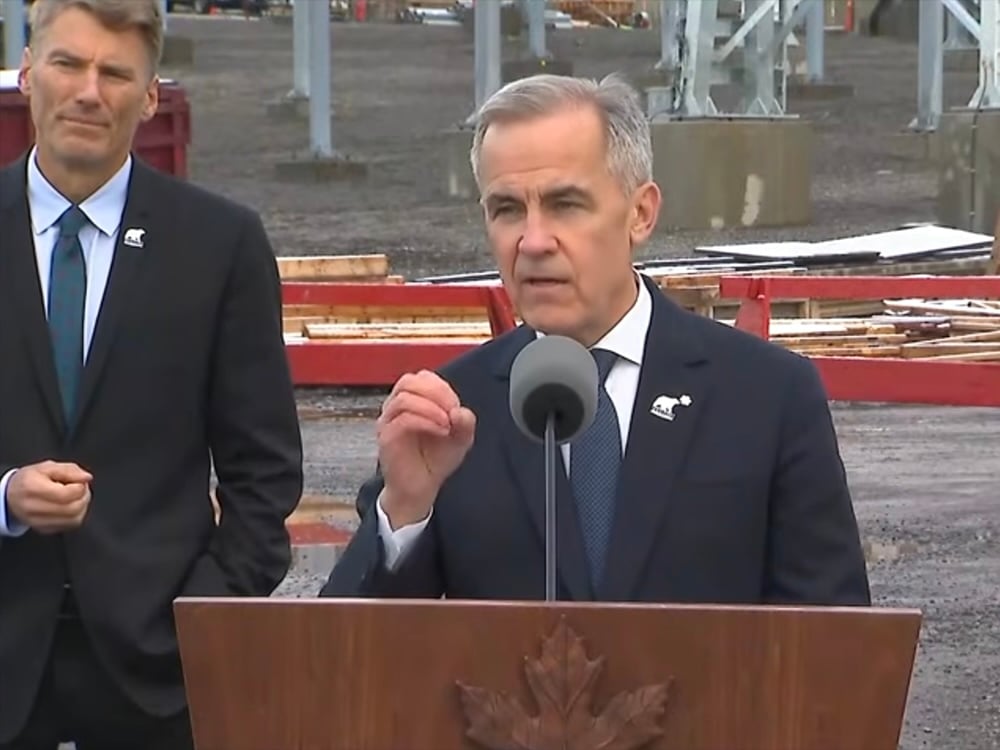
Prime Minister Mark Carney was in Terrace Thursday, where he promised federal support for “nation-building” projects meant to fuel development and diversify exports during the ongoing trade war with the United States.
Ottawa will add the proposed Ksi Lisims LNG terminal, along with an associated power transmission line, to its list of projects for fast-tracking, Carney said.
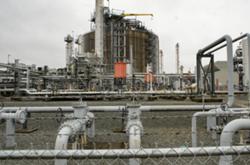
The Ksi Lisims LNG terminal would consist of a floating gas liquefaction and export facility proposed for Nisg̱a’a Nation territory about 120 kilometres northwest of Terrace. The project is proposed by Texas-based Western LNG in partnership with the Nisg̱a’a and Calgary-based Rockies LNG.
The facility received its federal and provincial approvals in September. Western LNG expects to make a final investment decision on whether to proceed with the project by the end of this year.
“Ksi Lisims will become Canada's second-largest LNG facility,” Carney said. “It will also be one of the world's cleanest LNG operations, with emissions an incredible 94 per cent below the global average.”
That promise hinges on the construction of BC Hydro’s North Coast Transmission Line, which the feds also added to the list of projects they intend to expedite. The line would connect LNG and other industrial projects in the region with renewable power generated primarily by B.C.’s hydroelectric dams.
The Major Projects Office, which was launched this summer under the new Building Canada Act, has been identifying projects it intends to prioritize in an effort to diversify the Canadian economy in response to U.S. tariffs.
The list includes projects considered to be of “national importance” that will receive further “assessment and consultations” under the Major Projects Office. The office has said it intends to work with identified projects to “accelerate their development” and reduce approval timelines to under two years.
The list of projects includes mines, LNG development, a port expansion and a nuclear power plant. After Thursday’s announcement, the office has identified a total of 11 projects, including four in B.C.
Previously announced projects include LNG Canada Phase 2 and an expansion at the Red Chris gold and copper mine. Both are based in northern B.C.
At Thursday’s announcement, Carney sidestepped sticky questions around the U.S. investment in Ksi Lisims and opposition from other First Nations in the region.
While Carney’s fast-tracking initiative has been touted as a response to U.S. President Donald Trump’s trade war, critics have pointed out that the projects are largely backed by foreign-owned corporations — and include substantial U.S. investment.
Ksi Lisims is being proposed by a Texas-based company and has U.S. backers. And while the prime minister touted the export terminal as “led by the Nisg̱a’a Nation,” it’s unclear whether the Nisg̱a’a will have any direct ownership stake in the project.
B.C. Premier David Eby previously used “Indigenous-owned” to describe Ksi Lisims. But the province has backed away from ownership claims in recent months, instead using “partnership” and “Indigenous-led” to describe the nation’s role.
The Tyee made multiple interview requests to the Nisg̱a’a Lisims Government but did not receive a response. Western LNG and Ksi Lisims LNG also did not respond to emailed requests for clarification about Ksi Lisims ownership.
Eby did not take The Tyee’s questions at a news conference that followed the project’s approval in September and the premier’s office later declined an interview request.
The provincial government has said Ksi Lisims will employ up to 800 people during construction and have a permanent workforce of about 250 people. The facility, which is proposed for Wil Milit, a former reserve located about 15 kilometres from the Nisg̱a’a community of Gingolx, would have an export capacity of about 12 million tonnes of liquefied natural gas every year.
On Thursday, Carney underscored the economic benefits of the projects and said U.S. tariffs are expected to cost Canada about 1.8 per cent of its GDP or “about $50 billion lost from our economy.”
Reaction to the announcement from critics was swift. The David Suzuki Foundation accused Carney of choosing to “fast-track [an] American fossil fuel project” rather than attend the COP30 leaders’ summit.
BC Green Party Leader Emily Lowan called it a “dangerous handout to foreign fossil-fuel interests disguised as a nation-building initiative.”
“The Ksi Lisims terminal will be built in Korea and floated over, which means the steel and high-paid construction jobs are overseas,” Lowan said. “Meanwhile, British Columbians are stuck with the pollution and higher energy bills, but very few lasting local jobs.”
Coastal First Nations, an alliance of nine North Coast First Nations, said Thursday it welcomes Canada’s commitment to build “low risk, low cost and low carbon energy” projects in partnership with Indigenous groups and added that it was pleased an oil pipeline did not make the list.
“We remain committed to ensuring the Oil Tanker Moratorium Act stays in place to protect our economy and our coast,” Coastal First Nations CEO Christine Smith-Martin said in a statement.
Some First Nations leaders in B.C. have expressed concern that fast-tracking of resource projects could affect Indigenous rights and the environment.
Lax Kw'alaams Band and the Metlakatla First Nation also filed separate Federal Court challenges against Ksi Lisims approval last month, saying their environmental concerns were ignored.
The Gitanyow Hereditary Chiefs unsuccessfully challenged the approval of the project by B.C.’s Environmental Assessment Office. In a statement issued Thursday, the nation said Carney’s announcement “is part of a growing and alarming trend... to forfeit Indigenous consent and environmental accountability under the guise of reshaping Canada’s economy.”
The facility is slated to export gas delivered by the Prince Rupert Gas Transmission pipeline, a project originally proposed in 2014 that has received final environmental approvals. The pipeline, a partnership between the Nisg̱a’a and Western LNG, also faces opposition from some First Nations along the project corridor, including Gitanyow.
Asked about Indigenous opposition, Carney pointed to Canada’s Indigenous Loan Guarantee Program, which he said offers “huge financing for Indigenous equity ownership” in resource projects.
“We’re encouraged with respect to Ksi Lisims in terms of the scale of Indigenous support across various groups, obviously the Nisg̱a’a, but more broadly, across the potential pipeline route,” he said. “We work in concert with all parties.”
Ksi Lisims is ‘wholly owned’ by US company
Speaking earlier this year in Korea, where Western LNG plans to build the export terminal before floating it to B.C.’s north coast, Premier David Eby described Ksi Lisims as “an Indigenous-owned project led by the Nisg̱a’a Nation.”
But in announcing the project in September alongside B.C. Energy Minister Adrian Dix and Nisg̱a’a Nation President Eva Clayton, there was no mention of ownership. Eby instead leaned into messaging around Indigenous partnerships and pre-empting U.S. efforts at developing LNG.
“British Columbians are not going to stand by and watch Donald Trump build a dirty LNG facility on the coast of Alaska when we have the opportunity to build a low-carbon LNG facility in partnership with Indigenous people in a way that provides billions of dollars for Canadians and British Columbians,” Eby said.
He indicated that Ksi Lisims was ready to proceed after the terminal received federal and provincial approval on the same day.
“I am very proud to announce that the environmental assessment certificate has been issued for the Ksi Lisims project, which means that the project is moving forward,” he said. “The only final hurdle for the Nisg̱a’a is a final investment decision for them and their partners.”
According to documents filed with B.C.’s Environmental Assessment Office, Ksi Lisims is a “wholly owned” subsidiary of Western LNG. In 2020, the partners — which include the Nisg̱a’a Nation and Rockies LNG — entered into an agreement that will see the project governed by a steering committee representing all three.
The governance structure “will continue until commencement of construction,” at which point the steering committee will be dissolved and the proponents will each become limited partners in Ksi Lisims, with “certain governance rights” granted at that time, according to the document. Construction on the terminal could begin next year.
Ksi Lisims proponents will have “meaningful input into management and operation” and the project will be operated in a way that is “consistent with the Nisg̱a’a Nation’s commitment to stewardship of the land,” the document said. The nation is also responsible for engaging with members.
Western LNG, meanwhile, will be responsible for complying with environmental regulations, the Environmental Assessment Office documents say.
B.C.’s corporate registry shows that Ksi Lisims LNG’s certificate of limited partnership was signed by Western LNG president and CEO David Thames in December 2021.
Among the project’s investors is Blackstone, which provided an “anchor investment,” Thames said in a statement earlier this year.
Blackstone is a U.S. energy investment company headed by longtime Trump adviser Stephen Schwarzman, who backed the president’s election campaign last year to the tune of nearly $40 million.
Western LNG also said it received “significant” investments from New York-based Jefferies Financial Group and Chicago-based Transition Equity Partners.
Federal government offers vague ‘fast-tracking’ plans
The federal government hasn’t been clear on what it will mean to fast-track projects that are largely approved or in the final stages of approval — and Thursday’s announcement shed little additional light. Major Projects Office chief executive officer Dawn Farrell said the office would help provide certainty around financing and securing labour.
In a statement announcing the first round of projects, the federal government said the Major Projects Office would “fast-track nation-building projects by streamlining regulatory assessment and approvals.”
Two B.C.-based projects were among the first announced. If completed, LNG Canada’s Phase 2 will double the capacity of the existing LNG Canada terminal in Kitimat, which began exporting liquefied gas to Asia earlier this year. The second phase, which was approved as part of the project’s original authorizations, is currently awaiting a final investment decision from investors Shell, Petronas, PetroChina, Mitsubishi and Korea Gas Corp.
The second previously announced project — an expansion at the Red Chris copper and gold mine in northwest B.C. — has also been identified for streamlined approvals by the B.C. government, raising concerns from the Tahltan Nation, which is currently reviewing the project. Red Chris is majority-owned by Colorado-based Newmont Corp.
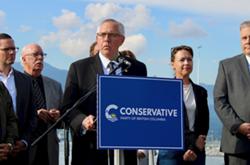
The federal Liberals have faced criticism for announcing projects that are approved or nearing the end of their approval process. Conservative Leader Pierre Poilievre accused Carney of “picking up the football in the end zone to spike it.”
But it’s a play that Poilievre also attempted during the federal election earlier this year. In April, Poilievre visited Terrace and announced he was “approving Phase 2 of LNG Canada” — despite the project already having all necessary approvals.
The Tyee reached out to the federal government in September for details about what a review of LNG Canada Phase 2 by the Major Projects Office would entail, given its prior approvals.
In response, Privy Council Office senior communications analyst Pierre Cuguen acknowledged that the projects have already passed many regulatory obstacles. He said the Major Projects Office would work to “close final regulatory and permitting gaps, co-ordinate with provinces and territories, and ensure financing plans can be achieved.” He declined to provide further details or identify outstanding permitting gaps related to LNG Canada Phase 2.
“It would be premature to speculate at this point on what the MPO will recommend in the context of the LNG Canada Phase 2 project,” Cuguen said.
New transmission line would power LNG projects
The energy-intensive process of liquefying gas for overseas export has created challenges for expanding the LNG industry while meeting provincial emissions targets — targets Energy Minister Adrian Dix recently admitted B.C. won’t meet over the coming years.
The North Coast Transmission Line, which is expected to begin construction next year and be complete by 2034, would reduce B.C.’s emissions from LNG by bringing an upgraded power supply to the north coast, allowing the terminals to connect to the BC Hydro electrical grid rather than burning their own fuel to process the gas.
While that would reduce B.C.’s carbon footprint, critics point out that natural gas produced in B.C. and burned abroad will still contribute to global climate change.
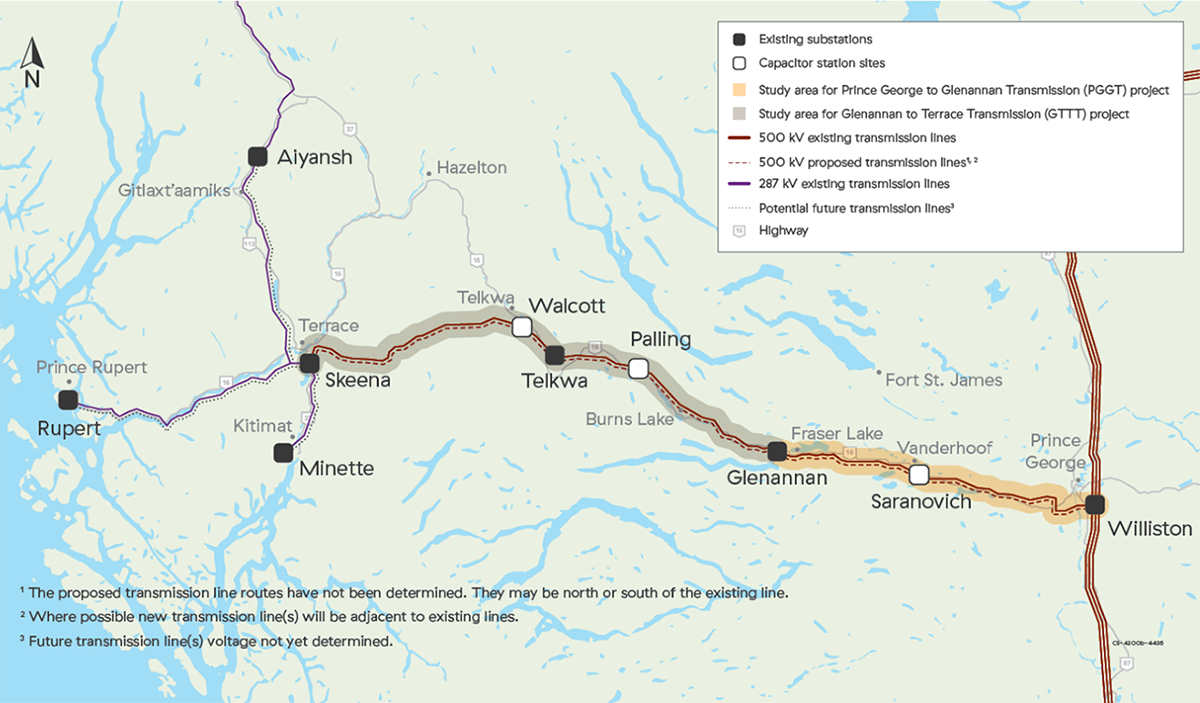
The transmission line’s first two phases, which would run 450 kilometres from Prince George to Terrace, are estimated to cost $6 billion. There has been no cost estimate for a third phase, which would extend 350 kilometres north of Terrace to the heart of B.C.’s mineral-rich “golden triangle.”
While Ksi Lisims could be operational by 2029 — about five years before the transmission line is complete — the B.C. government recently walked back requirements that all new LNG developments be powered by renewable sources.
In March, Dix provided a “clarification” to B.C.’s Environmental Assessment Office that says new LNG projects must be “net-zero ready” by 2030.
That means projects like Ksi Lisims can burn gas to power their facilities until an upgraded electricity supply is available.
While B.C. has said the upgraded power is “not for any single industry,” LNG proponents, including LNG Canada and Western LNG, have lobbied heavily for electrification and a transmission line.
The province plans to expedite construction of the North Coast Transmission Line by forgoing an environmental assessment and a review by the BC Utilities Commission. The project is instead being reviewed by the industry-funded BC Energy Regulator.
On Thursday, Carney announced federal funding for the BC Hydro project. The $140 million will come from the Canada Infrastructure Bank, he said.
“The North Coast Transmission Line will enable transformative industrial projects, including Ksi Lisims LNG,” he said, adding that the transmission line alone has the potential to facilitate $10 billion in new economic activity in this area.
“The first principle of these projects is it's in the interests of Canada,” he said. “I wanted to come here because the scale of and the breadth of the opportunity in northern British Columbia is immense if we work together to help unlock it.” ![[Tyee]](/design-article.thetyee.ca/ui/img/yellowblob.png)
Read more: Indigenous, Energy, Politics, Environment








Notice about commenting changes
The Tyee’s commenting system will be moving to a new platform on Nov. 12. If you’re already a Tyee commenter you must register with the new system on or after Nov. 12 with your preferred username.More information can be found here.