

 SHARE:
Ky Sargeant looks a little stressed.
Clipboard in hand, she’s glancing around the room, performing a mental head count. She’s expecting about 175 people at this event. So far, fewer than 50 are inside.
“Why can’t gay people ever show up on time?” she asks, to no one in particular. In return, I offer a joke: “They probably think it will be like a drag show and start 30 minutes late.”
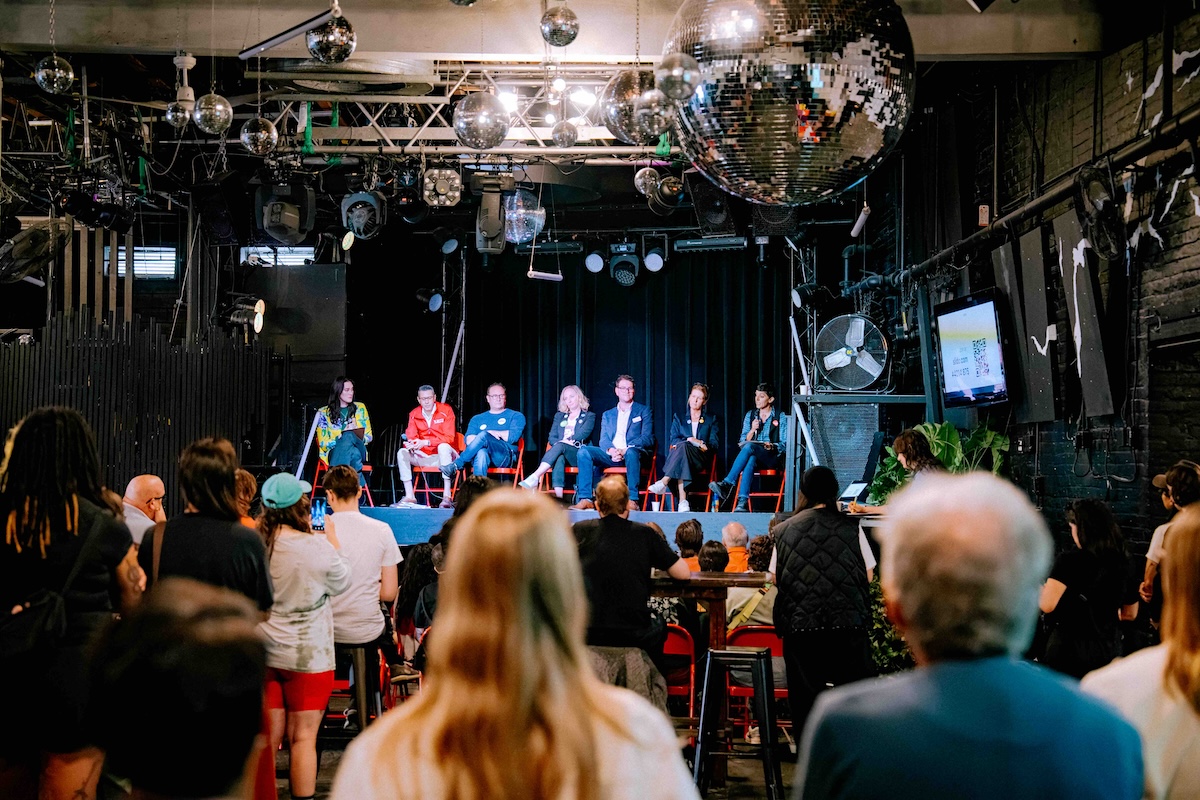
We’re standing in the Birdhouse, a queer arts and event space in Vancouver’s Mount Pleasant neighbourhood that regularly hosts drag performances and dance parties. Today looks a little different: the bar is closed, the lights are on, and the giant disco ball looming overhead remains stationary. It’s around 12:30 p.m. on a Sunday, and in half an hour, politicians, not drag performers, will take the stage.
The town-hall-style panel discussion ahead of Vancouver’s Oct. 17 municipal election is called Take Back Your City and is meant to cover issues important to the local queer and trans community.
Sargeant, who also does standup comedy under the stage name Kay, organized Take Back Your City with a clear goal: to get more people engaged in municipal politics. She organized the event with support from environmental non-profit Dogwood BC and No AI Vancouver, a grassroots activist group against the construction of AI data centres.
“If you are really interested in making change in your city, pushing something that is going to impact the lives of yourself and your neighbours, municipal politics is really the place to do it,” Sargeant tells me over the phone the day before the event.
While queer and trans people are typically more politically engaged than their heterosexual and cisgender peers, municipal elections historically suffer low turnout.
In the last Vancouver municipal election, only 36 per cent of eligible voters cast their ballot. The numbers are even bleaker for people aged 18 to 34, who have the lowest voter turnout rates and the highest proportion of LGBTQ2S(IA)+ people of any age group.
To Sargeant, this gap exists because spaces where citizens are invited to engage in municipal politics “are not typically for us.” She points out how political events often take place at community centres, cater to a much older crowd and aren’t particularly inviting for young, queer attendees. To put it simply: “They’re boring.”
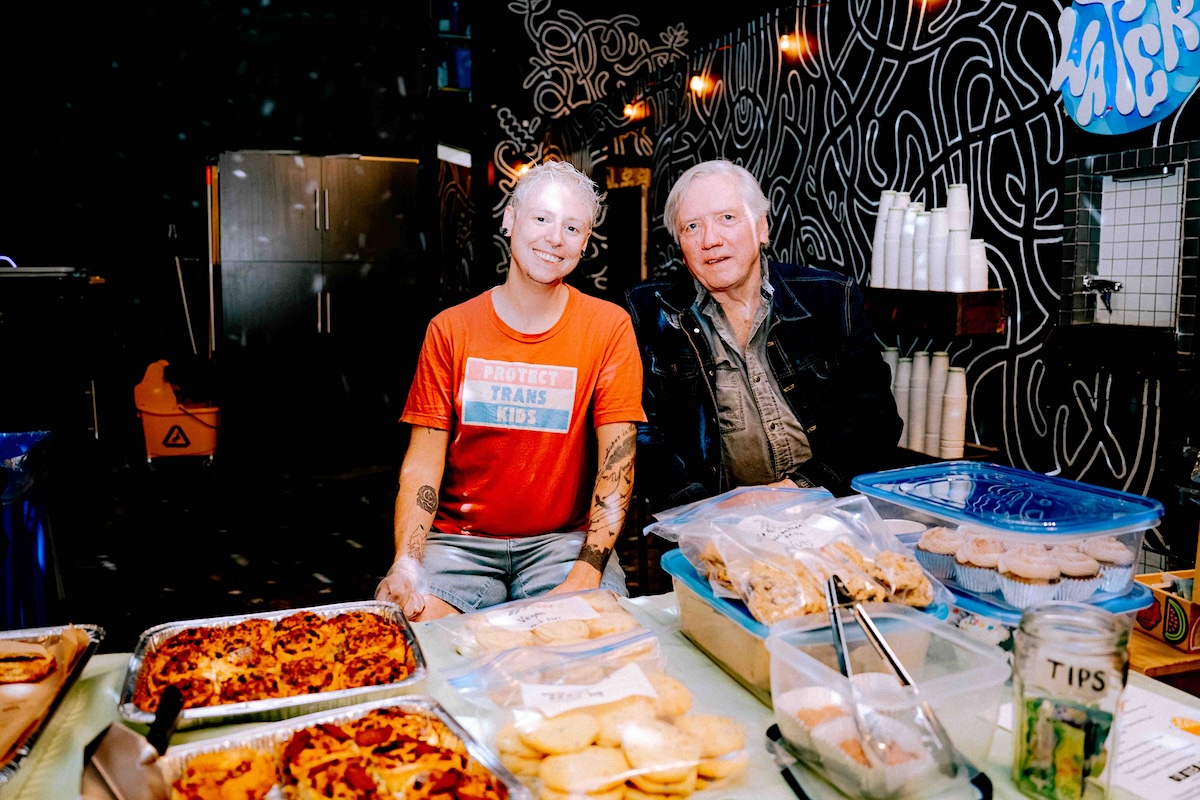
That’s why it was important to Sargeant to bring a sense of fun to Take Back Your City. She used Zohran Mamdani-esque branding, made sure to provide free food, including ice cream, and hosted the event in a space where the community could feel at home.
Inviting candidates to confront a threatened queer space
Sargeant also chose the Birdhouse, which provided the venue for free, to force candidates to confront a queer space that recently faced a wave of “enhanced enforcement” crackdowns from the city. In May, the Birdhouse and other art spaces had to cancel or postpone several events, including one of Sargeant’s all-trans comedy shows, when the city began enforcing limits on the number of events these spaces, which operate through a patchwork of temporary permits and licensing, could host per month.
“I want them to be in the space that was being threatened with closure and see all the people in there to show them this is what our community is,” she says. “We are engaged. We are mobilized. We have a voice in the city that matters.”
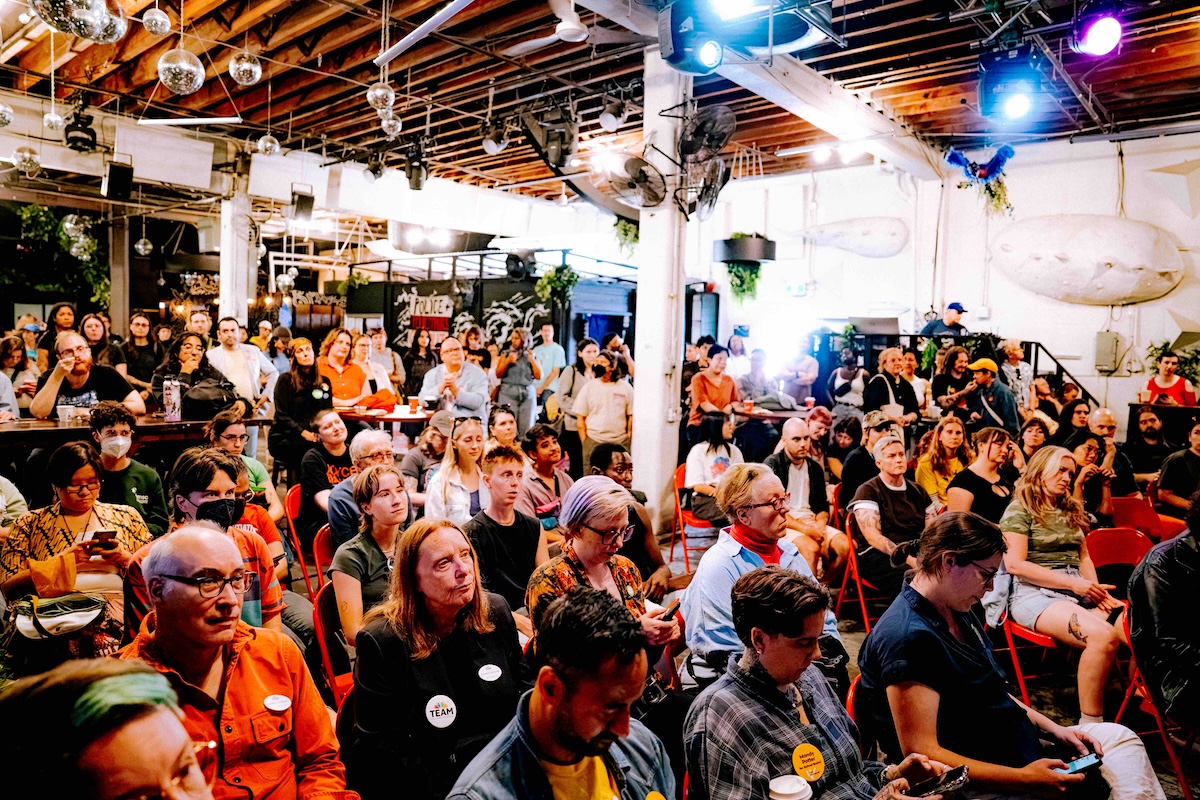
Sure enough, around the advertised start time, attendees start pouring in. The room fills with about 150 people. The crowd resembles what you might see at a typical Birdhouse dance party, mostly gen Z or millennials, with a handful of older attendees.
I ask some of the younger ones what brought them there: most found out about it on Instagram, came with friends and say they’ve never attended a municipal election event like this before.
For Elan Failing, this year feels different from past elections. She says she and her friends have been talking about it more often, and “this idea of getting out the vote is a bit more prevalent.” I ask why, and one of her friends, Brig Sterry, chimes in with the answer: ABC, or A Better City Vancouver, the party of Vancouver Mayor Ken Sim, which won a majority of seats in the 2022 Vancouver municipal election.
Sterry’s friends and others at the town hall criticized ABC for measures such as blocking a new overdose prevention site and slashing arts and culture funding while boosting police budgets.
“People are pretty upset about it,” Sterry says.
Sargeant invited the seven major political parties running candidates in this year’s election to speak on the panel. All but ABC sent a candidate.
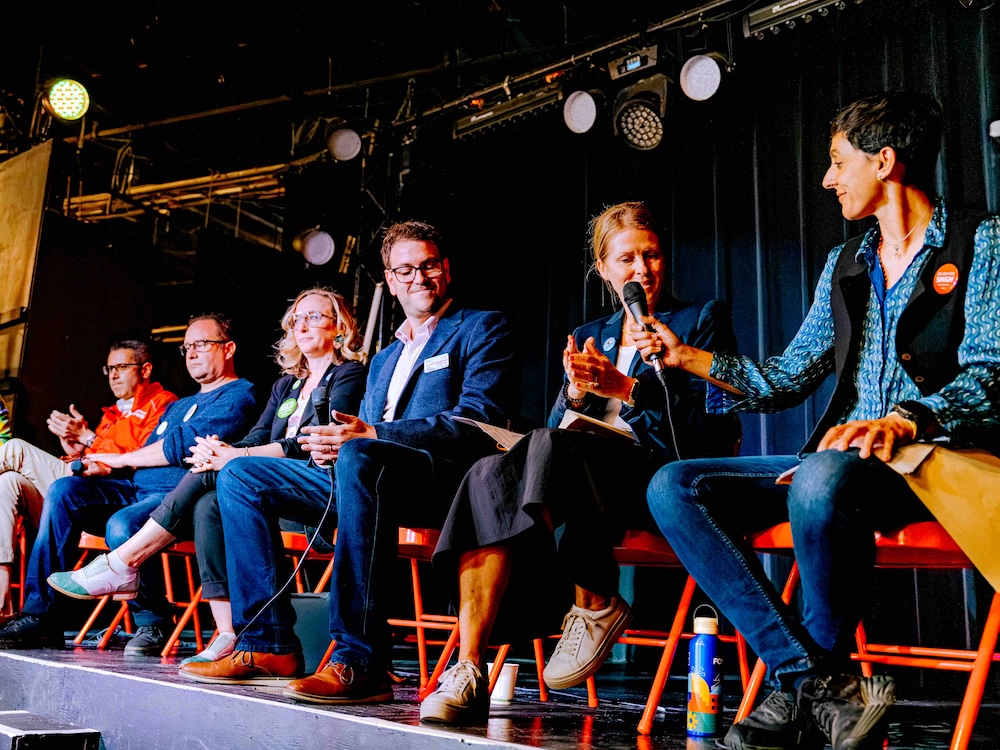
Panellists included mayoral candidates Kareem Allam of the Vancouver Liberals and Rebecca Bligh of Vote Vancouver, plus city council candidates Devyani Singh of the Coalition of Progressive Electors or COPE, Annette Reilly of the Greens and Jarrett Hagglund of OneCity. The sole park board candidate was Allan Fawley of TEAM for a Livable Vancouver. All of them, except Allam, are queer themselves.
An audience critical of AI
Before Sunday’s town hall Sargeant shared a survey asking the city’s queer and trans community to identify the issues most important to them this election. In addition to protecting arts and culture spaces, increasing affordable housing and addressing overpolicing in the Downtown Eastside, one issue emerged as the top priority: fighting AI data centres.
In May, the federal government and Telus announced plans for three large AI data centres in B.C., including one just blocks away from the Birdhouse. After hundreds protested over environmental concerns, the decision on the rezoning application for that land was postponed until after the municipal election.
Sargeant opens the panel by asking for each party’s position on the potential AI data centres, giving each candidate 75 seconds to respond.
Allam, the mayoral candidate of the big-tent Vancouver Liberals, goes first.
“From a national security perspective, we need AI data centres. We cannot be relying fully on American data centres,” he says.
“That’s a lie!” someone in the crowd interrupts, prompting a chorus of boos.
Allam pauses before continuing. He clarifies that his party’s position is for the centres to be built farther north in B.C. and not in the city, garnering tepid applause once his time is over.
Before moving to the next candidate, Sargeant jumps back on the mic. “In the interest of keeping the event moving, something even better than booing is just not voting for the person.” This elicits a laugh from the audience and a “That’s fair” shrug from Allam.
“That’s what politics are all about, right?” Sargeant continues. “The reason we have multiple people is to really showcase what the platforms are for each of the parties, and you can make the decision where you want to go from there.”
The rest of the panel continues without interruption, with the audience clapping, sometimes politely, sometimes uproariously, for each candidate’s response. A QR code projected on the wall allows people to anonymously submit questions, which Sargeant weaves in throughout the panel.
Candidates speak on housing, collaborating with Indigenous communities, vote splitting, overdose prevention sites and other issues raised in the survey and from audience questions.
The loudest applause comes when Vote Vancouver’s Bligh says, “Let’s make sure the next government is not an ABC government” — one thing everyone in the room, including those onstage, seems to agree on.
‘Everyone’s fired up, so what do we do?’
“Everyone is super fed up,” Laurence Lewis Neal, a member of Socialist Alternative, tells me after the panel. The group is tabling at the event in support of COPE.
Neal says it's refreshing to see a space that’s usually filled with dancing and drag also being used for something else at the heart of queer identity: politics.
“What's nice about today is, yes, everyone's fired up, so what do we do? What people are here to turn the tide around?” Neal asks. “Because it's not only about saying what we don't want; it's about envisioning what we do.”
The day after the panel, Sargeant tells me she feels proud that each party present expressed support for protecting queer spaces like the Birdhouse.
But just as importantly, she’s proud to have created a space for Vancouver’s queer community to engage in municipal politics.
“I hope this year is going to have a significantly higher [voter] turnout,” she says. “This project was part of my personal effort, and the effort that a lot of people are taking right now, to really get more people, more queer folks, more marginalized folks and more young people interested in the city.”
The crowded Birdhouse was proof that the interest is there. Whether that energy follows people from the dance floor to the ballot box will be decided on election day. ![[Tyee]](/design-article.thetyee.ca/ui/img/yellowblob.png)
Read more: Municipal Politics, Gender + Sexuality


Tyee Commenting Guidelines
Please note that email notifications for replies are not currently working due to a software issue which may be resolved in a future update.
Comments that violate guidelines risk being deleted, and violations may result in a temporary or permanent user ban. Maintain the spirit of good conversation to stay in the discussion and be patient with moderators. Comments are reviewed regularly but not in real time.
Do:
Do not: