


 SHARE:

For the last four years, politics in Kamloops have been anything but normal. There have been lawsuits, accusations and recriminations, more lawsuits, secret recordings, screaming matches at city hall and community events, and more lawsuits.
Current Mayor Reid Hamer-Jackson’s house is set to be sold off to pay unpaid property taxes. His business is subject to foreclosure, and he has been taken to court by his former lawyers for allegedly unpaid legal bills.
Despite all the troubles that have arisen since he became mayor, Hamer-Jackson is running for re-election. With five other mayoral candidates and 29 council candidates vying for office, Kamloops voters won’t be able to predict the shape of the city’s political future until results are finally announced on Oct. 17.
As The Tyee has chronicled at length, Hamer-Jackson’s first term was tumultuous. He repeatedly breached council’s code of conduct and had most of his duties and responsibilities stripped from him.
The rest of Kamloops’ council has operated as a united front, sidelining the mayor and pushing forward with infrastructure initiatives that include an expanded arena, a new arts centre and a new community centre for seniors.
But the city also has spent close to half a million dollars on code-of-conduct complaints involving Hamer-Jackson and paid more than $400,000 in severance to its former chief administrative officer, who quit following intense and protracted disputes with Hamer-Jackson.
Hamer-Jackson was elected to the city’s top job in 2022, amid a splitting of the mayoral vote. Of five candidates running for the mayor’s seat, three were incumbent councillors and another had formerly served on council. Hamer-Jackson, a local car dealer and the only political newcomer, won the race with just 31 per cent of the vote.
Four years later, Kamloops voters will have six different mayoral candidates to choose from. In addition to Hamer-Jackson, they include:
- Mike O’Reilly, an incumbent city councillor and prominent local developer.
- Nelly Dever, who served on council between 2011 and 2014 before losing a bid for re-election. She is a corporate consultant and non-profit fundraiser.
- Ray Dhaliwal, a former councillor who ran against Hamer-Jackson for the mayor’s chair in 2022. He finished last that year, garnering 11 per cent of the vote.
- Kris Lloyd-Middleton, a social worker and counsellor with no municipal politics history.
- Ivory Winston, another newcomer who works as a home-design contractor.
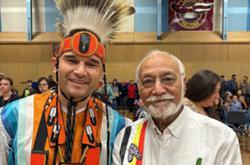
Kamloops residents seem desperate for a less fractious local government, said Arjun Singh, the executive editor of the Kamloops Local News Society, which publishes the non-profit newspaper the Kamloops Chronicle. Singh is also a former longtime councillor who ran against Hamer-Jackson for the mayor’s chair in 2022.
“The biggest thing that I’ve detected so far is just a desire to return to council not being in the news for fighting all the time,” Singh told The Tyee.
A former president of the Union of BC Municipalities, Singh said his past work with that organization suggests that “most councils that go through this dysfunction last a term and then it’s over.”
At the same time, he noted Hamer-Jackson is a unique figure, even in the context of fractious British Columbia councils.
“Reid is a singularly challenging figure in so many ways,” Singh said. “I like him personally. I think he’s a good man. He just causes chaos for himself and for everybody else politically.”
Hamer-Jackson, for his part, has continually blamed opponents for the discord. In interviews with The Tyee last year, he suggested Kamloops councillors unfairly targeted him and resisted suggestions that he may shoulder some of the blame.
Although the mayoral ballot will feature even more names than four years ago, this year’s race has more differentiated candidates than in 2022, Singh said.
O’Reilly has made ending the chaos central to his campaign and was flanked by former mayors Terry Lake and Ken Christian when he announced his candidacy nearly a year ago. With eight years of council under his belt and the support of many business leaders, O’Reilly fits the profile of Kamloops’ pre-Hamer-Jackson mayors, who have tended to be centre-right moderates with substantial council experience.
Dever, meanwhile, has joined the race as part of a small municipal party, a rare event in the B.C. Interior, where slates are almost unheard of.
That party, called Pivot Kamloops, includes three councillors with a range of political backgrounds. One candidate, Dennis Giesbrecht, previously ran provincially for the Conservative Party of BC. Another, Randy Sunderman, ran for the Green Party. Kathrine Blair-Wunderlich, meanwhile, led opposition to the city’s borrowing plans for its Build Kamloops projects.
Although O’Reilly, Dever and the other candidates might split some of the anti-Hamer-Jackson vote, Singh suggested that the mayor could leak supporters to Dever, who might be seen as a less volatile candidate.
Four years ago, concerns about crime and public safety helped propel Hamer-Jackson to power. Today, as he seeks re-election, he has continued to call for the closure of harm reduction sites. This year, though, he is focusing on his campaign for what he is calling “accountability” and the need to bring wide-ranging change to Kamloops City Hall. He says such changes are needed to facilitate the ground-level action he wants to see.
Both O’Reilly and Dever have put homelessness and addressing perceived street disorder at the centre of their platforms. Dever has called to reduce the funds provided to low-barrier services, while O’Reilly has proposed creating a new shelter and campus of care in an industrial area, while closing an existing shelter in a commercial area.
The council race
But as Hamer-Jackson has learned since taking office, a mayor has only a single vote.
The ability of Kamloops’ local government to move forward with projects over the objection of its mayor illustrates the powerful role councillors play in B.C. municipal politics. This year, 29 people are running for council, including all current councillors aside from O’Reilly.
Although Hamer-Jackson sought potential allies to run for council, thus far he has endorsed only two candidates.
Singh suggested Hamer-Jackson’s lack of allies on the council ballot might make it hard for him to argue that the dysfunction will end if he is elected.
That dysfunction might also affect whoever fills out the council seats come November. Although multiple independent adjudicators have ruled that Hamer-Jackson has been mostly to blame for their local government’s dysfunction, incumbent councillors might also feel some backlash.
“There’s certainly criticism for everybody on council for the dysfunction,” Singh said. It will be up to voters to discern who contributed most, he added.
Singh hopes voters will choose to retain the councillors they deem to have been most effective, while making room for newcomers and new ideas.
The broader public, though, may choose a different approach.
Ultimately, Singh said, it will come down to whether voters want to start afresh. “Do we throw everybody out and bring a whole new group in?”
Want to learn more? Join The Tyee's Tyler Olsen and two other reporters in Kamloops today for a panel discussion about how journalists cover municipal elections and politics. The panel takes place at 3:30 p.m. in Thompson Rivers University's International Building, Room 1015. ![[Tyee]](/design-article.thetyee.ca/ui/img/yellowblob.png)
Read more: Municipal Politics







Tyee Commenting Guidelines
Please note that email notifications for replies are not currently working due to a software issue which may be resolved in a future update.
Comments that violate guidelines risk being deleted, and violations may result in a temporary or permanent user ban. Maintain the spirit of good conversation to stay in the discussion and be patient with moderators. Comments are reviewed regularly but not in real time.
Do:
Do not: