

 SHARE:
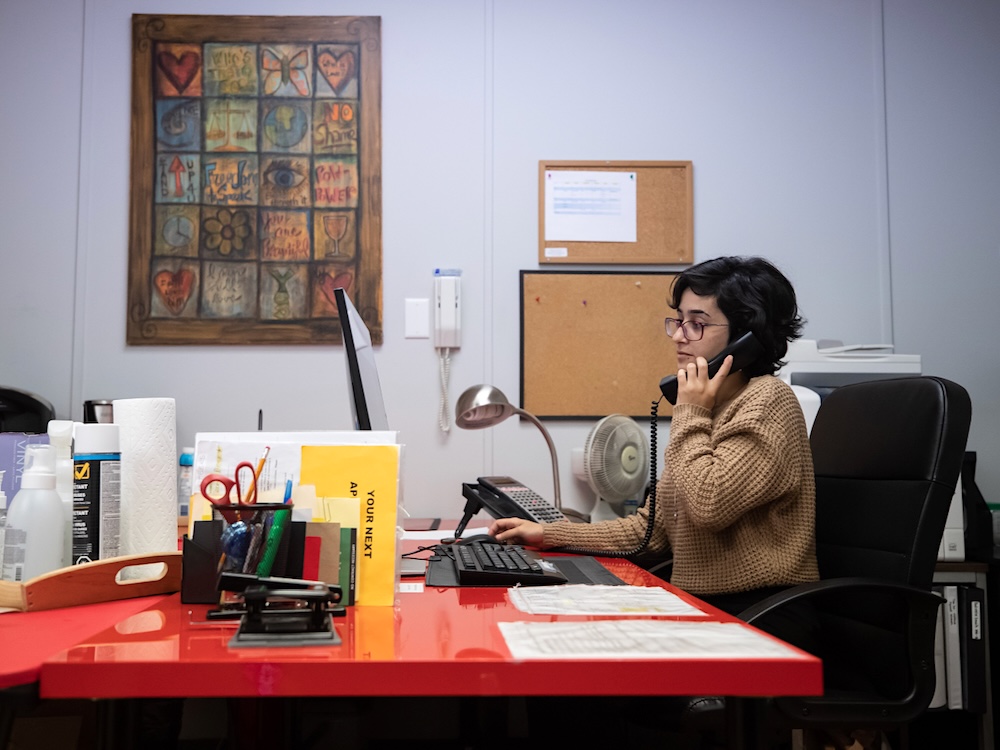
A Vancouver organization that supports women experiencing abuse is calling on municipal candidates across B.C. to commit to five actions to support victims of intimate partner violence.
Battered Women’s Support Services, or BWSS, launched its campaign during the Union of BC Municipalities convention this month, ahead of the province’s civic elections on Oct. 17, when communities across the province will head to the polls to elect mayors, councillors, regional district directors and other officials.
“We think that local governments have a really key role to play and that they haven’t been taking up their role in addressing intimate partner violence as part of the broader public safety,” said Angela Marie MacDougall, the executive director of BWSS.
Incidents of reported intimate partner violence have been increasing in recent years and continue to be a major problem across B.C. and Canada. A report released this spring by B.C.’s chief coroner studied 135 deaths caused by intimate partner violence and found that they were “overwhelmingly preventable.” According to Statistics Canada, there were 128,175 victims of intimate partner violence in Canada in 2024.
In a 2025 systemic review of the B.C. legal system’s treatment of intimate partner violence, author Kim Stanton highlighted a huge jump in intimate partner violence between 2014 and 2022.
According to statistics published by the B.C. government, there was a 164 per cent increase in intimate partner sexual assault between 2014 and 2022. Intimate partner physical assaults went up by 14 per cent in the same period, and indecent or harassing communications increased by 38 per cent. In total, 117,093 people reported intimate partner violence incidents to police in 2022.
BWSS is calling its current campaign “The Downplay Effect,” a name the organization said highlights the fact that intimate partner violence doesn’t just escalate — it’s normalized and minimized.
MacDougall is calling on municipal candidates across the province to commit to five actions supporting victims of intimate partner violence:
- Establish an intimate partner violence task force
- Increase funding to local victim services and anti-violence programs
- Improve local data collection for prevention and safety planning
- Invest in prevention education
- Appoint a dedicated municipal intimate partner violence lead
Nineteen municipalities have now already met or agreed to meet with BWSS to discuss how they can address intimate partner violence in their communities, including Abbotsford, Burnaby and Prince George.
On the organization’s website, voters can access both a municipal response tracker and the “Downplay Detector,” which tracks candidates by city who have made a commitment to include the work of combating intimate partner violence in their platforms. Any city council or mayoral candidates who have not committed are marked with “Downplay Detected,” accompanied by a warning symbol.
‘A complete unwillingness to admit the scope of the problem’
MacDougall pointed to the Coalition of Progressive Electors’ or COPE’s Sean Orr, the Green Party’s Pete Fry and the Vancouver Liberals’ Kareem Allam as Vancouver candidates who had officially committed to Battered Women’s Support Services’ actions. (Orr is running for council while Fry and Allam are their party’s mayoral candidates.) All three parties confirmed their commitments in statements to The Tyee.
“Where an ask sits with the province, such as frontline funding, standardized risk assessment and a prevention campaign, we will use the mayor’s office to press for it, alongside the recommendations of Dr. Kim Stanton’s systemic review and action on child care and housing for people leaving violence,” the Vancouver Liberals said in an email to The Tyee.
Fry told The Tyee that the Green Party of Vancouver is committed to creating a comprehensive municipal strategy and task force to prevent intimate partner violence. He said he intends to co-ordinate services, expand support for survivors and improve data and prevention education.
“The City of Vancouver, through the sort of reprioritization through Ken Sim’s zero-means-zero budget, [has] put more resources into things like policing,” said Fry, referring to a budget passed by the city in late 2025, which froze municipal property taxes, increased the police department’s budget by $50 million and made cuts to several city departments including arts, culture, planning and sustainability.
“I think social services are a big part of the funding for local victim services and anti-violence programs, not just policing.”
“Many times, it’s poverty that is the biggest single contributor to stressful family dynamics,” said Fry. “Where are the supports to get ahead of those issues before they become so bad that it results in things like intimate partner violence?”
In her report, Stanton wrote that many survivors encounter barriers to accessing the legal system, and “since most survivors never report violence to police, and those who do experience further barriers to remaining engaged with the legal system, there is a profound need to look at what is happening in the community safety ecosystem to prevent survivors from accessing justice.”
Other leaders of community organizations that serve survivors, such as Lynne Stuart, director of the Omineca Safe Home Society in Vanderhoof, share MacDougall’s perspective that interpersonal and systemic downplaying is what’s, in Stanton’s words, “happening in the community safety ecosystem.”
Stuart said more needs to change in her rural community.
“In my community, where the ‘downplay’ is probably the most gentle way to say this is what’s happening, we do not have effective collaboration because there is just a complete unwillingness to admit the scope of the problem,” Stuart said.
“When I say to people that we don’t actually collaborate with the RCMP, it seems like it’s a little bit of ‘What do you mean?’... We can’t be constantly pushing that rock up the hill when that rock doesn’t want to go.”
MacDougall plans to follow up with candidates who have committed to Battered Women’s Support Services’ asks after the election is over. “We’re going to need to see the commitments, or the non-commitments, turn into something.” ![[Tyee]](/design-article.thetyee.ca/ui/img/yellowblob.png)
Read more: Rights + Justice, Municipal Politics, Gender + Sexuality







Tyee Commenting Guidelines
Please note that email notifications for replies are not currently working due to a software issue which may be resolved in a future update.
Comments that violate guidelines risk being deleted, and violations may result in a temporary or permanent user ban. Maintain the spirit of good conversation to stay in the discussion and be patient with moderators. Comments are reviewed regularly but not in real time.
Do:
Do not: