
 SHARE:

True North: On the Road in Canada
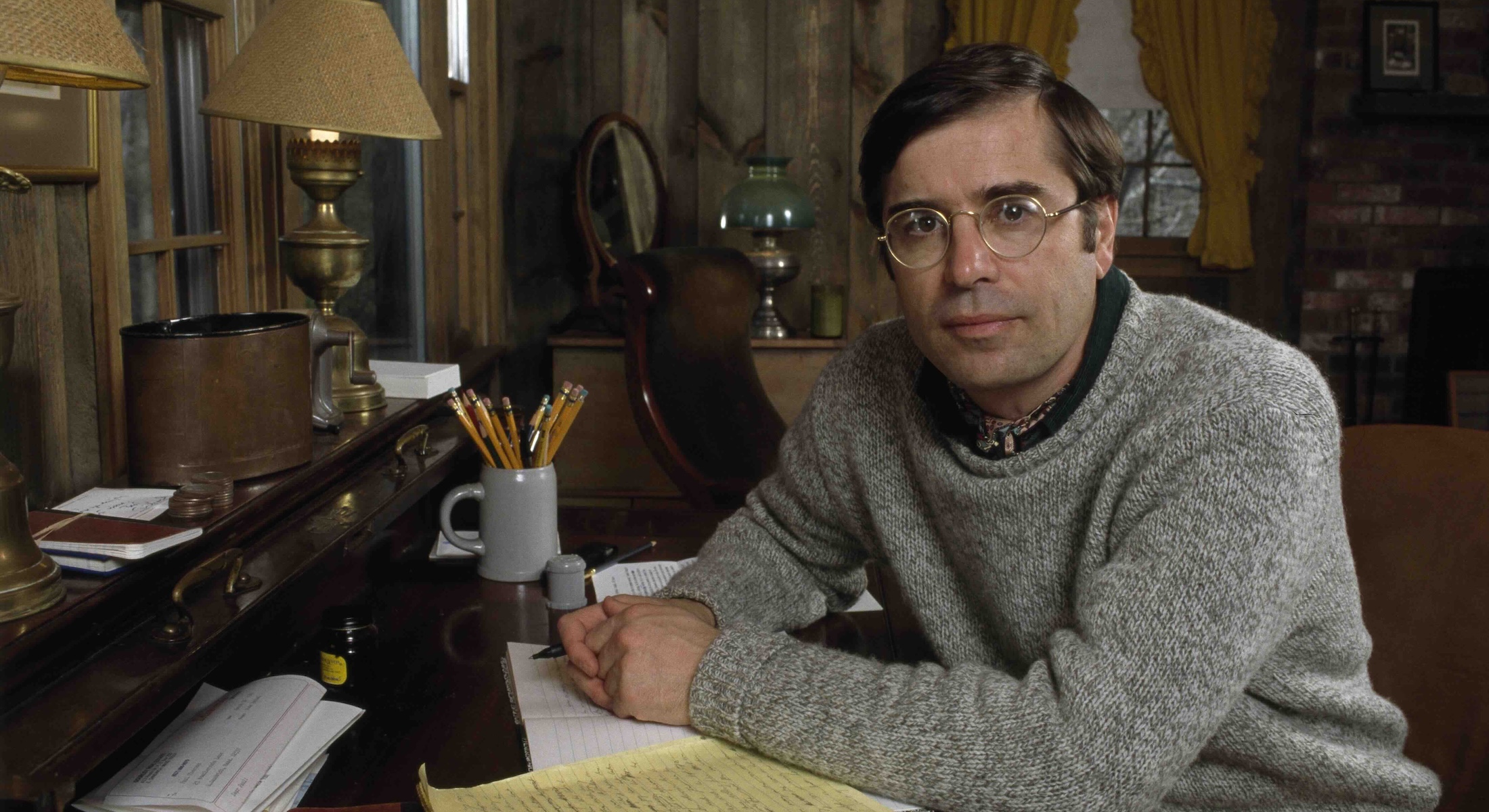
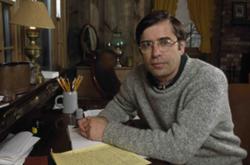
Paul Theroux
Mariner Books (2026)
When my wife and I started teaching in Vancouver in the late 1960s, many of our colleagues were what I called “teaching bums,” young men and women who were teaching their way around the world.
Some of our itinerant colleagues were from the U.K. or elsewhere in the Commonwealth. Some were former members of the American Peace Corps. They found lots of work in B.C., where the schools were growing fast and community colleges were springing up. At the very new Capilano College in North Vancouver, now Capilano University, one of my colleagues had been in the Peace Corps in Nyasaland before it became Malawi.
He told me about another American teacher he’d known there, Paul Theroux, who had gone on to teach in Uganda and then in Singapore. Theroux had published Fong and the Indians, a 1968 satirical novel about the challenges of cross-cultural communication that my wife and I read and loved.
For almost 60 years, we’ve been reading Theroux’s novels and travel books, along with countless other readers. We’ve all bummed vicariously around the world with him, whether by train, bus or kayak, learning about parts of the world we’d never see.
In recent years Theroux has travelled mostly by car, driving himself into parts of North America such as the American Deep South and Mexico. Now he’s completed a kind of North American trilogy with True North: On the Road in Canada.
For this book as for his others, Theroux has done his homework. He’s read dozens of Canadian writers, past and present—including Conrad Black, whom he clearly despises. He understands much of Canada’s history and current politics. After a lifetime in other countries, he finds this country and its peoples strikingly different.
Tracing the author’s own roots
Theroux begins True North with a remarkable account of his French Gascon ancestor Antoine Theroux, who crossed the Atlantic in 1693 to be a soldier and farmer in New France.
Theroux brings Antoine to life in amazing detail, and his story alone offers a vivid glimpse of our history. Then he traces Antoine’s descendants, some of whom migrated south to New England to work in the mills in the 19th and 20th centuries. (The family of the American novelist Jack Kerouac was among them, as Theroux is very aware.)
But many still live in Yamaska, Quebec, and Theroux pays his cousins a visit. They welcome him in the local church.
“This was a first,” he writes. “In all my travelling life I had never been so warmly welcomed.”
Theroux portrays his relatives and their world vividly, and in the process implicitly explains why Quebec sees itself as a nation.
What Quebec remembers
Anglo Canadians think of their history as beginning with the English victory at the Plains of Abraham, or even with Confederation in 1867.
But the Quebecois have over two centuries of history before Confederation. When they say “Je me souviens,” they are remembering those centuries of exploration and trade across North America, not just the conquest of New France by the British.
In Montreal, Theroux meets people who are immigrants from Sri Lanka, Peru, and Bangladesh.
He asks them all: “Do you consider yourself a Canadian?”
Two answer “No,” and the third complains about the high cost of living.
Theroux goes on asking the same question across Canada. By and large, the answer is the same, with some notable variations.
One farmer in Prince Edward Island, for example, tells Theroux that he thinks the island will become the last haven for white people. He worries about the nearby properties bought up by Chinese Buddhist monks, who live in almost complete isolation from their neighbours and rarely interact with them.
Theroux also asks his immigrant and Canadian-born interviewees if they’ve visited the U.S.
Many say they haven’t, or only once or twice. One of the author’s cousins, Sylvain Theroux, puts it this way: “I was there once—a farming convention. It was okay. I don’t have plans to go back. I really want to go to Japan.”
Theroux encounters this attitude across the country. It might read like Canadian insularity, but it sounds more like contentment. His interviewees, by and large, seem to enjoy the communities where they live, and they find little to interest them in the States.
Living in bubbles
The theme of the “ethnoburb” runs through the book. Whether Quebecois families whose local lineage goes back generations in Yamaska, communities of Somali refugees in Sault Ste. Marie or Chinese immigrants in Richmond, Theroux finds groups of people with shared ethnocultural ancestry clustering together. (The Swahili Theroux learned in Africa helps him communicate with the Somalis.)
This is nothing new; the first Chinese immigrants to settle in B.C. were almost all from the Pearl River Delta in southern Guangdong province. Drawn by the chance to work for a relative who’d already arrived and facing a racist society that legislated their exclusion for decades, they formed close-knit communities where they could share a home language and support each other.
The American draft dodgers and deserters who arrived in Vancouver during the Vietnam War also formed their own diaspora before returning home or blending in with their Canadian hosts.
Theroux may be thinking of ethnoburbs as modern ghettos, but in Canada they tend to be a sign of social mobility: South Asians move from Fraser Street to Surrey, and Chinatown residents to Richmond.
“Ethnobubbles” and “ethnoburbs,” as Theroux uses the terms, sound like former Prime Minister Joe Clark’s definition of Canada as a “community of communities.”
But most of those communities interact with one another, and many engage with the larger community on every level from school to government.
If we do indeed live in bubbles, very thin membranes divide us.
It’s a sign of Theroux’s narrative skill that he takes multiple road trips, taken over several years, and blends them into a single journey in a time that blends everything from the Ottawa convoy to Mark Carney’s election in the spring of 2025.
As Faulkner said, “The past is never dead. It’s not even past.”
Many trips, one journey
True North contains several trips, in different seasons, to Yamaska, but it seems like the same trip. Theroux swings through the Maritimes and the west coast of Newfoundland.
He lunches with a Fredericton bar owner who thinks immigration is necessary, acknowledges that opinions on the Prairies may differ and whose American experience is limited to trips to Maine.
He also meets David, a middle-aged member of the Mi’kmaq Nation who was part of the Sixties Scoop, when Indigenous children were taken from their families and given to white families.
David now writes stories about his life and learns from them: “Some people on the reserve don’t understand the world. They live in their own world. And people outside it don’t understand that world.”
But Theroux’s talent for talking with strangers hits a brick wall in a conversation with another Mi’kmaq Nation member that vibrates with tension. He asks about the man’s reserve, and whether it has problems with money, health or politics.
“I can’t answer you.”
“I guess I’m wondering are people happy there?”
“I have what I want.”
Conversations with Indigenous people recur across Theroux’s cross-Canada journey, and the impact of residential schools recurs as well. So does residential school denialism.
As he travels across Canada, Theroux prefers to stay in cheap motels where he can strike up conversations with ordinary people.
“The rich don’t confide,” he writes. “They hate personal questions, they make the rules, they are big dogs who only talk to big dogs. … The rich are often snobs, but it’s rare to find a snob who’s not a liar.”
But he does talk to many Canadian writers, including the novelist Michael Ondaatje. Like Theroux, Ondaatje is still writing in his eighties.
As much as Ondaatje praises Canada, Theroux senses a kind of distance from it, perhaps an attachment to his birth country, Sri Lanka.
“A writer is a foreigner,” Theroux writes.
Brief encounters, vivid glimpses of life in Canada
So it goes across the country. We meet a Newfie in Manitoba who gets teased about his accent. A Mexican Mennonite family have moved to Canada for its health care and their members speak more Plattdeutsch than Spanish or English. A Vietnamese woman has been brought here by a lovestruck Canadian. These brief encounters offer vivid glimpses into their lives and what Canada means to them.
In Alberta, Theroux notes that Premier Danielle Smith’s great-great-grandfather, a Ruthenian-Ukrainian named Kolodnicki, had changed his name to Smith, “and as plain Mr. Smith he’d flourished.”
But Theroux is not sympathetic to Smith’s politics. “It was no surprise,” he writes, “that she was an ardent supporter of the current American president, though she was at a loss for words when, describing his plan to annex Canada as the 51st state, he disparaged Canada.”
Theroux’s mood improves when he returns to his preferred form of interview during this trip: meeting ordinary people in ordinary places.
Talking with a woman in a Red Deer coffee shop, he learns she immigrated to Canada from the Philippines, and she has recovered from breast cancer after radiation, mastectomy, hospitalization and rehabilitation. Treatment was difficult, but it did not cost her any money.
“She was a low-paid worker in a small cafe, married, with a child, grateful to be in Canada, and looking forward to the annual Red Deer Filipino Festival.”
Travel as transformation
Driving through the Rockies, Theroux is amazed at the scenery, and something more: “I was calmed and uplifted by this landscape. Canada’s welcome was a consolation; I was grateful for that after so many years of feeling like an alien trespasser in other countries.”
He goes on: “It was the best of travel, transformative, not simply valuable as a happy day but something greater, as close to a spiritual experience as I’d ever had, something I’d remember, the power of a landscape to offer renewal and peace in a troubled world.”
And arriving in the Lower Mainland, Theroux is “astonished with the strangeness and newness from the moment I arrived. … Vancouver was in most respects unlike any other Canadian city I’d seen.”
He goes on to write: “My first impression was of a softness, something finer, and an orderly tone of settlement. … This suburb was scattered with election signs, notable ‘Vote for Taleeb Noormohamed.’ He was, I learned, a 48-year-old member of Parliament, born in Ottawa, graduate of Princeton and Harvard, the first Muslim member of Parliament in British Columbia. He represented Granville, and this was part of his constituency.”
Near the end of his journey, Theroux is in Vancouver when the tragic car-ramming attack at the Lapu-Lapu Day Festival shakes the city.
For the first time he finds himself unable to strike up conversations with strangers.
The next day the Liberals under Carney are elected, including Noormohamed. Theroux says it is “the fairest and the most civilized election I’d ever seen.”
“But there was little joy in Vancouver,” he writes. “The luminous city was now funereal and silent. Vancouver was in mourning.”
So we may live in bubbles, but what happens in one can be felt by all.
Theroux concludes his journey with a pause at the Peace Arch border crossing to reflect on what he’s seen and the people he’s met.
“I was so vitalized by driving through Canada,” he tells us, “I thought I’d like to hit the road again, or travel to another place, rejuvenated.”
Theroux may have given up the classroom long ago, but he has kept learning, and teaching, for 60 years. 
Read more: Books

Tyee Commenting Guidelines
Please note that email notifications for replies are not currently working due to a software issue which may be resolved in a future update.
Comments that violate guidelines risk being deleted, and violations may result in a temporary or permanent user ban. Maintain the spirit of good conversation to stay in the discussion and be patient with moderators. Comments are reviewed regularly but not in real time.
Do:
Do not: