

 SHARE:

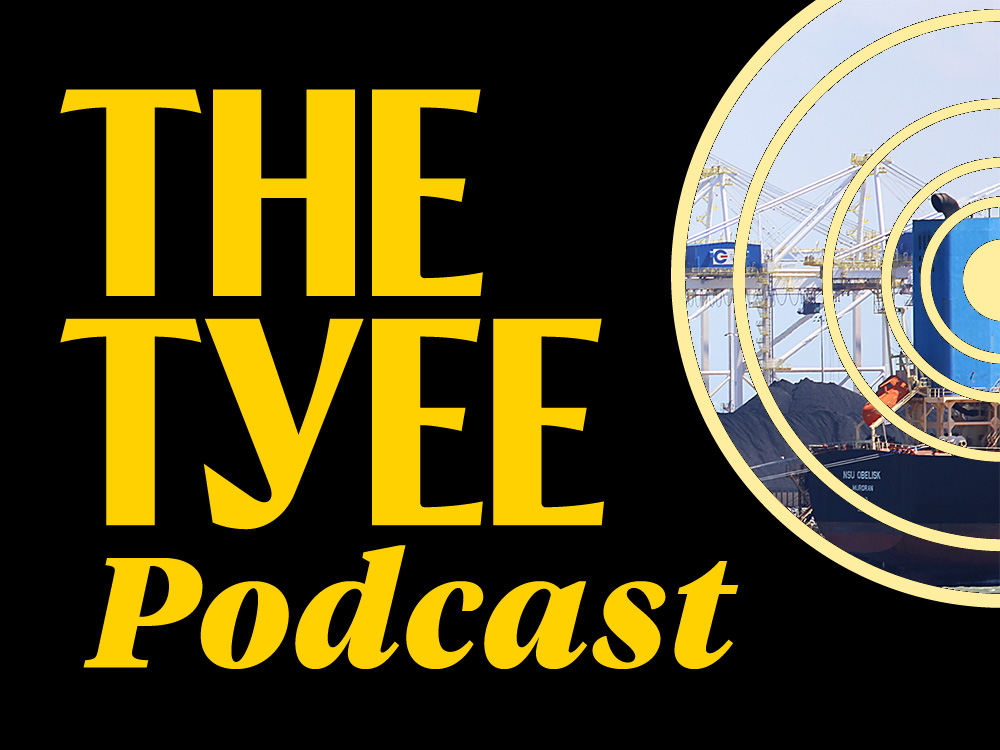
Why is British Columbia getting a new oil pipeline? Where are they going to put it? And what do you mean the Washington state government is pleading for Canada not to go ahead with the project?
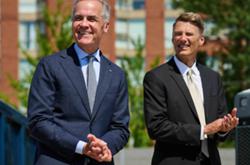
These questions, dear listener, were top of mind when I heard Prime Minister Mark Carney say he plans to get shovels in the ground next year building the Pacific Link oil pipeline. So this week, The Tyee Podcast put them to our biodiversity reporter, Sarah Cox. She told me the project puts a whole range of ecosystems at risk.
“I think I am just starting to register what we could lose here,” she said. “There are people who have been working on these issues for decades. And while they can't come out and say it... I know that on a personal level, some of them are really quite heartbroken and very worried about this.”
Very few people have been following the new pipeline as closely as Cox. This week, she takes us into the beautifully biodiverse future site of the project, the dystopian world of supertanker farms and the Canada-U.S. conflict over the pipeline.
Transcript
Note: Episode transcripts may contain errors. Always check the corresponding audio before quoting any part of the transcript.
Isaac Phan Nay:
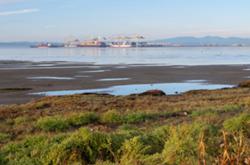
So I’m standing here in Delta, on these raised gravel dikes that separate the farmland behind me from the water and Roberts Bank behind me.
Harrison Mooney:
That’s Isaac Phan Nay. He’s the producer of this podcast, and he’s down at Roberts Bank
Isaac Phan Nay:
In the water, ducks mill about, seagulls circle, and these little flocks of little black birds keep flying in front of me. To my left, I can see trucks hauling containers down a long jetty to the terminal. Off in the distance, I can see ocean, and a mountain range.
Harrison Mooney:
But the scene may soon be very different. There’s a development coming, that promises to bring a million barrels of oil a day — and massive ships to carry it all — to Roberts Bank. It’s called Pacific Link.
This is The Tyee Podcast. Every week we dive deeper into the stories shaping the West Coast. Because Canada needs more B.C. I’m Harrison Mooney. And I’m asking: why are we getting a new pipeline?
I can’t think of better person to answer this question than Sarah Cox. She’s The Tyee’s biodiversity reporter and has been following this project closely. This week, she explains why we’re looking down the barrel of another pipeline, what it might mean for the birds and the orcas, and about the unlikely opponent trying to protect our biodiverse waters. Stay with us.
Ever since you joined The Tyee as our biodiversity reporter, I’ve been looking forward to the day we’d get to chat about the natural wonders inquisitive minds can find thriving or barely surviving all around us. You know, marbled murrelets, orcas wearing salmon hats, bioluminescent algae blooms, ancient trees with human names. But I’m checking the outline for this episode, and it’s about a pipeline, Sarah. I really thought we were done with pipelines. What’s going on here? And I don’t know what’s this one called?
Sarah Cox:
Harrison. We are so not done with pipelines. The Alberta government has never been done with pipelines, and the Alberta government has been looking for a way to get another pipeline to B.C.’s coast for a very long time. About 10 years ago, we had the Northern Gateway pipeline, which was ultimately rejected by the Trudeau government. That pipeline was going to go to Kitimat, and Trudeau deemed that the Douglas Channel, where super tankers would have gone transporting the oil was no place for tankers and no place for oil, and then the project kind of went cold for a really long time until this year, or actually until last year, when a memorandum of understanding was signed between the Alberta and federal governments, and then this July when there was a very big announcement.
Harrison Mooney:
OK, so I mean, we had I don’t know Northern Gateway and then the Trans Mountain and the Kinder. What’s this one called?
Sarah Cox:
This one started out being called the West Coast Oil Pipeline, and then it was redubbed Pacific Link. So basically, they’ve dropped the words oil pipeline from the name.
Harrison Mooney:
OK, OK, and now they have the word Link in the name. This is it’s we’re recording this the day before the Legend of Zelda: Ocarina of Time remake comes out. So Link is very in the news. That’s they’re really playing to my gamer sensibilities. Whatever. I feel like we’ve seen the oil pipeline story play out before, like in the past, they’ve been met with huge resistance from environmental groups, affected Indigenous nations, people sick of pictures of another slicked-up duck. Honestly, after Northern Gateway, I kind of thought we could let our guards down for a while, but these guys are downright relentless. Why are we getting another pipeline now?
Sarah Cox:
We’re getting another pipeline now for a number of reasons. One of them is that the Alberta government has continued to push for a pipeline over many years, a link by which oil can be sent to the Pacific Coast and on to Asian markets. And then we have this convergence of the Mark Carney government coming to power at a time when tension there are a lot of tensions with the United States and Canada is looking to diversify exports. 80 per cent of our oil currently goes to the United States, and the Pacific Link oil pipeline has been put forward as a way to diversify our exports. Also, in the convergence here is that the BC government was pretty much opposed to an oil pipeline, and we saw in July that the BC government basically pulled back and said that they would not oppose a new oil pipeline to BC’s coast, and this happened at exactly the same time that the federal government announced a real basket of financial goodies for B.C., and that is no coincidence.
Harrison Mooney:
Right. So they gave us a bunch of money, and then our government decided, sure, maybe actually we want a pipeline.
Sarah Cox:
Yeah, basically on the same day, Prime Minister Carney came to Vancouver, announced something called a cooperative prosperity agreement with British Columbia that included a lot of money, $3 billion for the. New Fraser River crossing, then a tunnel. Now possibly a bridge. 10 billion up to $10 billion for Roberts Bank. Almost $4 million for the North Coast Transmission Line. $500 million for the Red Chris Mine. These are all projects that the BC government had been looking for federal money for, and then Carney turned around and flew to Alberta, where he and Alberta Premier Danielle Smith made an announcement about the new oil pipeline and the route. And the route is the southern route, supposedly mostly following the Trans Mountain Pipeline route, but not entirely, and terminating in Southwest BC at Roberts Bank.
Harrison Mooney:
OK, I mean I will say that a cooperative prosperity agreement sounds awesome. I want one, but you know the I . Yeah. Let’s get together a committee. See if we can maybe get one here for the tie. OK, so Sarah, is there maybe any chance after all of these gifts and goodies and everybody’s agreed, and still, is there any chance that this new pipeline will maybe be tied up in bureaucratic red tape and environmental assessments that take years to complete, and maybe nothing actually happens, maybe?
Sarah Cox:
Well, I would say that in terms of being tied up in environmental assessments, that is not going to happen because this is the first project that’s been designated a project of national interest, and has gone to the major projects office. And what that means is that it’s going to be fast tracked, and it also means that it’s basically been approved before it’s been studied. So it’s not a question of whether the project’s going to proceed; it’s a question of under what conditions will it proceed? And the fast tracking is basically a year. Carney has basically promised shovels in the ground by next September. That’s pretty fast, so that’s a very consolidated review.
Harrison Mooney:
Whoa! Since when can you just deem something a project of national interest?
Sarah Cox:
Since we passed the Building Canada Act. Basically, the Building Canada Act means that we can shift from a multi-year environmental assessment. In Canada, traditionally, environmental assessments have been very thorough. Lots of consultation with stakeholders, Indigenous communities, scientists, affected communities, we basically they haven’t necessarily put the kibosh on any particular project, but we’ve really gone into fulsome detail about how the project will affect communities and the environment. The fast track process, likely not so much. It’s a very much a streamlined one year process now.
Harrison Mooney:
Right. So we’ve been thorough and thoughtful in the past, but no more of that. The Building Canada Act lets major projects bypass all these checks and balances and environmental assessments, and just I don’t know, just watch us cook. This is the Let Me Cook Act. We can just do it because we need to do it. Is that the idea?
Sarah Cox:
Well, we’re gonna find out. We actually don’t know that much yet. I’ve been trying to get more information, but we don’t know that much about how projects are going to be reviewed under the major projects office. So we do know that the window will be compressed. We don’t know what type of consultations will take place. Although we are assured that Indigenous communities will be consulted, Indigenous communities are not so sure. And there’s already about a dozen judicial review challenges by First Nations communities in BC and Alberta to the pipeline project.
Harrison Mooney:
I’m pretty sure the answer to this next question is money, but I suppose I should ask anyway. Why do people want this? Why does Alberta want this? Why is this project deemed in the national interest?
Sarah Cox:
So Canada wants this project to diversify exports. 80 per cent of our oil exports go to the United States. Carney says that the Pacific Link oil pipeline project is going to change that. Instead of sending oil to the United States, we’ll send oil to Asian markets. The reason why it’s going to southern BC is because there was such stink made about it going through northern BC. First Nations communities were staunchly opposed. We have the North Coast oil tanker ban that would have had to have been lifted for it to go to northern BC, and so really the only route is through southern BC.
Harrison Mooney:
Well, why don’t we just make a stink about it then? And then they can’t go through here. I don’t. You can’t just like well, somebody over there says we don’t want it, and so now that just goes through my house. I don’t I don’t understand how that’s allowed. Well, I mean, I guess I do because we’re you know it’s in the national interest. Fine, fine. Tell me about the Pacific Link Pipeline then. Give me the deets. What is the project? Where does it end? Oh, I said that too exasperated. I mean, where does it end?
Sarah Cox:
So the Pacific Link Pipeline project. The pipeline would start in Alberta, and it would be about 1,200 kilometres, more or less, following the route of the Trans Mountain pipeline. But when I say more or less, there’s about 200 kilometres of the route that seem to be open. We’re not quite sure where it will go, so we don’t actually know the route. We know it’s going to Roberts Bank. We don’t know where at Roberts Bank it’s going to be put. There are very many unknowns with this project, and yet it’s already received pre-approval and it’s being fast tracked. I think people are mobilizing against it. Environmental groups are very concerned. Indigenous communities are very concerned. Washington state is very concerned, but it’s all happening very, very quickly.
Harrison Mooney:
How much oil are we talking about here?
Sarah Cox:
We’re talking about a million barrels of oil a day.
Harrison Mooney:
A day. That’s a lot of oil.
Sarah Cox:
A day.
Harrison Mooney:
So it’s pumped from Alberta to Roberts Bank. At which point it’s pumped straight into mason jars. Yeah, just a bunch of Tupperware containers stacked real high. What happens once it gets here?
Sarah Cox:
OK, well that is also pretty murky at this point in time. We don’t know the details, and when I emailed the federal government asking them about the details, I was told that the specific location, and I’m reading here, and configuration of the proposed marine terminal infrastructure, including the causeway, have not yet been finalized. So when you go and look at the documents that the Alberta government has submitted so far. It does. It seems that the project could. OK, let me just backtrack for a sec here. At the end of the pipeline is going to be something called a tanker farm, which is going to be on land tankers to hold the oil that is being pumped in the pipeline until such time as it can be loaded into tankers, which head off into the Salish Sea and the open Pacific Ocean. So it’s going to require a new or extension to terminal at Roberts Bank, and according to the documents that have been submitted thus far, it looks very much like the new pipeline terminal, the new tanker terminal, will be either adjacent to this brand new Roberts Bank Terminal Two project that has also just received major projects designation, or it will be an extension from that, extending about a kilometre out further to the north and the west down at Roberts Bank. But again, there’s a lot that we don’t know, and it’s hard to it’s hard to get this information. It’s going to be even harder now that it’s not going to receive an environmental assessment, which at the very least in the past environmental assessments have made it really clear what the environmental risks are and have proposed mitigations.
Harrison Mooney:
I’m going to stop you right there. Did you say tanker farm?
Sarah Cox:
Yes, there’s going to be a tanker farm at the end of this pipeline. That’s what they call it, a tanker farm.
Harrison Mooney:
That’s very dystopian.
Sarah Cox:
It is indeed. But hey, we are living in a dystopian world. I mean, we have the BC former Ministry of Energy Mines and Petroleum Resources that the BC NDP government changed its name to the BC Ministry of Energy Mines and Low Carbon Innovation. So we are living we are living in a dystopian world here with some very interesting names for things. And so we’re gonna have a tanker farm.
Harrison Mooney:
I don’t like that. I actually, in researching for this conversation, I wrote down and then underlined the word super tankers because you know I had never heard. I mean I’ve heard of tankers. I didn’t realize there was such a thing as super tankers, and I didn’t know about tanker farms, like super tankers. Already sounds like a Paw Patrol spin-off, but it’s obviously not. I do want to know, like, have I seen a super tanker? Are those the ones just off Jericho Beach, or are those regular tankers? And there, and there are super-sized tankers coming in that are that are beyond what I’ve ever seen.
Sarah Cox:
Harrison, I’m sorry to tell you have not seen a super tanker. If you live in Vancouver and you’re looking out in Burrard Inlet and beyond, the tankers that are going through there now, carrying oil from the Trans Mountain pipeline from the West Shore terminals, are called Aframax tankers, and those tankers hold about two and a half times less oil than a super tanker holds, and it is super tankers. Yeah. So, but the plan the plan for the Pacific Link Oil Pipeline is to have super tankers and to have a super tanker a super tanker loading port At Roberts Bank.
Harrison Mooney:
Super tankers, tanker farms, the end of everything. OK, I mean, I know that that super tankers are very controversial. How yeah? How much bigger are super tankers than regular ships? Let’s go there. Give me some scale here. I need to picture how horrified I should be.
Sarah Cox:
OK, so super tankers are also called very large crude carriers, all caps, and-
Harrison Mooney:
All caps?
Sarah Cox:
Well, the V is a cap, the L is a cap.
Harrison Mooney:
Oh, I see. I see. I thought they were so big that the whole word had to be in caps like Ottawa Redblack.
Sarah Cox:
Not the whole word. So they each super tanker or very large crude carrier holds two and a half times as much oil as the Aframax tankers that are now moving through the Salish Sea with oil from the Trans Mountain Pipeline, and we have never had super tankers in the Salish Sea. These super tankers are banned. Well, they’re banned on B.C.’s North Coast. They’ve been banned in Washington state for 50 years because the risk of an oil spill was considered to be too high, but now with the West Coast Oil Pipeline slash Pacific Link oil pipeline project, the plan is to have super tankers in the Salish Sea, and each supertanker can hold about two million barrels of oil. So there would be approximately one supertanker being loaded down at Roberts Bank and moving through the Salish Sea every other day.
Harrison Mooney:
OK, so Washington state doesn’t want them. We’re talking about America. The Manifest Destiny guys are against this, but we do want them because they’re in the national interest. Why, man? I’m having a hard time with this. Why? Why? Why? Why are we allowing this and they don’t? What is what? I mean, I know it’s about the spill. You know, are there any other concerns about these super tankers? Are they just gonna? Are they just gonna raise water levels because they’re so heavy? What’s going on here?
Sarah Cox:
So there are many concerns about super tankers, especially in areas like the Salish Sea where they would have to navigate sharp turns. I mean, the chances of an oil spill are low, but when an oil spill happens, it is usually pretty catastrophic, and there have been accidents with super tankers. Accidents can happen in bad weather; they can happen because of pilot error. One oil spill prevention expert in Washington state told me that there’s not a lot of room for error in some areas of the Salish Sea and the international shipping routes, and one of those areas is called Turn Point, where ships have to make almost a 90 degree turn at the south end of Pender Island, just where Harrow Strait meets Boundary Pass. So they’re particularly concerned about that turn. So again, the chances of anything happening are low, but as we know, there are oil spills. We can look at the Exxon Valdez. We can look at Deepwater Horizon. In B.C. there was the Nathan E. Stewart spill that really had an absolutely devastating and catastrophic impact on Heiltsuk Nation territory and resources, ah, oil spills have happened with very large crude carriers. It is not out of the question. So the reasoning is that although the risk is low, the um, the consequences are extremely high and not worth even a low risk.
Harrison Mooney:
Washington state has been really outspoken against this. Their environment protection arm has asked Canada not to do this. Right?
Sarah Cox:
That’s right. So Washington state Governor Bob Ferguson and the director of Washington’s Department of Ecology, Casey Sixkiller, have written to the federal government, urging the Canada’s government not to fast track this pipeline project. They raised concerns about oil spill risks in the Salish Sea. They said it would strain spill response resources on both sides of the border. They said that it would pose risks to the maritime economy, and they also highlighted their concerns about risk to the shared endangered southern resident orca whales.
Harrison Mooney:
OK, what did we do with that letter? Did we just crumple it up and throw it in the trash, or was there any kind of response to mitigate their concerns or ameliorate their worries about the environmental damage?
Sarah Cox:
I’m not aware that there was any response, but then when subsequently, when the pipeline project was fast tracked as a project of national interest last month in October, both Casey Sixkiller and Governor Bob Ferguson issued a joint statement expressing disappointment over the increase in in the volume and in the volume of oil coming down to the coast and tanker traffic. So that’s where things have been left, and I imagine that there were probably some very interesting conversations happening behind the scenes.
Harrison Mooney:
But despite Washington’s best efforts, Canada is going ahead with this new pipeline and oil export terminal. After the break, Sarah dives into how that changes our oceans and key marine habitats along our coastline.
Welcome back to the show. When our producer Isaac was down at Roberts Bank, he ran into this woman walking her dog. And she shouted something to him like, “Enjoy it while you can, it’ll all be gone soon.”
She didn’t want to share her name. But she did want to talk. And she had this to say about the new pipeline:
Woman:
I wish that the powers that be, the ones obviously where the money’s going to benefit them the most, would put some hiking boots on, put some hiking gear on, take a walking stick, get out of their cars, walk this beautiful dike, look at what’s around, we’ll never, ever, ever be able to replace it. Once it’s gone, that’s it. We can’t buy this again.
Harrison Mooney:
Reporter Sarah Cox has the whole story.
Harrison Mooney:
OK. Well, all of this, I would imagine, is going to have a pretty significant effect on the environment. Even if there isn’t a huge spill, I just feel like you put a tanker farm somewhere, and that that probably affects the ecology a little bit. Can you maybe talk a little bit about? Actually, let me back up. I’d like to think I know a thing or two about the delicate and precious ecology around these parts, but compared to you, Sarah, I know that I know very little. So at this point, I’d like to invite you to tell me about the splendor and biodiversity of this region, and I’m just going to sit here cross-legged and wide-eyed with wonder. Sarah, what’s it like now at Roberts Bank?
Sarah Cox:
So, Roberts Bank. A couple people have asked me where is Roberts Bank, and my response is, if you’ve ever taken the ferry at Tsawwassen, you have been to Roberts Bank. Roberts Bank is a globally significant area. It’s kind of the area where the Fraser River empties and mixes with ocean water, and that is just a boon for life and biodiversity. It is Roberts Bank is an absolutely vital stop on the Pacific Flyway for migrating birds and gets millions of migrating birds every year, and these are birds that are flying for hundreds and hundreds of kilometres without stopping, and they stop at Roberts Bank because the food sources are rich. And I can get more into that in a minute because it’s a little bit geeky.
Harrison Mooney:
Yes please.
Sarah Cox:
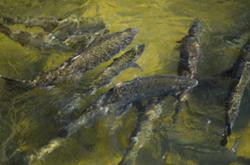
But anyway, the food sources there are rich. Roberts Bank is also a nursery for Pacific salmon, moving in and out of the Fraser River, and of course, it is also a that’s those salmon are extremely important for whales, and particularly the southern resident pod of killer whales or orca whales, which are highly endangered, shared between Canada and the United States, and deeply beloved by people on all sides of the border. So Roberts Bank is a very special area, and it has already seen a lot of development. We’ve had the original. We’ve had the Delta Port. We’ve had the ferry terminal. We now have Roberts Bank Terminal Two, which the federal government’s own environmental assessment concluded would have extremely serious and environmental impacts that could not be remedied. And now we may have on top of Roberts Bank Terminal Two, which has not been built yet, the new tanker, the new super tanker terminal, which again will either be appended to Roberts Bank Terminal Two and extended or built right beside it. So all of that is removing vital mudflat habitat for migrating birds, habitat for Pacific salmon, food sources for endangered orca whales, and it just goes on and on. Like you have only to if you if you have a minute when you’re going out to the ferry and you want to park your car and you want to walk along some of the beautiful paths that are along the mudflats. The area is just so alive. You can see at low tide, dozens of herons standing in the fields. They’re augmenting their diet with you know mice and voles from the fields. You have incredible flocks of snow geese. Even when the migrating birds have moved on, shining white in the air and filling the air with their honks and other sounds, you have so many birds year round there. The wildlife is just absolutely incredible, and what scientists are saying is that we need to leave our estuary areas and our mudflats and our key stops for migrating birds as untouched as we can. There’s already been a lot of development, and that we risk eliminating bird speed. We risk diminishing bird species. We risk a great diminishment of life itself if we don’t leave some room for nature in these very special places for nature.
Harrison Mooney:
Right. So maybe not the best place to put a tanker farm.
Sarah Cox:
Not sure if they have another option on the south coast, but that is that is what I am hearing from people is that we really, I mean, we’re at a point here. We talk a lot about the climate crisis. There’s also, and I hate to be a downer, but we have a biodiversity crisis as well, which is intertwined with the climate crisis, where we are losing nature, and I don’t need to go into all the studies that that show that we’re losing nature. Everybody loves nature. Everybody spends time in nature. Everybody loves seeing the orca whales, and we’re really at a turning point in terms of making a decision about how we’re going to protect nature and what little spaces we’re going to leave for nature, and of course, if we want to be purely selfish about this, it’s not just nature, but our own survival as a species depends on healthy ecosystems as well.
Sarah Cox:
So it’s not just the potential spill from a super tanker that concerns scientists and many other people on both sides of the border. There are many places where oil can spill, and of course, where oil spills, we know that it has a usually almost always a devastating impact. The type of oil that would be moved in the Pacific Link oil pipeline is bitumen, which is it’s a combination of chemical diluents and very thick oil that’s basically got the consistency of peanut butter without the chemical diluents. And what happens in the event of a spill is that the chemical diluents very quickly evaporate, and the heavier kind of peanut butter-like globs sink, and they’re dispersed by currents, and that makes it very very hard to clean up, and so oil could potentially spill when ships are being loaded. It could potentially spill at the tanker farm for this project, which is being built in an area prone to earthquakes on ground that is not the most stable. It could also potentially spill if a practice called lightering takes place.
Harrison Mooney:
What’s that?
Sarah Cox:
Well lightering I have recently learned is the practice by which oil is moved from one ship to another, and so what we’ve seen until very recently with the Trans Mountain project, and this boggled my mind a little bit when I first heard about it, is that the ships from Trans Mountain have been going to a place off the coast of just kind of northern Mexico, southern California. It’s a designated lightering zone in the Pacific Ocean, and so they’ve been going down there until earlier this year. And the oil has been transferred in this zone from the smaller oil tanker to super tankers, and then the super tankers go across the Pacific Ocean. And this was done because it was more economic, but now that the price of oil has shot up, the tankers, the smaller tankers, are going right across the Pacific Ocean, and Washington state has raised the concern that the advent of super tanker terminal and super tankers in the sailor sea could mean that the practice of lightering happens up here, and that is another opportunity for oil to spill.
Harrison Mooney:
Right. Any time that you are handing off the football, there’s a chance the football will get dropped. That’s terrible. OK, you also write about the impact of all this on the southern resident orcas. Can you tell me more about that?
Sarah Cox:
Yeah, so the southern resident orcas are an endangered pod of killer whales that lives year-round in the Salish Sea and moves back and forth between Washington and Canada. I mean, they’re so highly in danger that every time a new calf is born, it’s headlines in the papers and the media is talking about it because so few calves make it and become adults. And so this pod is hanging in at I think 77 animals at the moment, and there’s a lot of concern that additional traffic in the Salish Sea will affect them in a number of ways. And this, when the Roberts Bank Terminal Two environmental assessment happened, it found that the project would have very serious consequences for this population. And some of the ways that that happens is that the noise from the ships gets in the way of the whales’ ability to communicate with each other and to find their prey, and it disturbs their feeding. And so, what we have now happening in the Salish Sea, which is one of the most biodiverse inland seas in the entire world, is not only do we have projected large increase in ship traffic from the Roberts Bank Terminal Two project that is going to be built, we have a huge increase in traffic from the expansion of the Trans Mountain pipeline project by about an additional approximately 300 tankers a year, we are soon to have more traffic from Wood Fiber LNG project and from the Tilbury LNG project expansion, and then there’s a few smaller projects in Washington state as well, and all of this adds up to a projected increase of 2,000 additional ships in the sailor sea every year, of which the Pacific Link oil pipeline project tankers would be part of that, and that’s very concerning when you’re talking about the orcas and their ability to catch salmon and their ability to communicate with each other and to survive in these increasingly busy waters.
Harrison Mooney:
Right. So this is definitely going to affect the orcas, the ecology. You didn’t mention intertidal biofilm. I wrote that down. I was really hoping you’d talk more about that.
Sarah Cox:
I’m happy to talk about that. I’m just working on a story about that right now, and I really, I’m really digging into what exactly makes Roberts Bank such a special place, and biofilm is part of that. I can get all geeky about biofilm for a minute if you want.
Harrison Mooney:
I do want.
Sarah Cox:
So biofilm. If you’re at Roberts Bank and you look out over the mudflats, you’ll see kind of this shimmering goo on the surface, and it’s called biofilm. And years ago, a scientist working for the federal government, called Bob Elner, was looking at sandpipers feeding at Roberts Bank on the mudflats and wondering why they kept sticking their beaks into the mud, because everybody knew that sandpipers ate invertebrates, and he couldn’t find any invertebrates in the mud. And so, basically, over a number of years, Bob Elner’s investigations uncovered the fact that the sandpipers and other a few other bird species as well, like Dunlin, were actually slurping up the biofilm, and the reason why they are slurping up. The biofilm, which looks like mud, like he literally dissected some sandpipers and looked in their stomachs, and all he found were some sand and kind of a amber-colored liquid, and he couldn’t figure it out because these were birds on their spring migration. Their next stop was many hundreds of kilometres north, and they somehow needed to fuel up for that long journey. And these are tiny birds; they’re about the size of our fists. And so, Bob continued to investigate this. And what he and other scientists found is that the in the biofilm are these microorganisms called diatoms, and so these are about 10th of the width of a human hair. They’re very very tiny, and that what happens in the spring when there’s meltwater in the Fraser River is that this fresh water gushes out into the Fraser River estuary and the mudflats around Roberts Bank, and it coincides with these diatoms basically having starved themselves over the winter, and so you’ve got this perfect convergence of fresh water coming in, longer days, these microscopic organisms stop. They have they’re looking for new things to basically feed on, and so it kicks them into this super interesting cycle where they start to produce fatty acids, and particularly omega threes. And it turns out that the sandpipers and some other bird species are actually needing and feeding on these fatty acid-rich diatoms in the biofilm, which are giving them the stamina that they need to continue on their migration to nesting grounds in Alaska.
Harrison Mooney:
Whoa! I’m imagining Greek yogurt for birds. Is that too reductive?
Sarah Cox:
I think it’s like Greek yogurt and flax and blueberries and all those superfoods all mixed into one.
Harrison Mooney:
So it’s like an açai bowl for birds. OK, OK, that sounds amazing. But now instead, there will be tanker farms there. You know, it’s wild. I mean, the you know, I read a quote where Mark Carney said that Canada has become weighed down by well-intentioned but arduous, often duplicative regulatory processes, you know. So what we’ve done here is we have exempted this project, I guess, from those processes. You know, he also said to build at scale and speed again, we must do things differently, and that all just sounds very Trumpy to me. Like that sounds, you know, we’re cutting regulations so that we can do our business. But as much as maybe it’s in the national interest to get away from American, you know, like oil or dependence on that economy, we are doing it at the risk of like cool stuff like our intertidal biofilm and these birds and these endangered whales and you know I hear you talk about all this stuff and it’s just so fascinating to me and as the biodiversity reporter I have to imagine that you know you understand better than anybody what we might lose here this must be I think more upsetting to you than it is to me.
Sarah Cox:
I think I am just starting to register what we could lose here. There are people who have been working on these issues, and I’m thinking scientists in particular for decades. And while they can’t come out, I mean, they’re like objective scientists. They do the research, and they publish reports, and they sometimes talk to the media. But I also know that that on a personal level, that some of them are really quite heartbroken and very worried about this.
Harrison Mooney:
Sarah, Is this pipeline a done deal? You know, we’ve heard this song and dance before, and fought like hell, and made a difference. And you know, I know that there are still some things that have to happen, even if we’ve managed to create a law that lets the Canadian government do whatever they want. But maybe we can still prevent Pacific Link.
Sarah Cox:
It’s hard to imagine that a project that has been designated of national interest, that is bypassing Canada’s long-standing environmental laws, that is going to be overseen just by the Canadian Energy Regulator, which will be, you know, Major Projects Office will be examining the project. The Canadian Energy Regulator will be issuing permits. I think that at this point in time, it is hard to imagine that the project wouldn’t happen in some form, and the legal challenges notwithstanding, because there are a number of legal challenges, and no doubt there will be more legal challenges. One of the things that environmental assessments have done in the past, and some would argue, you know, that it’s ticking boxes. It’s not necessarily going to fix things, but they have proposed remedies for environmental harm, and to a certain extent, depending on the project, you know, that has been more or less effective, and so in this instance, I think everybody’s waiting to see whether there will be any environmental quote mitigations and what those will be. But it is also very hard to imagine that it will be anything that will change things substantially because the government’s own environmental assessment for Roberts Bank Terminal Two found that it would have irreversible environmental that would cause irreversible environmental harm that no mitigations could reverse. So here we are.
Harrison Mooney:
So here we are. Yeah, I was really hoping that that might end on a hopeful note, but no, we’ve reached the end, and here we are.
Sarah Cox:
I will say if there is a hopeful note, I think that you know we’re living in this very strange time for Canada U.S. relationships. I mean, and I can walk down to the water near where I live, and I can see the United States. It’s right across there, and we’re so close. And we’ve been such good neighbours for so long. In the last couple of years, have been very divisive, and I think that what is happening now with this project and the Salish Sea is that people are realizing that we actually we share a lot here, and we share a lot of nature, and that what happens on one side of the border affects wildlife and nature and human beings on the other side of the border, and so if there is any hope, I think it is in reestablishing and refining those very shared values.
Harrison Mooney:
I mean that is something, Sarah. Thank you so much for joining us.
Sarah Cox:
You’re very welcome. It’s my pleasure.
Harrison Mooney:
Sarah Cox is the biodiversity reporter with The Tyee. And you can find her reporting on our website at thetyee.ca Did you enjoy today’s episode? Let us know by sending an email or voice note to [email protected]
The Tyee is a nonprofit reader- and listener-funded journalism organization, made possible thanks to the support of our Tyee Builders. That could be you, listener. Head over to support.thetyee.ca to sign up, so we can keep publishing journalism in the public interest. That’s support.thetyee.ca. If you want to advertise on this podcast, we have a team that wants to hear from you. You can email them at adsales at the tyee dot ca.
Today’s episode was hosted by me, Harrison Mooney and produced by Isaac Phan Nay. It was engineered by Bespoke Podcasts. Our music is by Brian Binnema. Join us again in two weeks.
Read more: Podcast, Energy, Alberta, Environment


Tyee Commenting Guidelines
Please note that email notifications for replies are not currently working due to a software issue which may be resolved in a future update.
Comments that violate guidelines risk being deleted, and violations may result in a temporary or permanent user ban. Maintain the spirit of good conversation to stay in the discussion and be patient with moderators. Comments are reviewed regularly but not in real time.
Do:
Do not: