


 SHARE:
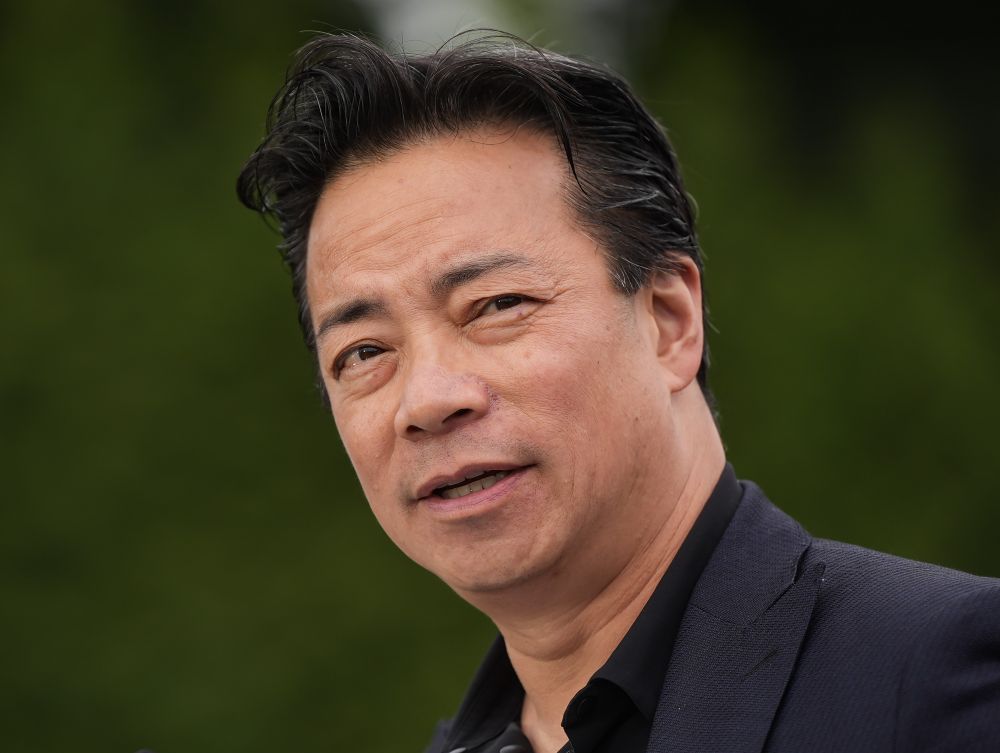
If Vancouver Mayor Ken Sim wants to be taken seriously, his public-safety plebiscite is a self-inflicted setback.
For the first three years of his term, Mayor Sim compiled a highlight reel befitting a sitcom mayor whose running gag was a spectacular lack of self-awareness.
He shotgunned a beer on stage. He asked a reporter if they would like to see him “rip some” chin-ups, which he promptly ripped. He dropped his trousers, with consent, in front of another reporter after throwing a record from The Police on his turntable. He underdressed in Vessi runners and black jeans for a Remembrance Day ceremony — the 100th anniversary of the Victory Square Cenotaph service, no less — where he laid a municipal wreath. He unabashedly told the world he was “orange pilled” for Bitcoin, which he described as the “greatest invention in human history.”
These antics were tough to shrug off amid the unfulfilled signature promise to hire 100 mental health nurses, the loss of marquee community events and attractions and escalating property taxes.
But after his party, ABC Vancouver, suffered a humiliating defeat in the April 2025 civic byelection, Sim adopted a noticeably more professional and serious tone, both rhetorically and sartorially.
Sim began presenting himself as a mayor who prioritized public safety and — despite the previous three years of property tax increases — delivered on a property tax freeze in 2026, with another one promised for 2027. By monopolizing these two issues, ABC Vancouver had built an electoral fortress, positioning Sim as the clear mayoral frontrunner of the 2026 municipal election.
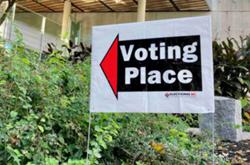
In an attempt to further reinforce its commitment to public safety, ABC Vancouver proposed — and then used its city council majority to approve — a plebiscite on public safety for election day.
However, it was a mask-off moment that exposed the very type of un-seriousness that Ken Sim had spent months trying to outgrow.
Vague questions with predictable answers
In a special meeting on Aug. 14, the ABC Vancouver-majority city council directed staff to add two non-binding plebiscite questions related to public safety to October’s civic election, at an approximate cost of $380,000 to $560,000.
“[Public safety] is the number one issue for the public and it is my number one priority,” Mayor Ken Sim explained at the Special Council Meeting.
The first question asks voters, “Are you in favour of the City of Vancouver strengthening its laws to forbid open-air hard drug (Heroin, Meth, Fentanyl, and Crack) use in public spaces?”
The second question asks, “Should the City of Vancouver formally ask the Province of BC to convert portions of the old St. Paul’s Hospital, or another similar site, into a secure medical facility that provides acute voluntary and 100-plus involuntary care beds for individuals posing a serious risk to themselves or others due to severe substance use and mental health disorders?”
Neither plebiscite question is binding. There are no consequences attached to an issue that Mayor Sim insists is his “number one priority.”
The first question acts as little more than a vague public opinion survey with a fairly predictable outcome since, presumably, most Vancouverites do not approve of the consumption of hard drugs in public. Moreover, the question does not explain which laws could be strengthened to crack down on public drug use.
“When it comes to specific laws so, you know, we can take a look and make it a little clearer. And, you know, we’ll get back to you on that one,” Sim tried to explain to CBC News when asked about which laws the plebiscite question was referencing.
The second question is somehow even more performative. It will ask voters if they want the City of Vancouver to lobby the provincial government for more voluntary and involuntary addictions treatment beds. However, Vancouver City Council does not need electoral permission to do this. In fact, Mayor Ken Sim can do this directly, as he did earlier in August.
ABC Vancouver and some commentators, like former Vancouver city councillor George Affleck, have defended the plebiscite as a measure to send a message to the provincial government.
But a plebiscite only carries meaningful democratic weight if voters are presented with a consequential choice. Asking voters if individuals suffering from severe substance use and dangerous mental health disorders should receive treatment is easy. It is much harder to decide who is forced into treatment, what conditions must be met to justify involuntary care, for how long and at what cost. This plebiscite conveniently sidesteps all of the serious work in favour of manufacturing a hollow public mandate.
And defending the plebiscite as a way to “send a message” gives away the game: this is unserious political theatre.
Some inconvenient legal truths
The plebiscite will fall under Section 184 of the Vancouver Charter, which allows city council to submit a question to its electors for their opinion, restricted to matters where council “has or desires to have the power to deal.”
Criminal law, including laws governing controlled drugs and substances, is the exclusive jurisdiction of the federal government. Neither the province nor a municipality can enact — or “strengthen” — criminal law.
The City of Vancouver can regulate conduct in public spaces through municipal bylaws (such as noise, smoking and alcohol consumption). But the plebiscite does not identify any bylaw that would be strengthened or explain what additional prohibition the City could impose.
So the first question of the plebiscite will ask voters whether the city should strengthen “laws” without identifying which laws Vancouver even has the legal authority to strengthen, with Sim himself unable to identify a single law.
The second plebiscite question at least addresses legal powers belonging to the province. But British Columbia’s use of those powers was just found to violate the Canadian Charter of Rights and Freedoms.
Two weeks before Vancouver City Council voted to add the non-binding plebiscite to October’s civic election ballot, the B.C. Supreme Court found key elements of the province’s involuntary care practices to be unconstitutional.
The Court found that involuntary detention does not automatically make someone incapable of making their own treatment decisions. B.C.’s Mental Health Act allowed a treatment facility director to consent to treatment on a patient’s behalf, making British Columbia an outlier in Canada by effectively stripping involuntary patients of the right to make their own treatment decisions. The Province has been given six months to amend the legislation so it is in line with the Charter.
Why St. Paul’s is no easy solution
So, while B.C. is being ordered to fix its involuntary care system, Mayor Sim is urging Vancouverites to demand more of it, neatly reducing a serious constitutional issue to cheap electioneering.
Even the proposed location for a treatment centre reveals the unseriousness of the plebiscite.
Sim described the old St. Paul’s Hospital as a “turn-key solution.” But a hospital and a secure involuntary treatment facility are different. Vancouver’s Building By-law distinguishes treatment occupancies from detention occupancies, where occupants are “restrained from or are incapable of evacuating… because of security measures not under their control.” This is an obvious consideration for a secure facility designed to hold 100 patients involuntarily.
Moreover, converting the aging hospital into a secure addictions-treatment facility could trigger substantial upgrades, including seismic work. These are all serious considerations, making the old St. Paul’s Hospital far from the turn-key solution that Mayor Sim purports it to be.
The plebiscite question poorly accommodates the complications of the St. Paul’s site by offering the option of “another similar site.” But this rhetorical escape hatch only underscores how little substance, or even thought, supports the question that will be posed to voters.
Vancouverites are being asked to endorse a treatment facility without any clear plan for a site, how much it would cost or even the governing rules for involuntary care, rendering the plebiscite little more than a public mandate for… vibes.
An unserious answer to a serious problem
Public safety is a serious matter that demands a serious debate over serious solutions. This plebiscite, unfortunately, points to an embarrassing disregard for the constitutional division of powers, the legal complexities of involuntary care and Vancouver’s own Building By-law.
It does not establish the stakes of a campaign promise, nor does it even present Vancouverites with any meaningful choice. And clearly, given the shallowness of the questions, that is by design.
By putting public safety, one of ABC Vancouver’s strongest issues, directly on the ballot, the party gives its supporters another reason to turn out and vote on Oct. 17. The questions themselves seem designed to produce results that Sim can claim as a public mandate.
It might work as a campaign strategy to galvanize the ABC base. But it is as cynical as it is vapid, which comes with risk.
Sim had spent over a year shedding the antics and distractions that defined him as unserious for most of his first term as mayor. With a narrowed focus on public safety and property taxes, Sim adopted a much more disciplined political persona and was poised to enter the campaign in a commanding position.
But for him to take his “number one priority” and reduce it to two non-binding ballot questions that offer neither a clear course of action nor a meaningful choice undermines the very seriousness Sim has spent the past year cultivating.
The plebiscite may help Ken Sim and ABC Vancouver mobilize their base. But after working hard to prove to Vancouver that he can be taken seriously, Sim has just given the city another reason not to. ![[Tyee]](/design-article.thetyee.ca/ui/img/yellowblob.png)
Read more: Municipal Politics




Tyee Commenting Guidelines
Please note that email notifications for replies are not currently working due to a software issue which may be resolved in a future update.
Comments that violate guidelines risk being deleted, and violations may result in a temporary or permanent user ban. Maintain the spirit of good conversation to stay in the discussion and be patient with moderators. Comments are reviewed regularly but not in real time.
Do:
Do not: