
 SHARE:

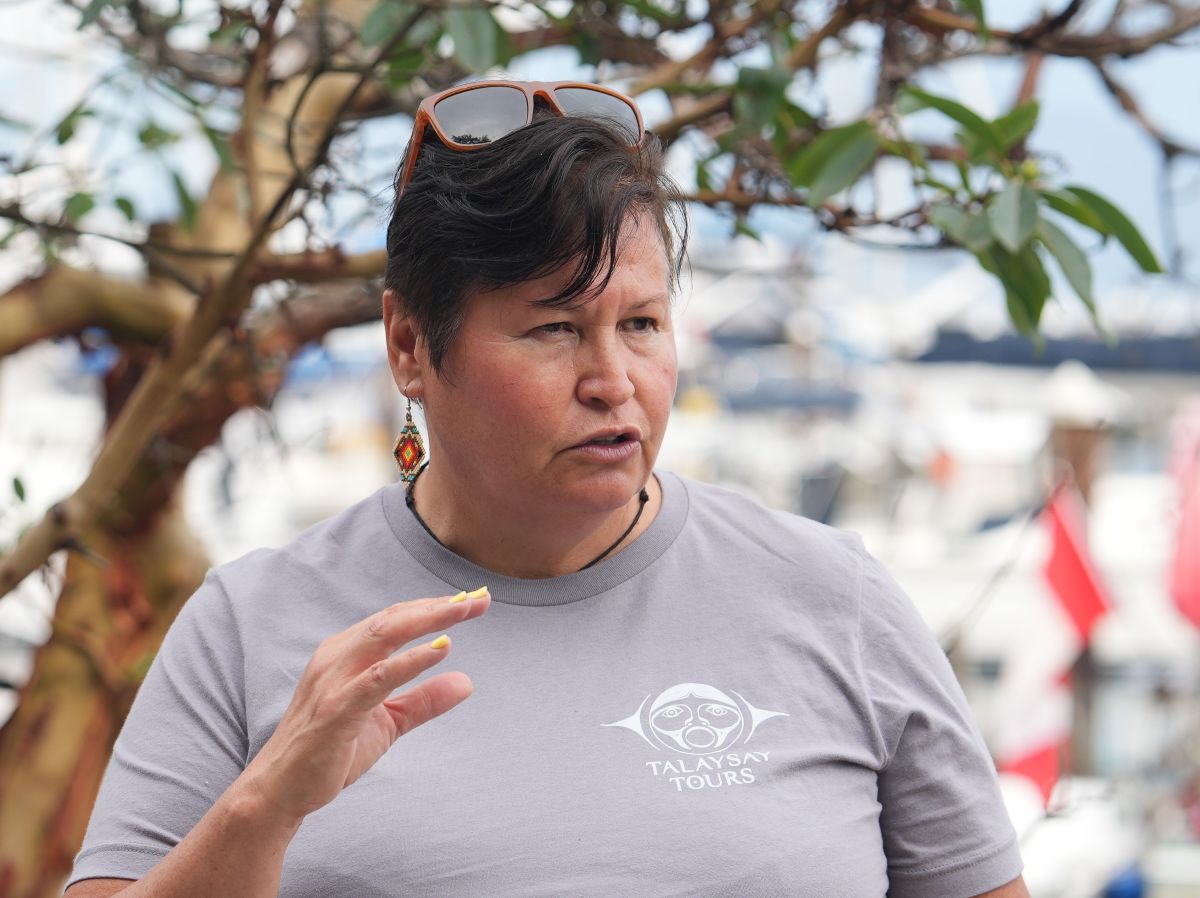
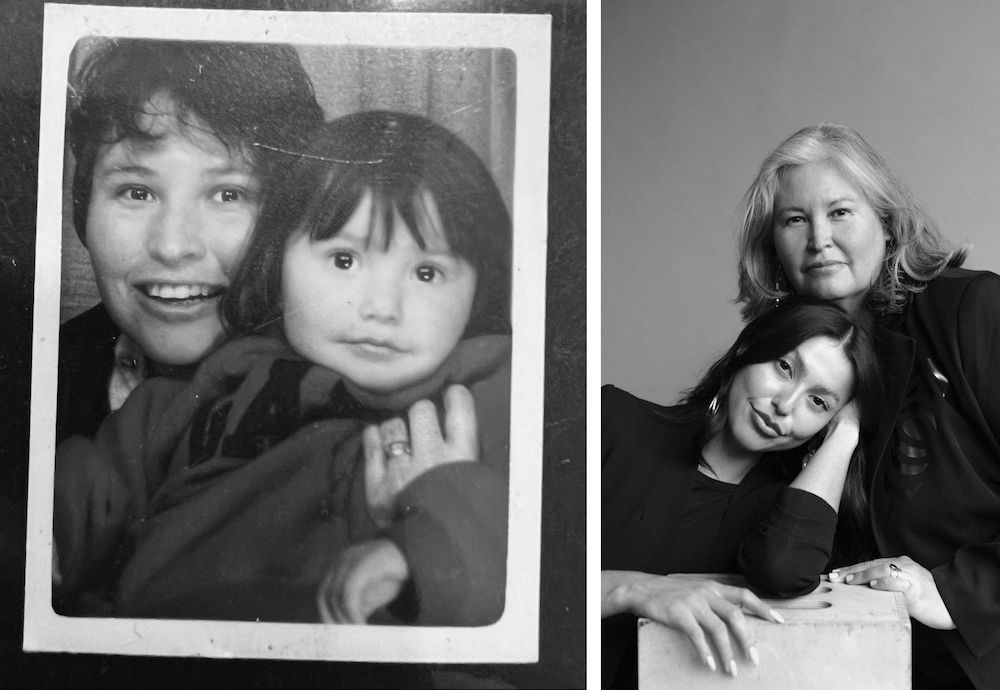
Talaysay Campo was four years old when she started joining her mother at work.
Splitting her time between the Sunshine Coast and Vancouver’s North Shore, Talaysay went with her mother, Candace Campo, on kayak and canoe tours during the day and university lectures at night, often sleeping in the back of the classroom.
Talaysay didn’t think twice about the hustle and bustle. She also didn’t realize her mother was laying the foundation for the tourism business that now bears her name: Talaysay Tours.
Since 2001, Talaysay Tours has given land- and water-based tours in Vancouver, Squamish, Whistler and the Sunshine Coast, through an Indigenous lens. The company offers everything from walks in Stanley Park that show how Sḵwx̱wú7mesh and shíshálh members use the land for medicine and food, to cultural workshops that offer hands-on learning. Talaysay Tours also provides private tours, school programs and virtual sessions.
Team members act as ambassadors for their culture, teaching visitors and locals alike about Indigenous history, laws, traditions and ongoing practices. Tours run anywhere from $70 to $145 per person, depending on the session. Prices for private and virtual tours vary based on the request. More than 6,300 people signed up for tours last year.
Talaysay Tours employs around 13 full-time staff members, as well as nearly 15 regular contractors and seasonal staff who help them out in busy seasons. Workers come from Indigenous communities from all around the coast.
“We are sharing the story of what Vancouver was before Vancouver. We are rewriting that narrative,” said Talaysay, a Sḵwx̱wú7mesh and shíshálh member who now serves as the company’s operations manager, with a focus on marketing and growth.
The Campo family has found success in a growing Indigenous tourism sector, which generated an estimated $3.7 billion in revenue nationwide in 2023, the latest year for which data is available. The industry directly contributed $1.6 billion to Canada’s GDP and supported about 34,700 jobs across the country as of 2023. Almost 60 per cent of Canadians polled by Angus Reid this August were interested in Indigenous-led tourism.
But when Candace first set out on this path, she had to chart uncertain waters. Candace, a shíshálh member, was fresh out of university and working in administration when a kayak tour operator on the Sunshine Coast asked her to be a cultural guide for their business. She jumped at the opportunity. “Administration was not my life purpose or passion,” she told The Tyee.
Candace quickly learned the ropes and found that tour guiding was something that came naturally to her.
“In our community, we are raised to be ambassadors because we host other families from other nations,” she said. “Being Indigenous on the West Coast means you're interrelated to all of the tribes. So I really feel that guest-host relationship was bred in me, and it's something that I really enjoy doing.”
But her stint with their business was short-lived.
“After I did my first cultural tour with them as a kayak guide, we said goodbye to our guests and I had to be very honest with them,” Candace recalled. “I looked at them both and I told them, ‘I'm going to start my own company.’”
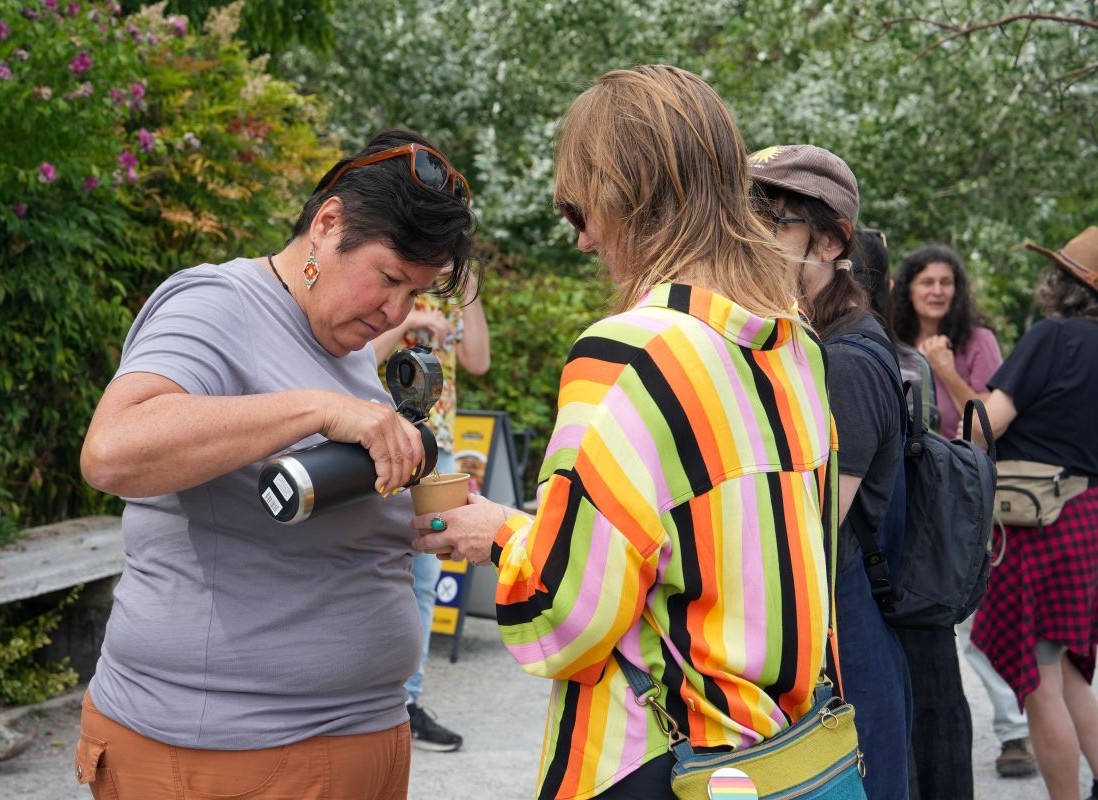
The owners were very supportive of her ambition, Candace said. A year later, Candace co-founded Talaysay Tours with her husband, Larry Campo. At the time, there were no Indigenous-led tour operators on the coast, and Talaysay Tours was one tiny kayak outfit in a literal sea of larger, more established tourism businesses.
Learning how to market the business and convince other tour operators to partner with her was challenging, Candace said.
“I even had one gentleman who's an operator,” Candace recalled. “He just flat out came and told me…‘Yeah, when you came into the business, I never thought you would survive.’”
Not only did they survive, they’re now recognized as one of the top Indigenous tourism companies in B.C.
From sea to shore
The road to success didn’t come without its bumps along the way.
In 2002, the Campos moved their young family and the business’s headquarters to Larry’s nation, the Skwxwú7mesh Nation on Vancouver’s North Shore, betting on the potential of a larger market in the city.
For the next 14 years, Candace ran the business seasonally with a young Talaysay in tow, offering kayak and canoe tours on the Sunshine Coast while building out a framework for walking tours in the city. About a decade ago, Talaysay Tours pivoted to running the business year-round, with a sharper focus on cultural walking tours.
“The first two years were very challenging. By 2018 I was starting to see the daylight, and 2019 we were just loving the growth of the business,” Candace said.
And then COVID hit.
With the overnight shutdown of operations, the family moved back to the Sunshine Coast. There, Candace and her daughter started spending a lot of time on the land — kayaking, paddle boarding, harvesting, hiking and gathering medicines — and had a new idea.
“We thought, we're out here, we need to do Facebook Live so that our Elders and our community could see the old village sites and the trails,” Candace said.
“We were just telling stories and talking about the plants, and really we were trying to bring some joy and some comfort to the Elders in our community… but it totally redirected us,” she said.
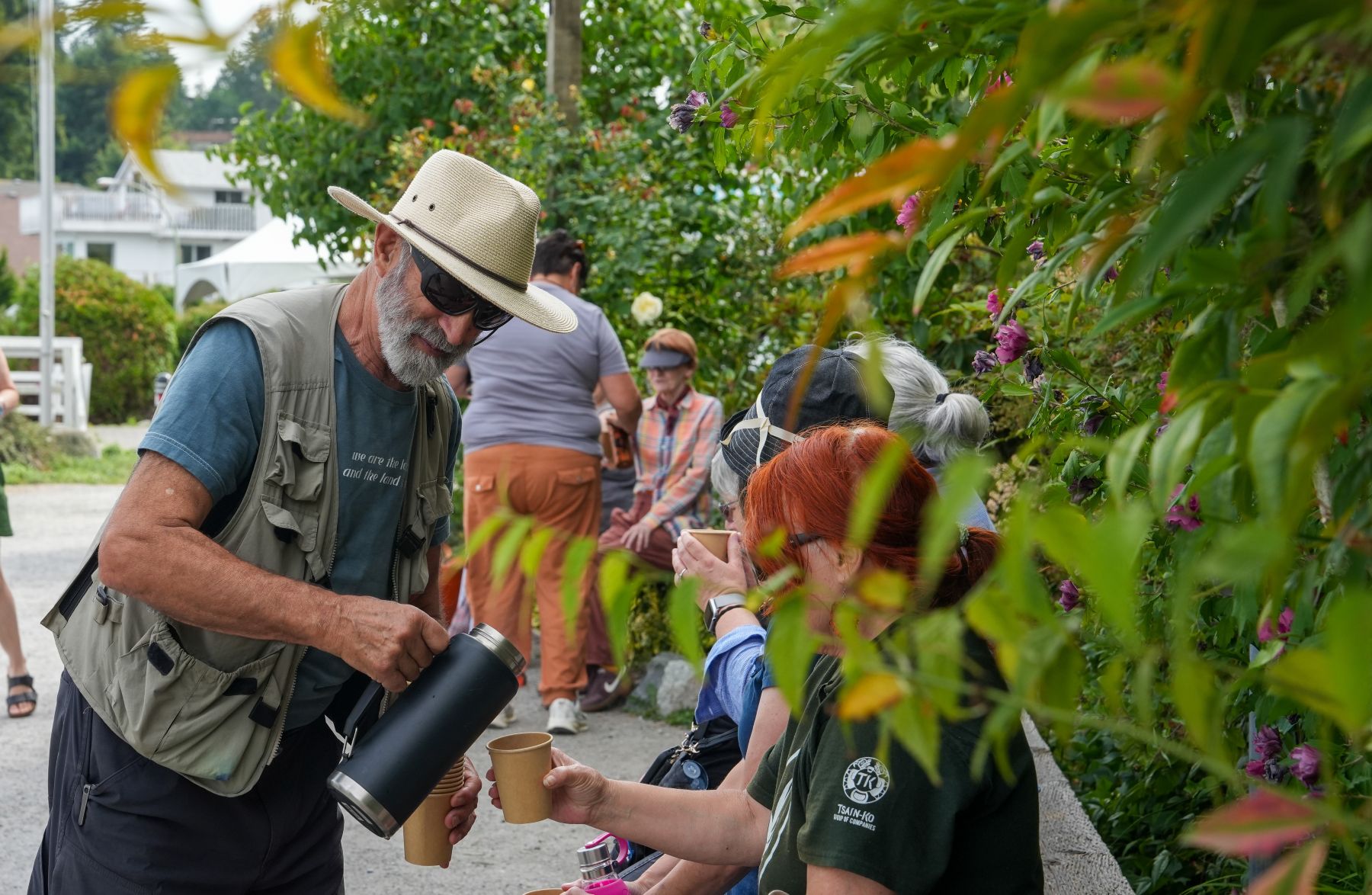
During one of those broadcasts, Talaysay had an “aha” moment — they should do virtual tours with the company. They started promoting virtual tours “a bit sheepishly,” Candace said, but it proved to be successful.
One of their first clients was the Jane Goodall Institute’s Roots and Shoots program, a global youth conservation program that continues to partner with Talaysay Tours to this day. They also hosted virtual tours for Apple New York, Sony and a variety of universities across North America.
The virtual tours gave them the financial base they needed to weather the storm of the pandemic, while also sharpening their photo and video skills for marketing their in-person tours once restrictions eased.
Candace said the unexpected success of that “aha” moment and its downstream impact has helped them set themselves apart from other operators — less “needle in the haystack,” more emerging as a leading Indigenous-owned company.
Extraction to reconciliation
Talaysay Tours, along with the many other Indigenous tour agencies in B.C., are demonstrating how to highlight reconciliation in a historically extractive sector.
The term “extractive tourism” was popularized in 2021 by academic Vijay Kolinjivadi. It refers to tourism that takes more from a local population than it gives.
While a healthy tourism sector can offer benefits to a community — mainly through jobs and economic growth — extractive tourism refers to situations when those benefits are distributed unevenly and wealth flows upwards. This happens, for example, when major corporations, which often aren’t located in the area or country where the tourism is taking place, reap most of the financial rewards of mass tourism. Locals, in return, get a smattering of low-paying jobs and a skyrocketing cost of housing.
Even eco-tourism, which emphasizes environmental, social and cultural responsibility, has been met with criticism for its negative impacts, including overcrowding in delicate environments, industry greenwashing and the exacerbation of existing inequalities. On the flip side, the form of tourism has also helped fund conservation projects and promote education around local ecosystems and wildlife.
Talaysay says their business proves that a better model is possible.
Colonization has had many impacts on Indigenous peoples being able to share (or even learn) their own culture, including residential schools that aimed to “kill the Indian in the child” and the 1885 to 1952 potlatch ban.
“We couldn't be who we were,” Talaysay said. “We couldn't dance, we couldn't sing, we couldn't speak our own languages and we couldn't share our culture.”
Now, employees and contractors can earn their livelihood by being on the land or the water, sharing that culture.
Guests book their tours, often coming back as repeat customers, to learn the history that has been left out of most history books. They learn about cultural and language revitalization, and become active participants in reconciliation. Guests also find out how to recognize plants and medicines, among other Indigenous ways of learning, to build a healthier relationship with the land, Talaysay said.
That’s evident in many of their interactive tours.
Take “Love the Land,” a tour in Porpoise Bay “that emphasizes a profound, reciprocal relationship with the Earth.” The walking tour teaches guests about the life cycle of salmon, forest gardens and how Indigenous knowledge promotes food security, biodiversity and climate resilience. When guests explore Stanley Park with Talaysay Tours, they learn about “how the rhythms of the ocean, the forests and the seasons sustain life.” The walk also ends with a beach cleanup.
Talaysay Tour’s revenue flows into their community rather than out of it, and helps them offer thoughtful, land-based training and employment to guides from across the continent. But it’s not just the money. The company frequently engages and relies on its Sḵwx̱wú7mesh and shíshálh Elders, who provide final approval on all training and protocols, according to Talaysay.
It takes a Talaysay Tour guide over a year of training before they can work in the field. But once they’re in, they’re in. Staff retention is high, even among seasonal workers, and the team has ongoing training opportunities and wellness programs, including multi-day trips on the land without clients.
Talaysay hopes they can be a model for more operators in the Indigenous tourism industry, inspiring others to share their traditional knowledge and help their home communities.
“When it comes to Indigenous tourism,” Talaysay said, “I feel like we're just getting started.”
This article runs in a section of The Tyee called ‘What Works: The Business of a Healthy Bioregion,’ where you’ll find profiles of people creating the low-carbon, regenerative economy we need from Alaska to central California. Find out more about this project and its funders, Magic Canoe and the Salmon Nation Trust. 
Read more: Indigenous, Environment








Tyee Commenting Guidelines
Please note that email notifications for replies are not currently working due to a software issue which may be resolved in a future update.
Comments that violate guidelines risk being deleted, and violations may result in a temporary or permanent user ban. Maintain the spirit of good conversation to stay in the discussion and be patient with moderators. Comments are reviewed regularly but not in real time.
Do:
Do not: