
 SHARE:

There’s a venerable adage in politics, often attributed to Ronald Reagan: “If you’re explaining, you’re losing.”
Soon after the report of the so-called Independent Advisory Panel on Electoral Boundaries was tabled in the Alberta legislature Monday afternoon, it became obvious panel chair Brian O’Ferrall felt the need to do quite a lot of explaining in the many pages of the majority report.
The report, as expected, rejected the work of the non-partisan election boundaries commission and advanced riding changes expected to advantage the United Conservative Party.
“Far too much of the panel’s time and energy was expended dealing with mandate and constitutional issues raised by the minority members of the panel,” the retired judge of the Alberta Court of Appeal unhappily explained in the report’s opening summary. He was, of course, referring to the questions raised by the two NDP appointees on the five-member panel.
“With respect to the minority opinion of two members of the advisory panel, all I can say as Chairman is that I failed miserably to have this panel confine itself to the merits or otherwise of its electoral boundaries proposals,” he added.
“Instead we had the same sanctimonious passing of judgment found in the majority’s criticism of the minority in the 2025-2026 Electoral Boundaries Commission Report,” he continued.
The majority of the non-partisan electoral boundaries commission, readers will recall, made recommendations that the United Conservative Party did not particularly like, which is why the do-over panel chaired by O’Ferrall was struck in the spring.
Alberta electoral boundaries have traditionally been reviewed by independent commissions whose reports have always been respected by past Alberta governments.
As a result of what must have been rather brisk conversations among panel members behind closed doors, O’Ferrall’s commentary devotes considerable verbiage to complaining about, in the words of a section heading, “unnecessary and counter-productive controversy.”
“Suggestions of ‘inappropriate partisan gamesmanship’ and warnings about the ‘threat of litigation’ dogged the panel throughout,” the chair said. “The minority appointed themselves legal counsel to the panel, though no one invited them to assume that role.”
“It is one thing to take issue with the merits of a particular boundary proposal,” he continued. “It is quite another to parade the horrors of a Charter breach, or, worse, insinuate gerrymandering on the part of fellow commissioners.”
Alas, for an Alberta citizen who didn’t have the opportunity to be a fly on the wall during the panel’s deliberations, such terminology seems justified.
Reports last week on social media that the panel would recommend that ridings in south Calgary and Lethbridge be extended deep into the reliably Conservative hinterlands, to dilute urban votes that might go to the Opposition NDP, now appear to be accurate. No amount of explaining can change that impression.
The report restores two rural ridings eliminated by the official commission.
Lethbridge currently has two ridings, both largely inside the city.
The proposal would see Lethbridge residents split into four ridings — one within the city and three massive rural ridings, each with a slice of the city. That’s an obvious attempt to dilute urban votes — which tend to lean NDP — and help ensure another UCP election victory.
And the report creates new boundaries that merge three urban ridings in west Calgary with adjacent rural constituencies, once again adding likely UCP voters to dilute urban votes.
The UCP obviously intends to put its thumb on the scale in the next general election, and the panel’s new maps provide the means. The mechanism can fairly be described as American-style gerrymandering.
As for the minority report by the panel’s two NDP-appointed members — University of Alberta constitutional law professor Gerard Kennedy and Okotoks Coun. Brent Robinson — its tone is measured, but firm.
“Our colleagues’ proposed changes to the maps of Calgary and Lethbridge have obvious partisan implications,” they wrote. “Albertans are right to be skeptical as to the motives.... These circumstances will affect how our colleagues’ changes are perceived. In other words, the well has been poisoned.”
“It is important for faith in democracy not only for electoral boundaries to be fair, but for them to be perceived to be fair,” they added, echoing Lord Hewart’s famous maxim about the administration of justice.
Back in the summary of the majority report — which was supported by panel members Monte Solberg, a former Harper government cabinet minister from southern Alberta, and Darwin Durnie, an engineering technologist — O’Ferrall accurately noted that “passing judgment on the constitutionality of this panel’s process and proposals is for others to do.”
And so it shall be, we can rest assured. Others will pass judgment on the constitutionality of this panel and its work, a process that can be expected to begin as soon as its findings have been inevitably passed by the UCP majority in the legislature.
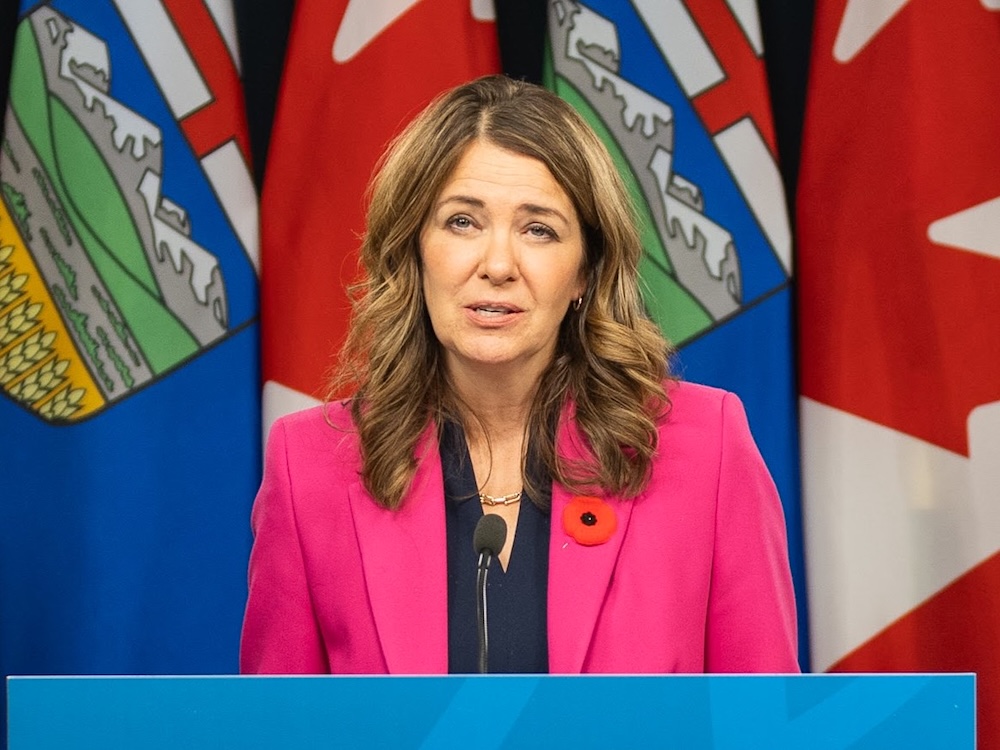
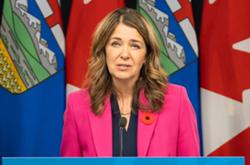
Alberta chief electoral officer Gordon McClure offered Premier Danielle Smith a way to avoid a legal showdown. He wrote all MLAs last week and said they should either postpone the next election — scheduled for next Oct. 18 — or stay with the current boundaries. It’s too late to start introducing new ridings to the process, he wrote.
But the UCP government told him to be quiet and start getting ready for an election on its terms. Which leaves the courts.
As Opposition Leader Naheed Nenshi vowed during a media scrum Monday afternoon: “If the UCP has the nerve to pass this Trump-style, MAGA gerrymandered map... we’ll see them in court.” 
Read more: Alberta



Tyee Commenting Guidelines
Please note that email notifications for replies are not currently working due to a software issue which may be resolved in a future update.
Comments that violate guidelines risk being deleted, and violations may result in a temporary or permanent user ban. Maintain the spirit of good conversation to stay in the discussion and be patient with moderators. Comments are reviewed regularly but not in real time.
Do:
Do not: