


 SHARE:
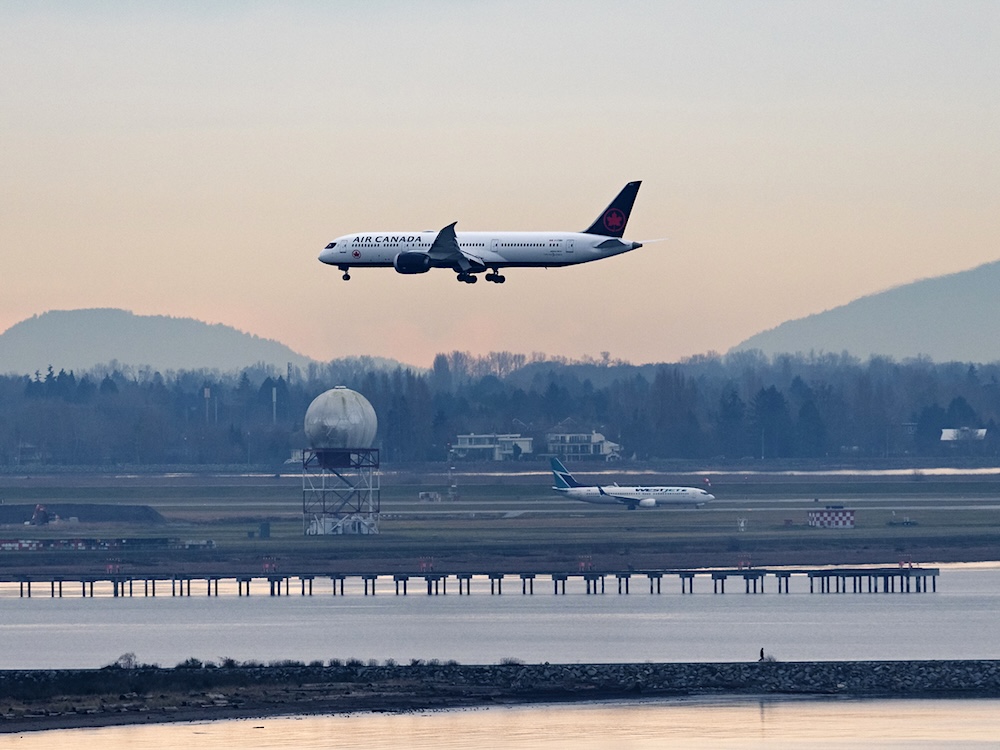
When Prime Minister Mark Carney’s Liberals first floated airport privatization in the 2025 budget, it was identified as a way of “improving affordability for Canadians.” This has been abandoned as Transport Minister Steven MacKinnon acknowledged travellers could pay more.
In fact, none of the reasons cited by Carney for airport privatization hold up, which raises the question: Why is he doing it?
Carney described his recent investment summit as an opportunity for the “world’s largest investors” to “peer into our shop window.” It turns out that Canada’s four largest airports were among the things for sale.
Privatizing airport operations puts travellers, workers and communities at risk while further empowering corporate interests.
Carney and others are trying to bog down opponents in the details, insisting that it is not “privatization” because the government will retain ownership of the underlying land and physical assets. However, the defence is disingenuous. As global business law firm Gowling WLG noted, airport privatization “refers to the transfer of ownership, management, or operational control of airport assets from the public sector to private entities” (emphasis added).
In 1994, the government created the National Airports System. Under this system, Transport Canada owns 23 airports with operations leased to not-for-profit airport authorities. These authorities run the airports on a cost-recovery basis.
The government’s new plan would allow operations to be leased by for-profit entities that can divert revenue to their owners. This would change the airports’ purpose from serving the public interest to serving private interests.
Free-market ideologues insist that the profit motive aligns private interests with the public interest. However, this claim is purely theoretical and requires adherents to ignore the numerous examples of powerful corporations routinely and systematically harming people and planet in their pursuit of ever greater financial returns.
Higher profits can be achieved by increasing revenue or decreasing costs. Revenue can be increased with higher prices, while costs can be decreased by lowering wages or cutting staff.
Price hikes are precisely what happened after Australia’s airport privatization. Price caps were initially implemented alongside privatization. Once removed, revenue per passenger increased three times more than overall inflation. This flies in the face of claims that privatization will make air travel cheaper, which could be why the government is walking back its initial claims about improved affordability.
Defenders of privatization insist that for-profit entities have an incentive to find efficiencies.
However, they often find it easier and more lucrative to cut labour costs. The same year that the privatized Sydney airport announced profits of AU$376 million, it cut 40 per cent of its workforce. These cuts came after the expiry of a 12-month protection of prevailing wages and labour conditions.
The Canadian government has said nothing about protecting the jobs of airport workers.
Air travel will only get more miserable if our airports have fewer workers being paid less.
According to Carney, privatization will “unlock” the “true value” of the airports. This is ideological nonsense. Consider the example of Chicago privatizing its parking meters. A consortium led by banking giant Morgan Stanley paid US$1.15 billion for a 75-year lease. In less than 10 years, the contract had paid out $1.97 billion in income. So much for the “true value” of privatized assets.
However, the idea of “unlocking” the value is even bigger nonsense for the Canadian government. Although the parking meter deal was a bad one for the City of Chicago, it is more understandable for a government that does not issue its own currency. But the government of Canada does issue its own currency. That means, as said by John Maynard Keynes, the father of macroeconomics, “anything we can actually do we can afford.”
The constraint is not financial resources. It is real resources. It is the labour and material inputs needed to build new airports, or expand rail, or repair bridges, or invest in care, or any of the other things that Canadians need.
In other words, we do not need to sell off public assets to rich people to have more public investment. We just need a government with the will to do so.
The privatization of airports will not make air travel cheaper or more pleasant. It will not improve working conditions. It will further enrich the already rich and powerful. And it is fiscally unnecessary. So, again we ask: Why is the Carney government doing this? ![[Tyee]](/design-article.thetyee.ca/ui/img/yellowblob.png)
Read more: Transportation, Federal Politics









Tyee Commenting Guidelines
Please note that email notifications for replies are not currently working due to a software issue which may be resolved in a future update.
Comments that violate guidelines risk being deleted, and violations may result in a temporary or permanent user ban. Maintain the spirit of good conversation to stay in the discussion and be patient with moderators. Comments are reviewed regularly but not in real time.
Do:
Do not: