


 SHARE:
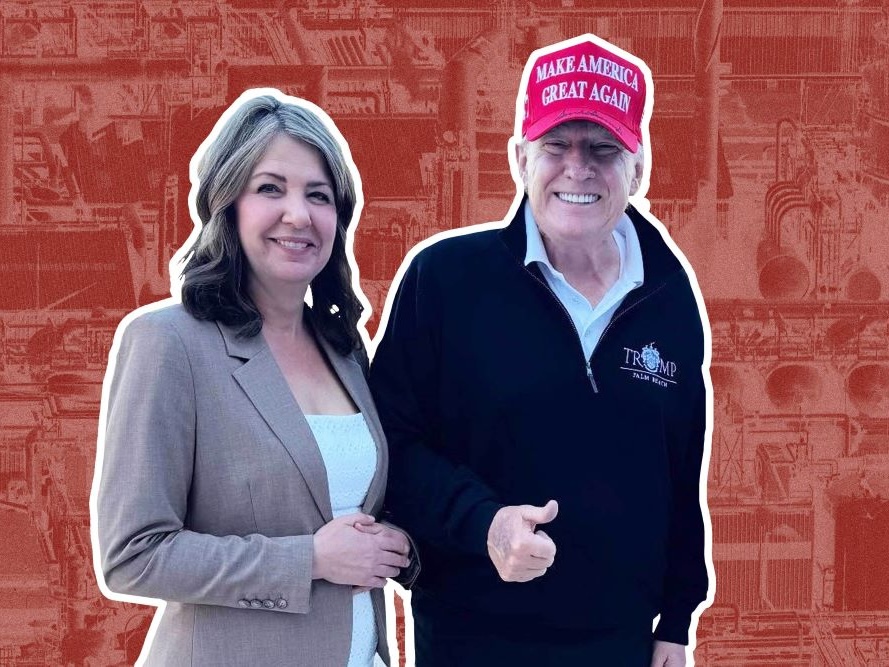
During Alberta’s 2023 election Danielle Smith said nothing about changing laws and institutions to make it easier to hold a vote on separating from Canada.
If she had, Albertans would have sent her packing.
Now the MAGA populist has imposed a confusing referendum on separation (along with nine other questions on immigration and the Constitution) when U.S. President Donald Trump and members of his administration have openly mused about annexing parts of Canada.
It is instructive that the leader of the Parti Québécois, who is not MAGA, has already promised that he would not hold a referendum on independence while Trump still holds power.
In contrast the MAGA-admiring Smith said she would hold a second referendum on leaving Canada as early as possible (next spring) if the separatists win the vote on Oct. 19.
But it would be a mistake to believe that if separatists win the day, the result would be a lastingly sovereign Alberta.
The Trump administration, which has declared that the Western Hemisphere, including Canada and Greenland, are part of the United States’ new security zone, will not twiddle its thumbs and let the globe’s fourth-largest reserve of oil become an independent nation.
There are a few reasons why Washington would find Alberta ripe for the picking.
A soft target for Americans
Start with the fact that Alberta has always been the most American of provinces.
In the 1900s U.S. immigration from the rural Midwest and the Great Plains left an indelible mark on the province’s culture and populist politics the same way Loyalists changed Upper Canada. In 1911 Americans accounted for a fifth of Alberta’s population. So many U.S. settlers poured into the new province that one politician opined that Alberta “might be regarded as a typical American state.”
The Americans left a trail everywhere. The Sundance Kid, “an all-round top hand,” broke horses for a time at the famous Bar U Ranch near Nanton. Guy Weadick, an American promoter, started the Calgary Stampede in 1912. Henry Wise Wood, a Missouri boy, helped to establish the populist United Farmers of Alberta, which dominated provincial politics throughout the 1920s. The Railroad Commission of Texas helped set up the Alberta oil industry’s regulatory regime. The oil boom in the 1950s brought a ton of U.S. CEOs as well as a distinctly American way of doing business. J. Howard Pew, an evangelical and U.S. head of Sun Oil Co., formed an alliance with Premier Ernest Manning in the 1960s to develop the tarsands.
To this day U.S. companies still own 60 per cent of the four biggest players in that mining project.
In recent times the province’s Republican political culture has been influenced by U.S.-born academics such as Tom Flanagan and Ted Morton. MAGA’s appeal to many parts of Alberta and the ruling United Conservative Party reflects this enduring legacy. Scratch a separatist and you’ll find American money, American influence or American DNA.
Another driver of Alberta’s political volatility is unprecedented population growth compounded by rapid urbanization; 83 per cent of the population now lives in cities. And all this growth was encouraged and courted by the UCP. Danielle Smith has even mused about doubling the province’s population to 10 million. She should have been pleased, then, when between 2023 and 2024 Alberta’s annual population growth outpaced that of every other province and that of any U.S. state in 2024.
Now the very political party that encouraged and courted this influx (“Alberta is calling”) is trying to target migrants as problems for the province — all to give the UCP more political power.
In the meantime, COVID and the opioid crisis have opened many dark doors leading to radical forms of political activism, particularly in rural parts. Many of the people who lamented the COVID public health response soon found another platform to vent their rage: separation. Almost every separatist leader cut their teeth on the trucker convoy that rattled Ottawa in 2023.
The RAND analyst Brian Jenkins notes in Plagues and Their Aftermath that societies do not recover from existential threats in a rational or linear manner. In the wake of COVID, Jenkins reckoned that democracies would be harder to govern, politics would be marked by intimidation and political coalitions would splinter and fall apart. Moreover, extreme beliefs would prevail.
“The post-pandemic world may be filled with people seeking saviours — fertile ground for false prophets and dictators — or with nihilists who abandoned hope and believe in nothing,” warned Jenkins. In many respects, much of the rot in Alberta’s politics can be traced back to a virus.
Petrostates are by nature combustible
Of course, urbanization, COVID and the opioid crisis have buffeted many places around the world that don’t match today’s tumult in Alberta. But a key trait makes Alberta particularly susceptible. It has all the flaws of a petrostate.
Because Alberta doesn’t have a responsible taxation system in which citizens pay all the bills, the government typically represents the interests of Big Oil. Oil dollars also give the political leaders of Alberta the financial means to not only pick fights with Ottawa or environmentalists but fund referendum campaigns they have no political or moral mandate to hold. No state plays entitled victim better than a petrostate. Meanwhile, while production and profits have grown, the workforce has shrunk along with its wages.
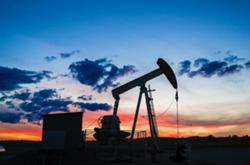
Yet, like many other petrostates, Alberta has had a string of governments that grossly mismanaged its fossil fuel windfall. It has not collected its fair share. It is not saved as it is in Norway or Saudi Arabia. Nor has it planned for the future, let alone cleaned up its environmental messes in the oilsands or its outstanding $100-billion liability in abandoned wells.
Add a power-hungry leader to the mix who would dearly like to lead her own nation, and the consequences can be brutal. As one researcher recently noted, “revolutionary petrostates are in a class unto themselves: they’re a whopping 249 per cent more likely to stir up international trouble.”
This danger posed by Smith’s ambitions should not be minimized, says Joe Anglin, a former Wildrose MLA who worked closely with Smith. He says that “the connection between Smith and Trump's MAGA ideology is woefully underestimated.” What they share is “a simple ideology of self-interest absent any regard for the truth or the public interest so long as Smith’s retention of power, or the desire for increased power, is advanced. The referendum vote is a perfect example.”
All of which plays into the waiting clutches of Donald Trump and his current version of the United States.
Alberta and the ‘Donroe Doctrine’
In 2025 Trump introduced a national security strategy that echoed the Monroe Doctrine of 1823 that spawned U.S. gunboat diplomacy. The Trump update declares that “the United States must be pre-eminent in the Western Hemisphere as a condition of our security and prosperity.” That declaration put Canada and Greenland in the U.S. sphere of influence and squarely within Trump’s crosshairs.
The new strategy, aimed at combating China’s growing global influence, explains why the president routinely refers to Canada as the 51st state and to its prime ministers as “governor.” He is not just being an asshole but projecting the so-called Donroe Doctrine for achieving regional security through domination.
Tellingly, Trump’s national security strategy also identifies oil as a political weapon. The illegal seizure of Venezuela’s oil supplies proved he wasn’t kidding.
So what does this have to do with Alberta’s separatists? Numerous papers published by the aptly named Defense Analyses and Research Corp., or DARC, based in West Virginia, offer chilling insights. DARC’s views are reportedly well read by Trump insiders and policymakers. The organization does not reveal its funding, and most of the authors of its papers on foreign policy and security use pen names.
The think tank not only identifies Canada as a growing security problem but recommends in several papers that the U.S. government actively fund and support separatist movements to undermine an antagonistic neighbour.
Let’s begin with a 2025 paper that calls for “the establishment of a new oil and gas cartel” that would enable the United States “to weaponize the global hydrocarbon trade towards American interests.”
If Alberta, “producing 85 per cent of Canada’s oil exports in 2023 and sending all that oil to the United States” could be coaxed to join the United States, then Trump would control 27 per cent of global oil production. (Smith, who basked in the opportunity to be photographed at Mar-a-Lago with Trump, has vehemently opposed using oil exports as a bargaining chip in Canada’s trade disputes with Trump.)
A followup 2025 paper with the title “The Trump Corollary” identifies Canada’s liberal democracy and multiculturalism as a security problem.
The paper’s author doesn’t argue for a U.S. takeover of Canada, but “the American government should seriously consider support for Canadian separatist movements, and — if necessary — Canada’s western regions should be territorialized by the United States, especially if the country makes clear it wishes to go on an adversarial path.”
In the fall of 2025, another paper entitled “Our Canadian Problem” directly calls for the dismemberment of the country to ensure U.S. security. “Rather than allowing it to continue down a path of anti-American antagonism, the United States could support the Alberta and Quebec separatist movements.”
The author adds: “A successful secession by Alberta alone would cripple the federal fisc, and drive separatism in other regions due to the resultant decline in their equalization payments which comprises such a substantial part of their provincial budgets.”
Setting the table for Trump’s US?
What the DARC papers clearly illustrate is that the Trump Corollary gives Americans the right to openly intervene and influence the outcome of this election.
And how has the election been framed? None of the 10 questions on the Alberta ballot this October are citizen initiated. All can be traced back to the Free Alberta Strategy that appeared in 2021 in the heat of the pandemic and was partly penned by Smith’s current chief of staff, Rob Anderson. It portrays Ottawa as the source of all evil and proposes to “secure self-determination for the people of Alberta within a reformed confederation, or if necessary, as an independent nation.” The tract tellingly omits the risk of being taken over as a U.S. energy colony.
The Free Alberta Strategy does declare that no government should adopt such disruptive policies without fully explaining to Albertans their goals, implications and consequences. Yet most Albertans have never heard of the document.
In other words, the authors of a utopian pamphlet calling for a sovereign Alberta clearly stipulated that any party or leader that seeks to pursue its radical agenda must “outline it clearly to Albertans, and ask them directly, through referenda or a provincial election, for a mandate to implement it fully.”
Smith never did that.
Instead, with no public mandate to do so, she imposed on citizens of her province a multi-question, divisive October referendum ballot crafted by Free Alberta Strategy zealots.
Which brings us back to Trump.
One 2026 DARC paper proposes “The Centrifugal Strategy” to take apart a “fragile” Canada. It argues that Canada’s desire for strategic autonomy now poses a serious national security challenge for the United States. Given that efforts to annex Canada tend to strengthen Canadian patriotism, the United States would be well advised to adopt a fragmentation strategy including support for separatist movements and funding “psychological operations to foment Quebecois and Alberta separatists.” Smaller Canadian statelets will be easier to dominate, concludes the paper.
“The truth is, Canada is already fragmenting, and it may collapse as a nation-state even without U.S. intervention. All we need to do is slowly nudge them along their path to the end of history,” writes the author.
Three months after the paper’s publication, Smith announced a referendum on separation. ![[Tyee]](/design-article.thetyee.ca/ui/img/yellowblob.png)




Tyee Commenting Guidelines
Please note that email notifications for replies are not currently working due to a software issue which may be resolved in a future update.
Comments that violate guidelines risk being deleted, and violations may result in a temporary or permanent user ban. Maintain the spirit of good conversation to stay in the discussion and be patient with moderators. Comments are reviewed regularly but not in real time.
Do:
Do not: