

 SHARE:
Learning to Breathe: A Memoir
Clara Hughes
Simon and Schuster Canada (2026)
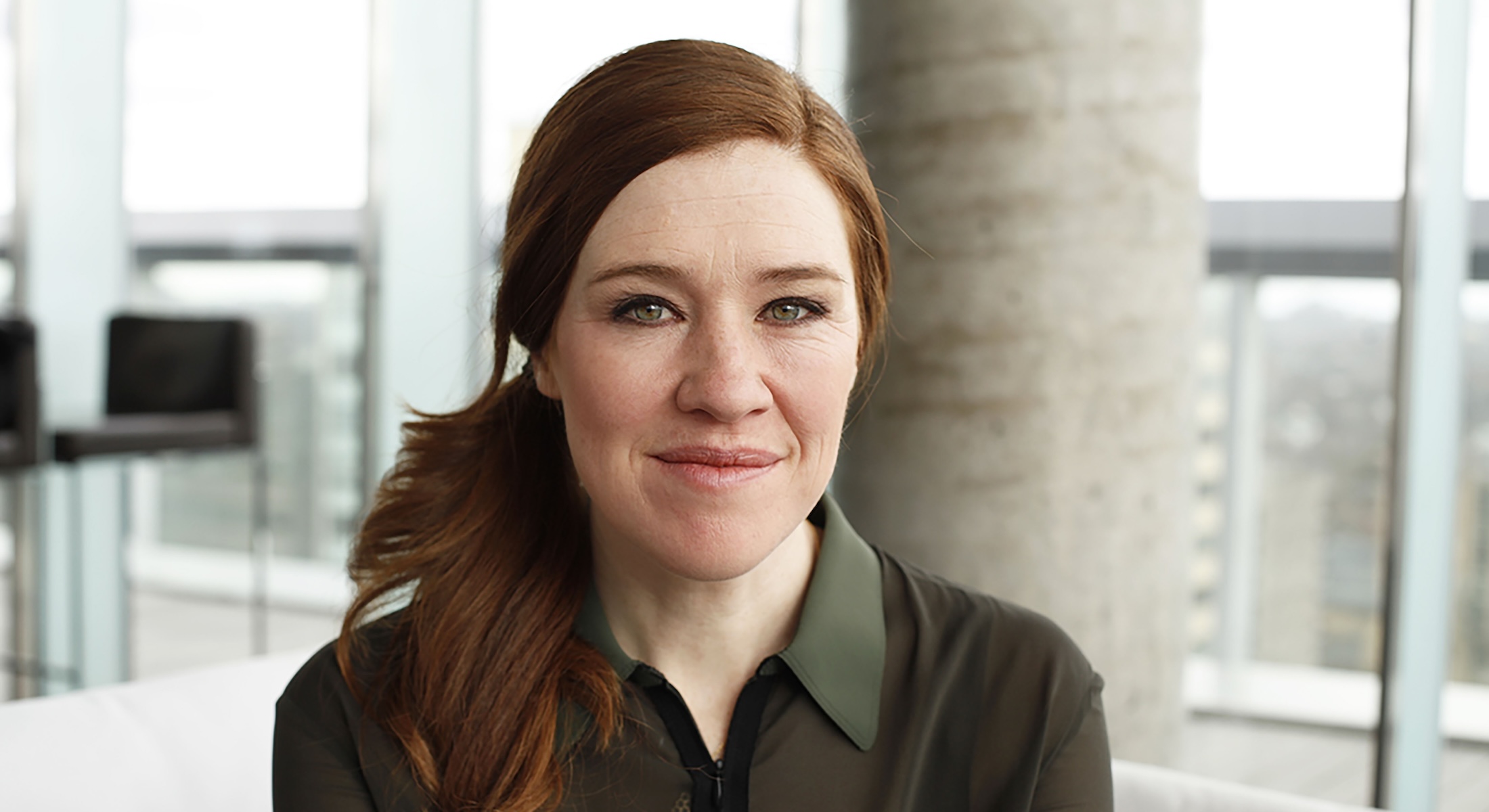
Most Canadians know Clara Hughes as the only Olympian to win multiple medals in both the summer and winter games. A formidable cyclist and speed skater, Hughes charmed audiences with her wide smile.
Once she retired from Olympic-level competition with no fewer than six medals to her name, she became the founding spokesperson of the Bell Let’s Talk campaign in 2010. The national initiative funded by a telecommunications company aimed to address stigma and raise awareness about mental health. As part of the campaign, Hughes spoke publicly about her experiences with depression and embarked on a national cycling tour to advocate for better mental health care.
Huges was a woman in constant motion. She later discovered long-distance hiking and the calm that would settle over her with 1,000 kilometres of trail ahead.
She hiked until she couldn’t anymore: one day in 2021, a rotten log crumbled beneath her hiking boot and her knee bent sideways.
Hughes was forced into stillness. She needed to recover from multiple surgeries at the same time her body plunged into menopause. During this period, she discovered what she didn’t realize she was running from.
In her new book out this month through Simon & Schuster Canada, Hughes shares a tumultuous, gristly story of enduring pain that opens into a memoir, written in real time, of her journey to uncovering deeply repressed memories from her childhood. The book unravels all the ways she blamed herself for what she survived.
Learning to Breathe: A Memoir is heart-wrenching at times, and immensely joyful in others. Hughes is courageous in her no-holds-barred approach to sharing intimate details of her life, and some of the early traumas that shaped it.
Readers who are sexual assault survivors, survivors of childhood abuse or who struggle with disordered eating, may need to take care when taking in the book.
Readers will also catch themselves cheering Hughes on as she sweats through anxiety-ridden nights, dives into the wild world of psychedelic-assisted therapies and finally, finally, gets to a place of healing. where she can have a dance party while solo skinny dipping on an empty, wind-swept beach.
The Tyee spoke with Hughes from her home on Vancouver Island to learn about her life after the Olympics, the transformation she’s experienced and what she’s learned. This interview has been lightly edited for length and clarity.
The Tyee: I’m still blown away that someone who started smoking cigarettes in Grade 3 could win six Olympic medals.
Clara Hughes: I know! It’s a work in progress that goes back to childhood and the first time I smoked. It’s not to be celebrated but it was part of my process. There’s so much shame in smoking for so many people. That’s why I was very open about it because we often hide parts of ourselves that hold shame — and shame is the biggest, hardest thing to work through.
This book is so raw. Why was it important to show the incredible Olympian sides of yourself alongside the traumatized and struggling parts?
We show the successful sides of ourselves. We celebrate champions, people who stand on podiums, people who make tones of money or doing big things. Many people, at the same time, are holding so much inside and hiding so much.
I wanted to show under all that there was a real person.
This experience, beginning in menopause, was really the catalyst to opening myself up to everything that was going on inside and no longer pushing it down. Many people never allow their hurt, harm, fear, shame, blame or trauma to come out.
I truly hope this helps people see all sides of themselves, so they no longer feel the need to run, to hide or silence the sides of themselves that need tending to.
You wrote about how the energy you were born with was your salvation, because it introduced you to sport, but also the reason you delayed dealing with trauma in your life, because you could exhaust yourself to the point of not having to feel. Can you tell me more about that?
My way of surviving was moving. Exhausting myself to the point of not being able to feel what was going on inside of me because it was terrifying. What I knew and didn’t know terrified me. But so long as I was tired enough, I could find a calm in being exhausted.
As a kid, I was finding ways to numb those feelings with alcohol, drugs and getting into all sorts of trouble. Then being catapulted into sport at the highest level for 23 years of my life, and then getting into long-distance hiking.
One trail was never enough. I was literally walking from Canada to Mexico on the Pacific Crest Trail and the first thought in my head was ‘I can hike the Arizona Trail now!’ With every end I came to, I needed to keep going.
Movement was a way of coping, surviving and continuing.
That all came to a grinding halt when I really, really hurt myself back in 2021 on the Vancouver Island Trail near Cape Scott.
I fell on my already injured knee that I’d been ignoring for months, and it blew up to the size of a cantaloupe. I had ripped the meniscus and done so much cartilage damage by not listening to the pain, because I had to keep going.
I couldn’t walk or hike for months and actually began to feel what was going on. It terrified me.
When you wrote your last book, Open Heart, Open Mind, you said it felt like you were starting a healing journey. Where are you on that journey?
I am in a very different place! When I wrote that book I thought I had it all figured out: as long as I kept moving, I’m good. I can process as long as I’m moving.
Now where I’m at is I get to choose if I want to move. I don’t need to run or hide from anything. I can find that sense of calm without the exhaustion and it’s a very different place to be.
I credit menopause with cracking me wide open; somatic therapies and psychedelic-assisted therapy allowed me to explore my deepest inner places and see what was there. Not only to face what I found, but to sit with it, tend to it and receive the support I needed to learn how to support myself.
Now I can actually live in this body, in this wide ecosystem inside of me that has safety, has love, has incredible pain too. Has all the beautiful elements of being human. I can be present in this place, in this space and in this self.
After reading about your experience with menopause I can say I am officially terrified. But your terrible experience kick-started your healing journey?
It really coincided with my surgeries and inability to keep moving forward. In menopause my emotional regulation completely fell off the rails. Feeling a deep sense of self-hatred, which I now know was not a new feeling. A deep sense of not wanting to be here anymore because it was too hard, I was too much of a problem and too broken.
All of these things erupted and when I tried to get help. The solution offered was antidepressants. That didn’t feel right to me because it was shutting something down that was trying to come out, erupting within me.
As a gen Xer I hope I’m part of a whole group of women saying ‘no more.’ This doesn’t have to be the same experience as it was for my mother. There are so many women in so many fields, including the medical field, who are pushing for women’s health to be prioritized, tended to, cared for, researched and supported properly. I feel like I’m on the cusp of change and many women are moving into a whole different landscape.
I was referred to a public doctor specializing in women’s health and found, outside of the system, Dr. Tracy Rodgers in Courtenay, who is an amazing women’s health doctor. The first time we spoke she said, ‘under my watch, no woman is going to suffer this way.’
She got me on hormone replacement, which made a big difference, but it was so much more than menopause.
Speaking with women in this season of life, it’s not just about how to fix things, but about who you want to be. It’s an amazing place to be as a woman. It’s a place of opening, exploration, creativity, curiosity. With the right supports we can truly flourish.
So, don’t be afraid! It’s an opportunity.
And then psychedelics! Okay, psychedelic-assisted therapy. How did using psychedelics help you?
I was working with somatic-based therapy, or mind-body connection. I had this rude awakening when I realized, as an athlete, as a person in constant motion, I had no connection with my body. I treated my body as a machine and it was no longer doing what I wanted. I would try a body scan to feel my toes and not feel anything. What was going on, what was this disconnect?
My therapist worked with psychedelics and I wanted to try — but I had no idea what it was going to unleash and open in me. It led to many months of deep struggles, of dysregulation, of an opening of a place in me that held repressed memories and experiences.
My body started to show me what it was holding and I started making the brain-body connection.
Psychedelics helped me let go of old stories and beliefs I had, that were rooted so long ago. Ultimately finding compassion for myself, forgiveness for myself, deep love for myself.
In my life I had found ways to survive, such as sport or hiking. But I had this deep self-hatred. Even after winning the Olympics I would feel like I wasn’t enough and I had to go and do something bigger to prove myself, to earn the oxygen that I breathed.
Therapeutic support, the master plant medicine of psychedelics, the set and setting, helped me go inside of myself and realize everything I needed is actually inside myself. It allowed me to come back home to this big, beautiful heart that beats, connects, loves and feels so much.
It’s been a wild ride. I’m not saying everyone should drop acid and everything will be okay because that’s not how it works.
But if a friend wanted to know more I would talk to them about it. But I would never tell them what to do.
Speaking of self-love, I loved reading about the time you were hiking, tripping on LSD and decided to start masturbating in nature. Why was it important to include sex and pleasure in this book?
Because we don’t talk about women’s sexuality, eroticism and sensuality enough! How many times in movies do you see dudes masturbating? I decided to take a chance and share that part of me. Some people will laugh, others will try to shame me. I don’t care.
This was a moment of me coming back to myself. I hope so many women can connect with that. That love and sensation is alive. And it is beautiful, and is meant to be celebrated in each and every one of us.
It happened right over there in the Beaufort Range. I’m looking at it from my home now. Hah, a place of eruption!
Towards the end of the book you wrote about letting the little pink shell and the black rock that represented your parents sink into the deep water you’d swum out in. It made me cry big salty tears because, in part, I realized how far you’d come and how you were going to be okay. At what point did you realize you were going to be okay?
It was in Canmore when I did a big LSD session. I spent 10 hours in this pit of blackness, where I kept asking ‘why am I the problem’ on repeat.
But just after I started seeing the truth of the dynamics within my family. For the first time I started seeing the truth of how I had been a scared little girl, who was not held or provided safety in her home environment.
After, I went out and sat beside the Bow River that flows through the valley where Canmore sits. I closed my eyes and all these animal eyes came to me: wolf eyes, eagle eyes, orca eyes, raven eyes. I had a sensation they were all projecting love, safety, acceptance and belief. I felt all that energy come in.
I opened my eyes and said out loud, to the forest, the mountains, the waters: I’m going to be okay.
I knew there’d be more challenging things to get through, but I knew I’d get through them. I had so many reasons to live, love and embrace the whole of me.
When did you decide this should all go in a second book?
This was never supposed to be about psychedelics, it was supposed to be about menopause. And maybe hiking, because it’s been such a thread in my life full of outrageous stories and epic adventures.
When I started experiencing menopause I was lost. I’ve done a lifetime of sport, with physiological, medical, strength and coaching supports. I know how to get things done. I know how to move through adversity, how to manage an injury — pretty much anything to get to the other side.
But I was feeling so incredibly helpless and hopeless. I really felt like there’s something here to share, because if I’m experiencing this, what are other women experiencing?
That was the nucleus of this book. Much of it was written in real time, which was another challenge. But also a beautiful aspect because it’s not reflective, it’s what I’m experiencing and worried about in real time.
This was it was actually like, raw and unedited. That’s how a book about menopause became so much more. ![[Tyee]](/design-article.thetyee.ca/ui/img/yellowblob.png)
Read more: Health, Books, Gender + Sexuality




Tyee Commenting Guidelines
Please note that email notifications for replies are not currently working due to a software issue which may be resolved in a future update.
Comments that violate guidelines risk being deleted, and violations may result in a temporary or permanent user ban. Maintain the spirit of good conversation to stay in the discussion and be patient with moderators. Comments are reviewed regularly but not in real time.
Do:
Do not: