


 SHARE:
After a rather doldrum-ish period through the early 2000s, when theatrical runs for non-fiction films fell off a cliff, documentary film is enjoying a monumental resurgence this fall. With good reason.
The state of the world is so extreme at the moment, that it seems only natural for audiences to be looking for explanation, but also an artistic lens through which to help see and understand the chaos more clearly.
This fall, three standout documentaries about Elizabeth Holmes, Elon Musk and Israel’s military operations in Gaza have been making waves for their impactful exploration of power, politics and the value of human life.
You Can See Everything, Vancouver-born Nathan Fielder and Lance Oppenheim’s portrait of disgraced techno-liar Holmes, premiered at the Telluride Film Festival on Labour Day weekend, causing so much early buzz that critics are already proclaiming it a masterpiece.

The film rolls into theatres on Oct. 16.
Meanwhile at the Venice Film Festival last month, the Israeli military exposé NAZA closed its premiere with a 25-minute standing ovation, the longest ovation in the history of the festival.
The documentary features anonymous interviews with Israeli intelligence officers and soldiers about their operations in Gaza. It takes its title from a Hebrew acronym for nezek agavi, meaning “collateral damage.”
The Venice Film Festival awarded its special jury prize to filmmakers Yuval Abraham and Rachel Szor.
Reaction to the film has been so great that Benjamin Netanyahu threatened to revoke Abraham and Szor’s Israeli citizenship and reserve members of the Israel Defence Force made a rebuttal work.
The original NAZA is currently on the festival circuit and the Vancouver International Film Festival recently added the film to its program for Oct. 10, the second-last night of the festival. The Guardian will stream it globally from its website in November.
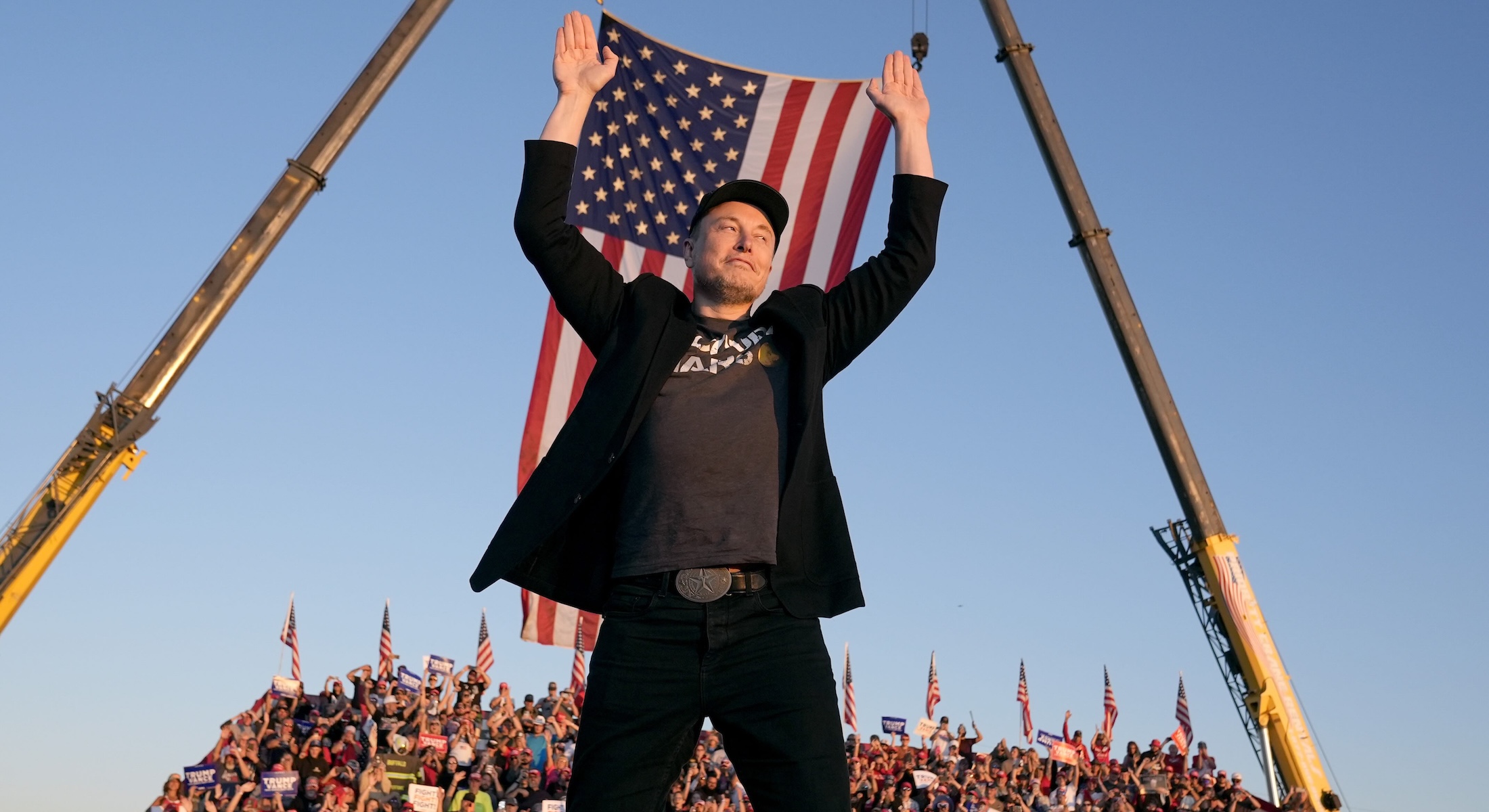
Musk, Alex Gibney’s three-hour-and-52-minute-long investigative portrait of the American tech leader and trillionaire Elon Musk, hits select U.S. theatres today, with a wider rollout Oct. 23.
The timing of its release before the U.S. midterm elections is interesting. Efforts to squelch the film have resulted in Meta refusing to run paid advertisements for it on its social media platforms Facebook and Instagram.
Meanwhile, the subject of the film is busily sabre-rattling against the filmmaker.
Documentary does what other media can’t
It’s been a while since documentary had such sizable impact. In light of the big releases this fall, it’s useful to look back at past precedent.
When the climate-change documentary An Inconvenient Truth, about former American vice-president Al Gore, hit theatres in 2006, the impact felt like a shockwave.
Then in 2009, The Shock Doctrine, the film inspired by Naomi Klein’s book of the same title about the rise of what she called “disaster capitalism,” took audiences by storm.
After a screening of the film, I remember watching a man throwing his bottle of Coca-Cola in the trash in apparent disgust over the corporate maleficence.
Having worked in documentary programming for a good chunk of my professional life, it is curious to see how nonfiction cinema has tackled the current moment. But thus was it always. While mainstream media kowtows and plays handmaiden to fascist impulses, documentary filmmakers take to the streets.
The passing of filmmaker Patricio Guzmán in September resurfaced documentary’s role in not only capturing history, but giving it context, analysis and understanding, all dosed with a heaping helping of art.
The extraordinary courage of Guzmán’s work began with 1975’s The Battle of Chile, a full-frontal assault on the evils perpetrated in his home country by Augusto Pinochet’s regime. This courage and ferocious dedication to truth, however painful, continued with his masterwork Nostalgia for the Light.
Throughout the course of his extraordinary career, Guzmán often cited the influence of French filmmaker Chris Marker, who was instrumental not only as a cinematic mentor, but who arguably enabled the Chilean director to make his first film a reality.
Marker smuggled footage out of the country after the coup and later arranged for editing facilities in Cuba so that Guzmán could complete his work.
The Battle of Chile became one of the most important political documentaries in cinematic history.
Re-reading Andy Beckett’s 2002 review of the film in The Guardian, the following lines jumped out at me.
“The film is an example of a valuable but increasingly rare kind of political filmmaking, which links the rise and fall of ideologies and politicians directly and dramatically to the society around them,” Beckett writes.
“It is hard to watch The Battle of Chile and still see ‘politics’ in the modern way, as just an unappealing abstract noun.”
I thought about this while watching Musk. It needed the expanse of almost four hours to fully encompass how one extremely flawed person can unleash so much destruction. It also emphasized the critical role of art and artists in parsing the greater movements of history.
‘The journalist is the historian of the moment’
Again, this returns me to Chris Marker.
Marker was a great chronicler of political change and upheaval. His documentaries and essay films are threaded through with the erudition and compassion for all-too human failings and foibles.
In the face of current turbulence, aspects of Marker’s films return, in particular his expanded 1977 film essay A Grin Without a Cat. The film took aim at the great cultural and political revolutions of the 1960s and ‘70s, including conflict in Chile, Vietnam and what was known as the Prague Spring of 1968.
In Marker’s director’s statement, he outlined some of the forces at work:
“A weird game. Its rules change as the match evolves. To start with, the super powers’ rivalry transforms itself not only into a holy alliance of the rich against the poor, but also into a selective co-elimination of revolutionary vanguards, wherever bombs would endanger sources of raw materials. As well as into the manipulation of these vanguards to pursue goals that are not their own.”
In some fashion, it feels like not much has changed.
Marker’s work was cited at a recent VIFF Live performance with the work of filmmaker/visual artist John Akomfrah. The panelists considered the impact of his work, not only in the immediate context but also in the strange and brambled connections between past and present.
When the French philosopher Albert Camus wrote that the “The journalist is the historian of the moment,” he meant that the job required reacting to the events of history even as they are happening.
I would argue that documentary filmmakers go a few steps further, gathering the maelstrom of current events into a larger, more closely examined picture to make sense of things even as they continue to develop.
This is very much the experience of watching Gibney’s film about Musk. Much of the content is familiar from the daily news cycle, but there is something about seeing it all collected that makes it feel different. The connective tissue between things becomes more apparent.
There are many scenes in the film that made me almost incandescent with rage. But the quality that most lingers after the film is over is the idiot laughter of Musk and his followers as they condemn millions of the most impoverished people on the planet, primarily women and children, to death.
As many critics have pointed out, it is Musk’s former romantic partners who are the most damning in their collective assessment of the man.
I wish they’d been even more forthright, earlier on.
It might have saved any number of lives and prevented untold suffering.
The ultimate lesson of Gibney’s film as he details Musk’s various delusions about colonizing Mars and creating self-driving cars is that we must relinquish our addiction to fantasy. The chasm between what is real and what are indulgent imaginings has dreadful repercussions. The end of the world doesn’t seem that far-fetched anymore.
The past few weeks of intensive film screening resurfaced the experience of taking in a large volume of documentaries in a row. As the former programming director of DOXA Documentary Film Festival, that was my job.
Oftentimes, these films dealt with the most horrifying stuff on the planet: genocide, environmental catastrophes, atrocities of every stripe, the worst things that people are capable of.
At the end of a normal programming day for DOXA, I remember the sensation of feeling like a sponge that had been forced to soak up too much liquid, full-up and leaking from the sheer excess of it all. It was not a good feeling.
It was only years later, sitting in a panel about journalism and the form of PTSD that comes from watching other people suffer, that it clicked. “Oh, that’s why I felt so terrible!”
There was a time when the idea of willingly watching documentaries dripping with more bad news wasn’t something I could do. I looked for anything that had nothing to do with the daily news cycle, or even anything that wasn’t even slightly anxiety producing. Doris Day movies and ‘90s-era rom coms filled the bill.
But something has shifted in recent months.
No amount of running or cinematic escape hatches have helped me. The world is still a raging inferno, so might as well turn and face reality.
Start with some heavy hitting films. Or, as American poet Wallace Stevens wrote, “Let be be finale of seem.”
‘You Can See Everything’ screens in major theatres starting Oct. 16. ‘Musk’ screens in major theatres starting Oct. 23. ‘NAZA’ is screening at the second-last night of the Vancouver International Film Festival Oct. 10, and it will stream online through The Guardian in November. ![[Tyee]](/design-article.thetyee.ca/ui/img/yellowblob.png)
Read more: Film





Tyee Commenting Guidelines
Please note that email notifications for replies are not currently working due to a software issue which may be resolved in a future update.
Comments that violate guidelines risk being deleted, and violations may result in a temporary or permanent user ban. Maintain the spirit of good conversation to stay in the discussion and be patient with moderators. Comments are reviewed regularly but not in real time.
Do:
Do not: