


 SHARE:
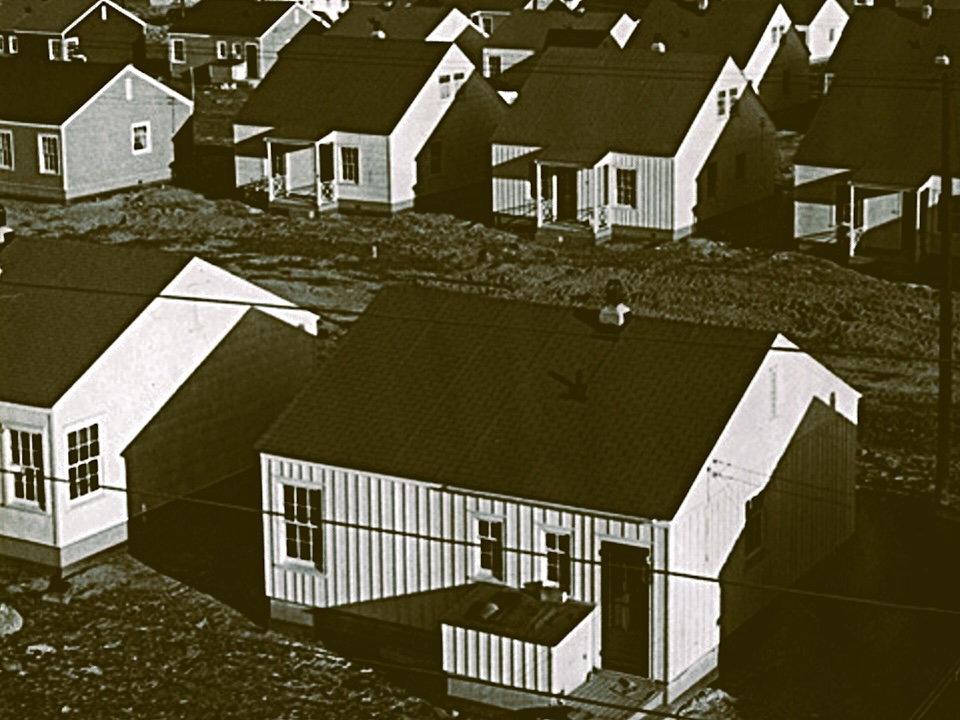
The Crown corporation that laid the foundation of modern Canadian housing was called Wartime Housing Ltd. Not Affordable Housing Ltd. Not the National Housing Agency.
Wartime.
That name records what it has taken to get this country to build at speed — a need we have again if we are to solve today's housing crisis.
Echoes of that approach can be found in Prime Minister Mark Carney's Build Canada Homes, a federal agency that aims to double the number of residences built each year. But Ottawa lacks the sweeping powers it claimed during the Second World War, which means Canada will not substantively tackle today's crisis unless new bridges are formed between federal and provincial governments to unleash the power of the state to build when the market falters.
I have worked in international trade, real estate, finance and wealth management, all in the private sector, throughout my entire career. My first professional real estate transaction was during my undergraduate degree at the University of British Columbia, over three decades ago. I subsequently earned a specialized master’s degree in banking from the University of London in the United Kingdom. I have a healthy respect for the importance of markets, and what they can accomplish. I have also come to believe that in Canadian housing, aggressive government intervention is needed now.
In the first instalment of this series, I argued that housing is the one nation-building asset no other country can tariff, and that a private sector bound by commercial return thresholds withdraws exactly when land and labour are cheapest, pointing to the need for a counter-cyclical player in the housing system.
In this article I explain how Canada can become a robust state developer of housing by adapting and evolving what we learned 85 years ago.
An operating model, not an ideology
Wartime Housing Ltd. was created in February 1941 under the War Measures Act, reporting to C.D. Howe as minister of munitions and supply, and run by a Hamilton construction magnate named Joseph Pigott. The goal was to supply war workers' housing. From conception to incorporation, it took a mere four months to launch Wartime Housing Ltd. — because the alternative was losing the Second World War.
Historian Jill Wade, in her landmark 1986 study “Wartime Housing Limited, 1941-1947,” found that it operated more like a large private developer than like a federal agency: local contractors, standardized designs, tight cost control, semi-prefabricated assembly.
That description is worth contemplating, because it contradicts the assumption underneath most Canadians' skepticism about public building — that a state developer is necessarily a slow, procurement-bound bureaucracy. Wartime Housing was not the output of a peacetime committee. It was a supply-chain response to a labour allocation problem, run by a contractor.
Industries needed workers; workers needed somewhere to sleep. In Halifax, Windsor and North Vancouver, mobilization put thousands into towns with no housing stock — shipyard workers renting “hot beds,” three shifts rotating through a single mattress over 24 hours.
The government did not respond with a white paper. It responded with flatbed trucks full of prefabricated wall panels. Crews worked through rain and winter mud in continuous assembly lines, putting up one-and-a-half-storey bungalows from factory-built components. Tenants nicknamed them “strawberry box” houses and paid $22 to $30 a month. By the Canada Mortgage and Housing Corp.’s own account, Wartime Housing Ltd. "built some 46,000 'wartime houses' between 1941 and 1947 to provide affordable housing for munitions workers, as well as returning veterans and their families."
Wartime Housing built many of them in British Columbia. Blocks went up around the North Vancouver shipyards three decades before my own family landed a few kilometres away, in the housing squeeze I described in “The Nation-Building Strategy Nobody Can Tariff.” Same city, same problem, a generation apart.

The designs for those homes — practical and efficiently replicable — were gathered up and published by Wartime Housing's peacetime successor, the Canada Mortgage and Housing Corp., or CMHC, in a 1947 guide called “67 Homes for Canadians.”
Those homes are still standing. CMHC began selling the stock to sitting tenants in the 1950s, buyers added dormers and additions, and whole streets of “strawberry boxes” remain ordinary, lived-in housing today. Sixteen years ago, when our family was looking to move back to the North Shore, I viewed several of them for sale in North Vancouver's Grand Boulevard.
The arithmetic, then and now
Canada ended the Second World War with a housing crisis amplified by a generation of veterans coming home and starting the families that became the baby boom. Through Wartime Housing and its successor, CMHC, Canadians solved it — roughly a million homes in the first postwar decade, in a country of 12.3 million people in 1946 and 16.1 million by 1956.
Measured against the population alive at the end of the war, that is a new home for every 12 Canadians, from an economy just emerging from six years of material controls. Matching that ratio today would mean more than 3.4 million homes over the next decade — more, in fact, since postwar households were larger than today's.
That postwar decade ran at about seven new homes per 1,000 people a year. Canada is currently building at just under six. CMHC's own supply-gap analysis implies we would need 10 to 11 per 1,000 to restore affordability. So we are running behind the pace set by a smaller, poorer, rationing-era version of this country, and the needed increase in homes is half again beyond what that country managed at its best.
That gap is the crisis we face today.
The sector that went backwards
Here is a troubling fact for anyone who thinks that gap can be filled if the Canadian construction sector is simply left alone to do its job.
Wartime Housing was running standardized, semi-prefabricated, assembly-line residential construction in 1941. Eight decades on, the sector has gone backwards — and the federal housing agency has put numbers to it.
In November 2025, CMHC deputy chief economist Aled ab Iorwerth published an analysis of productivity in housing construction.
Between 2019 and 2024, residential construction productivity fell while hours worked rose. More people, working longer, producing less. The Centre for the Study of Living Standards estimates the lost productivity over those years added $6 billion to $8 billion to construction costs in Canada — as much as 20 per cent of the increase in new home prices.
Read that last figure again. A fifth of what a new home costs more than it used to is not land, not labour scarcity, not municipal fees. It is an industry that got worse at building.
Manufacturing productivity rose enormously over the same period; agriculture was transformed. Residential construction went backwards, in the middle of a shortage, while demand ran ahead of supply for 20 years. Some of that erosion is regulatory. Compliance burdens have grown heavier, and entitlement timelines have stretched as rezoning has become more complex in most of Canada's major cities. But regulation does not explain a sector that never industrialized, in a country that has never required it to.
Ab Iorwerth's diagnosis is not that builders are lazy, and his findings are this argument in CMHC's own language: "Uncertainty over future demand makes it challenging for the industry to invest," he writes.
Discussing these results further with me, ab Iorwerth commented: "We need radical change in how housing is built, and that will require innovation, investment and risk-taking. Government, for its part, can help by giving confidence to the industry by fostering demand at scale."
What then could provide such confidence?
Not a subsidy and not a grant program. It takes a committed multi-year order book for a repeating product, large enough and certain enough that a manufacturer can finance a production line against it. That is a procurement decision, not an industrial strategy. Build Canada Homes already champions modular and factory-built housing. What it has not done is guarantee anyone a buyer.
This is exactly what a public developer at scale provides, and exactly what Wartime Housing provided the last time.
Before I say more about how Ottawa could unleash similar forces today, let's trace Canada's retreat from that successful effort.
The metamorphosis of 1954
The peacetime successor to Wartime Housing arrived on Jan. 1, 1946, when Parliament incorporated CMHC as a Crown corporation. The goal of the federal housing agency, in its own words, was "to house returning war veterans." That was the mandate. Not to insure housing. To house people.
Wartime Housing's 46,000 rental units were transferred to the new corporation. In 1956, CMHC marked the completion of Canada's millionth postwar home.
Then the institution changed shape.
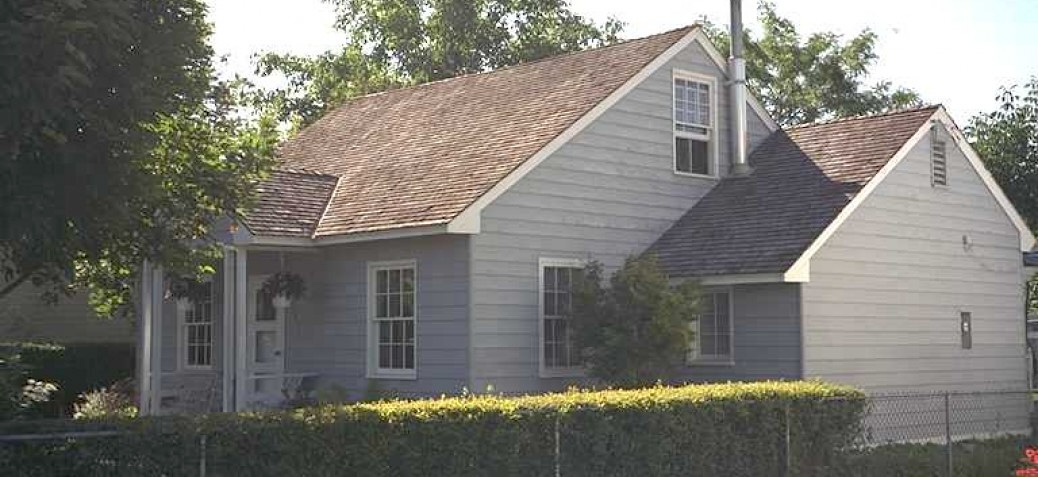
In 1954, CMHC introduced mortgage loan insurance to make “home ownership accessible to more Canadians by reducing lender risk and lowering down-payment requirements.” The policy brought the chartered banks into residential lending and did put millions of Canadians into homes. It also led to the federal government shifting from builder to insurer, from principal to counterparty, from a balance sheet with assets on it to a book of contingent liabilities.
For 30 years that looked like a good trade. Land was abundant, building approvals were quick, and when the only thing standing between a family and a house is the down payment, insuring the mortgage solves the problem. It stops being sufficient once the binding constraint becomes land on a predictable timeline, as it now is in Vancouver and Toronto. No amount of mortgage insurance produces a rezoning.
The big shift in direction by CMHC in 1954 also reshaped where Canadian capital gets allocated. Mortgage loan insurance fundamentally rewired what the credit market wants to invest in — steering capital toward risk-free mortgages on existing homes rather than the construction of new ones.
A steady retrenchment happened in stages, across governments of both parties. Sweeping changes to federal social housing programs in 1985. Cutbacks to rental rehabilitation in 1989, and cancellation in 1990. And then, in CMHC's own account: "In 1993, the Government of Canada announced it would end all long-term commitments to new social housing."
Each step had a rationale. Insurance was cheaper than construction. Provinces were closer to the ground. Deficits were real. Each step was defensible on its own terms, but the cumulative result was that Canada gave away its ability to build while limiting itself to the role of financier.
CMHC's current self-definition sits on the home page of its website: "Our primary focus is on market housing, home to 95 per cent of Canadians." That is a truthful description of a mortgage insurer and a research agency, and I rely on that research because it is first-rate. But there is an irony in it. The institution now studies the problem it was created to solve, rather than building its way out of it.
Two objections worth answering
Critics of greatly expanding government's role in developing new homes will raise two objections.
The first is the one most Canadians likely hold: postwar public housing is the precedent we are supposed to regret. The tower-block era failed, and Canadian cities are still redeveloping the results.
That is true. However, in North America, most non-market housing is viewed as a safety net of last resort. Nationally, our public supply sits at roughly four per cent of the stock. By restricting this housing to the absolute margins of the market, we guarantee it is available only to those in the deepest poverty. We means-test it. We isolate it. And thus, we stigmatize it.
But look at the places that actually fixed their housing problems. In Singapore, roughly 80 per cent of residents live in ownership housing built by the Housing and Development Board. In Vienna, non-market housing is close to 60 per cent of the city's stock; in Amsterdam, it’s about 40 per cent; and in Copenhagen, nearly half of the housing stock is non-market rental and co-operative ownership.
When you build public housing to those levels — and especially when it includes a route to ownership — the stigma evaporates. In Vienna, municipal housing is so normalized that a doctor, a barista and a nurse like my friend Julie, who commutes two hours to St. Paul's Hospital (and whom I wrote about previously), might comfortably share the same courtyard. (How that arrangement positively affects a neighbourhood and the people living in it is the subject of a later instalment in this series.)
Nor is this poverty housing. In August, Singapore raised the income ceiling for a new Housing and Development Board flat to S$16,000 a month — roughly C$214,000 a year — and to S$18,000 for the hybrid tier above it (about $240,000 annual income in Canada). That is the baseline for a middle class that used to earn a third of Canada's when my family left it, and today has a per capita GDP, on a purchasing power basis, roughly two and a half times ours.
Besides, those towers were social housing built for people the market had already failed. Wartime Housing built ground-oriented homes for people with jobs, and CMHC later sold them to their tenants. The strawberry box is not the failure. It is the model a public developer should want to be measured against.
The second objection turns on a reluctance to expand government powers, and it deserves a straight concession. Wartime Housing acquired land through municipal agreements, federal parcels and some expropriation under wartime authority. It had materials priority ahead of private construction and a mandate that ran through municipal friction. Those powers and operating methods were legitimate because the war was real and temporary, but they should not be the standard practice during peacetime.
What I am urging is not to reclaim such emergency powers. I instead contend that a peacetime institution can act with comparable decisiveness inside normal democratic constraints. But Canada has yet to build such an institution. It's obvious that Carney's Build Canada Homes isn't enough. Still, it could be the key piece in a larger, far more ambitious effort.
The promise and limits of Build Canada Homes
Wartime Housing Ltd. held three things at once: the designs, the capital and the land. Ottawa has recently done the first by providing a readily accessible resource of home designs, basically an update of “67 Homes for Canadians” eight decades later. As then-housing minister Sean Fraser put it in December 2023: "We are going to take the idea of a housing catalogue which we used the last time Canada faced a housing crisis and bring it into the 21st century."
A fine idea. But Ottawa is not the jurisdiction leading here. BC Housing's DASH program — Digitally Accelerated Standardized Housing — pairs permit-friendly designs for three-to-six-storey wood-frame buildings with sample zoning language local governments can adopt, and a marketplace connecting architects to Canadian prefabrication suppliers: components, factory capacity and approvals treated as one system rather than three. Tellingly, CMHC is one of DASH's funders.

At the federal level, meanwhile, what is Ottawa actually doing to build new homes? As during the Second World War, it is marshalling capital and land as well as standardized designs. The Build Canada Homes Act lets Ottawa move the holdings of another Crown corporation, Canada Lands Co., into the new agency, giving it federally owned land it can develop directly, and the agency has $13 billion to finance construction.
But the execution remains fractional. As CBC News reported this week, after a year in operation Build Canada Homes has broken ground on only about 2,000 units. Set against the 417,000 to 469,000 homes a year CMHC says are needed to restore affordability, 2,000 is a rounding error — and it makes the agency look more like a pilot project than like core national infrastructure.
Part of the reason is an unnecessary limit on capital. Section 30(2) of the Build Canada Homes Act caps what the corporation may borrow from sources other than the federal treasury at $400 million; everything else runs through appropriation. Build Canada Homes does not operate like an infrastructure fund that borrows against its own assets. It operates on an allowance — and $400 million is less than what one large mixed-use project costs in Vancouver.
Another problem is that the federal land runs out faster than the ambition. Ottawa's entire inventory of surplus and underutilized land identified for housing — the Canada Public Land Bank — is 87 properties representing an aggregate area of 458 hectares, an area slightly larger than Stanley Park, which the government estimates could support about 42,500 homes. Against the 3.4 million needed over the next decade, that is roughly six weeks of supply.
The missing piece: provincial involvement
Why was Wartime Housing Ltd. so much more successful, and what is needed to supercharge the current effort? Part of the answer lies at the provincial level.
Most developable land is governed by municipalities, which are creatures of provincial statute. As a federal Crown corporation, Build Canada Homes cannot zone or rezone that land and cannot compel either order of government to do it. The wartime mandate is gone with the war that justified it. That constraint is real, and it needs to be resolved.
In Build Canada Homes, the federal government again has its own housing building agency. Each province could have its own as well — using the zoning powers and the public land held by cities and the province to develop and build at scale, and drawing capital support from Ottawa. No private developer in Canada has a lower cost of capital than the federal government and the provincial governments, and carrying development risk through a downturn is precisely what a private balance sheet will not do.
None of this requires a government construction crew. Wartime Housing hired contractors — Pigott was one himself — and Singapore's Housing and Development Board plans, acquires and tenders while private companies build. What a public developer is better positioned to do than any private one is handle the entitlement risk, commit to volume, raise capital at the lowest available cost and keep building when the market stops. It is a master developer, not a construction company.
Recall that Wartime Housing held three critical powers: to acquire and zone land, to provide the capital for construction and to prescribe what housing types should be built. Canada has since distributed those powers across different orders of government and built nothing to bind them together.
Imagine if the power to borrow against assets was uncapped for Build Canada Homes. And that money flowed to capitalize newly formed provincial agencies that hold the land Ottawa cannot zone. Then bold home construction targets could be set and met, as they were in wartime.
The lesson of Wartime Housing Ltd. is that a country builds at scale only when it stops talking about a crisis and starts treating one like a crisis.
“Never let a crisis go to waste” may be a cliché, but it was apt then and it is now. Institutional friction — jurisdictional turf, procedural caution, assumptions that markets will sort things out eventually — is complacency by another name. Complacency is remarkably durable right up until the moment a society decides it can no longer afford it.
Canada is at that moment. ![[Tyee]](/design-article.thetyee.ca/ui/img/yellowblob.png)
Read more: Housing












Tyee Commenting Guidelines
Please note that email notifications for replies are not currently working due to a software issue which may be resolved in a future update.
Comments that violate guidelines risk being deleted, and violations may result in a temporary or permanent user ban. Maintain the spirit of good conversation to stay in the discussion and be patient with moderators. Comments are reviewed regularly but not in real time.
Do:
Do not: