


 SHARE:
Four years after Vancouver city council passed a motion endorsing a citywide restorative justice project, the framework for implementing the alternative justice model across schools, housing, policing, neighbourhoods and parks was released last week.
But without ongoing sustainable funding from the city and other levels of government, the dream of implementing alternatives to policing and prison for everything from neighbour disputes to criminal activity may not happen, says the organization steering the effort.
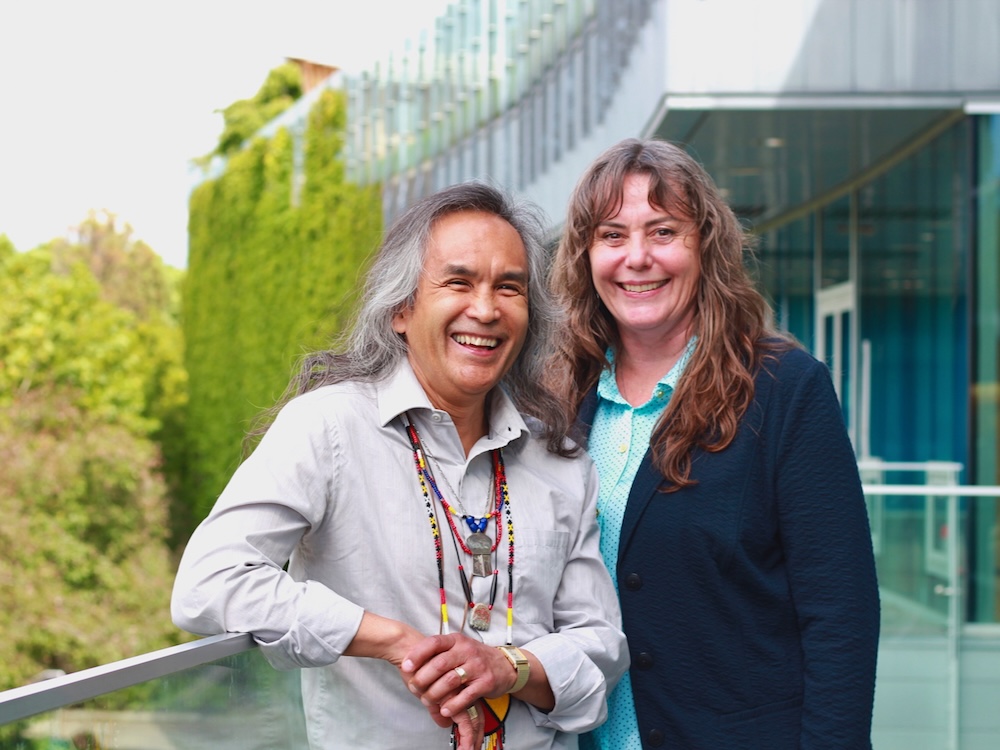
“We will save money,” said Evelyn Zellerer, founder and director of Peace of the Circle. Peace of the Circle is leading the Restorative Vancouver project alongside the Restorative Collective — over 40 municipal, provincial and non-profit organizations whose input guided the framework’s development and now its implementation.
Public safety costs a lot of money when police and incarceration are its only tools, Zellerer said. Yet the City of Vancouver did not provide funding for the Restorative City project this year, unlike previous years. The funding cut happened after city council voted to approve a budget with no property tax increase.
While most other departments had their budgets cut or frozen, the Vancouver Police Department received a 10 per cent or $46.2-million budget increase, bringing its total annual budget to just under half a billion dollars.
“The government is spending a tremendous amount of money right now on the legal system. We can be doing a lot more preventative work,” Zellerer said. “Building capacities locally, and being more effectively responsive.”
Zellerer has been training and mentoring restorative justice facilitators globally since she launched Peace of the Circle in 2004.
The organization’s name relates to the restorative justice model they use, the peace circle. When conflict or harms happen, perpetrators, victims and their support people sit in a circle with a restorative justice facilitator for either a single meeting or a series of guided discussions.
The aim is to reach understanding and accountability for the harms perpetrators cause, as well as finding an appropriate response that meets the needs of people directly involved and their communities.
“Crime is more than breaking the law; it’s a violation of people and relationships. And so when there is harm or violations of any kind, it creates an obligation to resolve and amend it, make it right,” said Zellerer.
Restorative justice, she added, is “advocating that crime hurts, so justice should heal.”
It’s not a new concept. While a historical record of restorative justice models can be found around the world, it is also found among Indigenous people, including First Nations here in B.C.
“Circles are ancient,” said Norm Leech, a St'át'imc Nation member. Leech is the executive director of Frog Hollow Neighbourhood House in Vancouver and a facilitator with Peace of the Circle.
“To me restorative justice is relearning how we used to resolve conflicts between ourselves, face to face,” Leech said. “Before we somehow became afraid of having the conversation... of potential conflict, potential confrontation. And that fear of the worst-case scenario would lead us to phone the police instead.”
A restorative justice city, according to the framework, is one that uses restorative practices as a first response to conflict and harm. The legal system continues to operate in the background “for those who choose or require it,” the framework notes.
A restorative city approach means building strong relationships between Vancouver’s many communities and services. This lays the groundwork to prevent some harm from happening in the first place, Zellerer said.
But it also addresses the conflicts and harms that do occur by creating accountability, while centring what connects people, communities and systems instead of focusing on what divides them.
Fully implemented, the Restorative City Framework would make Vancouver the first restorative justice city in Canada, a model for other municipalities to follow.
But it won’t get there without renewed and sustainable government funding for implementation and operation, Zellerer said.
Currently, with the exception of a couple of programs specifically for Indigenous people and some youth convicted of a crime, there are no restorative justice programs in Vancouver.
“There’s a very clear answer of why we don’t have it,” said Zellerer. “And that’s because it’s not being funded.”
Vancouver the outlier
Vancouver is a bit of an outlier in B.C. in terms of not having a restorative justice program, according to a motion introduced by then-councillor Michael Wiebe in 2022 to support the concept of a restorative justice city.
This included a one-time financial allocation of $150,000 for Restorative Collective’s work and, later, $50,000 towards the establishment of the Hastings-Sunrise restorative neighbourhood project.
The motion, which council passed, cited over 80 restorative justice programs across B.C. That includes Restorative Justice Victoria, which has been used to respond to a wide variety of issues, including hate crimes, to great effect.
Out of approximately 1,300 cases Restorative Justice Victoria has worked on, Zellerer said, “95 per cent successfully completed. And over a four-year period, 99 per cent of offenders expressed satisfaction; 100 per cent of victims would recommend restorative justice. It’s really pretty phenomenal.”
Zellerer has an undergraduate degree in psychology, as well as a master’s and doctorate in criminology. Her background includes working with women who have been victimized and women who have committed crimes.
Zellerer believes Canada’s legal system currently fails to achieve true justice because it chooses incarceration over accountability and community restoration.
This has led to an overincarceration of certain communities, such as Indigenous people, LGBTQ2S+ people and people with untreated mental illnesses and substance use issues, as well as people on remand waiting for trial.
“Most people in prison don’t need to be there. The vast majority of people don’t need to be imprisoned,” she said. “We have multiple crises, including of the legal system itself.”
Zellerer isn’t a prison abolitionist. There are some people who are too dangerous to be in society, she told The Tyee.
But Zellerer, Leech and the other members of Restorative Collective say applying a restorative justice model to the whole city would make Vancouver safer and more harmonious and would further decolonization efforts.
The restorative framework is designed around adopting local Indigenous laws and wisdom, Zellerer said. Representatives from the three host nations, səlilwətaɬ (Tsleil-Waututh Nation), Sḵwx̱wú7mesh Úxwumixw (Squamish Nation) and xʷməθkʷəy̓əm (Musqueam), sit on the Restorative Collective.
As do representatives from the Vancouver Aboriginal Community Policing Centre, the Urban Native Youth Association, the Vancouver Aboriginal Health Society and the Vancouver Aboriginal Transformative Justice Services Society.
“We are on unceded territories, this is Indigenous land. We must take the time to listen and learn what matters most to them, and what are the local Indigenous laws, which include natural laws, to abide by,” Zellerer said.
Sustainable, ongoing funding needed
Peace of the Circle has received some provincial and municipal funding for its work, including costs associated with the four years it took to develop the Restorative City Framework.
In addition to $200,000 that came with the city’s motion in support of the Restorative Vancouver project, Peace of the Circle received a $150,000 grant from the Law Foundation of BC, paid out in $50,000 annual intervals between 2024 and 2027. As well, it has received seven provincial civil forfeiture grants since the 2019-20 fiscal year, for a total of $320,000. This includes a $100,000 grant announced at the end of May.
In addition to developing the framework, the money covered six years of costs. That included building partnerships with organizations and people working towards established restorative justice practices; running the Restorative Collective’s peace circles and strategic planning meetings; presentations on the Restorative Vancouver model to city council and the province; and the initial setup of Hastings-Sunrise as the city’s first restorative justice neighbourhood.
The Hastings-Sunrise program, which received $50,000 of city grant funding in 2025, is run jointly by Frog Hollow Neighbourhood House and the Hastings Sunrise Community Policing Centre.
“A starting point was needed to demonstrate the value and effectiveness of restorative practices in Vancouver,” Leech said, adding it was not possible to implement the Restorative City Framework all at once.
The collective decided to start with neighbourhoods and chose Hastings-Sunrise as its first restorative justice neighbourhood.
So far the neighbourhood-level project has trained about a dozen people in trauma-informed restorative justice peace circle facilitation, to help resolve conflicts and have hard conversations.
But most people are facilitating off the sides of their desks, Leech added, noting the restorative neighbourhood project needs to hire a co-ordinator in order to effectively track and manage the facilitating work being done in Hastings-Sunrise.
The collective also needs ongoing, sustainable funding for co-ordination of the smaller projects that make up the overall Restorative Vancouver project, such as expanding to other neighbourhoods, training local restorative facilitators, strategic planning and communicating their work to the broader public.
The collective appreciates the funding it has received thus far, Zellerer told The Tyee. But ideally it would receive at least $250,000 annually to continue to implement the program and be made a permanent part of provincial and municipal government budgets.
“Each neighbourhood is different, the issues are different, the challenges are different,” Leech said, adding that every neighbourhood would need its own restorative justice co-ordinator.
The collective also wants to establish a Vancouver-wide restorative justice program, similar to Restorative Justice Victoria.
The program would be open to everyone, from residents who want an alternative to calling 911, to those seeking conflict resolution, to police, prosecutors and judges who want alternatives to incarceration for perpetrators.
Ideally it would all be housed in a Centre for Healing, Justice and Peace building, Zellerer said.
But municipal funding for the project was not included in the 2026 City of Vancouver budget so far this year. This is the first year since 2022 that the project has not received any municipal funding.
The city has made numerous cuts to programs and departments in order to afford the zero per cent property tax increase for this budget year.
The Tyee reached out to the city for an interview about the funding but did not receive a response by press time.
“We now have the first Restorative City Framework and amazing people and organizations willing to do the work,” Zellerer said. “The only thing still needed is sustainable funding.”
The Restorative Collective works with police to implement restorative justice where possible, including Peace of the Circle leading restorative justice training sessions with the Vancouver Police Department, which uses a peace circle process for addressing public complaints about the police force.
Representatives from the Vancouver Police Department, the Vancouver Aboriginal Community Policing Centre, the Chinese Community Policing Centre and the Hastings Sunrise Community Policing Centre also sit on the Restorative Collective.
“All of our communities, victims, survivors, offenders and the police, don’t have access to this essential service,” Zellerer said, referring to restorative justice.
“It is the vital missing component for public safety. Yes, we need policing, we need mental health teams. But we’ll never get the results we need, we won’t achieve public safety without also adding restorative approaches, to meet those needs.”
The collective is offering a free webinar explaining the framework in further detail on Tuesday. ![[Tyee]](/design-article.thetyee.ca/ui/img/yellowblob.png)
Read more: Rights + Justice, Municipal Politics





Tyee Commenting Guidelines
Please note that email notifications for replies are not currently working due to a software issue which may be resolved in a future update.
Comments that violate guidelines risk being deleted, and violations may result in a temporary or permanent user ban. Maintain the spirit of good conversation to stay in the discussion and be patient with moderators. Comments are reviewed regularly but not in real time.
Do:
Do not: