


 SHARE:
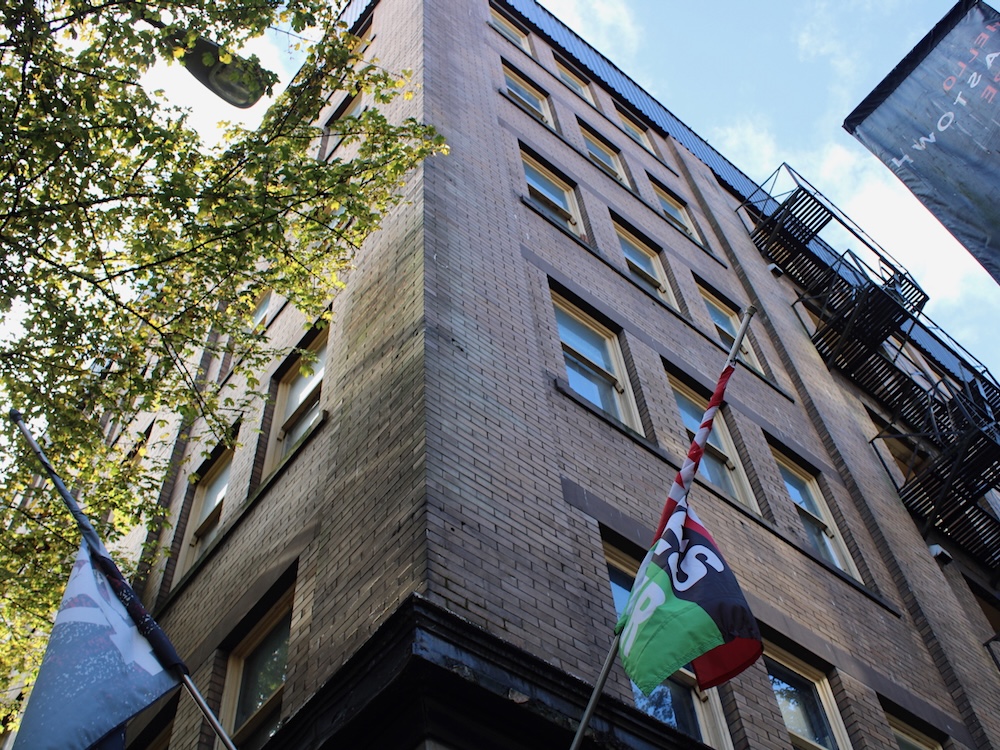
Over a month after it was derailed by a false claim that a city councillor distributed illegal drugs in public, Vote Vancouver Coun. Rebecca Bligh’s motion to end the pause on new supportive-housing construction in Vancouver was finally heard during a council meeting Wednesday.
But the motion to overturn a pause on new supportive-housing buildings did not pass, with four ABC Vancouver councillors and Mayor Ken Sim agreeing with the vast majority of the 26 people who spoke against the motion.*
The pause was introduced by Sim in February 2025. ABC Couns. Peter Meiszner and Lisa Dominato, who voted against the pause in 2025, weren’t present for the vote.
Bligh’s initial “Reversing the Costly Ban on Supportive Housing” motion, which was scheduled to be heard at the Feb. 25 standing committee meeting, called on city staff to research the impact of Vancouver’s “temporary pause” on all new supportive-housing projects.
Supportive housing is a form of housing for unhoused people or people who are at risk of becoming homeless. It’s supposed to offer health and social supports to help vulnerable residents stay housed.
Bligh withdrew the motion after it was revealed that ABC Coun. Lenny Zhou had created and shared a Mandarin-language video on WeChat about Bligh’s motion in which he referred to her as an “extremist,” called supportive housing “drug housing” for “drug users” and claimed a Vancouver councillor or councillors used and distributed illegal drugs in public.
While Zhou apologized, it was later revealed Sim had made the drug distribution accusation first, specifically naming Coalition of Progressive Electors or COPE Coun. Sean Orr, in a press briefing with Chinese-language media in early February. Sim has since apologized, and Orr, who has denied distributing drugs, has filed a civil suit for defamation against the mayor.
Bligh’s updated motion kept the same name but dropped the research request.
That’s because the delay in hearing the motion meant it was no longer within the 12-month timeline of the original motion, which would have prevented putting forward a motion to repeal it.
“The second part is that to repeal what was originally passed by the ABC majority in that period of time, a repeal procedurally would have meant rescinding that decision and asking council to vote again,” Bligh told The Tyee the day before the meeting.
“So what I needed to do was give council something to vote for, as opposed to reconsideration of a previous decision, which was how it was framed.”
Instead, the new version called for allowing city contributions of land or funding for supportive-housing projects again. The motion also noted that the federal government’s recent announcement of funding for 700 new supportive-housing units in the province will exclude Vancouver if the pause on approving new supportive-housing projects does not end.
But both Sim and Zhou said that was not true, noting Sim met with Ana Bailão, CEO of Build Canada Homes, an arm of the federal government, to discuss housing investments in Vancouver.
Neither explicitly stated they discussed new supportive-housing developments, though Sim’s X post about the meeting mentions single-room occupancy hotels, some of which have been converted into supportive-housing units.
In explaining his dissenting vote against Bligh’s motion, Zhou took a less hardline stance against supportive housing than he displayed in the WeChat video.
“Opposing this motion does not mean opposing supportive housing itself,” Zhou said, pointing to his vote in favour of two supportive-housing projects three years ago. Rather, it is insufficient, poorly run supportive-housing projects he is against, he said.
“Supportive housing does not equal to drug use. A well-run supportive housing with sufficient resources can minimize the potential issues in the neighbourhoods,” Zhou said during the council meeting. “But our focus needs to be on quality, livable units, with supportive services for residents.”
Opposition to drugs and drug use
The 23 speakers against the motion raised similar areas of concern. Many linked their perceptions of deteriorating public safety — even though Vancouver’s violent crime rates have been dropping for years — as well as public drug use, deaths of young people from toxic drugs and even young people’s awareness that illicit drugs exist, to supportive housing.
Most opponents used the word “compassion,” stating their position wasn’t about lacking empathy but that the increase in homelessness in Vancouver was evidence that supportive housing is a failed policy. Some discussed the deaths of loved ones due to drug poisoning and overdose.
Others referred to the rights of taxpayers, saying supportive housing was a cost the city neither was responsible for nor could afford. Others pointed to reports about 1,700 vacant supportive-housing units in Greater Vancouver, which includes multiple municipalities, including the city of Vancouver.
Many stated the city should invest in mental health care and addiction treatment and recovery beds — which, like housing, fall under provincial jurisdiction — instead of supportive housing, claiming that addiction leads to homelessness and not the other way around.
Opponents also raised Sim’s initial point when introducing the pause on supportive housing last year: Vancouver has a disproportionate number of supportive-housing buildings compared with other regions in the Lower Mainland.
Many, including ABC councillors, also noted that the pause on net new supportive-housing projects has exceptions.
This included continuing with already approved supportive-housing projects, as well as exempting housing built by Vancouver Coastal Health. The pause introduced by Sim also exempts projects that replace existing supportive housing; projects providing supportive housing for women, youth aging out of care or seniors; and social housing where “occasional” supports are offered to help maintain tenancy.
Wallace Pong, who organized an anti-supportive-housing rally in Richmond this past February with his organization WeVote, asked councillors if they would support living near supportive housing.
“Ask yourself: would you support housing like this within 150 metres of your own home? Your kids’ school? Think and study the truth and consequences of your votes, and you should represent the people who give you the votes,” said Pong.
Both Couns. Pete Fry and Orr later stated they lived within 150 metres of several supportive-housing buildings.
“Fundamentally, we’re not building the supportive housing that we actually need in the city right now,” Fry said, adding that close to 2,000 people are experiencing homelessness in Vancouver, a number that continues to grow.
“At the same time, our own housing targets... for at least 1,500 supportive-housing units, at least 150 units per year, and we’re not keeping pace with that.”
The six people who spoke in favour of Bligh’s motion had ties to council and organizations that work with people experiencing homelessness, including David Wray, who is seeking the COPE nomination to run for council in the fall election; former COPE councillor Jean Swanson; former independent mayoral candidate Angela Dawson; Robert Beda with the Young BC Greens; and Erin Seeley, CEO of YWCA Metro Vancouver.
They cited studies showing supportive housing reduces drug use and crime and increases public safety. They also referred to studies showing the cost of homelessness is greater than providing housing, including but not limited to the cost in health care and first responder resources from the increased exposure to violence, disease, injury and infection from living rough.
“We need supportive housing. We also need for there to be services for that housing, and we need better services in the city,” said Christina Chiu, who identified herself as a co-ordinator of a program for people experiencing homelessness and with low incomes.
“All of you have sworn an oath to take care of all the residents — all the residents — of Vancouver, and to provide good services. We are all part of this human family. Everyone deserves dignity, respect and care.”
Speakers also noted that other municipalities have not stepped up to build supportive housing since Vancouver paused new builds.
* Story updated on April 15 at 7:53 p.m. An earlier version said 29 people voted against the motion. The Tyee regrets the error. ![[Tyee]](/design-article.thetyee.ca/ui/img/yellowblob.png)
Read more: Housing, Municipal Politics









Tyee Commenting Guidelines
Please note that email notifications for replies are not currently working due to a software issue which may be resolved in a future update.
Comments that violate guidelines risk being deleted, and violations may result in a temporary or permanent user ban. Maintain the spirit of good conversation to stay in the discussion and be patient with moderators. Comments are reviewed regularly but not in real time.
Do:
Do not: