


 SHARE:
If there’s one thing the municipal parties vying for the seven Vancouver Park Board seats agree on, it’s that Joni Mitchell was right: you don’t know what you got till it’s (almost) gone.
Every opposition party platform for the Oct. 17 election — from the Vancouver Greens to TEAM to ABC Vancouver to the indie party running on disputes over Stanley Park’s trees — makes clear that they support a Vancouver Park Board independent from city hall.
We have incumbent Mayor Ken Sim and his ABC Vancouver party to thank for this unity.
In 2018, Sim ran for mayor with the Non-Partisan Association on a platform of dismantling the park board. Instead, the city council would run parks and recreation, as almost all North American municipalities do.
But Sim narrowly lost that mayoral election to Kennedy Stewart, and the Vancouver Park Board remained its own separate elected body.
When Sim ran again in 2022 with his A Better City or ABC Vancouver party, they ran a full slate of park board candidates. Their 92 election platform promises even included a “Park Board Priorities” section. Nothing indicated the party had a plan to dismantle the park board.
Yet in December 2023, a little over a year after ABC dominated the election with majority representation on city council, school board and park board, Sim and the ABC council majority passed a motion to do just that.
The fallout was swift: three of ABC’s six park board commissioners left the party to sit as independents as a result.
Working alongside one Green Party commissioner, the four now-independent commissioners flipped ABC’s park board majority on its head.
A year ago this month, the provincial government, which had to agree to change the Vancouver Charter to dismantle the park board, declared the city needed to further consult the Musqueam, Squamish and Tsleil-Waututh host nations on whose unceded territories Vancouver sits.
But spats between the park board and city hall — from whether this year’s property tax freeze meant millions in park board budget cuts, to who should be responsible for funding lifeguards at public beaches, to who gets to decide which of the city’s many aging recreation facilities will be renovated or replaced first — continued to play out in public.
This past July, Sim and ABC announced they would no longer pursue dismantling the park board. Instead, the party would again run a full slate of seven park board candidates, including one ABC park board incumbent, commissioner Jas Virdi.
But it’s clear from the opposition parties’ platforms that few are taking Sim and ABC at their word. Instead, they have their own competing visions of how Vancouver’s vast parks and recreation system should not only operate today, but grow into the future.
Which community centres to fix first?
Whether it’s the capital or the operational budgets, says former park board chair Aaron Jasper, money has always been the No. 1 issue for Vancouver’s park board, whose budgets must be approved by city council.
“I think the chronic, historic challenges when it comes to the park board being able to deliver on its mandate has been a lack of funding across the board,” said Jasper, who was elected to the park board in 2008 and 2011 with the now-defunct Vision Vancouver party but is no longer a member of any municipal party.
“Every year you have to get your gear on, get your pads on and go up and have a battle with council, trying to make the case.”
ABC Vancouver seems to know this. They got ahead of the election earlier this spring when Sim announced $400 million in funding for revitalizing five community centres over the next four years.
In 2022, the park board’s Community Centre Strategy report found that 72 per cent of Vancouver’s 27 community centres were in “poor” or “very poor” condition. The average age of the facilities was 46 years, with more than half constructed before 1990.
The city’s 2027-30 Capital Plan passed after ABC’s spring community centre announcement, outlining which five community centres would be first in line for revitalization: Kensington, Kerrisdale, Hastings, Roundhouse and Dunbar.
This differed from the Community Centre Strategy recommendations, which were reached through collaboration between the park board, which controls 24 of the 27 centres, and the community centre associations that operate them.
While Kensington Community Centre was the No. 1 redevelopment priority in both reports, Hastings tied with Strathcona for third-highest priority on the Community Centre Strategy’s 11-centre priority list.
Kerrisdale and Dunbar were eighth and 11th, respectively, and Yaletown’s Roundhouse Community Centre — opened in 1997 — doesn’t appear on the list at all. But all locations were areas where Sim and ABC were popular with voters in the 2022 election.
In response to the city’s $400-million community centre redevelopment announcement, the three former ABC park board commissioners and sole Green park board commissioner accused the mayor and ABC councillors of overstepping their jurisdiction. The park board passed a motion to retain a lawyer to consult on their options.
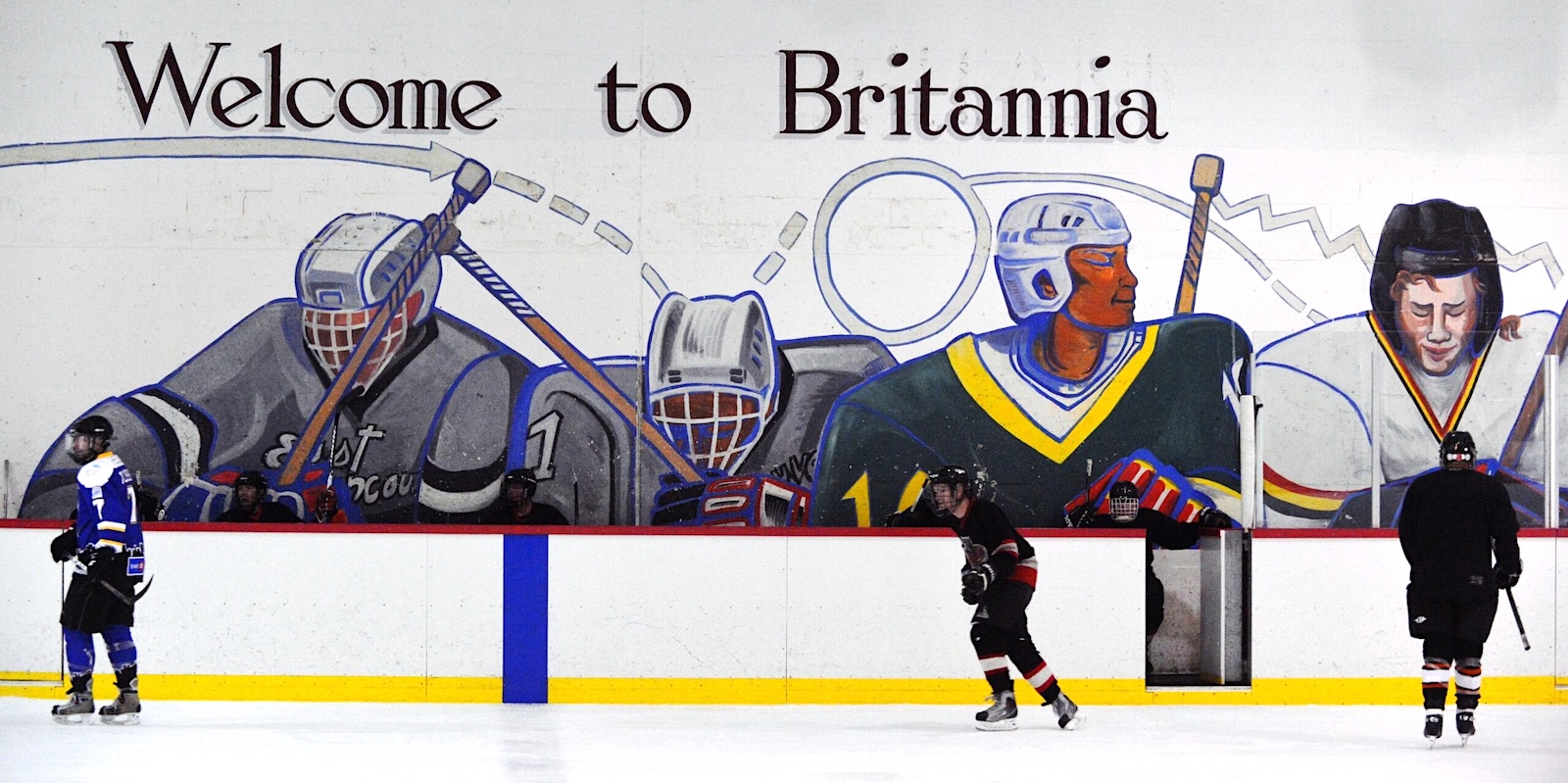
The 2027-30 Capital Plan approved by council left the redevelopment of the Britannia community complex — the plans for which were approved by council in 2018 and include redeveloping two schools, the community centre, pool, library and ice rink — in the planning and design stage. The project has been in limbo ever since, after funding from the province and federal government failed to materialize.
As well, the plan calls on the city to work with the joint operators of the West End Community Centre, RayCam Co-operative Centre, Thunderbird Community Centre and Strathcona Community Centre on their renewals.
So where do Vancouver’s municipal parties fall on the issue this election?
The incumbent ABC is sticking with its pledge of $400 million to redevelop five community centres over the next four years, though Jasper notes that’s not enough money — or time — to fix five community centres.
“I’m really bothered by ABC’s blatant misleading of the public,” he said. “You’re looking at, easily, $120 million per centre, if not more. And, on top of that, they don’t have the resources to get more than two done in a four-year cycle.”
ABC also promises to build the new River District community centre, which Vancouver developer Wesgroup Properties failed to start after previously promising to finish construction by 2025.
TEAM for a Livable Vancouver, which is running five park board candidates, is calling for community centre redevelopment decisions to be made by the park board. It pledges to invest $738 million into expanding and renewing parks and recreation in the city and end the practice of deferring capital maintenance to save money.
Former park board commissioner Sarah Blyth, who won elections in 2008 and 2014 with Vision Vancouver, noted that spending money on maintenance right now, versus having to pay even more later if you put off the work to save money, is a constant issue for the park board.
“It’s like upkeeping your car versus letting it fall to pieces to the point where it’s just totally not going to work anymore,” she said, noting maintenance is deferred when the park board is underfunded. “They’re not seen as a priority until they’re totally in disrepair.”
Blyth, who is no longer a part of any municipal political party, said the redevelopment of community centres shouldn’t be politicized.
“There is a system in place that works,” she said, adding that bumping centres off or further down the priority list won’t go over well and is unfair. “The park board should be working with the communities to ensure what communities need new community centres.”
Vote Vancouver’s platform, led by mayoral candidate Rebecca Bligh, doesn’t include community centre redevelopment promises. But the party is pledging to work with community associations such as the Hogan’s Alley Society to develop new community centres and build pools in the existing Marpole and Sunset community centres. Vote Vancouver is running two candidates for park board.
The Green Party, under mayoral candidate Pete Fry, is promising to follow the 2022 Community Centre Strategy’s redevelopment priority list by focusing on redeveloping Hastings, Kensington and Renfrew community centres first.
As well, the Greens — who are running three candidates for park board, including incumbent Tom Digby — pledge to “focus” on the redevelopment of the Britannia complex.
Running four park board candidates, the Coalition of Progressive Electors, or COPE, is also promising to follow the 2022 strategy’s redevelopment priority list for community centres and fully fund the park board.
The Vancouver Liberals are running six park board candidates, including two of the commissioners who left ABC in 2023. They are pledging $1.35 billion in funding for redeveloped and new community centres, pools and rinks, just $80 million shy of the $1.43 billion the current park board asked city hall to provide for maintenance and redeveloping their aging infrastructure earlier this year.
This includes redeveloping Renfrew Community Centre and building the new River District community centre.
The pool parties
The city’s swimming pools are not in much better shape than the community centres.
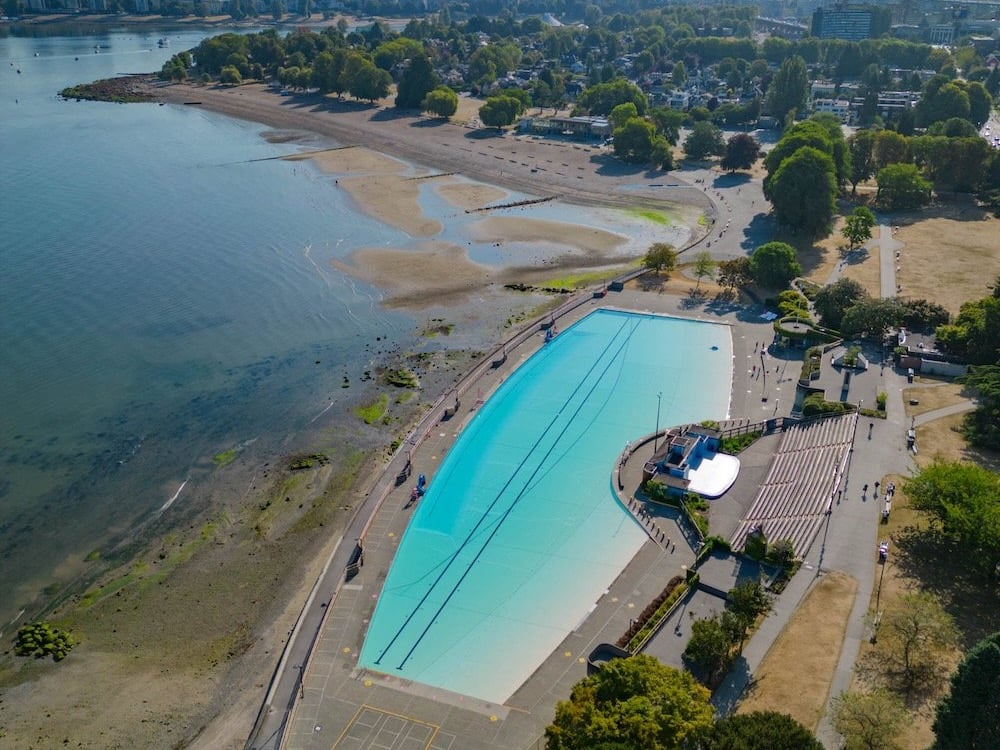
The outdoor pool at Kitsilano Beach has reached the end of its lifespan, closing twice in the past four years because of storm damage and seawall erosion, as well as leaky pipes. The pool must be replaced soon.
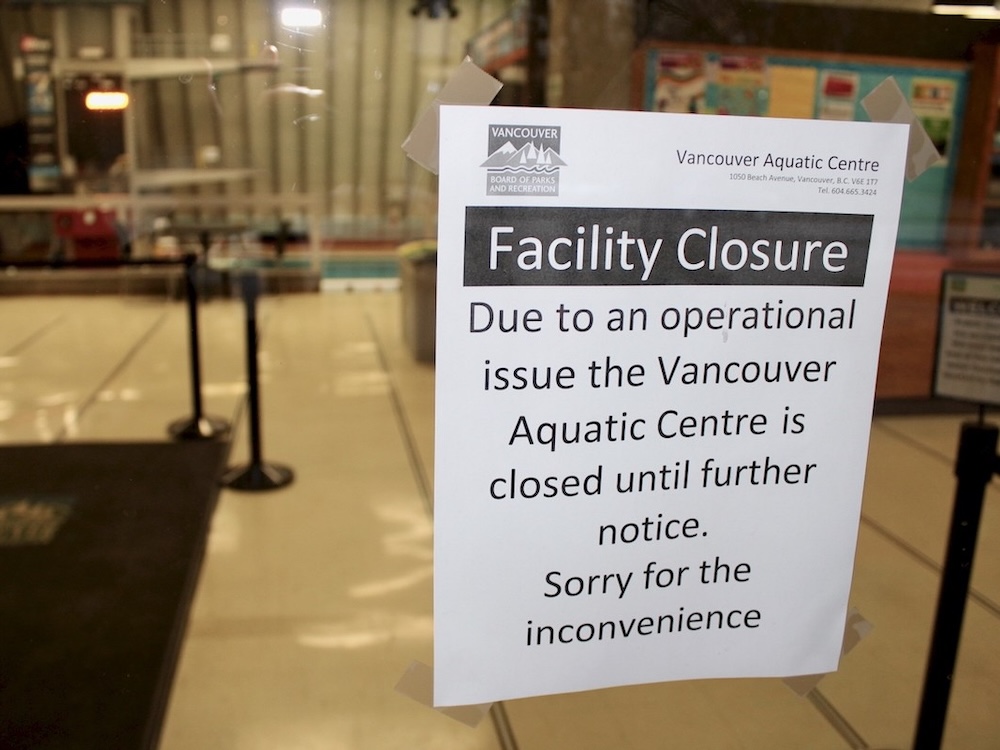
In the 2022 election, one of the plebiscite questions voters approved of was borrowing $103 million to replace the city’s only 50-metre, Olympic-sized pool at the Vancouver Aquatic Centre in the densely populated West End.
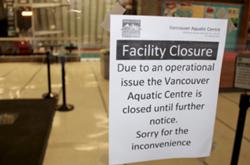
Portions of the concrete building had been crumbling off for years — including a piece of the ceiling that fell into the pool last November. The pool was closed for good this past summer and is slated for destruction starting this month.
Both city council and park board approved a 25-metre pool replacement proposal after staff said that was the only affordable option. A court petition challenging this plan, hoping to order the city to build a 50-metre pool, was recently dismissed at the B.C. Supreme Court.
Nevertheless, despite voting in favour of the 25-metre pool proposal, ABC is now pledging to build a 50-metre pool at the new aquatic centre. As well, it wants free swimming lessons for all kids aged 3 to 12 and to work with the school board to provide them during school hours.
ABC has also promised to build new pools in the Sunset and Marpole community centres. Both pools were part of the 2027-30 Capital Plan, but funding was not attached.
“They didn’t dedicate a single dollar,” former park board commissioner Jasper said. “Empty promises. There’s zero money in the current capital plan for either of those two pools.”
ABC also wants to undo the current reservation system at Kitsilano Pool, which they claim is limiting pool access. It’s an accusation the current non-ABC park board commissioners deny.
TEAM is also pledging a new 50-metre Vancouver Aquatic Centre pool, a new pool in South Vancouver’s Sunset neighbourhood and to renew Kits Pool but cancel its reservation system.
The Vancouver Liberals are pledging to build a 50-metre pool somewhere, while removing the Kits reservation system. They plan to set maintenance standards for all rec centres and parks, while “advancing” the Britannia complex renewal project.
The Greens are pledging a 50-metre pool at either the Hastings or Kensington community centre, while also renewing the aquatic centre, Kits, Kerrisdale and Britannia pools. They want to subsidize swimming lessons, too.
OneCity is promising to finish the Britannia complex redevelopment, including upgrading the pool. Lifeguards would be provided at every public beach and pool.
It also wants to open a new community centre at a redeveloped Kingsgate Mall space; the land belongs to the Vancouver School Board. This would include a 50-metre pool.
It’s not clear what impact this would have on the existing Mount Pleasant Community Centre just a few blocks away. New pools would also be built at Marpole and Hastings community centres.
COPE is promising new pools, including a 50-metre pool, without saying where. It also promises to provide adequate funding for all pools and to train and hire the needed lifeguards.
Vote Vancouver’s platform mentions the cuts lifeguards were facing earlier this spring. But the party does not promise to fund them.
However, it does promise to build a 50-metre pool somewhere in the city, as well as new pools at Sunset and Marpole community centres, to renew the Britannia pool and to end the reservation system at Kits Pool.
The Vancouver Liberals also pledge a new 50-metre Vancouver Aquatic Centre pool and to modernize other pools and staff all public beaches with lifeguards.
And the Vancouver Independent Parks Party, whose main concerns are around the removal of Stanley Park trees affected by the looper moth infestation, promises a review to see if a 50-metre Vancouver Aquatic Centre pool is possible.
While that construction is underway, the Independent Parks Party’s four park board candidates want to halt the planned maintenance for Britannia Pool.
Who gets to hang out at the park?
When voters cast their ballots this municipal election, in addition to voting for candidates, they will be asked to answer five questions.
Three of the questions are related to the capital plan, including whether the city should borrow $438 million for community-serving and essential facilities, and another $60 million for parks and open public spaces infrastructure.
The other two are more controversial plebiscite questions, one of which asks whether the city should create bylaws to empower police to “forbid open-air hard drug (Heroin, Meth, Fentanyl, and Crack)” use in public spaces.
This is already against the law. Yet ABC names public parks as one of the public spaces they want to apply a bylaw to, in its platform.
Not all people who use illicit drugs are low-income individuals. But those who consume their drugs in public often lack safe spaces to consume indoors because of poverty.
The park board is so important to people living in poverty, said former park board commissioner Blyth.
“It’s the only community space people own as taxpayers, and it provides protection from encroachment by developers,” she said. “The park board is there to protect the parks and increase the parks for people.... It’s good to have eyes on what belongs to the public.”
ABC’s platform does not mention homeless encampments in parks. The park board and city have dismantled several encampments since the 2022 election.
ABC wants to expand free access to community centres and pools for all children under 18. It promises to keep parks “needle-free,” establish a playground and park improvement fund and bring back the Stanley Park train.
TEAM’s platform does not explicitly mention encampments or homelessness, but the party promises to “toughen” enforcement of existing park bylaws.
The Greens promise to keep parks free of encampments for people experiencing homelessness by investing in what they’re calling peer stewardship and safety programs composed of people who have lived experience of homelessness, mental health issues and substance use issues.
The party’s platform does not go into detail as to how this would prevent people from setting up encampments in parks. Sleeping in most city parks is a legal right, provided campers have packed up their belongings by 7 a.m. every day.
The Vancouver Liberals promise to work with service providers to house people in the event an encampment is erected anywhere in the city. They also promise not to remove encampments until everyone is offered housing or services for any addictions and mental health issues they may be experiencing.
COPE promises to follow the National Protocol for Homeless Encampments’ eight principles for recognizing and respecting the human rights of encampment residents, which include no forced evictions and making sure that people’s basic needs are being met.
The TEAM, Vote Vancouver and OneCity platforms do not mention encampments.
Going to the dogs
But one group of residents many parties agree require greater access to public green spaces are dogs.
ABC promises to double the number of dog parks in Vancouver and expand the number of off-leash areas. TEAM promises to ensure there are dog parks located within walking distance of the city’s 22 neighbourhoods.
The Greens want more dog parks in general, while Vote Vancouver promises more “dog-friendly spaces” in the city’s parks. Finally, COPE promises to make existing dog parks friendlier by ensuring they have tree coverage, fresh water access and more off-leash spaces.
Increasing the number of available public bathrooms in and near parks and community centres is another common party promise, from the Greens, Vote Vancouver, Vancouver Liberals and COPE.
The Greens want to reduce the amount of park board revenue that comes from user fees — currently 56 per cent — back down to 50 per cent, returning $6 million in funding from the city.
At the same time, they and COPE want to increase access to the Leisure Access Program that helps low-income people access paid parks and recreation activities. The Vancouver Liberals don’t mention the program, but they do promise to introduce a low-income pass so that kids and seniors in particular have access.
Many parties want to reduce the cost of access by removing paid parking at some or all parks, beaches and community centres, despite the fact that some fees are only a couple of years old.
ABC has promised to remove paid parking requirements at all community centres, as well as at Jericho and Spanish Banks beaches. The Vancouver Liberals have promised parking will be free at all beaches and community centres.
TEAM wants parking fees eliminated at Jericho and Spanish Banks but has committed to a review of fees at other park board locales with an aim of removing them all.
The Vancouver Independent Parks Party wants the parking fee at Spanish Banks reduced to $1 per hour and to have free parking at VanDusen Botanical Garden’s annual Festival of Lights.
Increasing accessibility of parks for people with disabilities and neurodivergence are priorities for several parties, including TEAM, which wants to assess all park walkways for accessibility.
The Vancouver Liberals want to redesign parks, pools and community centres with the access and needs of seniors and people with disabilities in mind.
COPE will take a disability justice lens to all municipal governance, including services and infrastructure. The Greens promise to ensure all park designs and programs meet the needs of people of all abilities and those with neurodivergence.
The Greens will also prioritize exploring co-management of parks and recreation with the Musqueam, Squamish and Tsleil-Waututh host nations.
The party promises to work with urban Indigenous community members and organizations, as well, to ensure they are included in park board planning and initiatives, and to centre Indigenous cultural recognition through the incorporation of naming, values, art and healing gardens in the design of new parks and buildings. ![[Tyee]](/design-article.thetyee.ca/ui/img/yellowblob.png)
Read more: Municipal Elections 2026, Municipal Politics




.svg)
Tyee Commenting Guidelines
Please note that email notifications for replies are not currently working due to a software issue which may be resolved in a future update.
Comments that violate guidelines risk being deleted, and violations may result in a temporary or permanent user ban. Maintain the spirit of good conversation to stay in the discussion and be patient with moderators. Comments are reviewed regularly but not in real time.
Do:
Do not: