


 SHARE:
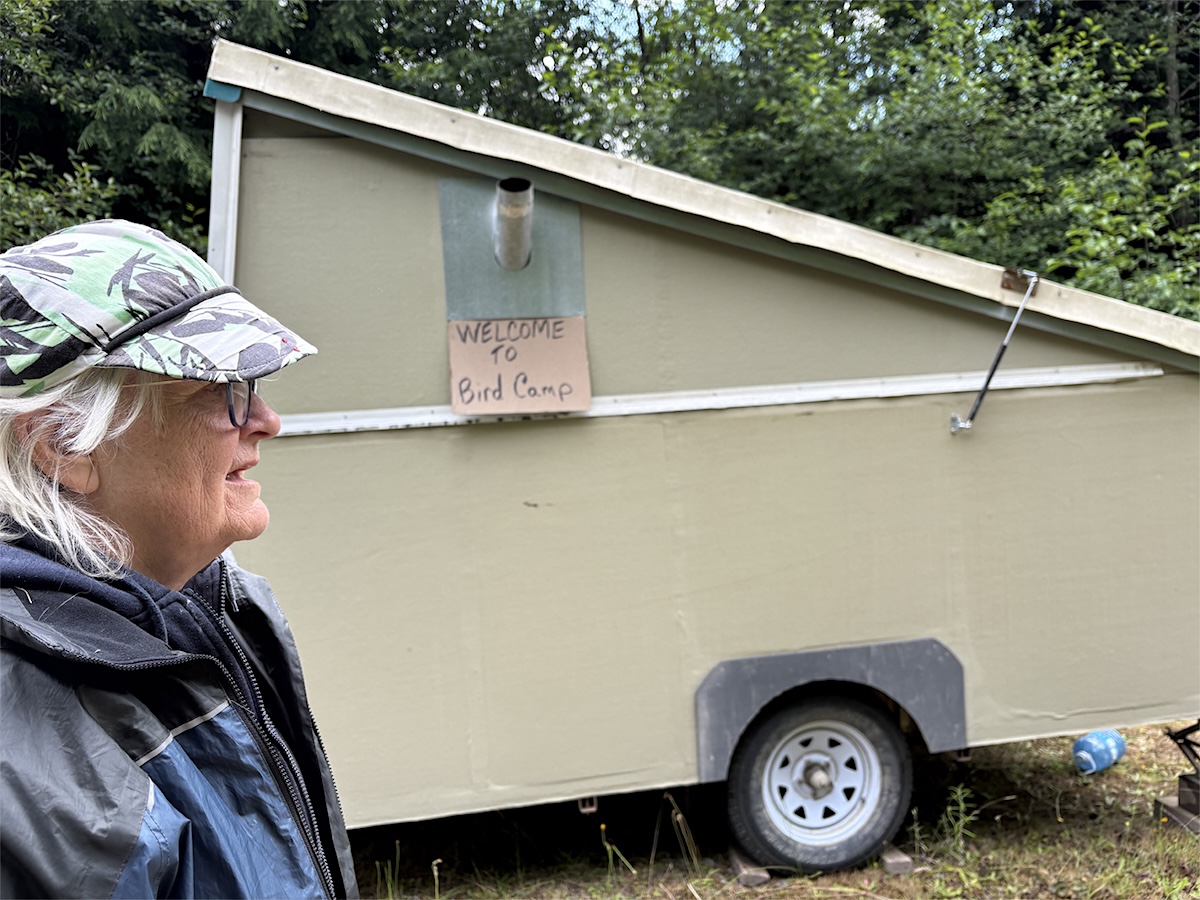
Royann Petrell awakes, almost giddy with excitement, in a small trailer at the end of an overgrown logging road. It’s 3:25 a.m. She dresses in layers to buffer the mid-July chill on west Vancouver Island and tightens the purple laces of her hiking boots. Before she retired, she was a professor of chemical and biological engineering at the University of British Columbia. Now she spends her days tromping around old-growth forests with binoculars and recording devices.
The drenching overnight rain has given way to a fine mist, and fog wraps around the ancient forests of Carmanah Walbran Park like a fluffy shawl. The park begins where the logging road ends. Petrell adjusts her camo baseball cap and clicks on her headlamp.
“Welcome to bird camp,” says a handwritten sign on construction paper, taped to the side of her homemade trailer.
It’s not unusual for Petrell, a co-founder of the citizen science group Old-Growth Birders and BioBlitzers, to rise before dawn to record birds in remote locations on Vancouver Island.
What’s far more surprising is that 50 others — scientists, ecologists, seasoned and aspiring birders, artists, parents towing small children — have travelled for more than two hours along bone-rattling logging roads from Lake Cowichan to join her.
They’re sleeping in soggy tents and vehicles that line the dirt road and planning to rise at 4 a.m. in the hopes of sighting a secretive bird.
To birders and biologists, the bird is known as a MAMU. American robins are AMRO, for the first two letters of their double-barrelled name. Common ravens are CORA. The marbled murrelet, a bird Petrell affectionately calls a “flying penguin,” is a MAMU.
Welcome to the second annual MAMU Day.
The event, organized by Petrell’s group and the volunteer group Friends of Carmanah Walbran, aims to raise public awareness about a small, quirky seabird at risk of extinction.
To lift spirits for the task ahead, one participant has brought “marbled murre-licks” — vanilla ice cream dipped in milk chocolate on a stick, with a chocolate stencil of a MAMU. The ice cream’s colours mimic the bird’s summer plumage, with hints of cinnamon and rust on its darker back, its underside a marbled cream and brown.
“We’re gonna have attitude,” Petrell told everyone gathered around a campfire last night in the spitting rain. “I want to see sass!”
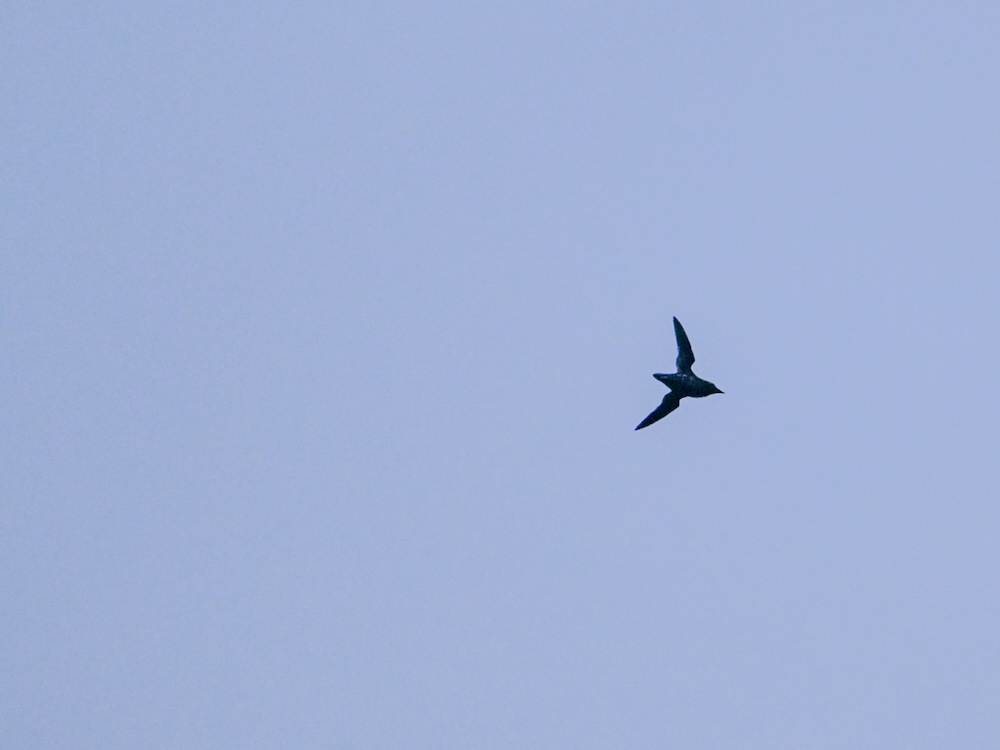
She played a tape of the most common marbled murrelet call, the sound the birds make when flying to their nest tree. The call is high-pitched and plaintive. It haunts long after you first hear it: keer keer keer.
The murrelets, which are about the size of a robin but weigh three times as much, are far more likely to be seen and heard when it’s foggy and they’re forced to fly low, giving rise to their nicknames: fog bird and fog lark. Even if Petrell had waved a magic wand, she couldn’t have conjured up better weather for today’s mission.
Nesting in old-growth forests
Catching a glimpse of a marbled murrelet is not like other birdwatching adventures, where you stand silently, binoculars in hand, scanning for movement. Murrelets are chunky little fighter jets. They easily clock speeds of 100 or 120 kilometres an hour. They’re on a stealth mission: to deliver food to their chick without being spotted by a baby-snatcher like a raven or crow.
But they’re a diving seabird, ill-equipped for life in the old-growth forests along B.C.’s coast where they incongruously nest. Their wings are stubby, and their feet are webbed. They can’t slow down, so they plunge through a gap in the forest canopy and execute an aerial stall. They land — if they’re lucky — on the branch where their single chick waits, snug in a bed of moss, for a small fish its parents carried in their beaks for up to 50 kilometres.
It’s a small wonder that marbled murrelets exist at all.

Five years ago, Petrell, an avid birder, knew almost nothing about marbled murrelets. A friend persuaded Petrell to drive from her home in the Comox Valley to Fairy Creek on southwest Vancouver Island, the site of the largest environmental civil disobedience action in Canada’s history, to see the old-growth forest slated for logging.
Petrell set up her tent next to 800-year-old cedar and Douglas fir trees and fell asleep to the evocative hoots of three owl species: northern pygmy owls, northern saw-whet owls and western screech owls. She reported the owls and the location on the eBird electronic database. Then she got a message asking if she would record other bird species around Fairy Creek, because forestry companies are not obliged to conduct comprehensive wildlife surveys before they log.
“That’s when I found out that surveys are not mandated ahead of logging, and no one had actually carried out any surveys in the area,” she says. “I was horrified.”
Petrell volunteered to survey the Fairy Creek area. Then someone asked if she could look for marbled murrelets. “What are they?” she remembers asking. “What do they nest in?”
The more she found out about marbled murrelets, the more concerned she became. She learned that murrelets are a canary in a coal mine, warning of environmental risk. When the murrelets fly to their nest in an old-growth forest, with a sand lance or herring for their chick, it signals that the ocean and forest are both healthy. When their numbers plummet, it indicates that something is amiss.
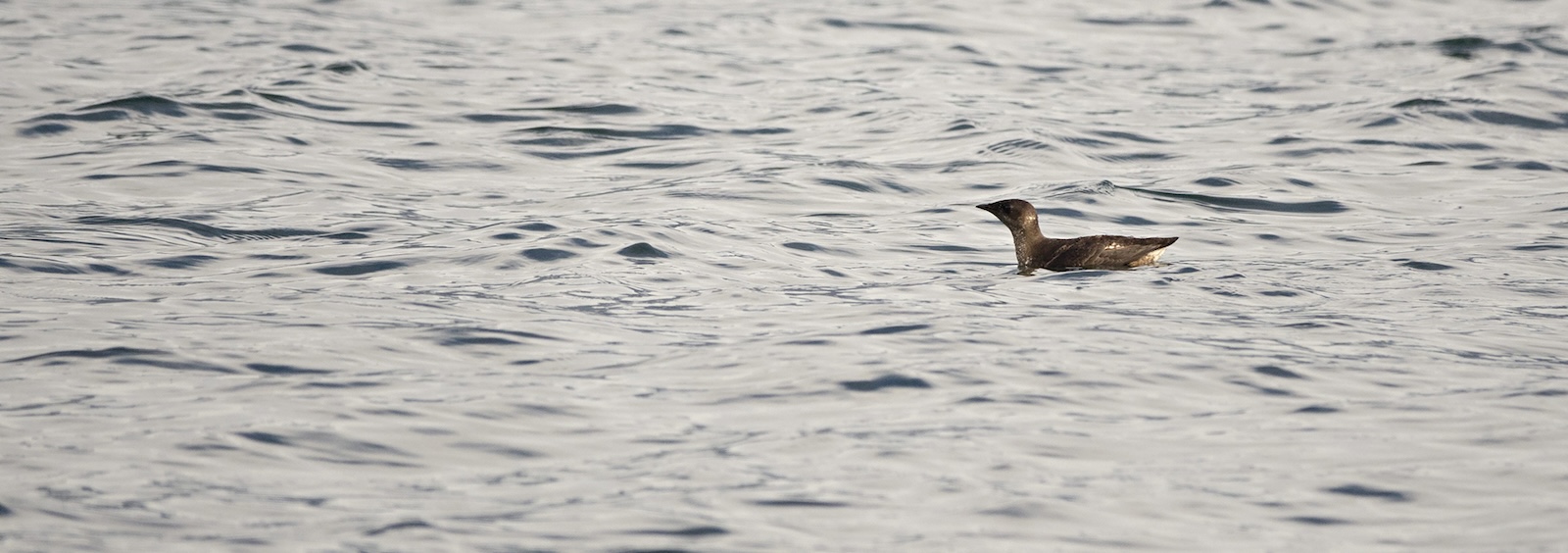
Historically, marbled murrelets were abundant along the Pacific coast, from Alaska to northern California. Ornithologist Percy Algernon Taverner, the author of Birds of Western Canada, described the Strait of Georgia as “sprinkled with these little sea birds,” especially along the edges of kelp beds.
In the early 2000s, biologists estimated there were 90,000 marbled murrelets in B.C. But over the next 20 years, as more coastal old-growth forests were clear cut, 15,000 marbled murrelets disappeared.
Studies indicate that when watersheds lose large areas of nesting habitat, marbled murrelets do not pack into the remaining forest. Instead, they don’t nest, and populations are reduced.
The B.C. Conservation Data Centre predicts B.C.’s marbled murrelet population will decline as much as 70 per cent in the short term and by 50 to 80 per cent in the long term.
“They’re going towards extinction,” Petrell says.
Today, the murrelets are expected to fly in at dawn, when it’s light enough for them to spot their nesting tree but still dim enough to give most of their predators the slip.
‘Cryptic’ birds pinging on the radar
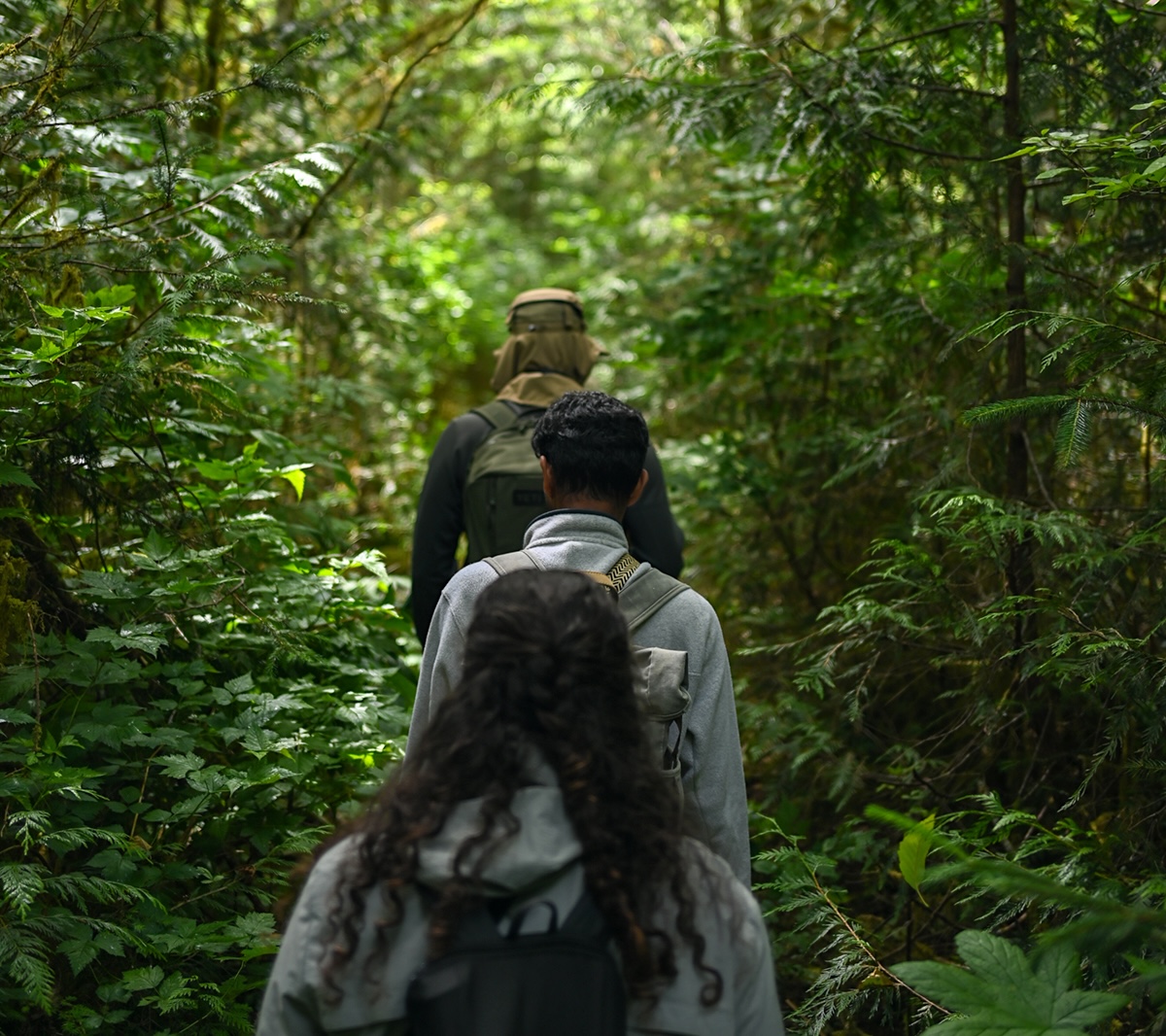
Petrell trots down the logging road and weaves through a small clearing strewn with dozens of empty camp chairs. She steps into Carmanah Walbran Park, taking a winding hiking trail. Her headlamp bounces off the scaly, and furrowed, barks of 800-year-old Sitka spruce and western red cedar trees. A billowing sea of mosses and lichens muffles sounds under the canopy.
She navigates over braided and knobby tree roots, searching for three young trees she scouted out yesterday, spaced about 30 metres apart. She turns on a hand-held recording device she left on each tree and hurries back to the clearing to await the dawn.
Campers are trickling into the clearing, careful to avoid making noise when they ease into their folding chairs. Some hold mugs of coffee they’ve brewed with water boiled on camp stoves; others plan to go back to sleep once the birdwatching window closes.
Paul Walde, an award-winning artist, composer and curator, is gathering information for an opera he’s writing about old-growth forests, Forestorium, that will be performed in Victoria in February. Jessie Demers, a sculptor, is shepherding 10 artists who are attending MAMU Day to create a collective canvas featuring old-growth forest plants. Trentön Schulz-Franco, the founder of the Special Bird Service, a group that focuses on making nature more accessible for people of colour and LGBTQ2+ communities through birding, is snapping photographs with a large telephoto lens.
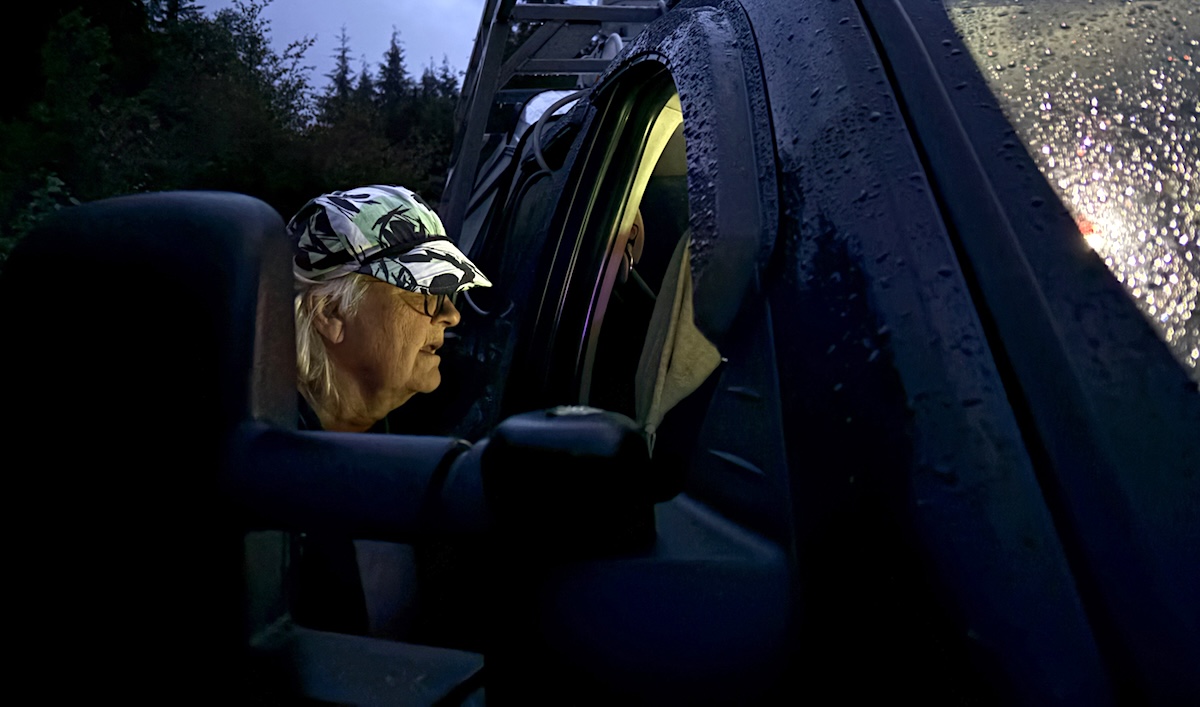
A pickup truck with a large radar unit on its cargo bed is parked in the clearing. Petrell leans into the truck’s open window to talk to wildlife consultant Bernard Schroeder, who sits in the passenger seat with a headlamp over his tuque, peering at a blue radar screen.
“Seen anything going in there yet?” Petrell asks. The radar will detect the murrelets before anyone can hear or see them.
“We’ve seen birds flying inland from the ocean,” Schroeder replies.
“There’s another bird,” he says, pointing to a moving dot on his screen. “They’re mostly coming in from the south-southwest.”
Petrell says that makes sense; it’s the shortest route from the ocean, which is almost 20 kilometres away.
“They really ping on the radar because of their dense fat layer and body shape,” Schroeder explains.
Schroeder has logged more than 600 hours flying in helicopters to assess marbled murrelet habitat for the federal and provincial governments. He’s climbed tall trees to search for marbled murrelet nests — though he admits that’s not his “cup of tea.”
By 1970, birders and ornithologists had documented the nests of virtually all the 700 bird species that raise their young in North America — except the marbled murrelet. Little was known about the mystery seabird that was sometimes spotted flying into old-growth forests.
Determined to solve the ornithological mystery, Audubon Field Notes offered a $100 prize — the equivalent of more than $800 today — to the first person who discovered a MAMU nest.
It was only a fluke that the first nest was found four years later. A tree trimmer, cleaning up after a freak snowstorm in California’s Big Basin Redwoods State Park, was 45 metres up a Douglas fir when he spotted a creature that looked like “a squashed-up porcupine” with a beak. The bird had webbed feet. Thinking this was odd, the trimmer radioed for a park ranger. The ranger called in biologists, who confirmed the odd-looking creature was a fabled marbled murrelet chick and the mossy depression on the branch was its nest.
It took another 16 years before researchers from the University of Victoria found a nest high in an old-growth Sitka spruce in the Walbran Valley, one of the first discovered in B.C.
Schroeder says the murrelets find a wide tree branch and pad down moss with their feet to make a little hollow for their egg. Once the chick is born, it poops on the edge of the nest in a circle — a defining characteristic of a marbled murrelet nest. By October or November, the fecal ring has washed away, and the only sign of the nest might be a few speckled olive-green or blue-green egg fragments.
“They’re very cryptic,” Schroeder says. “They want to have a secret little spot, and they’ll fly over thousands of great trees to find their little hidey-hole.” The murrelets won’t nest in trees close to the edge of the forest, where corvids — crows and jays and ravens, “who love murrelet chicks” and eggs — are more likely to patrol.
The chicks are alone most of the time and exercise their wings while still in the nest. When they’re ready to fledge and fly to the ocean, they pluck out their baby fluff and leap from the tree. They’ll only return to the forest in two or three years, when they’ve paired with a mate after a courtship at sea and are ready to breed.
Schroeder is a member of B.C.’s marbled murrelet recovery team, established more than 30 years ago to plan the long-term conservation and recovery of murrelets. The team recognized that coastal logging was going to continue, he says, and planned for a 30 per cent decline in marbled murrelet habitat along B.C.’s coast.
120 kilometres an hour, inbound
The problem, Schroeder says, is that logging has exceeded planned thresholds on the east coast of Vancouver Island and the coastal southern mainland. There, marbled murrelet numbers continue to decline. On the central and north coast, “there’re some good chunks of remaining habitat,” and numbers are more stable, he says.
But those areas are now under pressure, with the province “opening the floodgates for logging in the last little while,” Schroeder notes.
At 4:41 a.m., Schroeder points to two moving dots on the screen. “There’s a pair,” he says. “Those guys are going about 120 kilometres an hour. Inbound.”
Petrell nods at the young, second-growth forest above and below the clearing. “They’re going to go in and cross over there,” she predicts. “There’s lots of fog, so there’s going to be lots of birds.”
Suddenly, everything happens all at once, as though fleets of jets are simultaneously arriving at a busy airport and Schroeder is overseeing air traffic control.
“Southwest bird moving west-northwest,” he says as more people cluster around the open window to watch dots move on the radar.
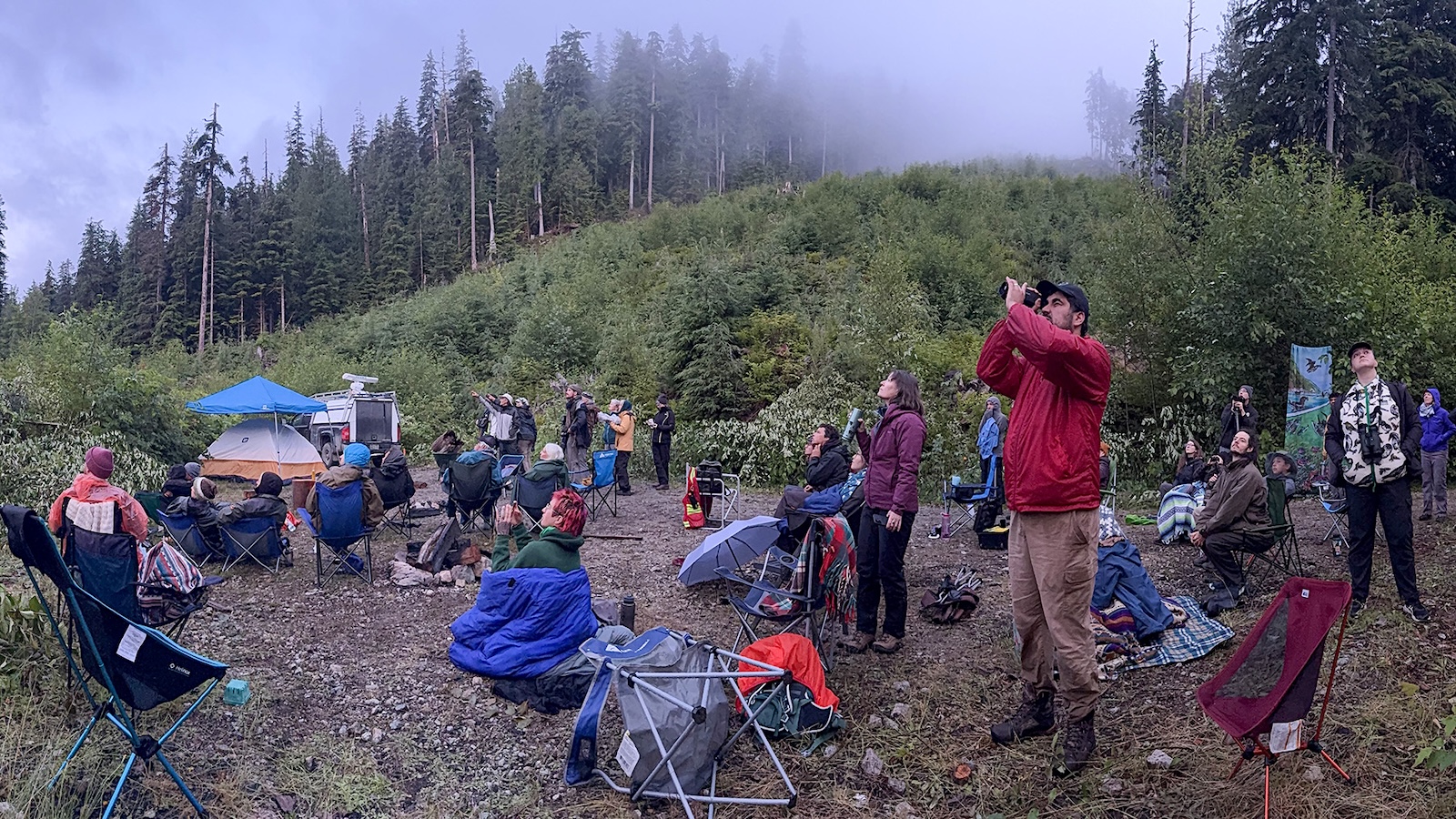
Then comes a keer keer keer. People peel away from the truck. The first murrelets are overhead. Keer keer keer. The murrelets circle above the clearing, still calling.
“Another one,” Schroeder says, still watching the radar. “A pair, 170 south, circling out to the northwest. Another. Another. 5:02 — we have multiple birds.”
The birds will circle their nest tree before they dive down through a gap in the canopy, a characteristic of old-growth forests. Some biologists believe that by circling and calling, “they’re alerting their chick that it's time to feed,” Schroeder says, noting that the chick is essentially in torpor. “It's lowered its body systems to stay alive in between the long periods when they bring fish.”
As the sky slowly brightens, other birds stir and start their day. Robins sing sweetly and golden-crowned kinglets trill. Black-headed grosbeaks, Swainson’s thrushes, western flycatchers, varied thrushes and cedar waxwings all join the chorus.
But the MAMU Day participants have eyes and ears only for the marbled murrelets. The murrelets come in pairs, circling over the clearing. A group of five approaches the park. Then another group arrives, too high for onlookers to see the fish they carry. Dark shapes streak across the sky. Some murrelets peel off and circle the clearing. Keer keer keer.
Petrell is rapt. “Look at everybody,” she says, pointing to dozens of people with their faces turned up to the sky. “The look of joy on everyone’s faces.”
Murrelet extinction ‘unnoticed and unknown’
Petrell and other MAMU Day organizers hoped to hold the event in an unprotected area of the central Walbran Valley that is designated for logging.
That 1,500-hectare area, along with the rest of the Walbran and Carmanah watersheds, was designated a key biodiversity area this year, recognizing its importance to species at risk of extinction.
Those species include marbled murrelets and Smith’s fairybells, a plant with bell-shaped flowers that provides nectar for bees, butterflies and other woodland pollinators. Other at-risk species in the Walbran include old-growth specklebelly lichen, a rare, leafy lichen found only in rainforests; a tiny, insect-eating bird called a Vaux’s swift that nests in old-growth trees; and the spruce dwarf tarantula, which lives in old forests and is about the size of a blueberry.
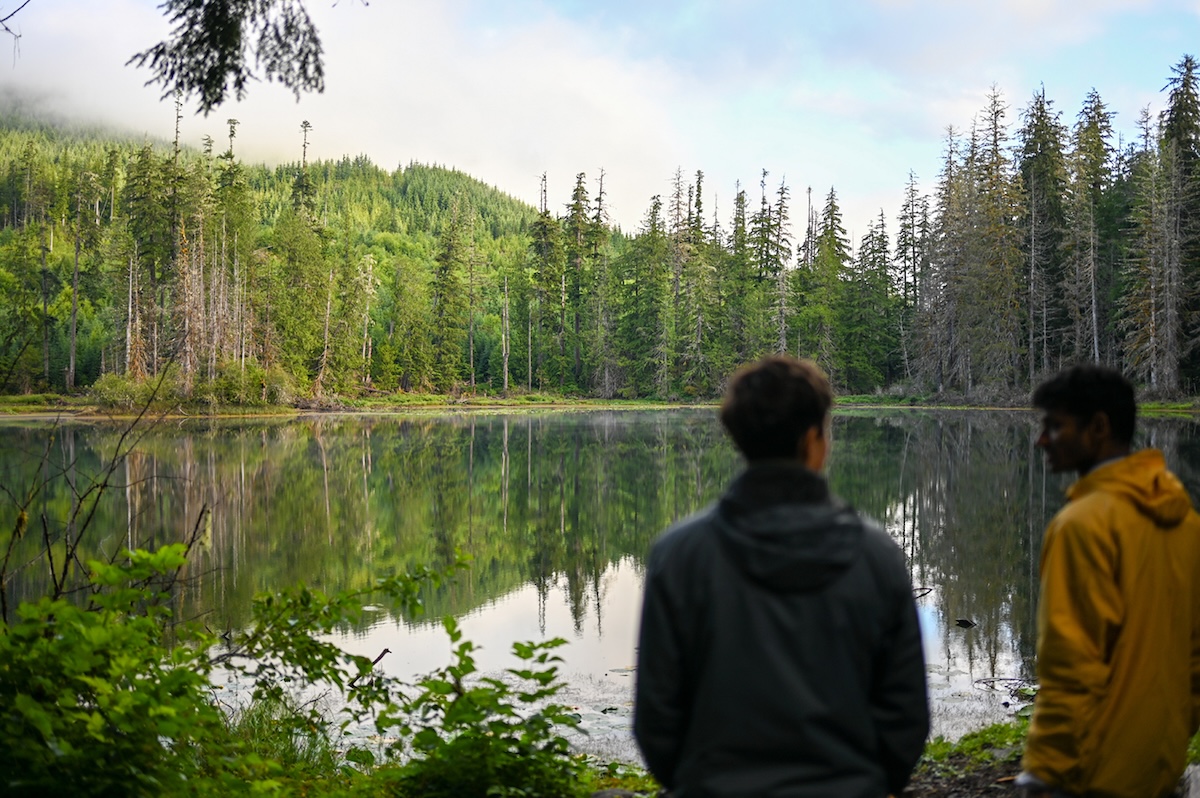
In February, Tsawak-qin Forestry, the company that has logging rights to that part of the Walbran, received permission from the B.C. government to install metal gates, blocking public access to the main Carmanah Walbran Park entrance. (The Tyee reached out to Tsawak-qin Forestry for comment but did not hear back by press time.)
Peter Cressey, a spokesperson for Friends of Carmanah Walbran, says MAMU Day organizers offered to give the forestry company the names of everyone attending the event, but their request for access to public lands was still declined, compelling the group to access the northern edge of the Walbran side of the park along the jumble of logging roads.
“It's quite concerning that they would find birdwatching to be threatening, or something be concerning enough to bar us from accessing those areas,” Cressey says. The area slated for logging houses “some of the highest biodiversity and recreational values on Vancouver Island,” he adds.
Surveys conducted by Petrell’s group have found an abundance of marbled murrelets in the Walbran, as populations elsewhere disappear.
“This extinction is largely unnoticed and unknown by the general public,” Cressey says.
“And I think that's really what the Marbled Murrelet Day is. We want to take what we see here and what we've heard here and make it more generally known.”
Petrell is already thinking ahead to the number of people who will attend next year’s MAMU Day event. “We’re going for 200,” she says.
Murrelets, she says, are one of 600 species that depend on B.C.’s old-growth forests.
“We’re not going to let them disappear.” ![[Tyee]](/design-article.thetyee.ca/ui/img/yellowblob.png)
Read more: Environment








Tyee Commenting Guidelines
Please note that email notifications for replies are not currently working due to a software issue which may be resolved in a future update.
Comments that violate guidelines risk being deleted, and violations may result in a temporary or permanent user ban. Maintain the spirit of good conversation to stay in the discussion and be patient with moderators. Comments are reviewed regularly but not in real time.
Do:
Do not: