


 SHARE:
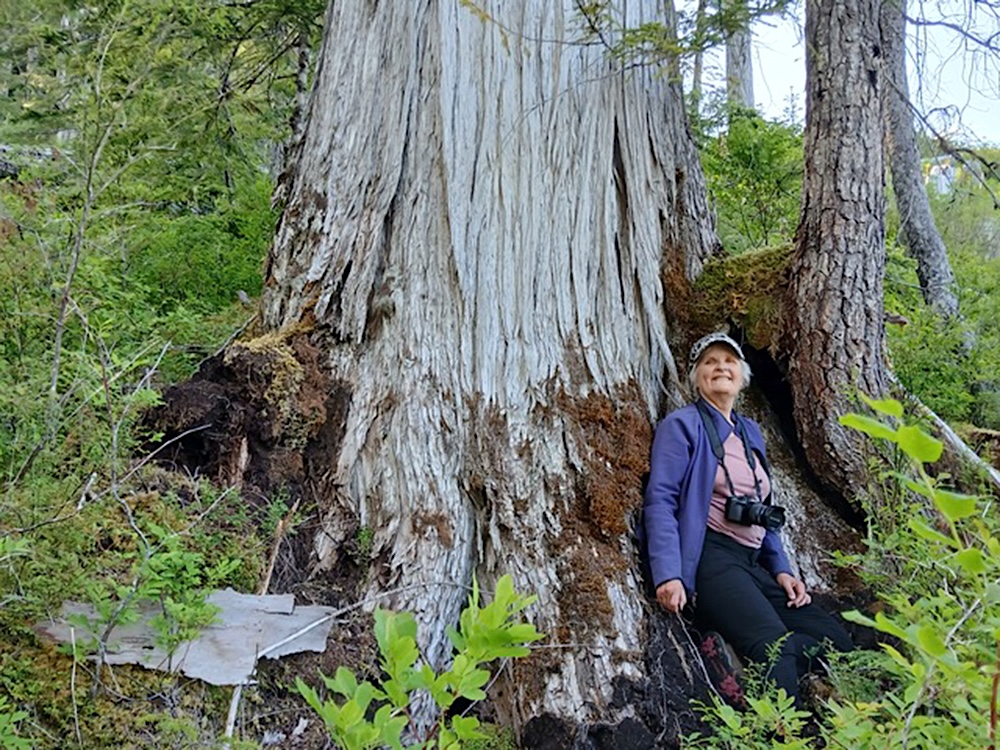
A new old-growth logging controversy is unfolding in British Columbia, dividing Indigenous leaders and pitting the provincial government against scientists and conservation groups.
The Tsitika River watershed, on northeast Vancouver Island, is home to ancient rainforests and an abundance of wildlife, including bird and lichen species at risk of extinction.
Most old-growth forests surrounding the mountainous watershed have already been clear cut. The remaining forest was deemed to be at such high risk of biodiversity loss that the B.C. government placed it in an old-growth deferral area, off limits to logging.
But last year, the government quietly removed a large tract of the cedar and hemlock forest from its old-growth deferral list.
And then in March, the government agency BC Timber Sales auctioned off 24 hectares for clearcutting.
“We complain about Brazil, but we’re worse,” Royann Petrell, a birder and retired professor of chemical and biological engineering at the University of British Columbia, told The Tyee.
Petrell co-founded the citizen science group Old-Growth Birders and BioBlitzers to record and photograph wildlife in ancient B.C. forests at risk of logging.
Last June, Petrell hiked into the Tsitika forest slated for clearcutting. She found towering cedar and hemlock trees with branches carpeted in thick moss — ideal for marbled murrelets, a small, mottled brown and white seabird at risk of extinction. Murrelets fish in the ocean but hatch their chicks in old-growth forests, laying a single egg in a mossy depression on an old-growth branch.
“It was amazing in there,” Petrell said. “Just huge trees everywhere.... You don’t see that many perfect trees for marbled murrelets.”
Petrell left an autonomous recording unit in a small green box, attaching it to a young tree in the logging area to record birds.
When she played the recording on her computer several months later, she heard the musical trills of songbirds like the Pacific wren, the fluty peep-peep of pygmy owls and the soft whistles of Canada jays.
She was amazed — and worried — to hear the sharp keer-keer calls of more than 300 marbled murrelets, which are also known as the “fog bird” because they can be heard calling on misty mornings.
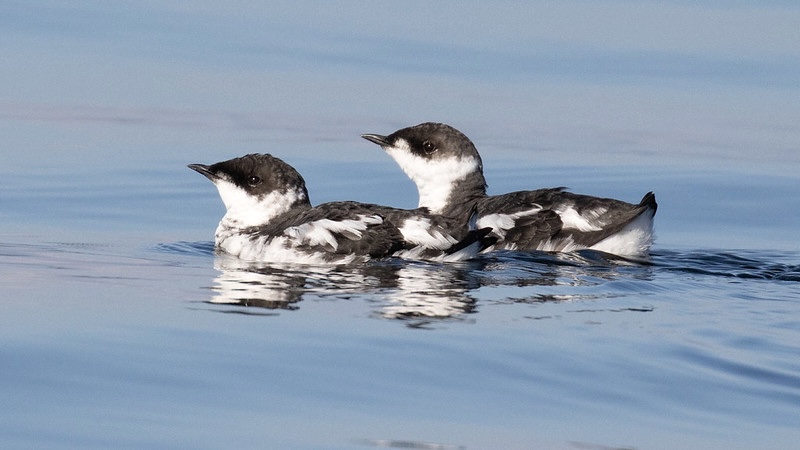
The murrelets were hatching their chicks in the forest earmarked for logging and using it as a flyway to bring fish to their nestlings from the ocean, about 10 kilometres away, Petrell said.
“You take that nesting tree away, it doesn’t mean they’re going to find another one.... They might keep going up there for years, looking for their tree in their forest.”
Marbled murrelets, she said, are like salmon that return to their natal stream. Take away their forest “and they’re dead.”
A globally rare rainforest
The decision to remove the Tsitika forest area from old-growth logging deferrals came as a surprise to biologist Rachel Holt, who said the B.C. government is failing to live up to its commitment to safeguard what little remains of the province’s old growth until a new forestry system is in place that prioritizes ecosystem health over timber values.
Until then, the old-growth deferrals were supposed to prevent forests at the highest risk of biodiversity loss from being logged.
Holt was a member of the technical advisory panel appointed by the government to determine which old-growth forests were at the highest risk of biodiversity loss and should be given a reprieve from logging.
Holt told The Tyee she discovered the Tsitika cutblock had been removed from old-growth deferrals only because she chanced to look at a B.C. government map.
“Frankly, nobody knew about it,” she said. “And that is gravely concerning to me.”
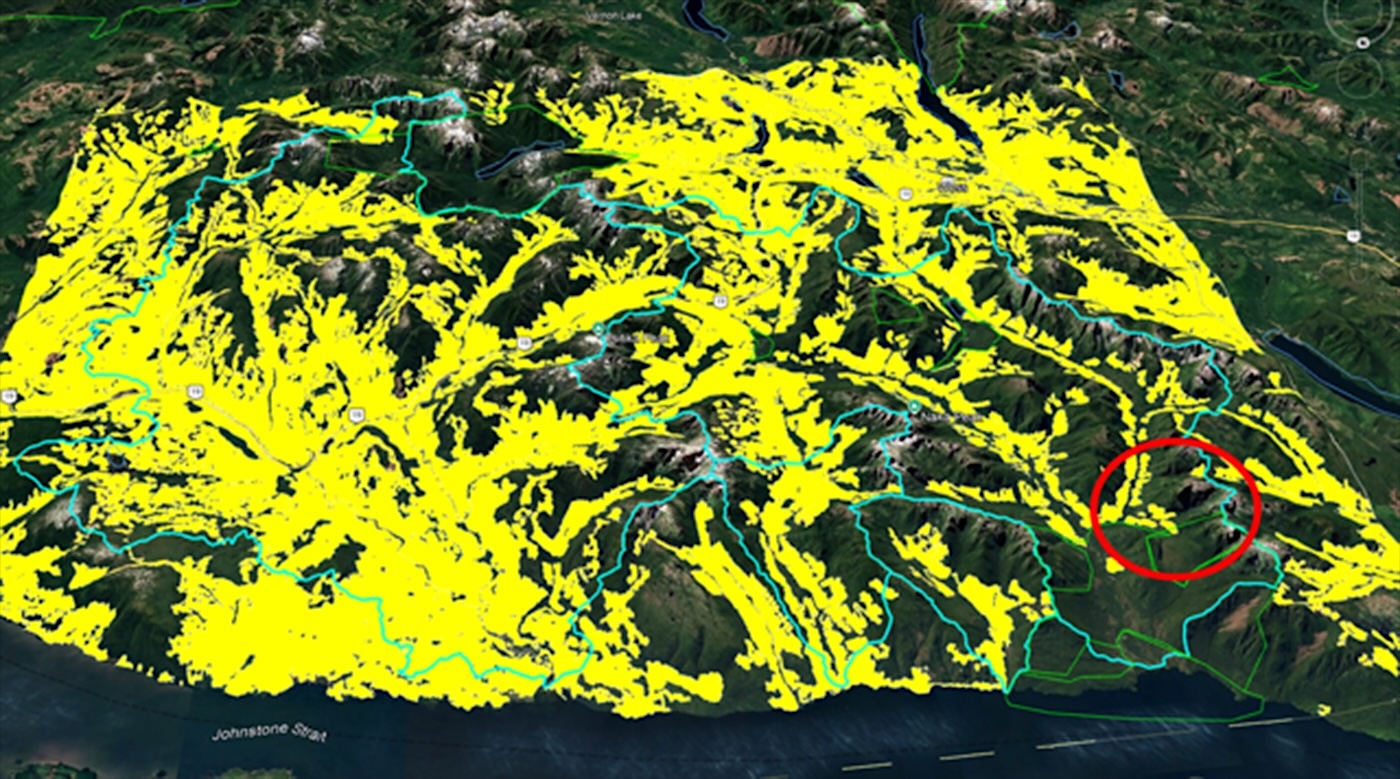
When Holt searched further, she discovered other old-growth deferral areas on Vancouver Island and elsewhere in the province had already been clear cut. BC Timber Sales has also proposed logging in other old-growth deferral areas, she found, after overlaying provincial forestry operations maps with old-growth deferral areas.
“We seem to have a system that is not accountable to the public, to ecological values.”
Holt said the government has not followed through on commitments to change its approach to old forests and safeguard ecosystem health and biodiversity.
Holt recently posted three short videos called “What’s the fuss?” on her Instagram page, making the case for why the Tsitika forest should be spared. She told The Tyee some trees in the cutblock are “conservatively” 800 years old.
“Let’s remember where we are,” she says in one video. “Coastal temperate rainforest, one of the world’s most rare and productive ecosystems, covering less than two per cent of the world’s land surface.”
“The vast majority of the remaining intact forest is found here, in British Columbia.”
In the videos, Holt shows a map of the former extent of old-growth rainforest around the Tsitika watershed and a map depicting how much of the globally rare forest has already been clear cut, including valley bottoms in the Tsitika.
“The vast majority” has been logged, she says.
Holt also points to two 2020 B.C. government reports that found forest biodiversity and aquatic ecosystems in the Tsitika watershed are at high risk.
“Everything is not fine,” she told The Tyee. “No matter which way you cut the data, there is no way to make the state of old growth look good on northern Vancouver Island.”
Conservation groups such as Pacific Wild and BC Nature, representing more than 60 naturalist groups around the province, told The Tyee they have written to the B.C. government detailing their concerns about the logging, including the potential impact of sediment on the Robson Bight Ecological Reserve at the mouth of the Tsitika River.
Robson Bight is renowned for its whale rubbing beaches, where orcas gather in shallow water to scratch their white bellies on smooth stones.
They’re also concerned about other species at risk of extinction found in the forest earmarked for logging. Those include the olive-sided flycatcher — known for its three-note whistle that sounds like “quick, three beers” — and old-growth specklebelly lichen, which takes hundreds of years to establish and is the colour of a pale robin’s egg on one side and peachy pink on the other.
The flycatcher and lichen are among 200 species in the logging area, including black bear and Roosevelt elk, that have been recorded on iNaturalist, a non-profit organization that aims to connect people to nature.
Overlapping territory, differing opinions
The B.C. Forests Ministry told The Tyee it approved the Tsitika cutblock following consultation with Tlowitsis Nation, We Wai Kai Nation, Wei Wai Kum First Nation and Kwakiutl First Nation, “on whose territory this cutblock overlaps.”
But other Indigenous leaders, including Ma’a̱mtagila Hereditary Chief Rande Cook, whose ancestors stewarded the Tsitika area, strongly object to logging.
That raises questions about which Indigenous leaders the government consults as it continues to remove old-growth forests from logging deferral areas, in pursuit of what the ministry told The Tyee is “sustainable and ecosystem-appropriate forestry that gets more local jobs for every tree harvested.”
Dallas Smith, president of Na̲nwak̲olas Council, representing six First Nations on B.C.’s south central coast and northern Vancouver Island, including Tlowitsis, We Wai Kai and Wei Wai Kum, told The Tyee that “outsiders” who recommended processes for old-growth logging deferrals didn’t take into consideration the forest management work First Nations were doing within their territories.
“Some nations throughout the province have decided that they don’t recognize those deferrals, because they have their own processes in place where they’re protecting and managing old-growth values.”
Smith, a member of Tlowitsis Nation, said the Tsitika cutblock sits in Tlowitsis territory. The council is working with Tlowitsis to help the nation with BC Timber Sales referrals, he said, “and this block is one that’s been through that process.”
“There’s discussions going on at a government-to-government level that have put the nation in a position where they’re not opposing the development of this block.”
He said the council’s role is to ensure First Nations’ wishes are acknowledged — “not just the environmentalists, not just the forest companies, but the balance that’s best for our communities.”
“I think it’s important to understand that as First Nations start to take control... people are going to start to get comfortable with how those decision processes are getting made,” Smith said.
“We’re ready to take our rightful place in self-determination,” he added.
Smith said First Nations will work with all levels of government, the conservation sector and industry to “make sure that our territories are managed in accordance with our principles and plans.”
He pointed to a cedar cultural program, instituted by Na̲nwak̲olas Council members, that identified all the large cultural cedars within territories, “not only for traditional use but understanding from a biodiversity point of view where we have these old-growth trees and how we can manage and protect them.”
He also said the council is confident the Robson Bight whale rubbing beaches will be safe from sediment from logging and road building, noting the bight is spiritually significant for First Nations.
BC has ‘lost its way’
But Ma’a̱mtagila Hereditary Chief Cook told The Tyee his people have been excluded from consultation and decision-making.
Cook said he strongly opposes old-growth logging in the Tsitika and is very concerned because the logging area sits next to the 554-hectare Tsitika Mountain Ecological Reserve and is upstream from the protected area for orcas.
“We’re looking at the very last percentage of old growth left, so trying to protect these areas is so important,” Cook, a multimedia artist, said.
Cook said there is a huge array of plant species in the cutblock area that haven’t been identified, including medicinal plants. “There’s a whole domino effect that is going to happen from this. It could be very devastating.”
Cook said the Ma’a̱mtagila never gave up their rights or title to the Tsitika and were removed from decision-making through colonial intervention.
“It’s been designed by the government to have Indigenous communities pitted against each other so they can continue down the path of resource extraction,” he said.
The Ma’a̱mtagila amalgamated with Tlowitsis Nation in 1945 and are not recognized by the B.C. government.
Cook is a plaintiff in a civil claim filed in the B.C. Supreme Court in 2023 against Tlowitsis Nation and the B.C. and federal governments. The lawsuit, which has not been tested in court, claims the Ma’a̱mtagila have always been a distinctive people who did not cede their rights or title when former leaders agreed to an “administrative amalgamation” 80 years ago.
Cook said the Tsitika cutblock area was traditionally shared between the Ma’a̱mtagila and ʼNa̱mǥis First Nation. Ernest Alfred, elected councillor of ʼNa̱mǥis First Nation, has visited the cutblock area and told the Canadian Press he doesn’t want it logged.
The Forests Ministry said all cutblocks go through “detailed expert assessments” that take into consideration multiple values such as biodiversity, cultural and old forest value.
“The path forward is sustainable forestry that takes into consideration both the economy and conservation, as both are needed,” the ministry said.
In 2020, the B.C. government committed to following all the recommendations made by an old-growth strategic review panel it appointed. The panel, led by two foresters, found that old-growth forests are irreplaceable and said they should be managed primarily for ecosystem health, not for timber values. It recommended old-growth forests at the highest risk of biodiversity loss be immediately deferred from logging.
Holt pointed out that the technical advisory panel she sat on went through a detailed process to identify the best remaining forest in every ecosystem in B.C., including the Tsitika forest now slated for clearcutting.
“The province has lost its way,” she said. ![[Tyee]](/design-article.thetyee.ca/ui/img/yellowblob.png)
Read more: Indigenous, Environment





Tyee Commenting Guidelines
Please note that email notifications for replies are not currently working due to a software issue which may be resolved in a future update.
Comments that violate guidelines risk being deleted, and violations may result in a temporary or permanent user ban. Maintain the spirit of good conversation to stay in the discussion and be patient with moderators. Comments are reviewed regularly but not in real time.
Do:
Do not: