


 SHARE:

Ebola, Bombs, and Migrants: Humanitarian Crises in a Security-Obsessed World
Dr. Joanne Liu, with André Pratte
House of Anansi Press (2026)
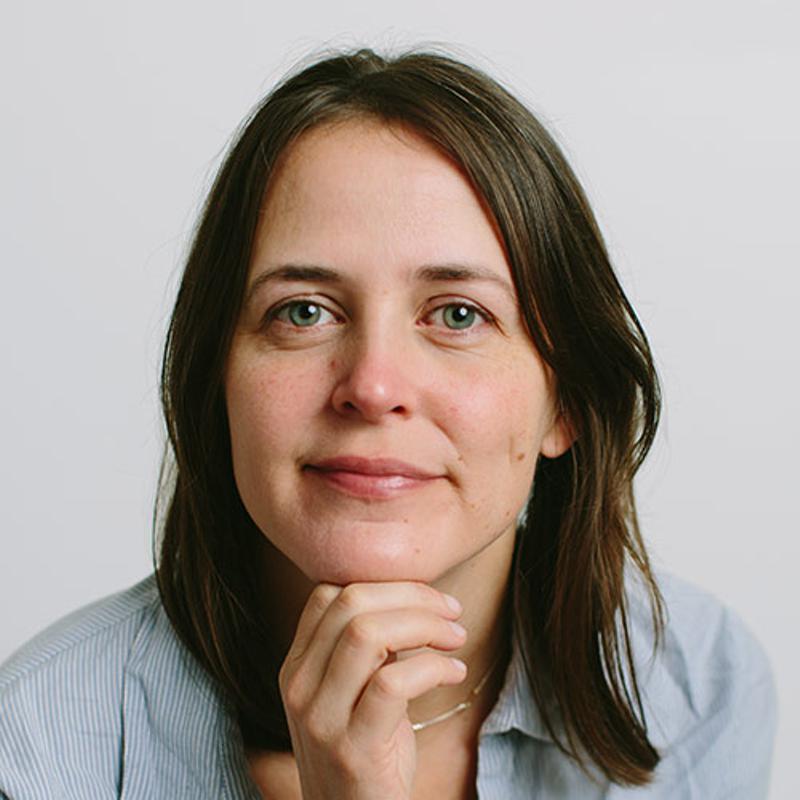
Dr. Joanne Liu has had a remarkable career as a humanitarian, and it has also made her a keen political analyst.
Based in Montreal, Liu is a pediatric emergency physician and a professor at McGill University’s School of Population and Global Health, where she directs its Pandemic and Emergency Readiness Lab. She previously worked with Médecins Sans Frontières/Doctors Without Borders, or MSF. She started her career with them in 1996.
Her book brings together her expertise across 30 years of work. Ebola, Bombs, and Migrants: Humanitarian Crises in a Security-Obsessed World is out now through House of Anansi Press. Early on, Liu explains that the book is not an autobiography but an attempt to “decompress” after 30 years of high-intensity life in MSF, which culminated in serving as its international president from 2013 to 2019.
Liu tells us her job as president had little real power, given the autonomy of MSF’s national chapters. But the role thrust her into major disasters and conflicts, in which she had to speak for both her organization and for the people it was trying to help.
“I have often been asked to detail what I learned from this period of my life,” she writes. “I will summarize it in three words: Ebola, Kunduz, and migrants. In my opinion, these three themes literally hijacked the organization I was overseeing. They encapsulated the challenges with which MSF was confronted and the way the organization overcame them in those years.”
Liu goes on: “The complexity of those challenges was heightened by the international ecosystem of fear the public experienced following the September 11, 2001 attacks. We became obsessed with security.”
In the case of Ebola, the security obsession expressed itself in various ways. As Liu puts it, Ebola to the rest of the world was “a distant threat that the Western world wanted to keep at arm’s length by constructing barricades between it and the affected countries.”
MSF was involved very early, and obtained the first blood samples in Guinea that confirmed Ebola had somehow leaped across Africa from the Democratic Republic of the Congo and Uganda. MSF published a communiqué describing Ebola in Guinea as an “unprecedented epidemic.”
That term, Liu notes, “was not well received by the World Health Organization.”
A WHO spokesperson tried to minimize the extent and seriousness of the epidemic, and when Liu met with Dr. Margaret Chan, then the director general of WHO, in Geneva, “Chan was visibly unconvinced of the urgency of the situation.”
Nor were UN member states like the U.S. and the U.K., which showed little concern about Ebola until an infected Liberian arrived in Dallas, Texas and was eventually hospitalized.
He died there, but not before passing Ebola to two of his nurses.
Ebolanoia
Meanwhile, American health-care workers repatriated from West Africa either had Ebola or were suspected cases. The country panicked.
The resulting scare resulted in the Obama administration finally taking note and delivering aid and personnel to West Africa. That included a number of brand-new Ebola treatment centres, almost none of which ever saw a patient.
But foreign governments still wanted to keep Ebola at arm’s length. European and American governments agonized about whether to bring their infected nationals home, or to leave them in place.
I well recall that Donald Trump, not yet president, tweeted often about leaving them to take their chances. Trump was actually expressing the spirit of the time, more honestly than most: the spirit of self-protection against perceived threats to personal and national security.
That spirit was a rejection of what Liu calls “solidarity,” a willingness to take the side of the suffering even at some possible risk to oneself.
Solidarity is at the heart of all humanitarian efforts, a recognition of human equality.
Liu goes on to describe another rejection of solidarity, an incident in Afghanistan, when the U.S. and its allies were fighting the Taliban. MSF had established a hospital in the Afghan city of Kunduz, treating whoever needed it.
Combat was going on all over the city as the Americans and the Afghan government battled the Taliban.
MSF had explained to the Americans, their Afghan allies and the Taliban that it was not taking sides, only giving medical care, and had repeatedly supplied the hospital’s coordinates to both sides.
The ‘angel of death’
Yet on the night of Oct. 3, 2015, the Americans deliberately attacked the hospital.
Liu describes it this way.
At 2:08 a.m. there was a giant explosion in the intensive care wing. An AC-13OU, an American combat plane, a model so heavily armed that it had been baptized “the angel of death,” began to raze our hospital to the ground.… The plane methodically bombed the east wing as well as the west, killing emergency, intensive care, archives, and pharmacy personnel.
The bombing lasted an hour, and repeated calls to U.S. headquarters had no effect.
It seems almost quaint now that the attack was considered an outrage. In recent wars, hospitals and their workers have been routinely targeted, whether in Syria, Gaza, Sudan, Ukraine or Myanmar.
Liu and other MSF officials protested to the U.S. authorities until they finally arranged a telephone interview between Liu and President Barack Obama.
She provides a transcript, in which Obama delivers an apology expressing great regret but refusing MSF’s demand for an independent inquiry.
“That afternoon,” Liu writes, “I found President Obama cold, clearly lacking in empathy. At the beginning of the conversation, it was clear that he was reading from a script that had been prepared for him. Without a doubt, he expected me to melt before his status and charm.… When the president saw that we were standing firm on our demand for an independent international inquiry, he changed his tone and acted as though we were good friends. That didn’t work either. So, a bit paternalistically, he rejected our request. In short, the conversation went nowhere.”
Eventually, Liu tells us, she came to think the U.S. had indeed made a mistake, deceived by its Afghan allies who wanted to punish MSF for treating Taliban casualties. But it was a mistake stemming from an obsession with security at any cost.
The same obsession, Liu argues, drives hostility to migrants. She notes that 123 million people were displaced from their homes in 2024. But most were displaced inside their own countries, while refugees who seek safety outside their countries total 73.5 million.
Rich countries like the U.S., Liu writes, don’t care about, for example, the triangle of drought in Central America — until the people there head north to avoid starvation by finding havens in the U.S. or Canada.
“The indifference exhibited by wealthy countries is a true shame,” she writes.
Withdrawing into themselves
Liu paints a bleak portrait of the year 2015. “Confronted by the surge of displaced Syrians, most of the European countries withdrew into themselves as a means of ‘self-protection.’”
Italy and Greece, receiving most of the survivors, sent as many as possible back to Libya or Turkey. And the Europeans interfered with humanitarian efforts to rescue migrants.
“Under the guise of falsely humanist discourse with regard to people on the move, politicians, media and the broader public had in reality paved the way for the criminalization not only of uprooted people but also those who attempt to come to their aid,” Liu writes.
Those included MSF, which chartered three ships for search and rescue operations in the Mediterranean. Greek and Italian authorities tried to stop MSF ships and their passengers from coming ashore. “The Libyan coast guard, whose work was funded in part by Europe, shot at us,” Liu writes.
The EU eventually “solved” its migrant problem in 2016 by paying Turkey six billion Euros (plus a promise to expedite Turkey’s entry into the EU) to accept Syrians from Europe and dump them in camps already overcrowded with refugees.
Reacting to this step, Liu tells us, “We announced that we were refusing all financial aid, from that point on, from the European Union and its member states. The sum was substantial: 62 million euros, around eight per cent of MSF’s revenues. Yet more proof that MSF wasn’t afraid of defending its principles.”
Rejecting EU funding also meant people would go untreated. But, Liu writes, “the logic of the gesture was sound: we cannot pretend to protect refugees while accepting money from their executioners.”
I was struck by Liu’s image of countries withdrawing from the world, seeking “self-protection.”
That describes our present predicament at all levels: countries, regions, classes, families, individuals. We sense danger all around us. Rather than reach out to help each other, we pull back from real and imagined threats all around us, threats we consider so great that any crime is justified if we think it will make us more secure.
But of course it does not. Withdrawal makes us far less secure, more endangered. If we will not engage with disease elsewhere in the world, it will attack us here, on its own terms.
If we violate international laws to harm some enemy, some other enemy will commit crimes against us.
And if we drive the migrants from our door, where will we go when it’s our turn to migrate? 







Tyee Commenting Guidelines
Please note that email notifications for replies are not currently working due to a software issue which may be resolved in a future update.
Comments that violate guidelines risk being deleted, and violations may result in a temporary or permanent user ban. Maintain the spirit of good conversation to stay in the discussion and be patient with moderators. Comments are reviewed regularly but not in real time.
Do:
Do not: