


 SHARE:
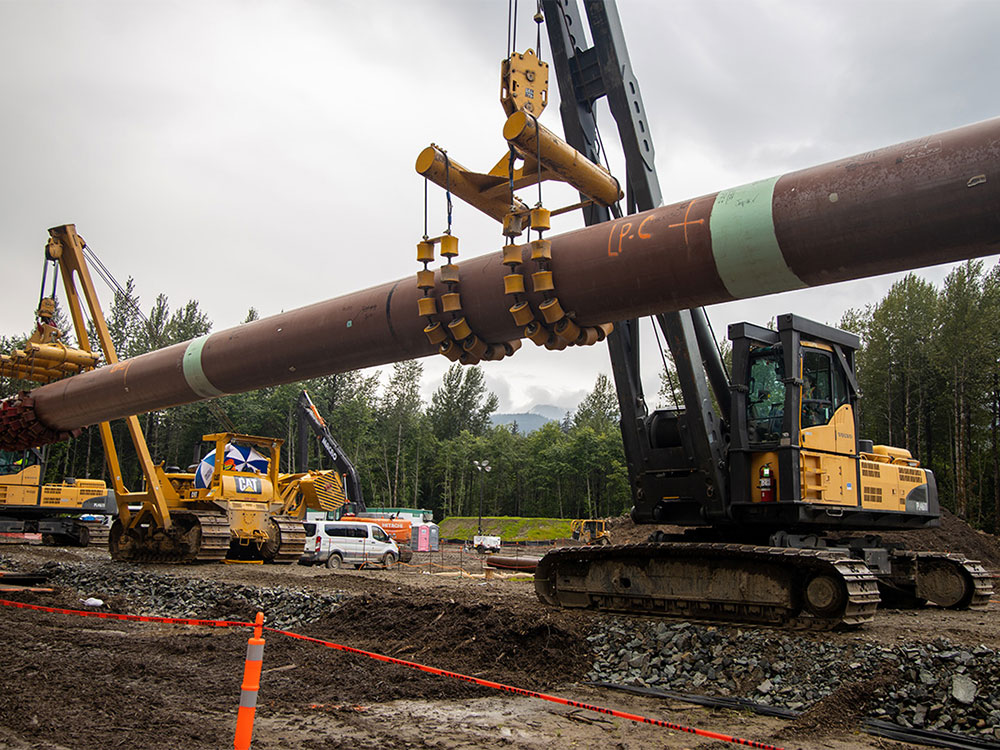
In 2019, Shell Canada, a subsidiary of one of the world’s biggest oil and gas companies, paid the British Columbia government not one dollar in royalty payments despite producing 175 billion cubic feet of natural gas.
The Tyee learned of Shell’s nonpayment after reviewing records that the government fought hard to withhold and relinquished only as a date for a formal appeal under B.C.’s Freedom of Information and Protection of Privacy Act drew near.
B.C.’s oil and gas resources are publicly owned, with companies like Shell paying one-time purchase fees to obtain the rights to drill and then paying royalty payments on each unit of gas and oil that they subsequently produce.
But while Shell and others have dramatically increased their drilling and production in recent years, what they pay in royalties has just as rapidly declined.
The precipitous decline in royalties has proven a problem for Premier David Eby, whose BC NDP government was accused recently of using “flawed price forecasts” that overstated the government’s likely future royalty payments by nearly $1.5 billion over the next five years.
Now a week into a month-long election campaign, The Tyee asked the NDP and other parties about declining natural gas royalties and what needs to happen to ensure British Columbians receive maximum financial returns from the resource.
Despite Eby’s admission that his government had used flawed information that caused its gas royalty calculations to be way off, the NDP told The Tyee that it still expects royalty revenues to nearly double from $766 million this fiscal year to $1.4 billion in 2027-28. The NDP said the sharp climb upward will be “driven by higher royalties for natural gas liquids as well as higher natural gas prices and production” and that if re-elected the government will work to ensure provincial residents “get a fair return” for their natural resources.
In a written response, the BC Green Party expressed skepticism, noting that “this year alone, British Columbians saw $531M less in LNG royalties than what the BC NDP promised, with the government blaming it on spreadsheet errors that have yet to be fixed. If the new Oil and Gas Royalty Framework is implemented in 2027, British Columbians will lose out on nearly $3 billion that could be spent on social services we desperately need.”
In a recent Tyee opinion piece, economist Jim Stanford noted that the primary reason for declining royalty revenues is “generous loopholes, credits and cost allowances” that allow companies like Shell “to largely avoid royalties.” Stanford went on to note that Shell and other oil and gas companies paid the province $672 million in royalties in the 2024-25 fiscal year. Fifteen years ago, those same companies paid nearly twice as much in royalties while producing half as much gas.
Shell’s nonpayment in 2019 is spelled out in documents reviewed by The Tyee and released by the Finance Ministry in 2022 to the then-B.C. office of the Canadian Centre for Policy Alternatives. The documents cover five fiscal years from 2017 through 2021.
They show that in 2017, Shell Canada paid a nominal $269,556 in royalties. It then paid $6.3 million in 2018 before paying nothing in 2019. In the subsequent two years, Shell paid nearly $6 million and $7 million, respectively.
Only nine months after disclosing those numbers, the provincial government decided members of the public would no longer be entitled to such information and passed legislation forbidding its release.
The Green Party said the decision to pass a law that effectively blocks the release of such information ever again means that the government is “effectively shielding the same corporations ripping British Columbians off from accountability.”
Chief Roland Willson of the West Moberly First Nations said the government’s decision to build a firewall around what specific companies pay in gas royalties is almost certain to fuel public distrust. West Moberly’s traditional territory, along with that of other Treaty 8 First Nations, is in the heart of the Montney gas formation, where almost all of B.C.’s natural gas comes from.
“Information on who pays royalties, and how much, is important for all citizens of British Columbia. Royalties are public revenue based on the extraction of publicly owned natural resources,” Willson wrote in an email to The Tyee. “Secrecy can cause a lack of trust in the government’s decision-making. It also breeds questions about whether the province is delivering on promises made and whether royalties are working as they should.”
The Tyee received no acknowledgment from Shell after emailing questions to its media department.
Searchable data on the BC Energy Regulator’s website shows that Shell produced nearly five billion cubic metres or 175 billion cubic feet of methane gas in 2019.
That same year, it also produced other hydrocarbons of significant value, including 79,203 cubic metres of pentane, which is used to dilute Alberta’s heavy oil; 22,443 cubic metres of butane, which is blended with gasoline; 17,388 cubic metres of propane, which is used for space heating and cooking; and 4,306 cubic metres of ethane, used to make ethylene and polyethylene.
Why the company paid no royalties on all that production is unclear, but government subsidies are the most likely explanation.
For 23 years, Shell and other companies operating in B.C. were able to reduce their combined royalty payments by billions of dollars under a subsidy program that financially rewards them for drilling deep and horizontal wells. Those subsidies now apply only to qualifying wells built prior to September 2022, the government told The Tyee.
Introduced in 2003, the subsidy program was justified on grounds that deep and horizontal wells were expensive to drill relative to shallower, more conventional wells. But deep and horizontal wells soon became the industry norm, and the costs to drill them fell steadily.
Mounting criticism of the deep-well credit program prompted the NDP government in October 2021 to launch an independent review of royalty rates. In May of the following year, then-premier John Horgan announced that deep-well credits would be phased out and replaced with “a new oil and gas subsidy and royalty system for the people of British Columbia; one that will bring an end to inefficient fossil fuel subsidies, including the largest in B.C., and put the interests of British Columbians first.”
In response to questions about Shell’s nonpayment sent by The Tyee to the Finance Ministry before the election call, the ministry said that while the deep-well credit program was clearly in place at that time, it could not disclose anything specific about whether or not Shell qualified for those credits and, if so, by how much.
“This information is confidential under the Petroleum and Natural Gas Act. However, at that time, wells drilled by a royalty payer could have been eligible for the Deep Well Royalty program,” the ministry said in its response. “Other credits could also have been available at that time to offset royalties payable.”
The Tyee also asked the ministry why disclosing what individual companies pay in royalties would pose any risks to those companies when all oil and gas companies operating in B.C. are subject to the same set of royalty rules.
“This information is particularly commercially sensitive to individual businesses,” the ministry maintained. “These businesses report production, valuation and cost information specific to their operations. Releasing it could reveal business information that could provide competitors with an advantage.”
Energy analyst David Hughes told The Tyee that he was mystified by the government’s response.
“Given that the B.C. government makes company-specific oil and gas production data available by month for all B.C. operators, it’s difficult to see why the government would keep the royalty revenue paid by companies for producing that oil and gas confidential from the public who are the owners of the resource,” Hughes said.
The records examined by The Tyee show that the 10 companies paying the most royalties between 2017 and 2021 paid a combined $609.5 million. ARC Resources Ltd., Tourmaline Oil Corp. and Canadian Natural Resources were respectively the top three royalty payers. Shell Canada was ranked ninth.
Between them, the top 10 companies in those five years paid nearly three-quarters of all royalty payments.
Shell remained a conspicuous outlier in having no recorded royalty payments in a single year among the province’s major oil and gas producers.
Shell is the largest shareholder in LNG Canada, with a 40 per cent share of the giant liquefied natural gas processing plant in Kitimat. At the time the province was courting would-be investors in that and other LNG projects, then-Liberal premier Christy Clark said the province’s booming natural gas sector would generate so much wealth that the province would be able to sock between $100 billion and $200 billion over 30 years into a permanent fund that would help to defray the costs of delivering numerous public services.
But the fund never materialized.
Stanford noted that new royalties are to be implemented in just over three months’ time in January. But no one knows what the royalties will be, as the government remains “locked in combative (but confidential) consultations with the gas industry, First Nations and other stakeholders over the new regime,” Stanford said.
Chief Willson told The Tyee he is worried the rates could remain low, which would be bad for all British Columbians. First Nations, as well, have a direct stake in the pricing of oil and gas resources, because of revenue-sharing agreements signed with the province.
Willson noted that in 2022 the B.C. government promised the new royalty system would capture half of industry profits after production costs. “But experts working with Treaty 8 nations estimate that the proposed model would deliver only 11 to 14 per cent of net profits under most scenarios, which is well below the government’s stated target.”
With the entirety of the Montney formation’s gas and liquids valued in the trillions of dollars, Willson told The Tyee much is at risk if the government lets oil and gas companies pay less than they should, or, as was the case with Shell in 2019, nothing at all.
CentreBC Leader Elenore Sturko told The Tyee that the royalties British Columbians receive from natural gas producers have fallen as a result of declining commodity prices. “That challenge is compounded by NDP incompetence in the form of bad math that could cost the province another $1.5 billion in revenue,” Sturko said, adding:
“That is exactly why we cannot put all our eggs in one basket. Natural gas resource revenues are important, but commodity prices fluctuate and fiscal conditions change quickly. We need to pursue success across multiple industries and build a truly diversified economy.”
The Tyee did not hear back from the Conservative Party of BC. OneBC was the only other political party to respond to questions. “Of course the government overestimated what the oil and gas companies are willing to pay, the BC NDP government thinks everyone can pay more taxes,” it said. ![[Tyee]](/design-article.thetyee.ca/ui/img/yellowblob.png)
Read more: Energy, BC Politics






Tyee Commenting Guidelines
Please note that email notifications for replies are not currently working due to a software issue which may be resolved in a future update.
Comments that violate guidelines risk being deleted, and violations may result in a temporary or permanent user ban. Maintain the spirit of good conversation to stay in the discussion and be patient with moderators. Comments are reviewed regularly but not in real time.
Do:
Do not: