


 SHARE:
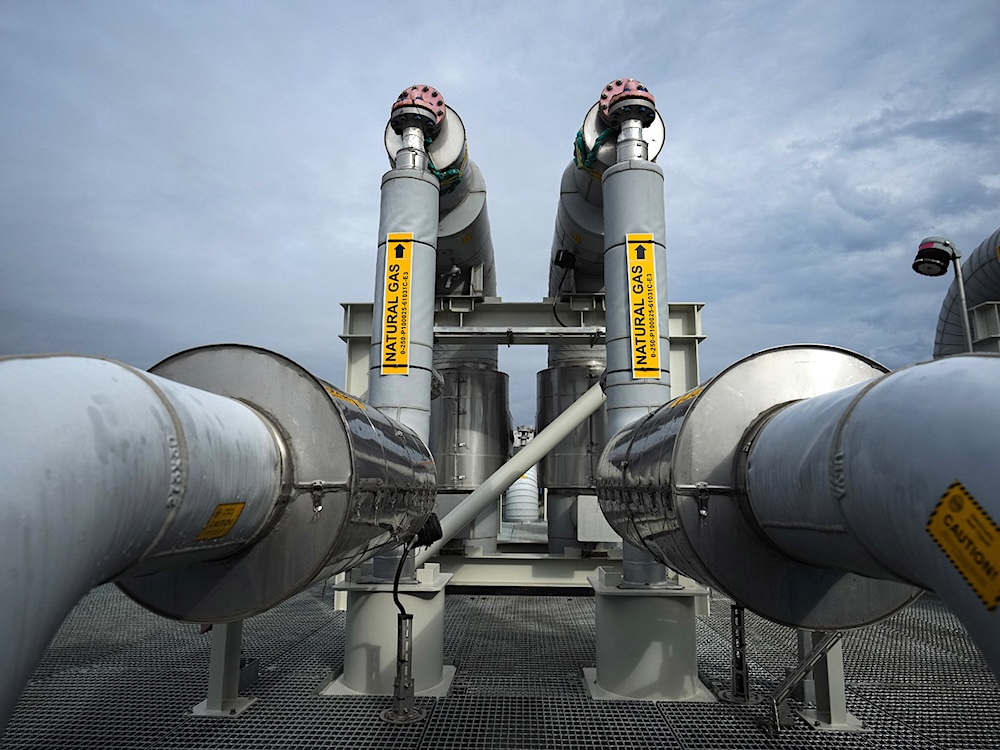
The British Columbia government needs to halt plans to implement a new oil and natural gas royalty regime until the details can be independently assessed to make sure they are fair, says Roland Willson, Chief of the West Moberly First Nations.
“Somebody has to oversee what’s going on here because I don’t have faith that the province is doing a good job on this,” Willson said. “This is taxpayers’ money that funds hospitals, funds the police, funds the teachers.... There’s billions of dollars just floating out of the province and nobody’s saying anything about it.”
An official with the Ministry of Energy and Climate Solutions said the government intends to release details of the new framework later in the fall and implement it in January.
Along with determining how much money the province collects from oil and gas, the royalty calculation affects the amount available to Treaty 8 First Nations, including West Moberly, through revenue-sharing agreements.
The province is transitioning away from a piecemeal system where rates move depending on many factors, including market prices, how productive a well is, how old it is, what fluid it produces and various incentives introduced over decades.
The provincial government recently admitted it had made accounting mistakes in this year’s budget, flagged in June by Treaty 8 technical advisers consulting on the proposed new royalty framework, that significantly overestimated natural gas revenues. The province admitted to the mistake only in late August, after Business in Vancouver published a story about the discrepancy.
On Monday Finance Minister Josie Osborne presented a quarterly update that reduced the estimated revenue to the province from royalties by $300 million a year due to the mistake. A further $225-million reduction in the current year was because of lower gas prices.
The declines contributed to the province’s already record deficit growing to $13.8 billion, another $450 million higher than when the budget was presented in February.
While the error was significant, the bigger issue is whether the government can be trusted to make sure the province is fairly compensated for the publicly owned resource, Willson said. While Treaty 8 First Nations wanted to make sure they were being treated fairly, he added, they discovered in the process that the wider B.C. public isn’t being treated fairly either.
“What I don’t understand is why the hell isn’t anybody screaming about this,” he said. “The people of British Columbia should be just furious about this.”
Review found royalty system was ‘broken’
The Energy Ministry announced work on the new royalty framework in 2022 after an independent review — by Nancy Olewiler from the school of public policy at Simon Fraser University and Jennifer Winter, who teaches in the school of public policy at the University of Calgary — described the existing system as “broken.”
“It does not support and contribute to government and societal goals,” they wrote. “It consists of piecemeal modifications to a system that was designed for a different era with different risks, technology, and market conditions.”
The system was too complex and cost a lot both for the industry to comply with and for the government to administer and audit, they found.
Overall, it was benefiting the industry over the public. “It has contributed to a significant decline in the Crown’s share of the net economic value from petroleum and natural gas resources over the past 15 years and a transfer of value from the province to industry.”
The province pledged to fix the system and get a fair return for the resource. It introduced a transitional system and originally set Sept. 1, 2024, as the date a finalized new framework would be in place, though it has since delayed the implementation to January 2027.
“The new framework will be based on a revenue-minus-cost royalty system,” the 2022 announcement said, stressing that it would benefit the public and increase revenue from the industry. “It will use price-sensitive royalty rates designed to achieve a return of 50 [per cent] of profits on the public resource after costs are accounted for.”
New framework falls short, says Willson
Willson said the government appears to have abandoned the plan to receive a 50 per cent share of the profits and in fact won’t get anywhere near that. Analysis done for the Treaty 8 First Nations suggests the amount of net profits that will be captured under most market conditions is between 11 and 14 per cent.
Willson questioned whether the province is as intent as it once was on getting a fair return from the industry, given that it was slow, in his view, to respond to the error the Treaty 8 consultants identified and has appeared unconcerned about a few hundred million dollars.
According to a Sept. 1 briefing provided to reporters, the consultants first raised concerns in June that the figures in the budget were incorrect due to a failure to appropriately calculate the processing and transportation costs.
Staff in the Energy and Climate Solutions Ministry confirmed those costs had been included but discovered four other errors averaging a total of about $292 million a year that needed to be corrected.
In his comments to reporters, Energy and Climate Solutions Minister Adrian Dix acknowledged the seriousness of the mistakes but also talked about how oil and gas prices can fluctuate widely and throw off forecasts.
Willson said the government doesn’t seem to see the error as urgent. “Even if it is $200 million, to laugh that off? That’s a significant amount of money when they’re saying there’s no money for hospitals, emergency rooms closing down because we can’t afford to hire doctors.”
Nor was Willson pleased with the province’s treatment of First Nations as it worked on the new framework.
“This was supposed to be a collaborative approach with us, the Treaty 8 nations,” he said. “We were going to jointly go to industry and talk to them, and [then] we found out they’ve had 192 meetings with industry while we’re doing this.”
The government’s approach has eroded trust, he said. “We don’t have any faith in anything that comes out of their mouth now on this stuff.”
The whole process needs to stop while the auditor general reviews what happened, he said.
Opposition MLAs have also called for the auditor general’s involvement, and Premier David Eby has said he has told the Energy Ministry to ask the auditor general to review the error and what they are doing to prevent similar mistakes in the future.
Osborne said the integrity and accuracy of forecasts is essential to maintain trust in the government’s budget and updates.
“That’s why, when the Ministry of Energy and Climate Solutions had the possibility of an error identified to them, that they took the internal review, the internal processes that they needed to do, to identify what the cause of that was,” she said.
The Energy Ministry discovered the mistake was caused by human error, she said, then took steps to correct the forecast, verify the calculations through a third party and strengthen the process to prevent it from happening again.
Finalizing the details of the new royalty framework and the timing of when it is introduced remains up to the Energy Ministry, she said.
Willson said someone needs to be watching the ministry more closely.
“Had we not discovered this, they would have approved this formula. No one even would have blinked an eye at it,” he said. “The whole structure has to be looked at. Not just the formula. I think the whole thing has to be reviewed.” ![[Tyee]](/design-article.thetyee.ca/ui/img/yellowblob.png)
Read more: Indigenous, Energy, BC Politics





Tyee Commenting Guidelines
Please note that email notifications for replies are not currently working due to a software issue which may be resolved in a future update.
Comments that violate guidelines risk being deleted, and violations may result in a temporary or permanent user ban. Maintain the spirit of good conversation to stay in the discussion and be patient with moderators. Comments are reviewed regularly but not in real time.
Do:
Do not: