

 SHARE:
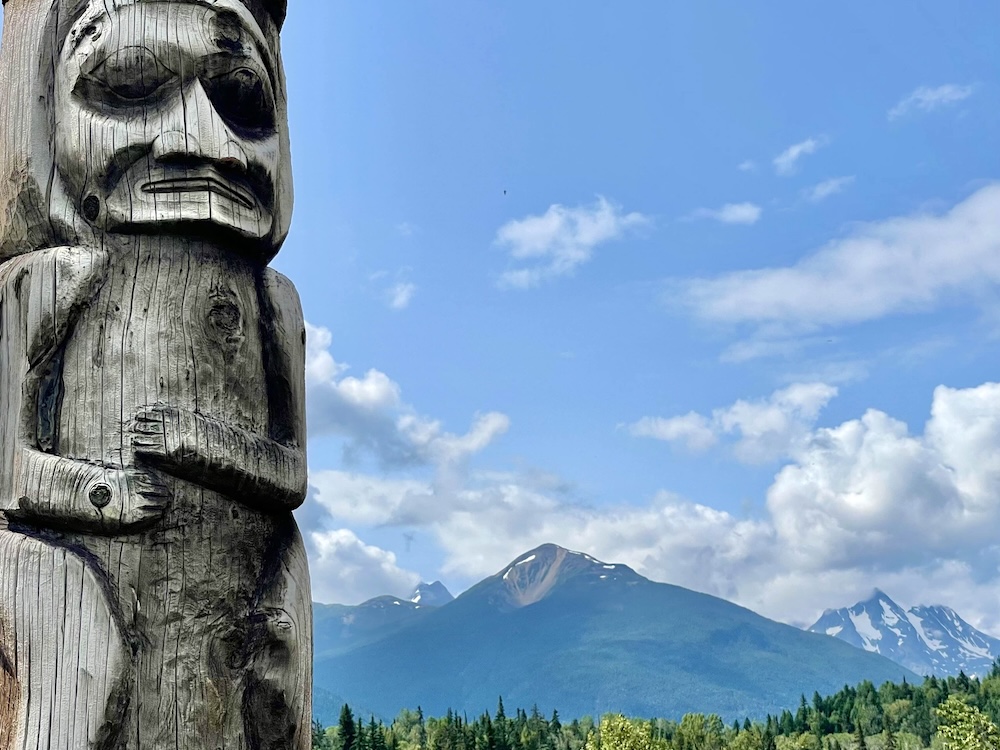
When I was young, I spent hours sitting on my grandfather’s front porch, gazing up at the row of totem poles in Gitwangak village. The historic poles stood tall against the backdrop of majestic mountains, towering over the small reserve.
I listened carefully as my grandfather described each one in our traditional language, Sm’algyax. My grandfather, the late Simoo’gyet, or Hereditary Chief Lelt, Fred Johnson, could no longer see the poles; he was blind from a fire in his smokehouse.
Totem poles are known as Git’mgan in Sm’algyax, and my grandfather explained that our ancestors carved figures, like wolves and frogs, into cedar to pass on important family history rooted in oral tradition.
For Gitxsan people, oral history and songs have been handed down for thousands of years.
Matriarchs and Hereditary Chiefs are considered the living memory of our community; they are responsible for passing on laws, language and culture to younger generations.
Git’mgan carry that history too. They describe the history and governance of each Wilp, or house group, and serve as deeds to specific parts of the Lax'yip, or traditional territory.
My grandfather knew the importance of making sure I understood what had been passed down to him. He believed that one day Canada would recognize what our people have always known.
“You can’t beat the truth,” he told me in Sm’algyax, pointing towards the totem poles. “What I’m telling you about our laws, our ownership, who we are, one day all of this what I’m saying to you is going to be in the white man’s supreme law.”
My grandfather’s teachings stayed with me
I didn’t know it then, but my grandfather’s teachings and prediction would follow me throughout my life.
In the late 1980s, I became the youngest witness to testify in Delgamuukw v. British Columbia, the Aboriginal title case brought forward by Gitxsan and Wet’suwet’en Hereditary Chiefs. My grandfather also gave evidence in the case.
The Supreme Court of Canada affirmed Aboriginal title as a right protected in Canadian law and the importance of Indigenous oral histories as evidence.
The historic decision laid important legal foundations for future Aboriginal title cases across British Columbia.
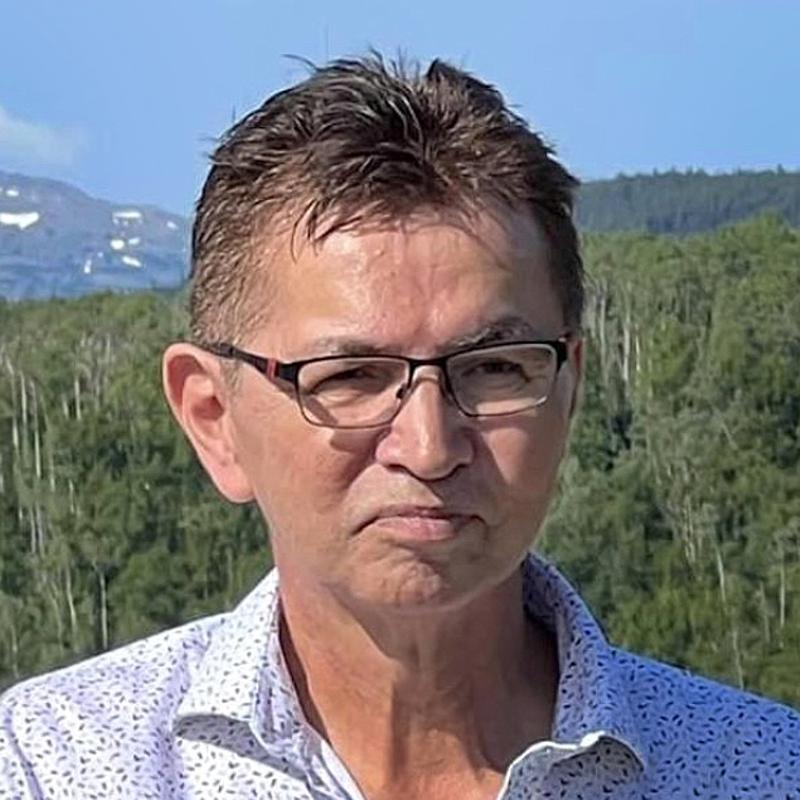
When I was 44, I inherited the name Simoo’gyet Malii from my uncle, along with the great responsibility to protect the Gitanyow Lax'yip for future generations. Gitanyow is a neighbouring community to Gitwangak, and both are part of the larger Gitxsan Nation in northwestern B.C.
What does reconciliation really ask of us?
Decades later, our Aboriginal title remains unresolved. Today, on the National Day for Truth and Reconciliation, I am thinking about the residential school survivors in my community and across Canada, the generations of families who continue to carry the trauma, and all the children who never returned home.
I am also thinking about what reconciliation really asks of all of us, especially when some of the progress of reconciliation is being challenged.
In 2015, when the Truth and Reconciliation Commission released its 94 Calls to Action, it told Canada that reconciliation requires more than acknowledging past harms. It requires changing the relationship between Indigenous Peoples and the Crown.
Call to Action 45 speaks directly to that relationship. Among its commitments, it calls for the reconciliation of Indigenous and Crown legal orders, including the recognition and integration of Indigenous laws and legal traditions.
For generations, colonial governments tried to replace our laws and governance with their own.
But ours never disappeared.
Our Ayookxw, or laws, and Adaawk, or oral history, survived. Our traditional governance and feast system survived. Our relationship with the Lax'yip survived.
And we survived.
For me, reconciliation is about more than coming to see our totem poles in our villages or photographing them in museums. Learning about and celebrating our culture matters, but reconciliation also asks Canadians to understand and act on what our poles represent: our relationship with the Lax'yip that has existed for thousands of years.
And for Gitanyow, reconciliation means recognizing and respecting our Aboriginal title.
It means creating a peaceful path to certainty and coexistence, where we make decisions together and share the prosperity of our lands.
All these years later, my grandfather’s words stay with me. You can’t beat the truth. In our language, “Nee diit naa dim ant jehl xsim'ay.” ![[Tyee]](/design-article.thetyee.ca/ui/img/yellowblob.png)
Read more: Indigenous









Tyee Commenting Guidelines
Please note that email notifications for replies are not currently working due to a software issue which may be resolved in a future update.
Comments that violate guidelines risk being deleted, and violations may result in a temporary or permanent user ban. Maintain the spirit of good conversation to stay in the discussion and be patient with moderators. Comments are reviewed regularly but not in real time.
Do:
Do not: