


 SHARE:
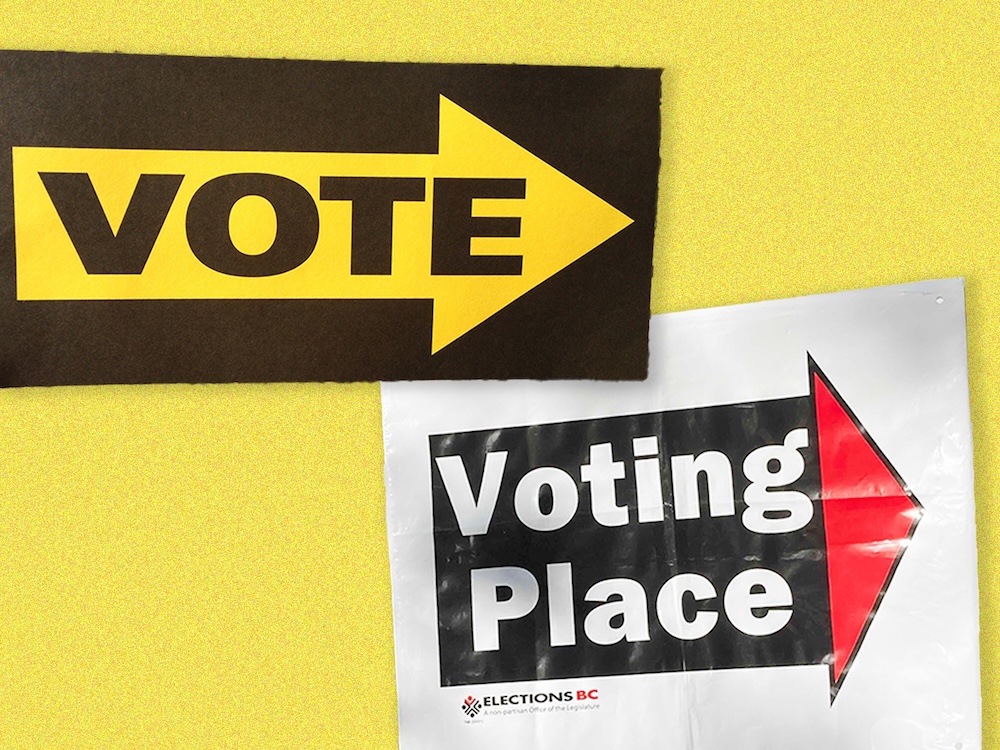
Provincial politics in British Columbia have entered soap opera levels of drama. Politicians are switching parties faster than a university freshman during frosh week. NDP Leader David Eby is invoking Donald Trump’s name like he wants to recreate Beetlejuice. Candidates are materializing and disappearing like they’re in the chase scene of a Scooby-Doo episode.
All this spectacle threatens to overshadow the province’s worst attended, but still vital, democratic event: the municipal election.
There is “a perceived lack of importance” for local elections, Hamish Telford, a political science professor at the University of the Fraser Valley, told The Tyee. Local governments, he added, might in fact “impact our daily lives more than federal and provincial governments.”
Municipalities are responsible for whether your neighbour can build a mega-mansion, whether you can drink alcohol in parks and whether there are enough lifeguards at your local pool. They determine property taxes, often manage policing levels and keep basic necessities such as sewage and water systems running, and roads paved.
They also can’t seem to bring voters to the polls.
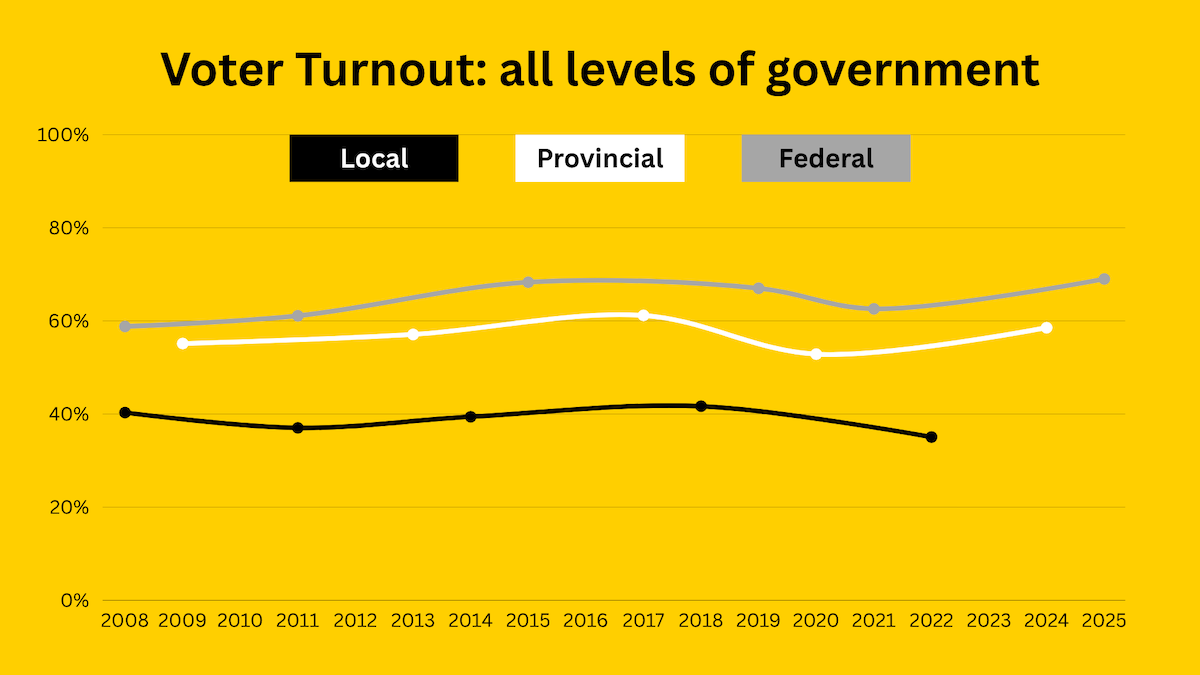
In the last municipal election, fewer than 30 per cent of eligible voters submitted their ballots. That is significantly lower than both the previous provincial election (58.5 per cent) and the previous federal election (69 per cent).
The reasons are many, and long-standing, Telford said. People moving between communities have a harder time becoming familiar with local politics. The decline of local news organizations across the province makes it more challenging for people to get information about local candidates. The sheer volume of candidates is also a factor — the average municipal voter needs to choose five candidates for council, as well as multiple school board members.
And frankly, local politics often isn’t as sexy as the provincial and federal races.
In municipal elections, wins by acclamation — meaning candidates run unopposed and win by default — are not uncommon. Five communities had no general election day in 2022, due to wins by acclamation. Mayoral acclamations in particular have a strong effect on voter turnout.
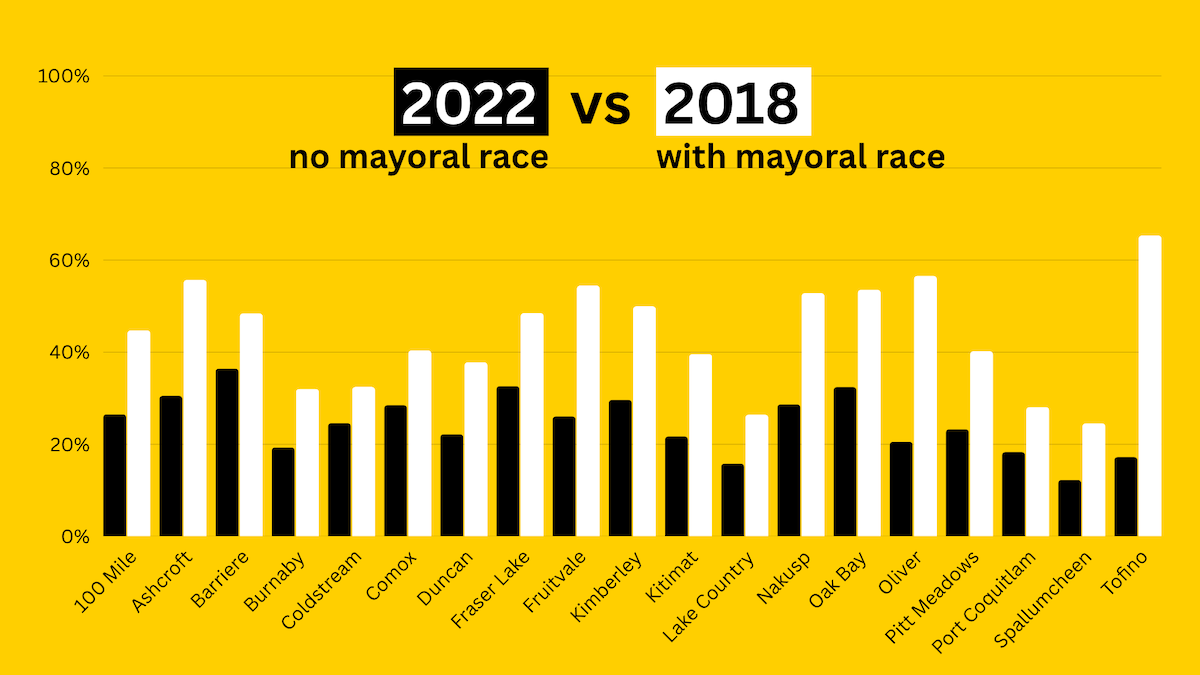
“That’s the big position in a local election,” Telford said. “It’s like, ‘Well, that guy’s going to win, why am I going to bother?’”
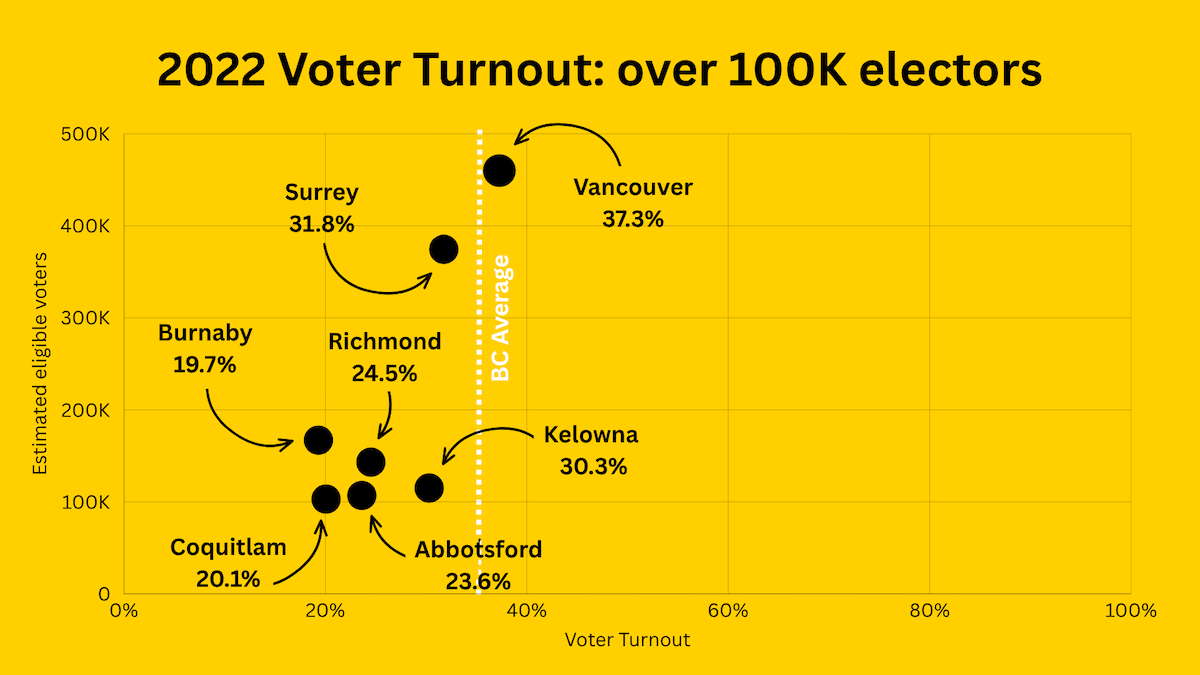
That was the case in Burnaby last election. Although the city has never had a strong voter turnout, averaging about 25 per cent over the last two decades, the 2022 election saw only 19.7 per cent of eligible voters show up to the polls — the worst turnout of any community with more than 100,000 voters. Incumbent Mayor Mike Hurley ran unopposed, and that, chief election officer Dennis Back said, was a big reason for the low turnout.
This year, Back expects Burnaby’s turnout to bounce back. Six candidates are vying to become Burnaby’s mayor this time around.
“If the number of candidates is any measure as to the interest in this year’s election, it is certainly higher than in the previous election,” Back wrote in an email to The Tyee.
Farther east in Invermere, chief election officer Kindry Dalke has similar expectations for her community.
In 2022, the District of Invermere was one of the five municipalities where all seats were filled by acclamation. Although incumbent Mayor Al Miller has already secured his seat by acclamation for 2026, there are six council candidates vying for three council seats.
“I think it’s going be pretty normal turnout this year,” Dalke said.
Nearby communities such as Canal Flats and Radium Hot Springs both have competitive races this election, and “being in such a small community, you hear about the other areas and it kind of just fires people up,” Dalke said.
That sense of community is why small municipalities like Invermere have a “normal” turnout that is significantly higher than that of their larger, urban counterparts.
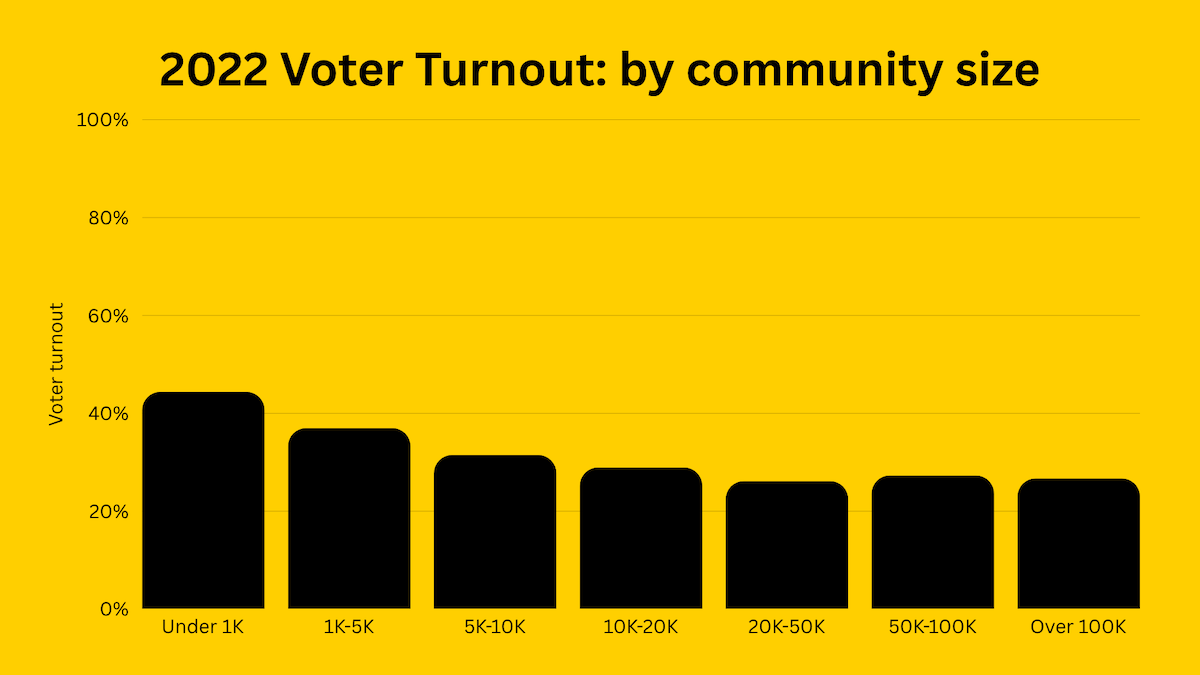
“People just have a feeling they’re voting for their neighbour or their friend, and they want to give them that support. It’s not just a nameless person on the ballot,” Dalke said.
Telford agreed, saying that word of mouth in small communities helps fill gaps left by the lack of local news. Smaller communities also typically have fewer council members and shorter candidate lists, which can make it easier for voters to fight against decision fatigue. (There are six candidates for three positions in Invermere, while there are 42 candidates for eight seats in Burnaby.)
However, even small communities haven’t been able to buck the trend of decreasing turnout, and local politicians worry that the surprise provincial election call will confuse voters and ultimately drive them away from the polls.
Oh snap
At the annual Union of BC Municipalities conference this year, members passed an emergency resolution asking the province to wait until after the municipal election to call a potential snap election.
“At a time when B.C. is facing considerable economic and social uncertainty, overlapping elections would be a disservice to our citizens,” UBCM president Cori Ramsay said in a press release Sept. 17.
Ramsay reiterated UBCM’s concerns to Eby on Sept. 18, with politicians in the room applauding and whooping after her request. Eby told them that he would “certainly consider the resolution and the advice, just like we consider all resolutions that come forward from local governments.” (From the audio, it sounded as though one person booed him.)
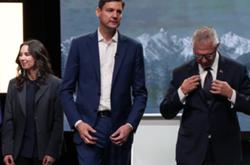
Just four days later, Eby stood in front of the legislature and announced B.C. would go to the polls.
Although Eby’s announcement focused extensively on the threat posed by Trump, the election was “clearly an opportunistic move” to capitalize on the disarray of the opposition parties, Telford said.
The provincial election will take place on Saturday, Oct. 24, with advance voting happening from Oct. 16 to Oct. 21 — overlapping with the municipal election’s general voting day on Saturday, Oct. 17.
Overlapping elections are extremely rare. It is possible to find instances of elections happening in the same year — the federal election and B.C.’s municipal elections took place one month apart in 2008 — but examples of elections happening in the same month are challenging to find. Challenging, but not impossible.
In 1979, the provincial and federal elections both took place in May, with voting day happening on May 10 for the province and May 22 for the feds. It caused at least a little befuddlement.
“There is a considerable amount of confusion in the [provincial] riding [of North Vancouver-Seymour] about who is running where and for what,” wrote Al Forrest of the Victoria Times in an article published on May 9, 1979.
The confusion was exacerbated by a former federal Liberal, Jack Davis, running for the provincial Social Credit party. Former provincial Liberal leader Gordon Gibson resigned his seat to run in the federal election and already had his signs up during the provincial campaign, “adding to the bewilderment,” Forrest wrote.
“The confusion will end at the polling booth however,” he added, “with most voters looking for either the Socred candidate or the NDP candidate.”
The province saw a 69 per cent turnout for that election, while B.C. saw nearly 75 per cent of electors turn out to vote in the federal election less than two weeks later.
To add to the electoral chaos, there was a municipal election in November of that same year. (This was not uncommon. Before the 1980s, local elections took place nearly every year.) Despite the potential voter fatigue, roughly 15 per cent of eligible voters in North Vancouver participated in their local election — up from less than eight per cent the year before.
While that 1979 trifecta may be an extreme example of interwoven elections, many are expressing concerns that this year’s double whammy could cause similar confusion — and lead to even worse voter turnout.
Burnaby’s Back said the snap election “has caused huge angst among municipal politicians and the public generally.”
“Only time will tell what the final impact will be on voter turnout and voter confusion,” Back added.
Logistical complications
The overlap will likely also affect the simple logistics of holding an election.
Elections BC needs to hire approximately 17,000 election officials to administer the provincial election on Oct. 24. Telford noted that these hires are typically seniors, and many of them will have already committed themselves to the municipal election.
Space could also be a challenge, particularly in smaller communities like Invermere. Dalke said Elections BC has been having trouble securing locations for advance voting because there simply aren’t enough suitable spaces in the district.
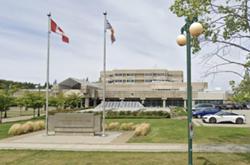
Dalke said one of the advance voting locations in Invermere could be across the parking lot from the Columbia Valley Centre, where general voting will be held on Oct. 17.
“If that turns out so, in that case, we might be helping each other out,” Dalke said. “They might actually get a higher turnout with that advance vote that day because everyone’s already there for the municipal election.”
There is also a possibility that the television-like drama of the provincial election will inspire more people to pay attention to their local races.
“There’s a slim hope here for a bit of a turnaround with the media focused on the provincial campaign,” Telford said.
“Perhaps that will lead to more coverage of the local campaign and help overcome that information deficit.”
Judging by the lack of optimism in Telford’s voice, he isn’t counting on it. ![[Tyee]](/design-article.thetyee.ca/ui/img/yellowblob.png)
Read more: Municipal Politics



Tyee Commenting Guidelines
Please note that email notifications for replies are not currently working due to a software issue which may be resolved in a future update.
Comments that violate guidelines risk being deleted, and violations may result in a temporary or permanent user ban. Maintain the spirit of good conversation to stay in the discussion and be patient with moderators. Comments are reviewed regularly but not in real time.
Do:
Do not: