


 SHARE:
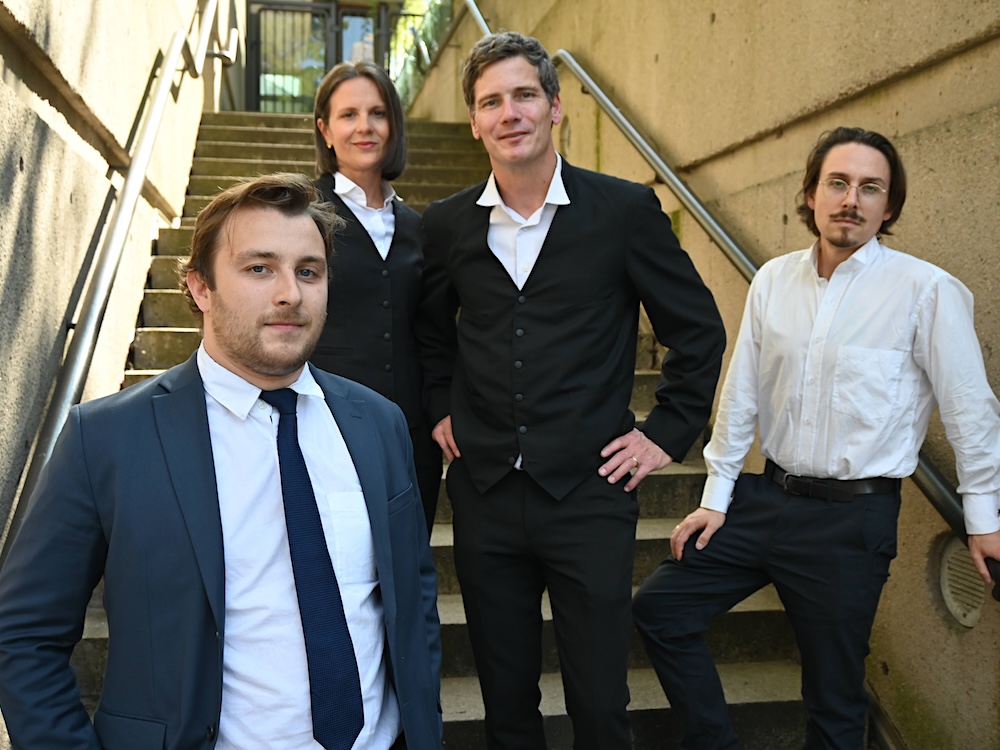
The Drug User Liberation Front’s constitutional challenge wrapped up Friday, but co-founders Eris Nyx and Jeremy Kalicum won’t know until next year whether their efforts to save lives will land them in jail.
They were in B.C. Supreme Court arguing that the law that convicted them each of three counts of trafficking methamphetamine, cocaine and heroin was unconstitutional.
Their lawyers, Tim Dickson, Stephanie Dickson and Kaelan Unrau, called 14 witnesses to lay out a case that by criminalizing DULF’s compassion club the government violated Section 7 and Section 15 of its members’ Charter rights.
Section 7 of the Charter of Rights and Freedoms prohibits the state from depriving people of their rights to life, liberty and security of the person, and Section 15 says all people must be treated equally and have equal protection and benefit from the law.
DULF’s lawyers said Canadian drug laws are mostly fair but fail to protect people amidst the toxic drug crisis that has killed more than 19,760 British Columbians since January 2014, according to the BC Coroners Service.
Canadian drug laws are laid out in the Controlled Drugs and Substances Act and the Food and Drugs Act.
The federal health minister can grant exemptions under Section 56 of the Controlled Drugs and Substances Act to allow people to violate the legislation in extraordinary cases.
DULF’s constitutional challenge hinges on how accessible exemptions under Section 56 actually are.
Their lawyers argued exemptions are “illusory” and not practically available, which means, they say, the Controlled Drugs and Substances Act violates Charter rights.
Crown counsel disagreed and argued the safety valve is available.
The case was heard by Justice Catherine Murray.
A compassion club for meth, cocaine and heroin
Nyx and Kalicum were running a compassion club in Vancouver’s Downtown Eastside where they bought meth, cocaine and heroin from the dark web, rigorously tested the drugs for potency and purity, labelled the drugs and sold them at cost to 47 compassion club members.
They were open about what they were doing, regularly speaking with police, all three levels of government and media about the need for this service.
They had tacit support from the Vancouver Police Department and the City of Vancouver, and more-direct support from Vancouver Coastal Health, which provided funding for DULF to run its drug-checking service and a location to run an overdose prevention site.
DULF applied for a Section 56 exemption to the Controlled Drugs and Substances Act from Health Canada, asking for permission to buy and sell drugs for their compassion club, but were denied.
They went ahead and opened their compassion club anyway in August 2022.
On Oct. 25, 2023, Nyx and Kalicum were arrested by the Vancouver Police Department and each charged with three counts of trafficking under Section 5, Subsection 2, of the Controlled Drugs and Substances Act.
A little over two years later, on Nov. 7, 2025, the pair were found guilty of possession for the purpose of trafficking by Murray.
Anyone charged with a criminal offence in Canada has the opportunity to challenge the law they’re accused of breaking as unconstitutional.
If Murray agrees the trafficking charges are unconstitutional, then the charges against Nyx and Kalicum will go away.
Laying out the case
Over the several weeks of the trial, heard over several months, DULF’s lawyers laid out the case that the government’s actions infringed on sections 7 and 15 of compassion club members’ Charter rights.
They first established that the government’s own experts agreed there was a need for compassion clubs where members could access tested or regulated alternatives to street drugs without a prescription from a doctor. This is called a non-medical safer supply model.
When the government didn’t act, DULF stepped up. They tried to get permission for their compassion club but were denied, which criminalized their actions.
They opened a compassion club anyway that ran a non-medical safer supply model and generated a small amount of evidence that their compassion club was saving lives.
Because they had not been given a Section 56 exemption to the act, they were arrested and charged with trafficking, and were later found guilty. The compassion club was shut down, ending members’ access to the non-medical safer supply model. Members had no choice but to start using the unregulated supply again, which is extremely dangerous.
Therefore, DULF’s lawyers said, the government’s actions put members’ lives at risk. They also argued that because substance use disorder is a recognized disability, shutting down the compassion club was also specifically putting disabled people at risk of the unregulated drug supply.
DULF lawyer Tim Dickson said there were three main ways the compassion club was not able to access the Controlled Drugs and Substances Act Section 56 exemption.
First, the Controlled Drugs and Substances Act and the Food and Drugs Act are closely interwoven pieces of legislation, and a Section 56 exemption applies only to the former, which means DULF would have still been criminalized by the Food and Drugs Act, he said.
Second, the federal health minister would face strong backlash if they gave a compassion club permission to buy and sell meth, cocaine and heroin, so it’s extremely unlikely a politician would ever actually grant an exemption, he said.
The governing Liberal party isn’t willing to take a strong stance on harm reduction and downloads the responsibility to Health Canada, which leaves the decision-making to a single minister, Dickson added.
Third, there is no way for a compassion club to get permission to source drugs under the Food and Drugs Act, he said.
In its exemption request to Health Canada, DULF proposed to buy diacetylmorphine, or pharmaceutical-grade heroin, from Fair Price Pharma.
But in order for Fair Price Pharma to sell drugs to DULF, it would have had to reapply to Health Canada for permission for its drug to be used in a non-medical safer supply model without a prescription, the court was told by Dr. Martin Schechter, founding director of the University of British Columbia’s school of population and public health and a founder of the pharmaceutical company.
Reapplying for permission would likely require a clinical trial, which could take up to a decade, cost millions of dollars and would require a control group of humans to continue using the unregulated drug supply while another had access to a pure, pharmaceutical alternative, Dickson said.
No ethics board in the world would approve that clinical trial, he added.
On the flip side of that, no illicit producer of drugs would willingly spend the time and money to conduct a clinical trial in order to be allowed to sell their drugs in Canada because they can simply sell to the unregulated market, Dickson said.
Therefore, no safety valve was accessible to DULF that would have given them permission to run a non-medical safer supply compassion club, he said.
Crown counsel Oren Bick disagreed. He said the Controlled Drugs and Substances Act and the Food and Drugs Act are related but separate legislation. Therefore, the Food and Drugs Act is outside the scope of the constitutional challenge.
He also said the Food and Drugs Act does not technically block any drugs from being sold and that it is reasonable for the act to require drug manufacturers to prove the safety, efficacy and quality control of a new drug they want to bring to market.
DULF’s lawyers agreed the Food and Drugs Act is mostly fair but added that in the context of an unregulated drug crisis, something needs to change. There is no incentive for a cartel manufacturing cocaine to spend millions of dollars on a clinical trial when they can continue to sell to the unregulated market.
Murray pushed back against Bick.
She told him the court case is not about whether or not the Food and Drugs Act would technically block a controlled substance such as cocaine from ever coming to market, but whether or not there is a current path for harm reduction initiatives like DULF’s compassion club to source regulated drugs in the midst of an ongoing toxic drug crisis.
She added that Bick’s stance, which stuck to the technical permissions of the legislation rather than looking at how it is “not responsive and not practical” to respond to the overdose crisis, was “fanciful.”
Bick also criticized the research DULF did to check the efficacy of their compassion club. The research, which was published in a peer-reviewed journal, found compassion club members were less likely to die from overdose while they were able to access this safer supply.
At the start of the trial Nyx acknowledged there were limitations to the study but said they did the best they could at the time.
Bick said a single limited study was not enough evidence to prove the compassion club was working and therefore shutting it down infringed on people’s Charter rights.
Murray seemed surprised by that argument and again pushed back.
“That’s the whole point of why we’re here,” she said. “They can’t get a good enough study so they can’t break through,” she said, adding, “All of your arguments are so circular.”
Murray said in court that a decision would likely come sometime in January.
*Story updated July 29 at 10:30 a.m. An earlier version of this story said Fair Price Pharma is a non-profit company. It is not. ![[Tyee]](/design-article.thetyee.ca/ui/img/yellowblob.png)
Read more: Health, Rights + Justice








Tyee Commenting Guidelines
Please note that email notifications for replies are not currently working due to a software issue which may be resolved in a future update.
Comments that violate guidelines risk being deleted, and violations may result in a temporary or permanent user ban. Maintain the spirit of good conversation to stay in the discussion and be patient with moderators. Comments are reviewed regularly but not in real time.
Do:
Do not: