


 SHARE:
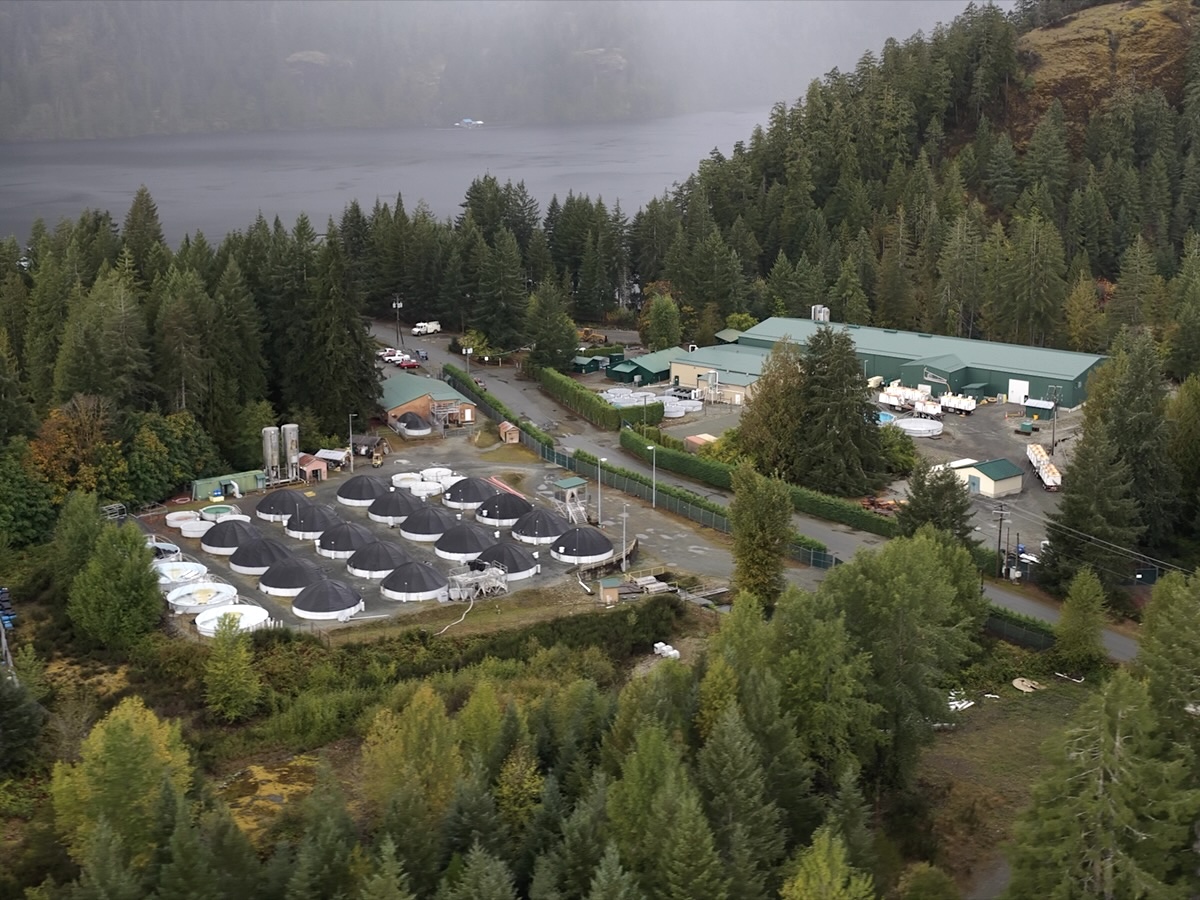
A long-standing dispute over the future of B.C. salmon farms ratcheted up Wednesday when Hupačasath First Nation served an eviction notice to a hatchery that supplies 14 farms in Clayoquot Sound.
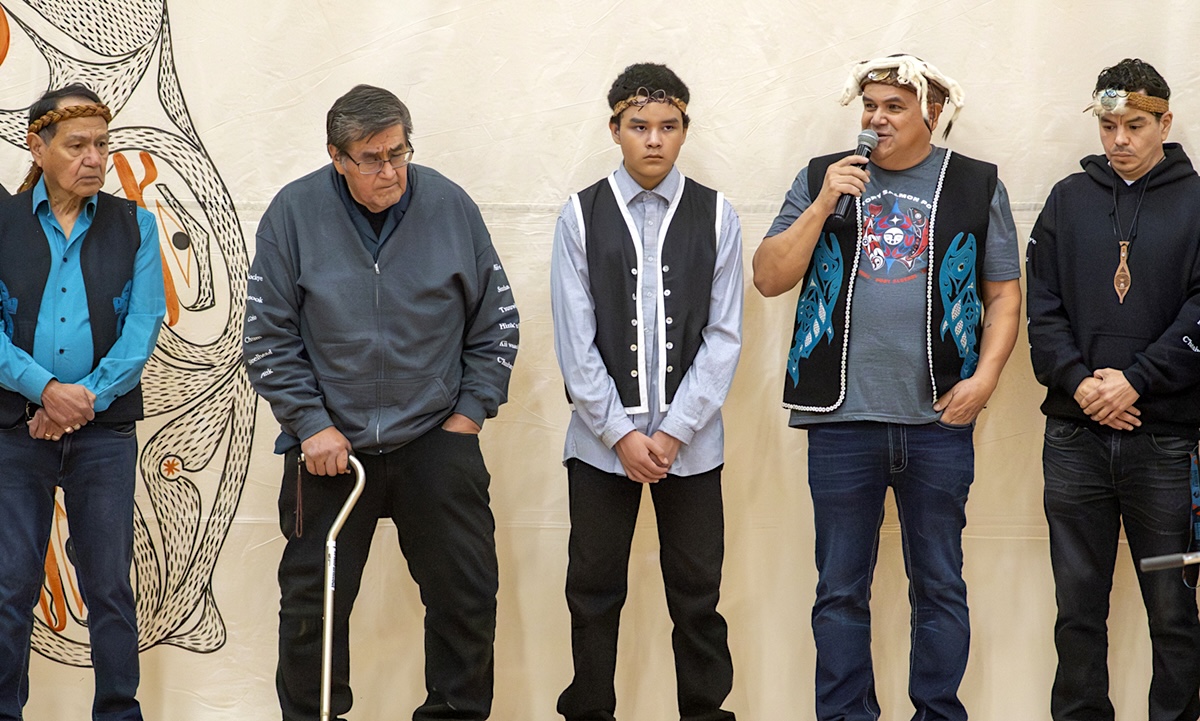
In a news release shared with The Tyee, Hupačasath Hereditary Chief Alton Watts told salmon farming giant Cermaq that the company must immediately stop transferring Atlantic salmon smolts from its Boot Lagoon hatchery near Port Alberni and shutter operations by the end of this year.
“Cermaq does not have social licence to operate in Hupačasath territory,” Watts said. “They do not have our consent to rear invasive fish that threaten wild salmon stocks in our territory.”
Watts said Hupačasath First Nation has the sovereign right to cut off feedstock to operations “that have been scientifically proven to cause harm to our relatives, wild Pacific salmon.”
Watts told The Tyee that the wild salmon he catches in the Somass River and its tributaries, near Port Alberni, are showing signs of the diseases that plague farmed salmon. The wild fish feed near salmon farms in Clayoquot Sound before migrating up the Somass River, Watts said.
“They’re missing skin, so you can actually see their meat. Under their skin, they have some sort of parasite or sea lice... some of their mouths are diseased and have sores on them,” he said.
Watts said Cermaq, headquartered in Norway, has never asked for permission to operate its Atlantic salmon hatchery on Hupačasath territory. He said he hopes the company will phone and apologize for not getting permission, and then “vacate the area.”
Cermaq Canada did not respond to a phone message and email from The Tyee before press time.
The BC Salmon Farmers Association, which represents Cermaq and other salmon farming companies, said it wasn’t aware of the eviction notice and couldn’t comment.
The Boot Lagoon facility is one of four Atlantic salmon hatcheries Cermaq operates on Vancouver Island.
Watts said he’s also concerned that the Boot Lagoon hatchery, next to Great Central Lake, could leak “contaminants” into salmon-bearing waters. The lake, which drains into the Stamp River, a tributary of the Somass, is home to one of the last thriving salmon runs in Nuu-chah-nulth territories.
The Hupačasath co-manage a chinook salmon hatchery near Cermaq’s hatchery. If Atlantic salmon get loose or contaminants leak, “they’re directly going to be harming our wild stocks,” Watts said.
Most B.C. salmon farms raise Atlantic salmon — a species not native to the West Coast — in open-net pens in sheltered bays, where the tide flushes away waste.
Many farms lie along migration routes for Pacific salmon, and scientists have warned that sea lice and diseases from farmed fish are being transferred to wild juvenile salmon along migration routes.
Sea lice are parasites that cause damage and stress to immune systems, making fish more vulnerable to diseases. Those diseases include Piscine orthoreovirus, which is linked to a host of fish health problems, including hemorrhages in internal organs.
Mounting concerns about the impact of fish farms on wild salmon prompted the federal government to announce a ban on open-net pen salmon farming in B.C., starting in 2029.
The ban requires companies to transition to closed containment systems or land-based salmon farms.
But seven international salmon aquaculture companies have been lobbying the Mark Carney government to rescind the ban.
In a letter obtained through B.C. freedom of information legislation, the companies said a transition to closed-containment salmon farming by 2029 is “simply not feasible” and will result in the collapse of the B.C. salmon farming sector.
The Carney government subsequently avoided recommitting to the ban, prompting the First Nations Leadership Council to write an open letter to Carney and Fisheries Minister Joanne Thompson in June, urging them to uphold and fully implement the 2029 transition.
In late August, Thompson confirmed that the plan to ban open-net pen farms is still in place, saying the government continues to engage with stakeholders to find a path forward.
Watts said his community and others are still waiting to hear how the federal government will honour its commitment, noting the Carney government has “so far failed to advance” the transition plan.
Carney has spoken eloquently about sovereignty and resilience in the face of external threats, Watts said.
“With respect, we ask that the prime minister observe our right to enforce our own salmon laws and build a wild salmon economy that benefits all Canadians.”
Dan Lewis, executive director of Clayoquot Action, a non-profit conservation group, said Clayoquot Sound, a UNESCO Biosphere Reserve, is “one of the last strongholds of fish farming” in B.C.
In addition to Cermaq’s 14 farms, B.C.-based Creative Salmon operates seven farms in Clayoquot Sound that raise chinook salmon.
A 2026 study found wild salmon stocks in Clayoquot Sound have plummeted, with 45 per cent of the original 1934 stock now genetically extinct. “They are hanging by a thread,” Lewis said.
Chinook in the Kennedy River have been declared extirpated, “the next step before extinction,” he said.
“It’s a full-scale emergency here.”
He said Clayoquot Action welcomes the Hupačasath eviction of Cermaq’s hatchery.
Watts “is exercising his rights and asserting his title to take action to protect salmon,” Lewis said, “and we stand with him.”
Fisheries and Oceans Canada, often referred to as DFO, told The Tyee that the land and water lot regulations that govern the operation of the hatchery do not fall within its jurisdiction.
B.C.’s Ministry of Water, Land and Resource Stewardship, which issues tenures for fish hatcheries, said it couldn’t answer questions during the provincial election period, when government communications are limited to critical health and public safety information. ![[Tyee]](/design-article.thetyee.ca/ui/img/yellowblob.png)
Read more: Environment








Tyee Commenting Guidelines
Please note that email notifications for replies are not currently working due to a software issue which may be resolved in a future update.
Comments that violate guidelines risk being deleted, and violations may result in a temporary or permanent user ban. Maintain the spirit of good conversation to stay in the discussion and be patient with moderators. Comments are reviewed regularly but not in real time.
Do:
Do not: