

 SHARE:
British Columbia’s shortfalls in its response to the unregulated toxic drug crisis were strongly criticized during the first three weeks of the Drug User Liberation Front’s constitutional challenge.
Compassion club co-founders Jeremy Kalicum and Eris Nyx are in court arguing the criminalization of their club violated members’ Charter rights.
The Charter’s Section 7 prohibits the state from depriving people of their rights to life, liberty and security of the person, and Section 15 says all people must be treated equally and have equal protection and benefit from the law.
To lay out that argument to Justice Catherine Murray, DULF lawyers Tim Dickson, Stephanie Dickson and Kaelan Unrau called several medical, pharmaceutical and public health experts to the stand.
Experts spoke about the province’s inadequate response to the drug crisis. More than 18,752 British Columbians since 2014 have died from drug poisonings.
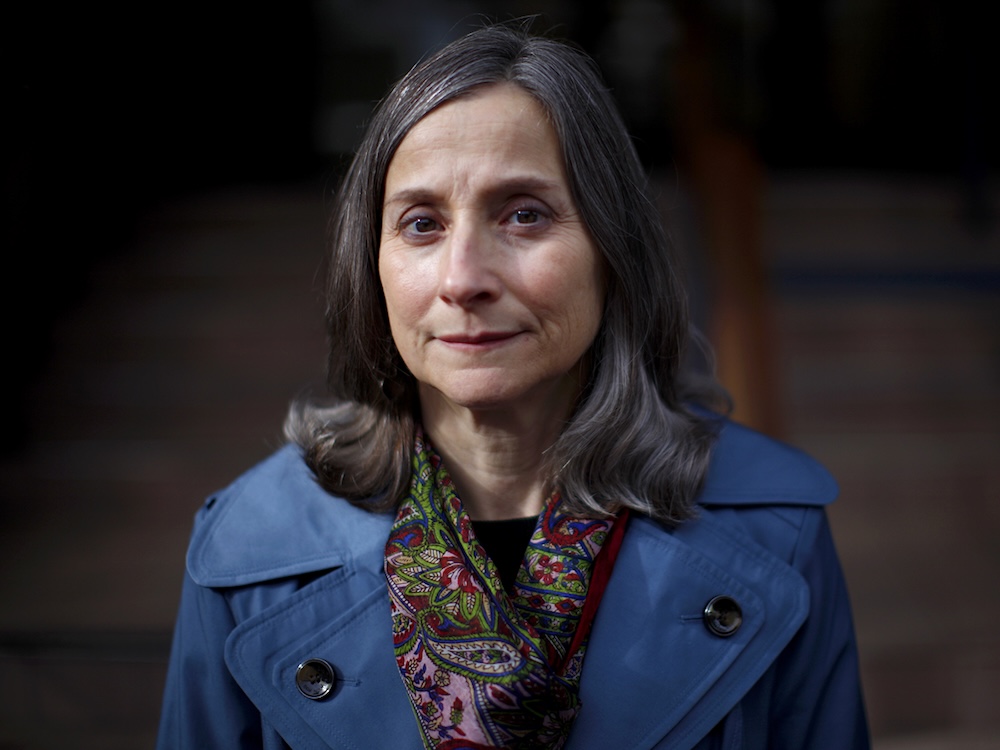
Some of the sharpest criticism came from B.C.’s former chief coroner Lisa Lapointe, who held her position for 13 years before retiring last year.
Lapointe told the court that the province has taken an “issue management approach” to “give the impression positive matters were being taken,” without ever meaningfully evaluating if the money it was spending on the crisis was actually reducing overdoses or overdose fatalities.
As chief coroner, Lapointe called three death review panels, which brought together experts to look at death patterns and advise the government how to avoid future fatalities.
The government almost entirely ignored the recommendations from two of the three panels, Lapointe said. She characterized its response as “extremely frustrating,” and surprising because the chief coroner and government share the same goal of preventing death, she said.
The second and third death review panels both recommended B.C. expand its safer supply model and explore a non-medical distribution model, which the province said it would not do.
A non-medical model would allow people to access regulated drugs without getting a prescription from a doctor. This process would still be regulated, closely monitored and evaluated.
B.C. instead focused on funding policing, and treatment and recovery beds, which Lapointe said was problematic because the province is not tracking how these investments reduce overdoses, deaths or harms caused by unregulated drugs.
Lapointe said she asked the province to regulate the treatment and recovery industry to track how many people achieve lasting sobriety, how many people leave the programs and how many people overdose while in the program or shortly after leaving. The province has not done that, she said.
Police funding hasn’t been evaluated to see if it reduces overdoses, but studies have shown police drug seizures increase the risk of fatal overdose, she said.
She continued: “I have heard more police than I can count say, ‘We cannot arrest our way out of this crisis.’ Yet that seems to be where we’re heading.”
In its cross-examination of Lapointe, Crown counsel called Lapointe an activist, which seemed to surprise her.
“I’m not an activist,” she said.
Lapointe said she has been invited to speak at rallies as an expert but has always been there as an invited guest, not an organizer or participant.
How safer supply worked
B.C.’s safer supply program was introduced in 2020 to separate people from the unregulated drug supply by prescribing them alternatives to street drugs.
The program was very successful at reducing harms but was only ever available to 3.5 per cent of people who use unregulated drugs in B.C. and are therefore at high risk of overdose or death, Lapointe said.
Since its peak in 2023 the safer supply program has been rolled back in “a not so subtle way of eliminating the program,” Lapointe said.
Lapointe told the court the safer supply program was closely monitored to make sure participants were taking all of the medication prescribed to them.
Despite that, safer supply was blamed for the diversion of hydromorphone, sold under the brand name Dilaudid, into the unregulated market.
Lapointe told the court she believed it was highly unlikely that safer supply was being diverted in a meaningful way, although diversion from the people prescribed Dilaudid for other reasons was possible.
In December 2024, only three per cent of all Dilaudid dispensed in B.C. was for the safer supply program, with the other 97 per cent dispensed for reasons unrelated to safer supply, like pain management.
Patients prescribed Dilaudid for pain do not have to take their medication in front of a pharmacist or provide urine tests to their doctor.
It’s also not clear if Dilaudid pills seized in police drug raids are actually diverted pharmaceuticals or unregulated knock-offs, Lapointe said. She added that the province would need to set up a study to check this but has not yet done so.
In 2023 the Vancouver Police Department said Dilaudid made up 0.3 per cent of all drugs seized that year.
Crown counsel asked the judge to reduce the weight of Lapointe’s and other criticisms against the province because the province was not there to defend itself.
In response, Justice Murray pointed out the province had been invited to be part of the court case but declined.
Diversion to protect loved ones
There are a lot of reasons people might divert drugs, including trying to keep loved ones safe.
In a heartbreaking testimony that appeared to emotionally affect Murray, former DULF compassion club member TJ Felix spoke about their complicated relationship with drugs.
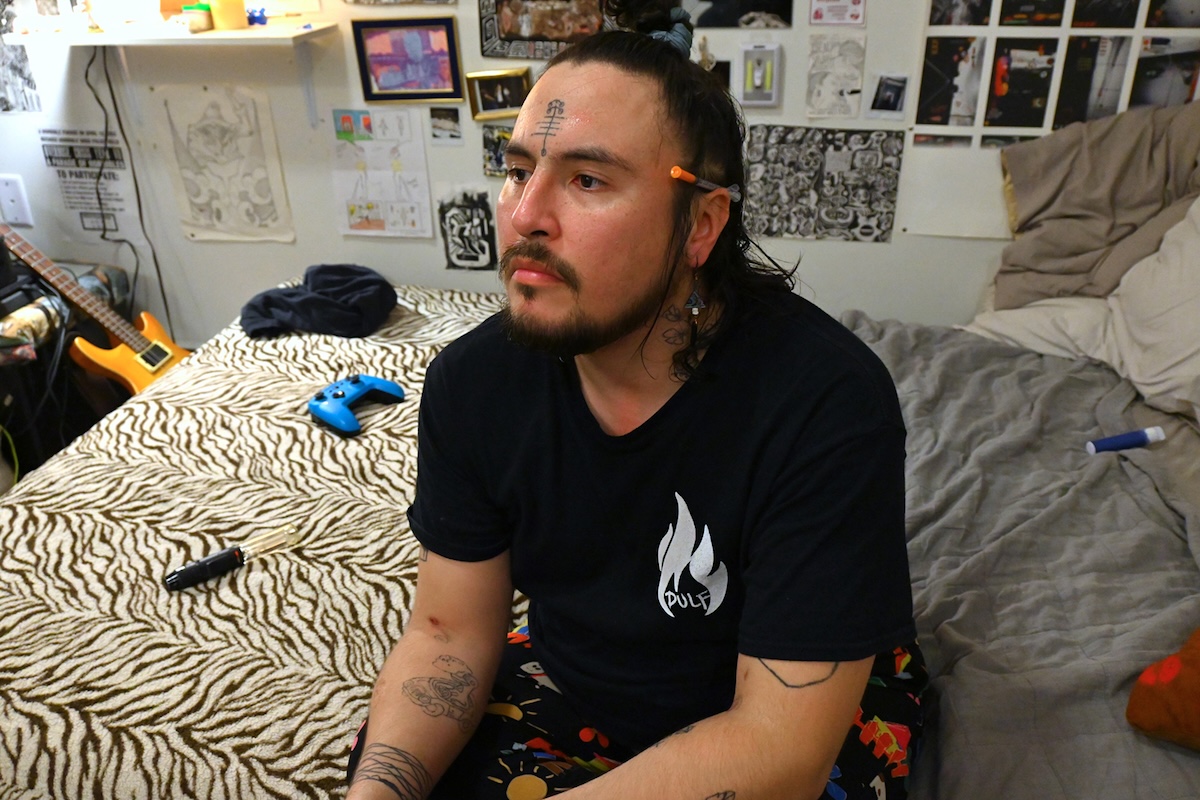
Felix, who is Secwe̓pemc and uses they/them pronouns, said they grew up around drugs because both of their parents “lived and died” as chronic drug users. When their parents died they were moved around foster care in the Interior.
Felix said they started drinking at six years old, smoking at nine and using cocaine by 12. By 19 years old they were using IV drugs.
“There was the ongoing stress of being low-income and constantly facing homelessness while friends and family where dying,” Felix said. “I had the ongoing trauma of what I was subjected to as a kid on top of not having any family. Drugs were my everything. My support, my family and friends.”
Felix said they have overdosed more than 50 times, and had loved ones fatally overdose in front of them “many times.”
“When you witness the horror of someone you love dying, you don’t want to see that ever again,” Felix said.
Felix said they sometimes would share drugs they had bought from DULF with loved ones to try to separate their loved ones from the unregulated drug supply.
“If I knew someone who died and there was anything I could have done to prevent their death — I couldn’t have lived with that,” they said. “Having a safe alternative [to street drugs] is a solution to that.”
Felix has used naloxone, been through detox and treatment and taken opioid agonist therapy, which is considered the gold-standard treatment for opioid use disorder.
Felix told the court those government-funded options had downsides and barriers.
They spoke about going to treatment and checking themselves out less than 12 hours later after spending the night listening to one person scream and scream, and another person masturbate in a bed placed less than three feet from their own.
Being on opioid agonist therapy tied them to their pharmacy and meant they could never leave the city, and going through detox for opioids is “the worst thing you can imagine but 10 times worse,” they said.
Withdrawal from opioids feels “like every nerve ending exploding. It’s like you’re being dragged through a bed of nails,” Felix said. “It’s indescribable, horrific and painful. You’d do anything you could to avoid it.”
A person who uses drugs isn’t able to care for themselves when they are worried about where their next hit will come from, Felix said. “It’s the most destabilizing thing.”
At the same time, using drugs from the unregulated market feels like “a gun always at the back of your head,” they said.
Felix told the court they wanted to work with and be a member of DULF because “someone finally had the courage to do something” to address the ongoing crisis.
They also said they provided honest answers in the DULF surveys used to analyze how the compassion club was helping its members.
“The study would be null if we weren’t honest,” Felix told the judge. “I believe [DULF] worked. I didn’t have any reason to lie about something like that.”
Felix added that DULF helped them stabilize. They had started thinking about trying to access treatment and recovery again when DULF was shut down, Felix told the court.
Crown counsel’s cross-examination of Felix was brief, generally asking them to provide more details from their testimony.
In response to Crown counsel’s questions, Felix said they used drugs to self-medicate to “achieve a state of nothingness” and would often not use free drug-checking services because they struggled to value their own life.
Felix said they had only been considering going to detox when DULF was shut down because the list to get into detox is “notoriously long” and requires someone to show up every day to keep their position in line.
Balancing between gangsters and corporate greed
Brian Emerson testified about the considerations public health has to balance when addressing the toxic drug crisis.
Emerson is a retired medical doctor and former B.C. deputy provincial health officer.
When a government prohibits a substance, an unregulated market run by criminals and gangsters can be created, he said. A Canadian example is alcohol prohibition. Unregulated markets encourage more potent substances, which can poison people, he said.
When the government swings the other way and allows a drug with few regulations it can also cause harm, he said. An example is tobacco, which used to be entirely run by “corporate greed,” where cigarettes were marketed to pregnant people and children, he said.
Public health wants to minimize the harms associated with both extremes, so it aims for somewhere in the middle, where drugs are controlled but there is a way for some people to access a regulated supply, he said.
DULF lawyer Stephanie Dickson said this was similar to DULF’s goal, where compassion club members could access some of the safety afforded by a tested supply.
Other experts who testified during the trial included Thomas Kerr, a University of British Columbia professor and director of research with the BC Centre on Substance Use, who worked with DULF to produce its research; Paxton Bach, a clinical assistant professor at UBC and addiction medicine physician at St. Paul’s Hospital, who spoke about how more people are dying because the unregulated supply is more dangerous, not because more people are using drugs; Nick Boyce, policy director for the Canadian Drug Policy Coalition, who spoke about Health Canada’s unwillingness to talk about safer supply; and Martin Schechter, who was the principal investigator for the North American Opiate Medication Initiative clinical trial in 2008 and founder of Fair Price Pharma, the company DULF tried to get Health Canada permission to work with. Schechter spoke about the challenges he’s faced getting permission from Health Canada for his company to produce pharmaceutical-grade heroin.
DULF’s constitutional challenge was originally scheduled for three weeks in December but will now continue on into the new year. The case will resume Jan. 19, 2026, at 10 a.m. ![[Tyee]](/design-article.thetyee.ca/ui/img/yellowblob.png)
Read more: Health, Rights + Justice








Notice about commenting changes
The Tyee’s commenting system will be moving to a new platform on Nov. 12. If you’re already a Tyee commenter you must register with the new system on or after Nov. 12 with your preferred username.More information can be found here.